Maruyama Castle (Isehara City, Kanagawa Prefecture) Complete Guide | History, Remains, and Access Information
What is Maruyama Castle? | A Mysterious Medieval Castle Remaining in Isehara City, Kanagawa Prefecture
Maruyama Castle is a medieval hilltop castle located in Shimokasuya, Isehara City, Kanagawa Prefecture. Also known as Kasuya Castle and Chidoriga Castle, it is currently maintained as Maruyama Castle Ruins Park. Situated on a small hill along National Route 246, it was a fortified stronghold built on the tip of a plateau approximately 35m above sea level and 10m above ground level.
Regarding the castle’s history, there are extremely few documented records, making it a mysterious entity sometimes referred to as a “phantom castle.” However, archaeological excavations conducted in 1985 (Showa 60) confirmed large-scale remains such as earthworks and moats, revealing its importance as a medieval castle. Even today, parts of the earthworks are well-preserved, making it a popular spot for castle enthusiasts and history buffs.
Basic Information on Maruyama Castle
Location and Geographical Environment
Location: 2168-2 Shimokasuya, Isehara City, Kanagawa Prefecture (Maruyama Castle Ruins Park)
Maruyama Castle is located in the Shimokasuya district of Isehara City, in the central part of Sagami Province (present-day Kanagawa Prefecture). Its location cleverly utilizes the natural topography of a plateau, with low-lying wetlands surrounding it that served as a natural moat. Currently, National Route 246 runs east-west through the southern side of the castle grounds, effectively dividing the plateau.
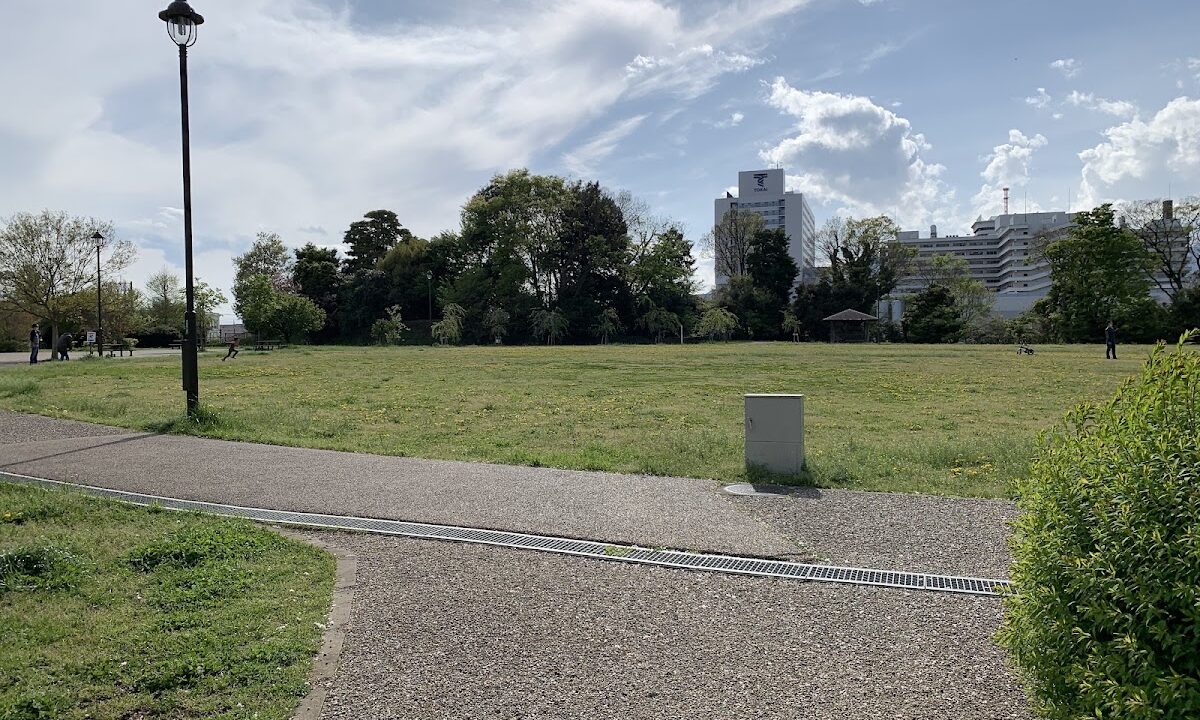
To the north of the castle ruins is Takabeya Shrine, a nationally designated Important Cultural Property, and to the east is Tokai University School of Medicine Hospital. This geographical arrangement indicates that Maruyama Castle was a strategic base built at a key transportation hub.
Castle Classification and Structure
- Classification: Hilltop Castle
- Builder: Ogigayatsu Uesugi Clan (Tradition)
- Construction Period: Kamakura to Muromachi Period (Estimated)
- Main Lords: Ogigayatsu Uesugi Clan, Kasuya Clan (Tradition)
- Remains: Enclosures, earthworks, dry moats, screen-like moats, gates, building remains, pit-dwelling remains
The castle’s structure centers around a semi-circular main enclosure, surrounded by outer enclosures (belt enclosures) extending from the west to the north. The main enclosure has a relatively large flat surface and exhibits the typical form of a medieval castle, defended by earthworks and moats.
Origin of Common Names and Alternative Names
Maruyama Castle has several alternative names.
Kasuya Castle: This name originates from the place name Kasuya, where the castle is located. A connection to the Kasuya clan, who are believed to have ruled this region, has also been pointed out.
Chidorigajo Castle: The origin of this name is uncertain, but it may have been named based on the castle’s shape and topographical features.
Tono-no-kubo: Some documents also record the name “Tono-no-kubo,” which is thought to be a place name indicating the location of the castle lord’s residence.
History of Maruyama Castle | The Ogigayatsu Uesugi Clan and the Sengoku Period of Sagami
Background and Period of Construction
Regarding the construction period of Maruyama Castle, there is a lack of reliable historical records, and it is estimated to have been built sometime between the Kamakura and Muromachi periods. It is generally believed to have been built by the Ogigayatsu Uesugi clan, but this is also in the realm of legend.
The Ogigayatsu Uesugi clan was a powerful branch of the Uesugi clan during the Muromachi period, alongside the Yamanouchi Uesugi clan, who held the position of Kanto Kanrei (governor of the Kanto region), and expanded their power mainly in Sagami Province. In the latter half of the 15th century, the power of the Ogigayatsu Uesugi clan reached its peak under the influence of their vassal, Ota Dokan. It is highly likely that Maruyama Castle was also renovated and expanded during this period.
Relationship with the Kasuya Clan
While the place name suggests a connection to the Kasuya clan, detailed records of the Kasuya clan are limited. The Kasuya clan is thought to have ruled this region as a local lord in Sagami Province, and Maruyama Castle may have functioned as either their residence or a branch castle.
The existence of another nearby site called Kasuya-kan suggests that Maruyama Castle and Kasuya-kan may have formed an integrated defensive system. It has been suggested that Kasuya-kan served as a residence, while Maruyama Castle was used as a fortified outpost (a place of refuge during wartime).
Connection to Ota Dokan
Ota Dokan (1432-1486), known as a retainer of the Ogigayatsu Uesugi clan, is famous as the builder of Edo Castle, but he is also believed to have been involved in the construction and renovation of many castles in Sagami Province. Maruyama Castle has been suggested as one of the castles Dokan was involved in, but no conclusive evidence has been found.
Ota Dokan is known as a master castle builder, and castles he was involved in exhibit distinctive layouts and defensive structures. The shoji-bori (a type of moat with a screen-like structure) discovered at Maruyama Castle is a defensive technique that began to be adopted in Sagami Province during Dokan’s time, suggesting the possibility of renovations by Dokan or someone influenced by him.
Maruyama Castle in the Sengoku Period
From the late 15th to the 16th century, the Kanto region entered an era of warfare with the rise of the Later Hojo clan (Odawara Hojo clan). The Ogigayatsu Uesugi clan was gradually pressured by the Later Hojo clan and suffered a decisive defeat at the Battle of Kawagoe in 1546.
The exact role Maruyama Castle played during this period is unclear. It is believed that many castles in Sagami Province came under the control of the Later Hojo clan as their power expanded, and Maruyama Castle may have suffered a similar fate.
Date of Castle Abandonment
The exact date of Maruyama Castle’s abandonment is also unclear. Generally, it is estimated to have lost its function around the end of the Sengoku period, around the time of Toyotomi Hideyoshi’s siege of Odawara (1590). With the arrival of the Edo period, a peaceful era prevailed, and castles as military facilities became unnecessary, leading to the abandonment of many medieval castles. It is thought that Maruyama Castle also disappeared from the historical stage during this period.
Remains Revealed by Archaeological Excavations
1985 Archaeological Excavation
The true nature of Maruyama Castle was revealed through archaeological excavations conducted in 1985 (Showa 60). This excavation was carried out prior to the preservation of the castle site and the development of a park, and numerous important remains of a medieval castle were confirmed. The investigation revealed that Maruyama Castle was not merely a small fort, but a full-fledged castle built according to a plan. Of particular note was the presence of a large-scale shoji-bori (a type of moat).
Structure of the Main Enclosure (Honmaru)
The main enclosure is located in the center of the castle and has a semicircular flat surface. It covers several hundred square meters and is thought to have housed the lord’s residence and important facilities. Earthen ramparts surrounded the main enclosure, strengthening its defenses.
Excavation surveys have uncovered building remains and pit-dwelling structures within the main enclosure. These are presumed to be traces of residential facilities and warehouses, indicating that the castle functioned not only as a military facility but also as a place of daily life.
Characteristics of the Earthen Ramp
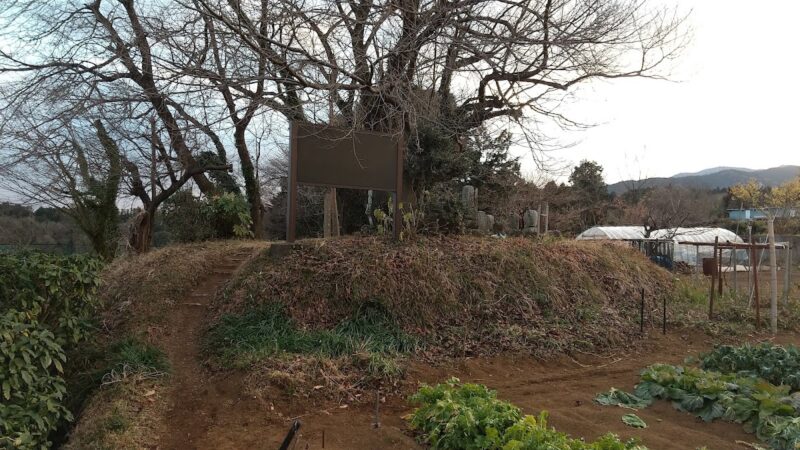
The earthen ramparts, which can still be seen in Maruyama Castle Park today, played an important role as a defensive structure of the castle. The ramparts were built surrounding the main enclosure, and some sections reach a height of several meters.
A close examination of the earthworks reveals that they were carefully constructed using a technique called rammed earth. Rammed earth is a traditional construction method that creates strong structures by compacting layers of soil. The use of this technique indicates that Maruyama Castle was a planned and full-fledged castle.
The earthworks currently preserved in the park have been partially restored and maintained after the excavation, but they still convey their original appearance well and are valuable resources for understanding the defensive systems of medieval castles.
Discovery and Backfilling of Shoji-bori
One of the most noteworthy discoveries from the excavation was the existence of a large-scale shoji-bori (a type of moat). A shoji-bori is a special type of moat with ridge-like earthen mounds at the bottom, a sophisticated defensive technique designed to make enemy intrusion difficult.
Shoji-bori are characteristic remains found in castles of Sagami and Suruga provinces during the Sengoku period, and were particularly common in castles of the Later Hojo clan. The discovery of a shoji-bori (a type of moat) at Maruyama Castle suggests that the castle may have undergone renovations during the Sengoku period (Warring States period).
Unfortunately, the discovered shoji-bori was backfilled after the excavation and is no longer visible from the surface. However, records and photographs from the excavation have been preserved, serving as important historical documents that prove the historical value of Maruyama Castle.
Arrangement of the Horizontal Moat (Dry Moat)
A horizontal moat (dry moat) surrounded the main enclosure. These moats, dug along the outer perimeter of the castle, served to prevent enemy approaches and clearly define the boundaries between enclosures.
The horizontal moats of Maruyama Castle were skillfully positioned, utilizing the topography of the plateau and forming an efficient defensive line combining natural undulations with artificial excavation. Some of the horizontal moats reached depths of several meters, suggesting they were quite substantial defensive structures.
Structure of the Koguchi (Entrance)
The koguchi, the entrance to the castle, has also been confirmed through archaeological excavations. The koguchi was one of the most important defensive structures for the castle, serving as the front line to stop enemy incursions. The entrance to Maruyama Castle was constructed by opening an earthen rampart, suggesting that the surrounding area was heavily fortified with earthen ramparts and moats. Currently, an explanatory sign indicating the location of the entrance is installed within the park, providing a clue to understanding the castle’s structure in its heyday.
Castle’s Age Based on Excavated Artifacts
The excavation has yielded artifacts such as pottery and ceramics. These artifacts provide important clues to estimating the period in which the castle was in use.
Based on the style of the excavated pottery, it is estimated that Maruyama Castle was primarily used from the 15th to the 16th centuries. This corresponds to the late Muromachi period to the Sengoku period, coinciding with the time when the Ogigayatsu Uesugi and Later Hojo clans were vying for power in Sagami Province.
Highlights of Maruyama Castle Ruins Park
Park Development Status
After the excavation, the Maruyama Castle ruins were developed into Maruyama Castle Ruins Park and opened to the public as a place of relaxation. The park faces National Route 246, making it relatively easy to access.
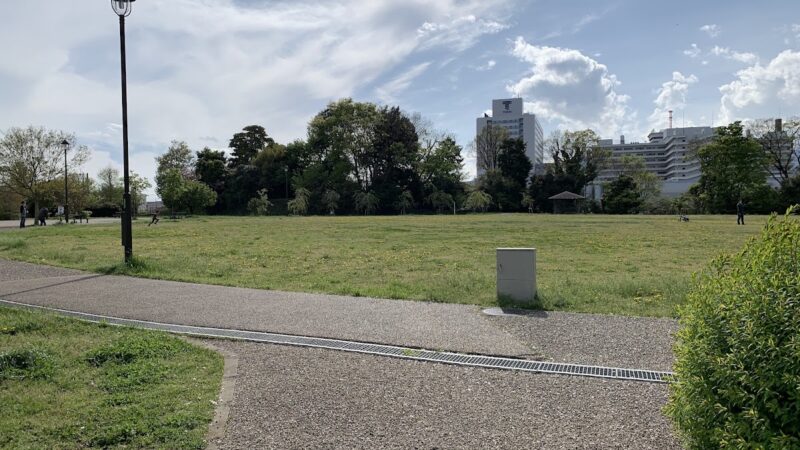
The park features a spacious grassland and playground equipment for children. With spring riders, swings, and multi-purpose play structures, it’s a popular spot for families. While a historical castle site, it also functions as a modern park, making it a community-oriented facility.
Visiting the Preserved Earthworks
The most noteworthy feature of the park is the preserved and maintained earthworks. The earthworks surrounding the main enclosure are valuable remains that allow for close observation of the defensive structures of a medieval castle.
While climbing onto the earthworks is not permitted, their shape and scale can be observed from the surrounding area. By observing the height, width, and curved arrangement of the earthworks, one can understand the castle construction techniques and defensive ingenuity of the time.
Information boards are installed around the earthworks, allowing visitors to learn about the history and structure of Maruyama Castle. Those interested in castles are encouraged to carefully observe the remains while referring to the information boards.
Main Enclosure Plaza
The site of the main enclosure is now a large grassy plaza. The semi-circular, flat area is well-preserved, allowing visitors to appreciate the scale of the castle’s central area in its heyday.
From the plaza, you can enjoy panoramic views of the surrounding landscape, appreciating the castle’s advantageous location on the edge of a plateau. On clear days, you can see the vast Sagami Plain and the surrounding mountains, demonstrating the strategic importance of this location.
Information Boards and Signs
Several information boards explaining the history and structure of Maruyama Castle are installed within the park. Detailed explanations of the castle’s layout, archaeological findings, and historical background are provided, ensuring that even first-time visitors can understand the castle’s appeal.
Important remains such as gates and earthworks are marked with signs, allowing visitors to easily identify their locations. Utilizing these information boards will allow you to delve deeper into the history of Maruyama Castle.
Tips for Exploring the Castle Ruins
Maruyama Castle Ruins Park is a small castle site, so a visit takes approximately 30 minutes to 1 hour. Following the points below will make your visit more fulfilling:
- Understand the Overall Picture from the Entrance Information Board: First, understand the castle’s history and structure outline from the information board at the park entrance.
- Observe the Earthworks: Carefully observe the preserved earthworks, paying attention to their height, shape, and construction techniques.
- Walk Through the Main Enclosure Plaza: Walk through the plaza of the main enclosure to experience the scale and topography of the castle’s central area.
- Confirm the Location of the Gate: Confirm the location of the gate and imagine the mechanisms of entry, exit, and defense within the castle.
- Observe the Surrounding Topography: Observe the surrounding topography from the park’s perimeter, noting the elevation differences between plateaus and lowlands, and the castle area divided by the national highway.
Nearby Historical Spots
Takabeya Shrine
Takabeya Shrine, located adjacent to the north side of Maruyama Castle Ruins Park, is a historical shrine designated as a National Important Cultural Property. Its founding is ancient, said to date back to the Nara or Heian period.
The shrine’s main hall is an Edo period building, a beautiful structure adorned with elaborate carvings and decorations. While its relationship to Maruyama Castle is not entirely clear, the location of an important shrine north of the castle indicates the historical significance of this area.
When visiting Maruyama Castle Ruins Park, be sure to also visit Takabeya Shrine. The shrine grounds have a quiet and peaceful atmosphere, making it a fitting place to conclude your historical stroll.
Kasuya-kan Ruins
Near Maruyama Castle, there is another archaeological site called Kasuya-kan. Kasuya-kan is thought to be the site of the residence of the Kasuya clan, and its connection to Maruyama Castle has been suggested.
As mentioned earlier, it’s possible that Kasuya Castle functioned as a residence during peacetime, while Maruyama Castle served as a fortified outpost during wartime. Visiting both sites together will provide a deeper understanding of the life and defense systems of medieval feudal lords.
Around Tokai University Hospital
To the east of the Maruyama Castle site is Tokai University Hospital. With the development around the hospital, archaeological surveys have been conducted in this area, uncovering remains and artifacts from the medieval to early modern periods.
These survey results provide important information for understanding the historical environment around Maruyama Castle. It’s clear that not only the castle site, but the entire surrounding area holds historical value.
Access and Visiting Information
Access by Public Transportation
Train and Bus:
- Get off at Isehara Station on the Odakyu Odawara Line.
- Approximately 20 minutes on foot from the station, or take a Kanagawa Chuo Kotsu bus and get off at the Awakubo-iriguchi bus stop, then a short walk.
When using the bus from Isehara Station, several routes pass through Awakubo-iriguchi. The bus stop is located along National Route 246, and Maruyama Castle Ruins Park is right in front of it. Buses run relatively frequently, approximately every 30 minutes during the daytime.
If walking, head west from Isehara Station along National Route 246. It’s about 1.4 km and takes about 20 minutes. On a sunny day, walking while enjoying the surrounding scenery is recommended.
Access by Car
Location: 2168-2 Shimokasuya, Isehara City, Kanagawa Prefecture
Access from Major Roads:
- Along National Route 246, approximately 15 minutes from the Tomei Expressway “Atsugi IC”
- Approximately 10 minutes from the Odawara-Atsugi Road “Isehara IC”
National Route 246 is a major arterial road connecting Tokyo and Shizuoka, and is a busy road. Maruyama Castle Ruins Park is located along the national highway, making access by car relatively easy, but caution is advised regarding traffic conditions on the highway.
Parking Information
Maruyama Castle Ruins Park has a free parking lot with approximately 15 spaces. The parking lot is located near the park entrance and is conveniently situated.
However, the parking lot is small, and may be full on holidays and during peak seasons. It tends to be particularly crowded from morning to early afternoon, so it is recommended to visit with plenty of time to spare.
Notes for Visitors
- Opening Hours: The park is open year-round, but please avoid visiting at night.
- Admission Fee: Free
- Estimated Time Required: Approximately 30 minutes to 1 hour
- Attire: Comfortable walking shoes are recommended. The area around the earthworks is grassy, so please be careful of your footing after rain.
- Restrooms: Restrooms are available within the park.
- Playground Equipment: There is playground equipment for children, making it enjoyable for families.
Best Seasons for Visiting
Maruyama Castle Ruins Park is open year-round, but spring and autumn are particularly recommended.
Spring (March-May): During cherry blossom season, the surrounding cherry blossoms are beautiful, allowing you to enjoy cherry blossom viewing while strolling through the castle ruins. The weather is mild, making it an ideal season for historical exploration.
Autumn (September-November): During the autumn foliage season, the surrounding trees change color, offering beautiful scenery. The temperature is also pleasant, making it suitable for long walks.
Summer is extremely hot, and there is little shade in the park, so heatstroke prevention is necessary. Winter in the Sagami region is relatively mild, but windy days can make it feel colder, so be sure to dress warmly.
Reviews and comments from visitors to Maruyama Castle
Reviews from castle enthusiasts
Maruyama Castle is highly regarded among castle enthusiasts for its well-preserved earthworks and mysterious history. Visitors to castle websites across Japan have left the following reviews:
- “The earthworks are well-preserved, giving a sense of a medieval castle.”
- “Its easy access along the national highway is a major draw.”
- “The explanatory signs are comprehensive, making it easy for beginners to understand.”
- “Although small in scale, the remains are well-preserved.”
- “The castle’s many mysteries stimulate the imagination.”
On the other hand, some opinions include, “The scale of the remains is small, limiting the points of interest,” and “It’s a shame that the moat has been filled in.”
The average rating is around 3 out of 5 points. While it pales in comparison to larger castles, it has gained a certain level of appreciation as a place to learn about local history and as an easily accessible castle site.
Evaluation from Families
General visitors, especially families, who are not particularly interested in history, appreciate its function as a park.
- “There are playground equipment so children can have fun.”
- “There’s a large lawn to play on.”
- “There’s a parking lot, which is convenient.”
- “It’s perfect for walks and picnics.”
However, some people have commented that “there aren’t many types of playground equipment” and “there’s not much shade, so it’s tough in the summer,” suggesting that some people find the facilities lacking compared to larger parks.
Evaluation as a Historical Walking Spot
As a destination for historical walking, many recommend visiting it as part of a route that includes other historical spots in the surrounding area, rather than visiting it alone.
Combining it with Takabeya Shrine, Kasuya-kan Ruins, and other historical sites in Isehara City will allow for a more fulfilling historical walk. Since there are several historical sites within walking distance of Isehara Station, it’s an area suitable for a leisurely half-day to full-day visit.
Historical Value and Future Challenges of Maruyama Castle
Positioning in Medieval Castle Research
Maruyama Castle is one of the important historical sites for the study of medieval castles in Sagami Province. The shoji-bori (a type of moat with a screen-like structure) discovered during archaeological excavations is a valuable resource demonstrating the development of castle construction techniques in Sagami Province during the Sengoku period (Warring States period).
Furthermore, the existence of Maruyama Castle provides important clues to understanding the shifts in the spheres of influence of Sengoku daimyo such as the Ogigayatsu Uesugi clan and the Later Hojo clan. Given the scarcity of written historical records, archaeological findings are playing a crucial role in filling in historical gaps.
Challenges of Preservation and Utilization
While the development of Maruyama Castle ruins as a park has ensured a certain degree of preservation, challenges remain.
The biggest challenge is that the discovered shoji-bori has been backfilled. Balancing preservation and park utilization is a difficult problem, but it is desirable to allow visitors to view valuable remains like the shoji-bori in some form. Installing replicas or exhibits using videos and models are possible methods.
In addition, public relations activities to inform more people about the historical value of the castle ruins are important. In addition to the current explanatory signs, the introduction of explanatory systems utilizing smartphone apps and AR (augmented reality) technology is worth considering.
Utilization as a Local Resource
Maruyama Castle Ruins are a valuable historical resource of Isehara City. Beyond its use as a tourist attraction, it plays a crucial role as a site for local history education.
Local elementary and junior high schools utilize Maruyama Castle Ruins as teaching material for local history lessons, providing children with a place to learn about local history. Further promoting such educational use will foster a sense of attachment to the region and raise awareness of cultural property preservation.
Furthermore, establishing historical walking courses centered around the castle ruins park and holding regular history lectures are also ways to utilize it as a local resource.
Summary | The Mysterious Charm of Maruyama Castle
Maruyama Castle, located in Isehara City, Kanagawa Prefecture, is a mysterious medieval castle often called a “phantom castle” due to the scarcity of historical documents. However, excavation surveys in 1985 confirmed the existence of full-fledged remains such as earthworks, moats, and screen-like moats, revealing that it was an important castle in Sagami Province during the Sengoku period.
Currently, the site is maintained as Maruyama Castle Ruins Park, allowing visitors to see the preserved earthworks up close. Its convenient location along National Route 246 makes it easily accessible, making it a castle site you can visit without hesitation. Although small in scale, it’s a valuable historical site that evokes the atmosphere of a medieval castle, making it a recommended spot for castle enthusiasts and anyone interested in history.
Nearby are other historical sites such as Takabeya Shrine and Kasuya-kan Ruins, and visiting them together will make for a more fulfilling historical walk. When visiting Isehara City, be sure to visit Maruyama Castle Ruins and experience the allure of this mysterious medieval castle.
The history of Maruyama Castle is still shrouded in mystery, but that’s precisely what makes it so captivating and stimulates the imagination. Standing before the preserved remains and reflecting on the lives of the people who lived during the Sengoku period will surely be a special experience.