Kinugasa Castle, Yokosuka City, Kanagawa Prefecture | A Thorough Explanation of the History and Remains of the Miura Clan’s Base
What is Kinugasa Castle? – A Historic Mountain Castle Built in the Central Part of the Miura Peninsula
Kinugasa Castle is the site of a medieval mountain castle located in Kinugasa-cho, Yokosuka City, Kanagawa Prefecture. Situated almost in the center of the Miura Peninsula, it played an important role as the base of the Miura clan from the late Heian period to the Kamakura period. Currently, it is preserved as a Yokosuka City designated historical site, and remains such as baileys, wells, and moat traces are well-preserved.
A distinctive feature of Kinugasa Castle is its practical structure, built on a mountaintop approximately 35 meters high, yet equipped with multiple wells and spacious baileys. It was the site of the “Battle of Kinugasa” during the Genpei War, and is also known as the place where Miura Daisuke Yoshiaki met his tragic end.
Basic Information on Kinugasa Castle
Location: Around 29-1162 Kinugasa-cho, Yokosuka City, Kanagawa Prefecture
Castle Type: Mountain Castle
Year of Construction: Kohei 5 (1062)
Builder: Miura Tamemichi (Muraoka Tamemichi)
Main Lords: Miura clan (Tametsugu, Yoshitsugu, Yoshiaki, Yoshizumi, etc.)
Year of Abandonment: Tensho era (around 1573-1593)
Remains: Enclosures, earthworks, moats, wells, gates
Designated Cultural Property: Yokosuka City Designated Historic Site
Elevation: Approximately 70 meters
Relative Height: Approximately 35 meters
History of Kinugasa Castle – 400 Years of Residence for the Miura Clan
Construction and the Beginning of the Miura Clan
The history of Kinugasa Castle dates back to the mid-Heian period. In 1062 (Kōhei 5), Muraoka Heitaifu Tamemichi, who distinguished himself in battle while serving under Minamoto no Yoriyoshi during the Former Nine Years’ War, was granted territory in Miura District, Sagami Province, and built a castle on Mount Kinugasa. This is considered the beginning of the castle.
Tamemichi later adopted the name Miura Tamemichi and became the ancestor of the Miura clan. From then on, the Miura clan expanded their power with Kinugasa Castle as their base, growing into a powerful samurai family that controlled the entire Miura Peninsula. Counting from the castle’s construction during the Kōhei era, the Miura clan used this location as their base for approximately 500 years.
The Genpei War and the Battle of Kinugasa
Kinugasa Castle first appears on the historical stage during the Battle of Kinugasa in 1180 (Jishō 4). When Minamoto no Yoritomo raised an army to overthrow the Taira clan, the Miura clan sided with him. However, after Yoritomo’s defeat at the Battle of Ishibashiyama, Hatakeyama Shigetada and others on the Taira side attacked Kinugasa Castle to subjugate the Miura clan.
In this battle, Miura Daisuke Yoshiaki (then 89 years old) remained in the castle to ensure the safe escape of his family, fighting valiantly until his heroic death. According to the *Azuma Kagami*, Yoshiaki, along with 150 cavalrymen including Wada Yoshimori and Kaneda Yoritsugu, defended the castle against a large army of over 1,000 cavalrymen led by Hatakeyama Shigetada.
Thanks to Yoshiaki’s sacrifice, Miura Yoshizumi and others successfully escaped and joined forces with Yoritomo on the Boso Peninsula, making a significant contribution to the later establishment of the Kamakura Shogunate. To repay Yoshiaki’s loyalty, Minamoto no Yoritomo built Manshoji Temple near Kinugasa Castle in 1194 (Kenkyu 5) to pray for Yoshiaki’s soul.
Kinugasa Castle from the Kamakura Period Onward
After the establishment of the Kamakura Shogunate, the Miura clan prospered as a powerful vassal family, but were destroyed by the Hojo clan in the Hoji War of 1247 (Hoji 1). Afterward, Kinugasa Castle continued to exist as a base for controlling the Miura Peninsula, but during the Sengoku period, it came under the control of the Later Hojo clan and is believed to have been abandoned during the Tensho era.
Layout and Structure of Kinugasa Castle
Main Enclosure and Bailey Arrangement
Kinugasa Castle is a mountain castle with a main enclosure on a mountaintop approximately 70 meters above sea level behind Daizenji Temple, and multiple baileys arranged around it. The main enclosure measures approximately 40 meters east-west and 30 meters north-south, and the flat terrain can still be seen today. The main enclosure is surrounded by a series of outer baileys, providing strong defenses.
The castle grounds extend approximately 200 meters east-west and 150 meters north-south from the main enclosure, making it a relatively large castle for a medieval mountain castle. Earthen ramparts and trenches are constructed between the baileys, demonstrating various measures taken to prevent enemy intrusion.
Entrances and Defensive Structures
Multiple entrances (gateways) have been identified at Kinugasa Castle, and a stone-walled entrance remains, particularly near the rear entrance (karateguchi). This is a rare feature for a medieval castle and is thought to be the result of later renovations.
The main entrance is a steep slope ascending from the Daizenji Temple side, making it an extremely difficult terrain for attackers. Furthermore, remnants of earthen ramparts remain around the castle, and on the flat land to the south is a site believed to be the “training ground,” where soldiers are thought to have trained.
Wells and Water Sources
A notable feature of Kinugasa Castle is the presence of several wells. The following are known as the main wells:
Fudo Well: Located at the top of the main gate, this was the castle’s primary water source and still holds water today. It was used as drinking water for the castle’s soldiers.
Mizukui Well (Bakui Well): Located at the bottom of the rear gate, this well is said to have been used to water horses.
These wells are valuable relics for a mountain castle, indicating that Kinugasa Castle was designed to withstand prolonged sieges.
Kinugasa Castle Remains and Highlights
Existing Remains
The following remains are well-preserved at the Kinugasa Castle site:
Kuruwa (Enclosures): Multiple enclosures, including the main enclosure, remain clearly visible, allowing us to imagine the castle’s structure in its heyday.
Earthworks: Earthworks can be seen around the castle grounds, indicating defensive lines.
Moat: Several moats separating the baileys remain, providing clues to understanding the castle’s defensive structure.
Well: The aforementioned Fudo Well and Mizukui Well still exist, valuable relics that reveal the life of a medieval castle.
Gate: A gate constructed with stone walls remains, indicating the structure of the castle’s entrance.
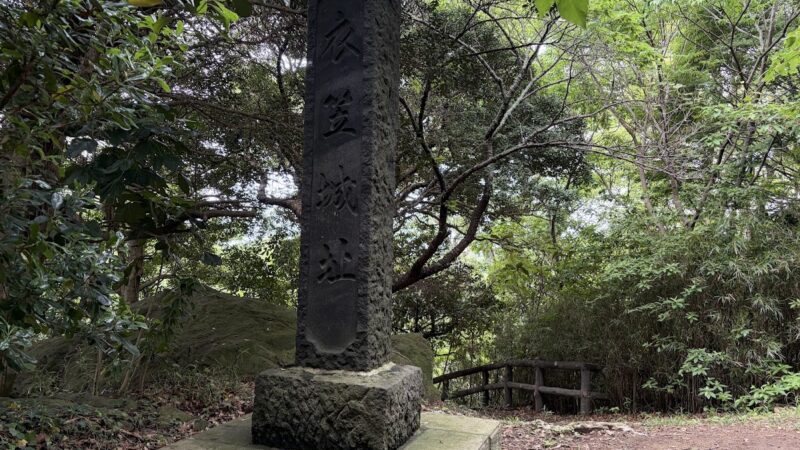
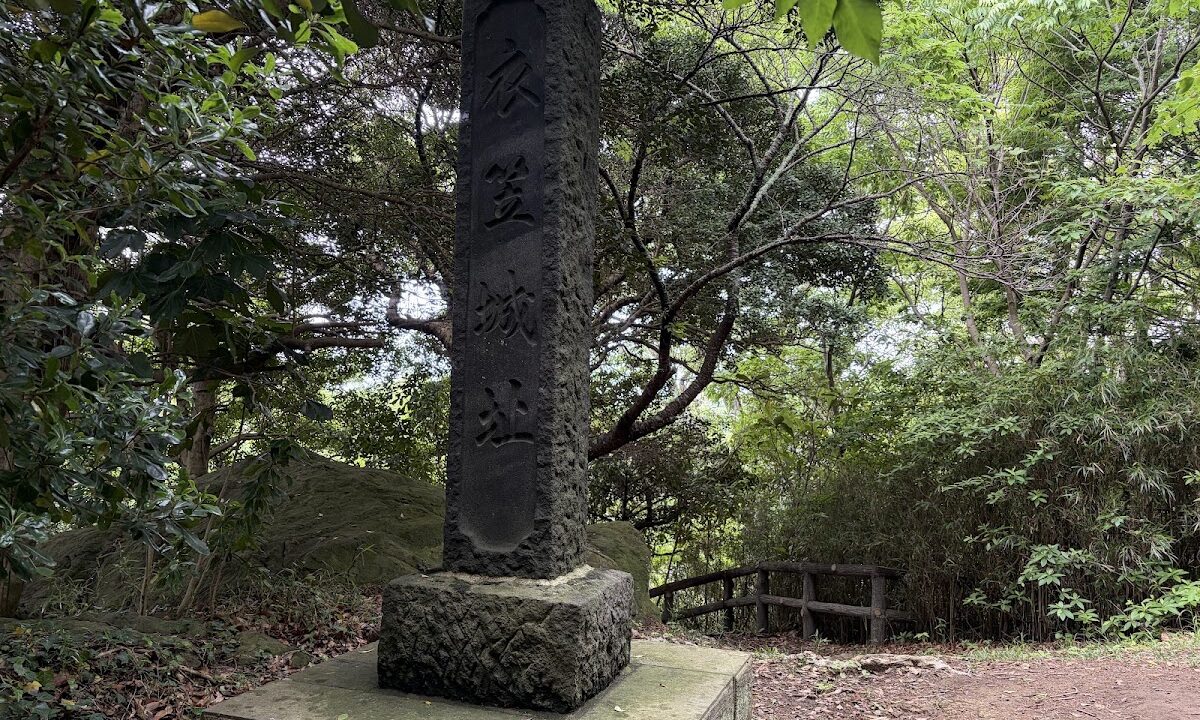
Stone Monument: A stone monument inscribed “Kinugasa Castle Site” stands at the castle ruins, signifying its historical significance.
Related Historical Sites in the Surrounding Area
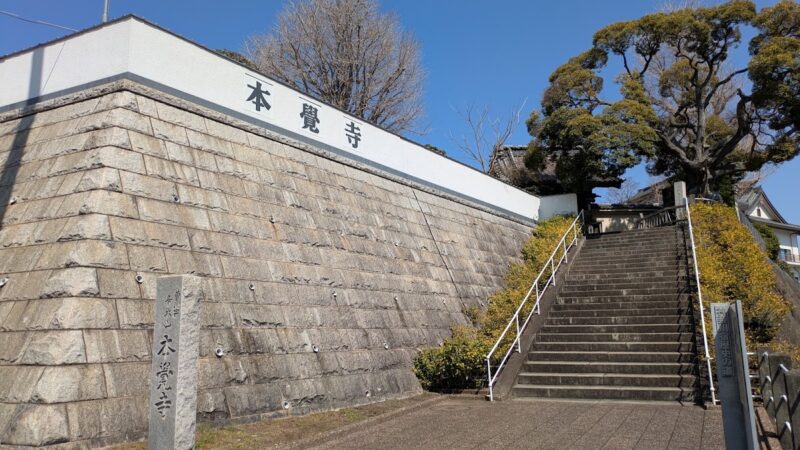
Daizenji Temple: A Soto Zen temple located at the main entrance to Kinugasa Castle, believed to have functioned as a defensive base for the castle. A path leading to the castle ruins continues from the temple grounds.
Manshoji Temple: A temple built by Minamoto no Yoritomo to commemorate Miura Yoshiaki, located approximately 1 kilometer from Kinugasa Castle. It houses the burial grounds of the Miura clan, and a memorial tower for Yoshiaki has also been erected.
Training Ground Site: This is a flat area south of the castle, said to be where the retainers of the Miura clan practiced martial arts.
Scope and Interpretation of “Kinugasa Castle”
Scope of the Castle Area
There are some differences of opinion among researchers regarding the scope of Kinugasa Castle. In a narrow sense, it refers to the mountaintop area behind Daizenji Temple, but in a broader sense, the entire Miura clan base, including surrounding forts and residences, is sometimes referred to as “Kinugasa Castle.”
Archaeological investigations suggest that the mountaintop area, centered around the main enclosure, was the core castle facility, and that it formed a defensive network together with the residence area at the foot of the mountain and the surrounding subsidiary castles.
Mountain Castle or Hilltop Castle?
Kinugasa Castle is generally classified as a “mountain castle,” but some consider it a “hilltop castle” due to its relatively low elevation of approximately 35 meters. However, considering the surrounding topography and defensive structure, it can be said to be a castle with strong characteristics of a mountain castle.
Access and Tourist Information
Transportation Access
Access by Train:
- Get off at Kinugasa Station on the JR Yokosuka Line, approximately 20 minutes on foot.
- The easiest route is to head towards Daizenji Temple from Kinugasa Station.
Access by Bus:
- Get off at the Kinugasa Castle Ruins bus stop on the Keikyu Bus, approximately 15-20 minutes on foot.
- From the bus stop, head towards Daizenji Temple, passing through a residential area.
Access by Car:
- Approximately 5 minutes from the Kinugasa Interchange on the Yokohama-Yokosuka Expressway.
- There is no dedicated parking lot, but there are some parking spaces around Daizenji Temple (for visitors).
Points to Note During Your Visit
Estimated Time Required: Allow approximately 1 to 1.5 hours to visit the castle ruins. Including nearby historical sites such as Manshoji Temple, a 2-3 hour visit is possible.
Clothing and Equipment: As this is a mountain castle, comfortable walking shoes and clothing are essential. In summer, bring insect repellent and drinking water.
Viewing Route: The general route is to visit Daizenji Temple → Fudo Well → Main Enclosure → Rear Gate → Water-Eating Well.
Best Season: Spring (cherry blossom season) and autumn (autumn foliage season) are especially recommended. In summer, vegetation can make it difficult to see the remains.
Points to Note When Visiting
- The castle ruins are located in a forest, so the ground can become slippery during and after rain.
- There are some steep slopes, so those who are not confident in their physical strength should not overexert themselves.
- Some areas may include private property, so please observe proper etiquette while visiting.
- Please be careful not to damage the ruins or litter.
Nearby Tourist Attractions
Manshoji Temple
Manshoji Temple, located about a 15-minute walk from Kinugasa Castle, is a temple founded in 1194 by Minamoto no Yoritomo to commemorate Miura Yoshiaki. The temple grounds contain the burial grounds of the Miura clan, with a memorial tower for Yoshiaki and tombstones of successive generations of the Miura family.
The temple’s treasure hall displays valuable materials related to the Miura clan, making it worthwhile to visit for a deeper understanding of the history of Kinugasa Castle.
Other Castle Ruins in Yokosuka City
In addition to Kinugasa Castle, several other castle ruins remain on the Miura Peninsula.
Uraga Castle: A castle located overlooking Uraga Port, it was one of the branch castles of the Miura clan.
Misaki Castle: A castle built in Misaki, at the southern tip of the Miura Peninsula, it functioned as a naval base for the Hojo clan.
Sahara Castle: The residence of the Sahara clan, a branch of the Miura clan, it played an important role as a branch castle of Kinugasa Castle.
Visiting these castle ruins will allow you to understand the medieval history of the Miura Peninsula in a more comprehensive way.
Yokosuka City Museum of Nature and Humanities
This museum, within walking distance of Kinugasa Station, features exhibits on the history and nature of the Miura Peninsula. It also displays materials related to Kinugasa Castle and the Miura clan, and is recommended to visit before or after visiting the castle ruins.
Cultural Value of Kinugasa Castle
Importance as a Yokosuka City Designated Historic Site
The Kinugasa Castle ruins are protected as a Yokosuka City designated historic site and are highly regarded as a representative example of medieval castles on the Miura Peninsula. The site’s cultural value is particularly recognized for the following reasons:
- Headquarters of the Miura Clan: It was the central base of the Miura clan, who played a crucial role in the establishment of the Kamakura Shogunate.
- Well-preserved Remains: Remains such as baileys, wells, and earthworks are well-preserved.
- Site of a Historical Event: It was the site of the important historical event, the Battle of Kinugasa.
- Symbol of Local History: It is a historical site symbolizing the history of Yokosuka City and the Miura Peninsula.
Efforts for Preservation and Utilization
Yokosuka City is actively working on the preservation and utilization of the Kinugasa Castle ruins. Regular mowing and maintenance of the remains are carried out, creating an environment where visitors can safely visit.
Furthermore, investigations and research by local history enthusiasts and castle researchers are continuously conducted, accumulating new discoveries and knowledge. In recent years, the creation of castle reconstruction drawings using digital technology has also been advanced.
The Relationship Between the Miura Clan and Minamoto no Yoritomo
Deep Ties with the Minamoto Clan
The relationship between the Miura clan and the Minamoto clan began when Miura Tamemichi distinguished himself in battle during the Former Nine Years’ War, serving under Minamoto no Yoriyoshi. Thereafter, the Miura clan served as powerful retainers of the Minamoto clan for generations, playing a particularly important role during Minamoto no Yoritomo’s uprisings.
In 1180, when Yoritomo raised an army in Izu, Miura Yoshizumi attempted to join him with his family, but was unable to participate in the Battle of Ishibashiyama due to flooding of the Sakawa River. This delay ultimately allowed the Miura clan to survive, enabling them to join Yoritomo after the Battle of Kinugasa.
The Miura Clan in the Kamakura Shogunate
After the establishment of the Kamakura Shogunate, the Miura clan held significant influence as a powerful retainer. Miura Yoshizumi served as a close confidant of Yoritomo, and his son, Yoshimura, also participated in important political decisions of the shogunate. Wada Yoshimori was appointed the first head of the Samurai-dokoro (Board of Retainers) and played an active role at the heart of the samurai government.
However, in the power struggle following the Jokyu War, conflict with the Hojo clan intensified in 1247, leading to the downfall of the Miura clan in the Hoji War. Many members of the Miura family were killed in this battle, marking the end of the era of the Miura clan, who were based at Kinugasa Castle.
Archaeological Survey of Kinugasa Castle
Results of Excavation Surveys
Multiple archaeological surveys have been conducted at the Kinugasa Castle site, confirming medieval artifacts and structures. Excavated artifacts include earthenware plates, Chinese ceramics, and iron products, providing evidence of the castle’s use from the 12th to the 15th centuries.
Of particular note are the artifacts from the late 12th century unearthed around the main enclosure. This coincides with the period of the Kinugasa War, making it a valuable example where historical documents and archaeological evidence align. ### Castle Layout Survey
Recent castle layout surveys (detailed investigations of the castle’s structure) have clarified the defensive structure of Kinugasa Castle. The arrangement of baileys, the relative positions of earthworks and moats have been meticulously recorded, making it important material for the study of medieval castles.
These survey results confirm that Kinugasa Castle was not merely a residence, but a full-fledged mountain castle designed for actual combat.
Significance of Visiting Kinugasa Castle
As a Place for Historical Learning
Kinugasa Castle ruins are an excellent place to learn about Japanese medieval history, particularly the history from the Genpei War to the establishment of the Kamakura Shogunate. Visiting places where historical figures such as Minamoto no Yoritomo and Miura Yoshiaki, who appear in textbooks, were actually involved deepens one’s understanding of history.
It is also used as a site for school education; local elementary and junior high schools provide opportunities to visit Kinugasa Castle ruins as part of their local history studies.
Attractiveness for Castle Enthusiasts
For castle enthusiasts, Kinugasa Castle is an attractive spot for the following reasons:
- You can observe the well-preserved remains of a medieval mountain castle.
- It is a rare castle site with multiple existing wells.
- It is a castle with abundant historical documents and archaeological evidence.
- By visiting it together with other castle sites on the Miura Peninsula, you can understand the regional castle network.
Interacting with Nature
Kinugasa Castle Ruins, while close to the city, retains abundant nature and can be enjoyed as a place for hiking and nature observation. Enjoying the changing seasons—cherry blossoms in spring, fresh greenery in early summer, and autumn leaves in fall—while strolling through history is one of its charms.
Summary
Kinugasa Castle in Yokosuka City, Kanagawa Prefecture, is an important mountain castle that served as the base of the Miura clan and was the stage for history for approximately 500 years. From its construction in 1062, through the Battle of Kinugasa in 1180, and throughout the Kamakura period, this castle functioned as the political and military center of the Miura Peninsula.
Even today, the remains of the castle, such as the baileys, wells, and earthworks, are well-preserved, making it a valuable historical site for learning about the structure of medieval castles. Its convenient accessibility on foot from Kinugasa Station is also a major draw, making it popular not only with history buffs but also with hikers and nature lovers.
Kinugasa Castle is steeped in numerous dramas that color Japanese history, including the deep bond between Minamoto no Yoritomo and the Miura clan, the tragic end of Miura Daisuke Yoshiaki, and its contribution to the establishment of the Kamakura Shogunate. When visiting Yokosuka City, be sure to visit this historically romantic castle site. Combining it with a visit to the nearby Manshoji Temple and other castle ruins on the Miura Peninsula will allow you to experience the history of the Miura Peninsula in medieval times even more deeply.