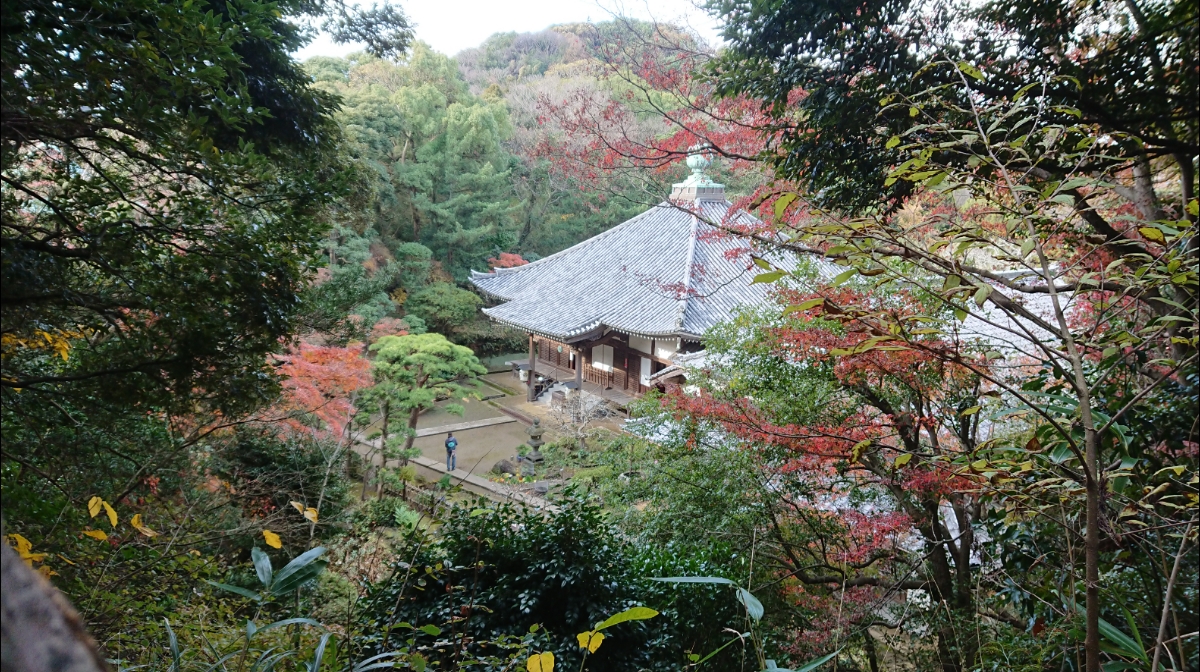
Jinmuji Castle, Zushi City, Kanagawa Prefecture | A Thorough Explanation of the History of a Key Defense Point in Kamakura and an Ancient Tendai Sect Temple
Located in Zushi City, Kanagawa Prefecture, Jinmuji Castle is a medieval castle that played a crucial role as a defensive base during the Kamakura period. It possesses a unique historical landscape integrated with Jinmuji Temple, an ancient Tendai sect temple, and attracts attention from history enthusiasts and castle fans as a valuable historical site that conveys the Kamakura Shogunate’s defense strategy.
What is Jinmuji Castle? – The Front Line of Kamakura Defense
Jinmuji Castle was a defensive base built by the Kamakura Hojo clan to prepare for invasions by the Miura clan of the Miura Peninsula. It functioned as an outpost defending the Nagoe Pass, one of the “Seven Passes of Kamakura” protecting the Kamakura Shogunate.
Discovery of the Castle Structure and Historical Value
From 1981 (Showa 56) to the following year, an archaeological excavation survey was conducted by the Zushi City Board of Education. This investigation revealed the existence of a clear castle structure within the grounds of Jinmuji Temple, proving it was not merely a temple but a complex facility with military functions.
The investigation confirmed the remains of earthworks, moats, and baileys, revealing a defensive system characteristic of a medieval castle. As a result, Jinmuji Castle is being re-evaluated as an important historical site exhibiting a unique castle form of the Kamakura period, where religious and military facilities were integrated.
Defense of the Seven Passes of Kamakura and the Nagoe Pass
Kamakura was a natural stronghold surrounded by mountains on three sides, with limited access to the outside world via mountain passes called kiridoshi. The Nagoe Pass, defended by Jinmuji Castle, was a crucial point for monitoring incursions from the Miura Peninsula.
The Kamakura Shogunate constructed a multi-layered defense system for the capital by placing fortresses at these passes. Jinmuji Castle was located on the front lines, playing a role in monitoring the movements of powerful samurai families, including the Miura clan.
History of Jinmuji Temple – An Ancient Temple Dating Back to the Nara Period
Jinmuji Temple, which formed the foundation of Jinmuji Castle, is an ancient Tendai sect temple said to have been founded in 724 AD (Shinki 1).
Founded by Gyoki Bodhisattva
According to its history, in 724 AD (Shinki 1), Gyoki Bodhisattva founded the temple as a prayer hall at the request of Emperor Shomu. Gyoki is said to have carved and enshrined statues of the Eleven-Faced Kannon, Yakushi Nyorai, and Shakyamuni Buddha, and founded Jinmuji Temple as a place to pray for the Emperor’s well-being, peace throughout the world, and prosperity for all people.
Its official name is “Iōzan Raigōin Jinmuji,” and the mountain name Iōzan derives from the fact that Yakushi Nyorai is the principal deity.
Restoration by Ennin and the Heian Period
During the Heian period, it is said that Jinmu-ji Temple was restored by Ennin (Jikaku Daishi), a high-ranking priest of the Tendai sect. Ennin, as the third head priest of the Tendai sect, dedicated himself to its development, and Jinmu-ji Temple was established as an important center of the Tendai sect.
Prosperity in the Kamakura Period – Minamoto no Sanetomo’s Pilgrimage
The entry for May 15, 1209 (Jogen 3) in the *Azuma Kagami* records that Minamoto no Sanetomo, the third shogun of the Kamakura shogunate, visited “Jinmu and Iwadono Kannon-do.” This “Jinmu” is believed to refer to Jinmu-ji Temple, indicating that it was a temple of such high status that even a shogun of the Kamakura shogunate would visit it directly.
Minamoto no Yoritomo and Hojo Masako also devoutly worshipped there, and the temple prospered as a temple with deep ties to the Kamakura shogunate. It is believed that during this period, in addition to its function as a temple, defensive functions as a castle were added.
Highlights of Jinmuji Castle and Jinmuji Temple
The Jinmuji Castle ruins and Jinmuji Temple retain numerous historically valuable buildings and natural features.
Yakushido Hall (Kanagawa Prefecture Designated Important Cultural Property)
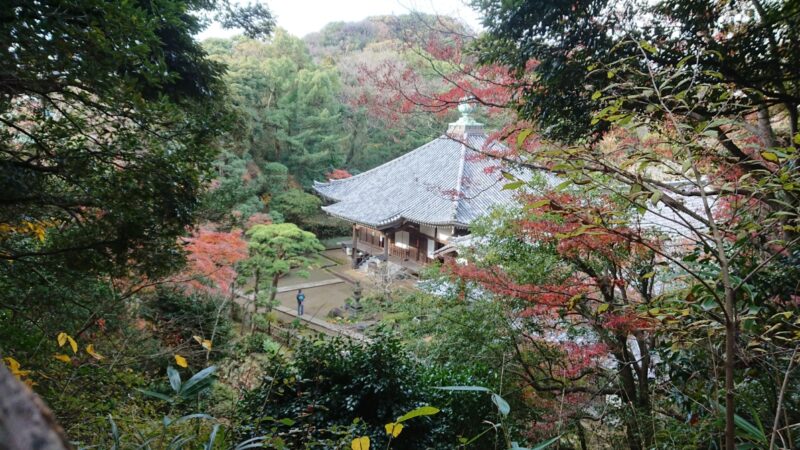
The Yakushido Hall of Jinmuji Temple is a valuable building designated as an Important Cultural Property of Kanagawa Prefecture. It has also been selected as one of Kanagawa’s 100 Best Buildings, and it preserves architectural styles from the medieval to early modern periods.
The Yakushido Hall houses the principal image, Yakushi Nyorai (Medicine Buddha), and has long attracted worshippers seeking healing from illness and prayers for good health. The hall also houses Fudo Myoo and the Yakushi Triad (both designated Important Cultural Properties of Zushi City).
Cultural Properties and Buddhist Statues
Jinmuji Temple houses numerous valuable cultural properties.
- Daiitoku Myoo (Great Wisdom King) Painting (Kanagawa Prefecture Designated Cultural Property)
- Senju Kannon Bodhisattva Statue (Kanagawa Prefecture Designated Cultural Property)
- Fudo Myoo (Acala) Statue (Zushi City Designated Important Cultural Property)
- Yakushi Triad Statue (Zushi City Designated Important Cultural Property)
These Buddhist statues and paintings represent the pinnacle of Buddhist art from the Kamakura to Muromachi periods and hold high historical value in art history.
Miroku Yagura
Within the temple grounds is a horizontal cave called “Miroku Yagura.” Yagura are a type of burial system unique to the Kamakura area, tombs carved into tuff cliffs. The yagura at Jinmuji Temple is believed to have been used as a burial place for samurai and monks during the Kamakura period.
Nanjamonja Tree (Ilex crenata)
The most famous natural heritage at Jinmuji Temple is a giant Ilex crenata tree over 400 years old. Locally known affectionately as the “Nanjamonja Tree,” this tree is one of Kanagawa Prefecture’s 100 Famous Trees.
The Japanese holly (Ilex crenata) is a warm-climate evergreen tree, a rare species in this region. Its trunk circumference can reach several meters, and its majestic presence overwhelms visitors. It bears small white flowers in spring and dark purple berries in autumn.
Temple Grounds and Natural Environment
The temple grounds of Jinmuji Temple cover approximately 13 hectares and retain a strong sense of its mountain temple past. It is designated as one of Kanagawa Prefecture’s 50 Scenic Spots, Kanagawa Prefecture’s 50 Beautiful Forests, and Kanagawa Prefecture’s 50 Scenic Spots, and is highly regarded for its natural environment.
Similar to Mount Takatori, the surrounding area is surrounded by Neogene tuff rock formations, and its location within the forest creates a unique environment with low temperatures and high relative humidity. This makes it a rich habitat for ferns and insects, a treasure trove of biodiversity.
Zushi’s Eight Scenic Views: “The Evening Bell of Jinmuji Temple”
The bell of Jinmuji Temple is selected as one of the Eight Scenic Views of the Miura Peninsula, “The Evening Bell of Jinmuji Temple,” and is also counted as one of the Eight Scenic Views of Zushi. The sound of the bell ringing at dusk has long been a familiar sight to the local people.
Jinmuji Temple appears in the lyrics of the Zushi City Song, along with Hiroyama Mountain and Tagoe River, and is loved by the citizens as a representative scenic spot of Zushi City.
Visiting the Castle Ruins
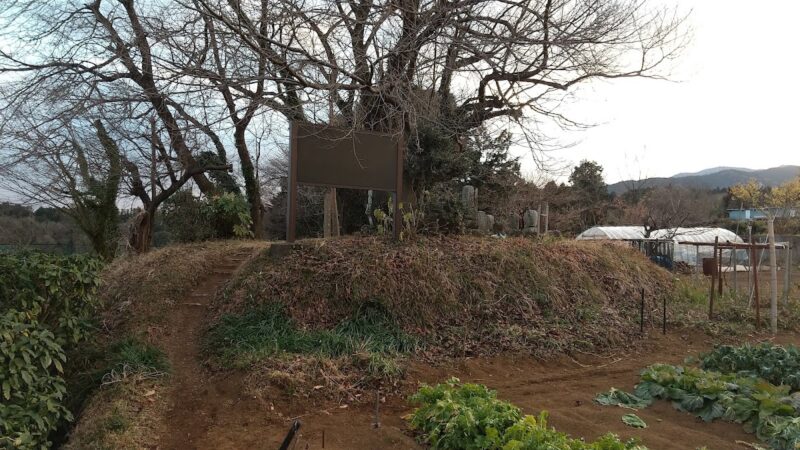
The remains of Jinmuji Castle are scattered throughout the temple grounds. In particular, traces of defensive structures such as baileys, earthworks, and moats can be seen in the mountainous area behind the temple.
As you climb the mountain path, you will see the castle structure that skillfully utilizes the natural terrain. The steep terrain itself functions as a defensive structure, allowing you to experience medieval castle construction technology.
Access Information – How to Get to Jinmuji Castle and Jinmuji Temple
Address
2-1402 Numama, Zushi City, Kanagawa Prefecture
Access by Train
From JR Yokosuka Line “Higashi-Zushi Station”
- Approximately 25 minutes on foot
- Head northeast from the station, pass through the residential area, and enter the mountain path.
From Keikyu Zushi Line “Jinmuji Station”
- Approximately 20 minutes on foot
- Although the station name includes “Jinmuji,” Higashi-Zushi Station may actually be closer.
- Follow the signs from the station.
Access from the Kanto area is approximately 40 minutes from Yokohama Station on the JR Yokosuka Line, and approximately 1 hour and 15 minutes from Tokyo Station.
Access by Car
Approximately 10 minutes from Yokohama-Yokosuka Expressway “Zushi IC”
*There is a parking lot on the temple grounds, but the number of spaces is limited, so we recommend using public transportation.
Visiting Hours and Admission Fee
- Visiting Hours: Grounds are freely accessible (please check in advance for viewing the interiors of buildings such as the Yakushido Hall)
- Admission Fee: Free (additional fees may apply during special viewings)
*Please note that entry to the temple grounds may be restricted due to weather or temple events; it is recommended to check in advance.
Attractions Around Jinmuji Castle and Jinmuji Temple
Nagoe Pass
Nagoe Pass, which was defended by Jinmuji Castle, is designated as a national historic site and one of the seven passes of Kamakura. It is within walking distance of Jinmuji Temple and still conveys the atmosphere of an ancient road from the Kamakura period.
Sheer cliffs rise on both sides of the pass, allowing you to experience its function as a medieval defensive structure. It is also a well-maintained hiking course, making it ideal for historical walks.
Takatori Mountain
Takatori Mountain, located near Jinmuji Temple, is a low mountain at 139 meters above sea level, but is known for its rocky terrain and magnificent views. Near the summit is a giant rock-carved Buddha, making it a popular tourist spot often visited in conjunction with Jinmuji Temple.
Hiroyama Park
A representative scenic spot in Zushi City, it boasts an observation deck offering panoramic views of Sagami Bay and Mount Fuji. Located about 15 minutes by car from Jinmuji Temple, it’s conveniently combined with sightseeing in the Zushi and Hayama area.
Zushi Beach and Zushi Marina
In contrast to the mountain worship atmosphere of Jinmuji Temple, Zushi Beach and Zushi Marina offer a Shonan resort feel. A recommended itinerary involves enjoying marine sports and relaxing on the beach before taking a historical stroll at Jinmuji Temple.
Points to Note When Visiting Jinmuji Castle
Clothing and Equipment
Visiting the remains of Jinmuji Castle involves walking along mountain paths. Please prepare the following equipment.
- Comfortable athletic shoes or trekking shoes
- Comfortable clothing
- Drinking water
- Insect repellent spray (Summer)
- Rain gear (During periods of unpredictable weather)
Best season for visiting
Jinmuji Temple is beautiful in every season, but the following times are especially recommended:
- Spring (April-May): Beautiful fresh greenery and the flowers of the Japanese holly are also enjoyable.
- Autumn (November-December): The autumn leaves are at their peak, and the temple grounds are ablaze with color.
- Winter (January-February): The air is clear, the views are excellent, and you can enjoy a peaceful visit.
Summer is humid and there are many insects, so be sure to take thorough insect repellent measures.
Visiting Etiquette
Jinmuji Temple is a temple that still functions as a place of worship. Please observe the following etiquette when visiting.
- Maintain silence
- Photography is permitted only in designated areas
- Unauthorized entry into buildings is prohibited
- Please take all your trash with you
- Collection of plants and animals is strictly prohibited
Historical Significance and Modern Value of Jinmuji Castle
Jinmuji Castle is a valuable historical site that exhibits a unique form of castle architecture characteristic of medieval Japan, where religious and military facilities were integrated. As a structure that concretely demonstrates the defense strategy of the Kamakura Shogunate, it occupies an important position in the study of Japanese castle history.
Position in Castle History
Unlike the early modern castles of the Sengoku period, which had stone walls, medieval castles primarily utilized earthworks, moats, and natural terrain for defense. Jinmuji Castle is a typical example of such a medieval castle, and also possesses the unique characteristic of being a complex facility with a temple.
While examples of temples possessing fortified features are not uncommon in large mountain temples such as Enryaku-ji Temple on Mount Hiei and Kongobu-ji Temple on Mount Koya, examples of medium-sized regional temples like Jinmuji Castle with a clearly defined castle structure are rare.
Importance in Regional History
Jinmuji Castle is an important historical site that tells the story of the relationship between Kamakura and the Miura Peninsula, and the conflict between the Hojo and Miura clans. It is indispensable for understanding the role this region played in the process from the establishment to the fall of the Kamakura Shogunate.
For Zushi City, Jinmuji is one of the most important spots symbolizing the city’s history and culture, and is part of the citizens’ identity, even being sung about in the city anthem.
Utilization as a Tourism Resource
In recent years, with the growing interest in historical tourism, Jinmuji Castle has attracted attention from castle enthusiast communities such as “Kojodan” (Castle Attack Group). It has also received high praise in the “100 Castle Lords” list, making it a popular tourist spot visited by castle fans nationwide.
In the tourism promotion efforts of Zushi City and Kanagawa Prefecture, Jinmuji Temple is positioned as an important tourist resource and is actively featured on official tourism websites such as “Kanagawa Tourism NOW.”
Summary – Experience the Charm of Jinmuji Castle
Jinmuji Castle, located in Zushi City, Kanagawa Prefecture, is a historically and culturally valuable site integrated with Jinmuji Temple, an ancient temple founded in the Nara period. The unique landscape, a fusion of the remains of a medieval castle that functioned as a defensive base for the Kamakura Shogunate and a temple with a 1300-year history since its founding by Gyoki, offers an unparalleled charm.
There are also many other attractions, including a 400-year-old Nanjamonja tree, the Yakushido Hall (a prefecturally designated important cultural property), and the temple grounds selected as one of Kanagawa’s 50 most beautiful forests. It can be visited on a day trip from the Kanto area and can be combined with sightseeing in Kamakura.
Jinmuji Castle is worth visiting for a variety of reasons, whether you’re a history buff, a castle enthusiast, someone who wants to enjoy nature, or simply someone seeking tranquility in a peaceful temple. We highly recommend experiencing its history and natural beauty for yourself.
*Please check the latest opening hours and event information before your visit.