Iwatsurugi Castle (Aira City, Kagoshima Prefecture) Complete Guide | History and Highlights of the Shimazu Brothers’ First Battle
What is Iwatsurugi Castle?
Iwatsurugi Castle (Iwatsurugi-jo) is a medieval mountain castle located in Hiramatsu, Aira City, Kagoshima Prefecture. It is also known as “Iwakenjo” or “Hiramatsu Castle.” Built on a mountaintop approximately 225 meters above sea level, this castle is known as a strong fortress, utilizing the steep terrain with a relative height of approximately 200 meters.
It functioned as an important strategic castle in the Osumi region, and in particular, the battle of 1554 (Tenbun 23) was a historical stage where the three Shimazu brothers—Shimazu Yoshihiro (later feared as “Oni Shimazu”), Shimazu Yoshihisa, and Shimazu Toshihisa—all fought their first battles. This battle holds extremely important significance in the history of the Shimazu clan and is one of the notable battles in the history of Japan’s Sengoku period.
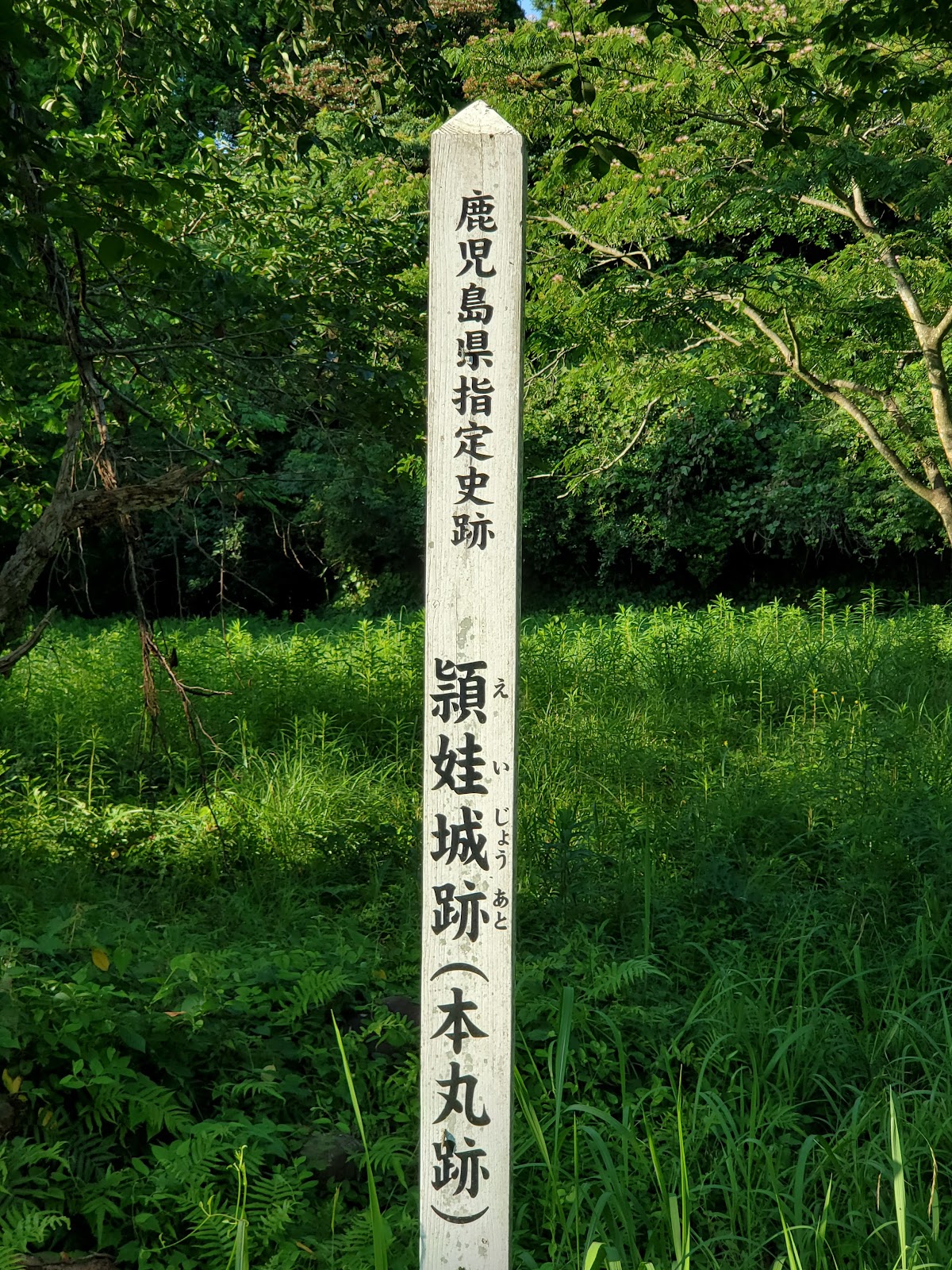
Currently, the Iwaken Castle ruins are designated as a historical site by Aira City, and the remains of the castle, including stone walls, earthworks, baileys, and moats, are well-preserved. It is a popular historical site for castle enthusiasts and history buffs, offering a valuable opportunity to experience the appearance of a mountain castle from the Sengoku period.
History of Iwaken Castle
Background of Construction and Lords
While there are various theories regarding the exact construction date of Iwaken Castle, it is believed to have existed as early as the Sengoku period. This region was a strategic point in Osumi Province, located at a key transportation hub connecting Kajiki and Kokubu.
The castle was managed under a garrison system, with Shimazu clan retainers taking turns defending it. Due to its steep terrain and clever layout, it functioned as a strong fortress capable of being defended even by a small number of soldiers.
The Battle of 1554 | The Shimazu Brothers’ First Battle
The most important event that etched the name of Iwakenzō Castle into history was the battle that took place in 1554. That year, Gamō Norikiyo, in alliance with the Kedoin clan and others, rebelled against the Shimazu clan and attacked Kajiki Castle, defended by Kimotsuki Kanenori, a Shimazu ally.
In response to this crisis, Shimazu Takahisa sent his three sons into battle. The three brothers—the eldest son, Shimazu Yoshihisa (then 20 years old), the second son, Shimazu Yoshihiro (then 19 years old), and the third son, Shimazu Toshihisa (then 18 years old)—all faced their first battle.
The battle for Iwakenzō Castle was fierce, and is also known for the use of firearms. This occurred just 11 years after the introduction of firearms to Japan (1543), making it a noteworthy example in military history as an early instance of firearm use in Kyushu.
The three young brothers achieved a magnificent victory in their first battle, and this experience became the foundation for the Shimazu clan’s later remarkable development. Shimazu Yoshihiro, in particular, later became a fearsome general known as “Oni Shimazu” (Demon Shimazu), famous for numerous military achievements, including the “Shimazu retreat” at the Battle of Sekigahara.
Subsequent History
Even after the battle of 1554, Iwaken Castle continued to function as an important base for the Shimazu clan in the Osumi region. A defensive system based on garrisons was maintained, playing a role in preserving the military balance of the region.
With the end of the Sengoku period, like many mountain castles, Iwaken Castle gradually ceased its military role and was abandoned. However, the castle remains are well-preserved, conveying the appearance of a Sengoku-era mountain castle to this day.
Structure and Layout of Iwaken Castle
Overall Layout
Iwaken Castle is a mountain castle of the Renkuruwa style, with multiple baileys (enclosures) arranged along the ridge, centered on the mountaintop at an altitude of approximately 225 meters. The castle’s robust structure makes full use of its steep terrain, with a relative elevation of approximately 200 meters, combining natural fortifications with artificial defensive structures.
The main enclosure is at the center, with secondary enclosures positioned on both sides of the ridge. Each enclosure is demarcated by earthworks and trenches. To make intrusion from the foot of the mountain difficult, the approach to the castle was intentionally designed to be complex.
Major Remains
Stone Walls
One of the distinctive remains of Iwaken Castle is its stone walls. While examples of full-fledged stone walls are limited among medieval mountain castles in Kyushu, some stone masonry remains can be confirmed at Iwaken Castle. These stone walls were constructed using the nozurazumi technique, stacking natural stones, making them valuable resources for understanding stone wall construction techniques of the Sengoku period.
Earthworks
Earthworks surround each enclosure, enhancing its defensive capabilities. Many of the earthworks are about 1-2 meters high, and some remain in good condition. It is believed that fences and walls were erected on top of the earthworks, playing an important role in preventing enemy intrusion.
Enclosures (Kuruwa)
Several enclosures are arranged along the ridge, centered around the main enclosure. Each enclosure is relatively flat and is presumed to have been used as a building or troop station. The enclosures are clearly demarcated by moats and steep slopes, demonstrating defensive ingenuity throughout.
Moats
Moats dug to cut off the ridge are an important defensive feature of Iwaken Castle. Multiple moats have been identified, serving to prevent enemy intrusion. Some moats reach several meters in depth, demonstrating the advanced civil engineering technology of the time.
Layout Characteristics
While the layout of Iwaken Castle shares characteristics with mountain castles in the Osumi region, it also exhibits unique ingenuity. It is a defense-oriented design that takes advantage of the steep terrain, calculated to allow for effective defense even with a small number of troops.
The layout of the baileys, utilizing the ridgeline, excelled in both visibility and defense, allowing for early detection of enemy movements. Furthermore, the multi-layered defensive system using multiple trenches effectively halted enemy advances in stages.
Highlights of Iwakenjuku Castle
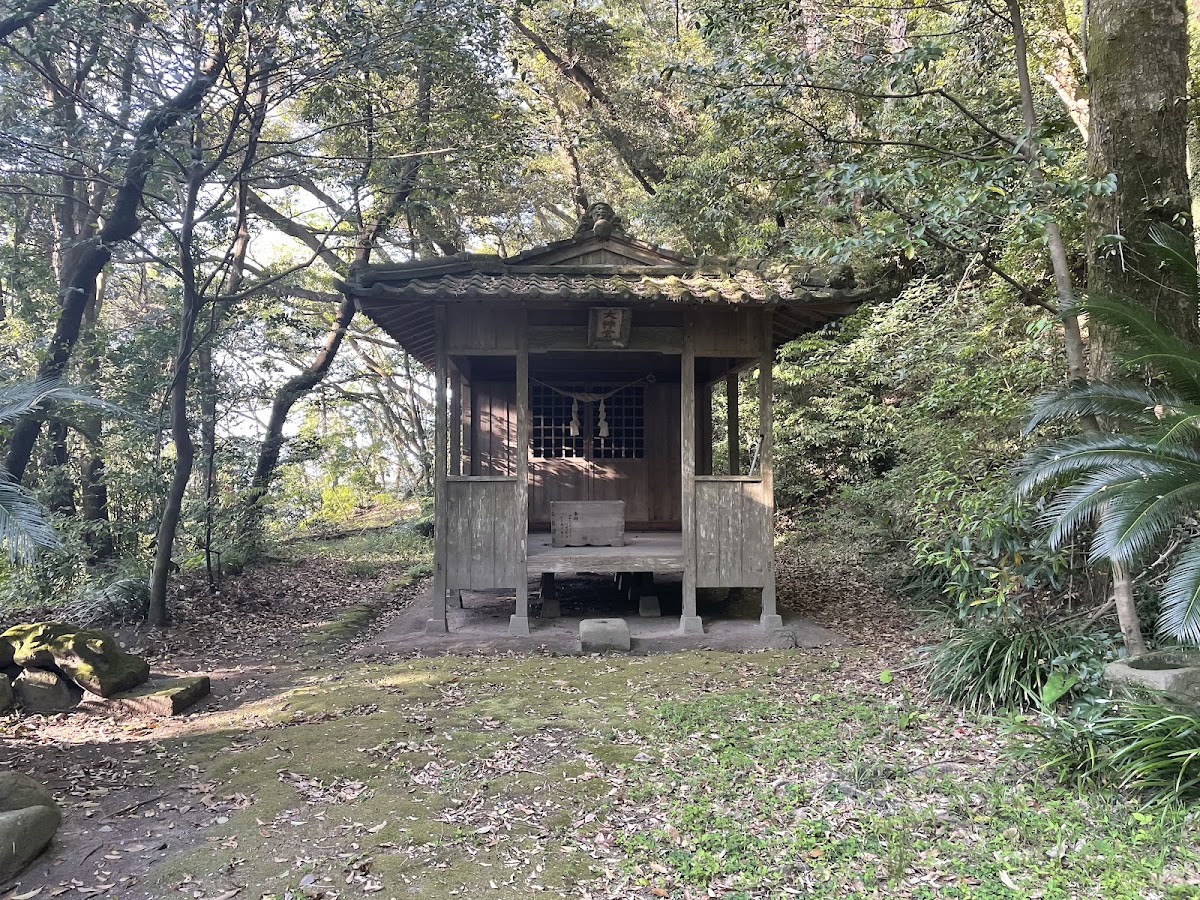
Iwakenjuku Shrine
Iwakenjuku Shrine, the starting point for exploring Iwakenjuku Castle, is an important point for exploring the castle ruins. An information board about Iwakenjuku Castle is installed within the shrine grounds, providing basic information about the castle’s history and structure.
The shrine grounds are enveloped in a tranquil atmosphere, allowing one to reflect on the history of the fierce battles that once took place here. The shrine itself has played an important role as a center of local faith.
Ascent Route and Mountain Path
The entrance to the hiking trail is located partway along the road leading up the mountain from beside the Iwakenjuku Shrine grounds. While some parts of the trail are not fully maintained, this allows for a stronger sense of the castle’s former atmosphere.
This mountain castle is located about 200 meters above sea level, but even beginner hikers can reach the summit in about an hour. However, some areas can be slippery, so appropriate equipment (such as trekking shoes) is recommended.
Remains of Stone Walls and Earthworks
As you proceed along the path to the castle, you can see the remains of stone walls and earthworks in various places. In particular, some of the stone masonry remains are valuable resources for understanding the development of stone wall technology in medieval mountain castles.
The earthworks remain in good condition around the baileys, allowing you to experience the defensive system of the time. The height and shape of the earthworks help to understand the castle’s high defensive capabilities.
View from the Main Enclosure
Upon reaching the main enclosure at the summit, you can enjoy a spectacular view of the Aira Plain and Kinko Bay stretching out below. This view gives a real sense of the castle’s strategic importance.
On a clear day, you can even see Sakurajima and the Kirishima mountain range in the distance, offering a panoramic view of the geographical features of the Osumi region. The former lords and soldiers likely monitored the surrounding area while gazing at this view.
Moats and Enclosures
The moats built along the ridge are the core of Iwaken Castle’s defensive system. Seeing the deeply excavated moats firsthand allows you to appreciate the high level of medieval castle construction technology.
The arrangement of multiple enclosures is also a highlight. The layout and shape of each enclosure reveal the skillful design of the castle’s fortifications.
Access Information
Access by Public Transportation
Train and Bus
- Get off at Shigetomi Station on the JR Nippo Main Line
- Take a bus from the station and get off at the Shigetomi-Fumoto bus stop
- Approximately 10-minute walk from the bus stop to the castle entrance (Iwaken Shrine)
If using public transportation, it is recommended to check the timetable in advance, as bus services are limited.
Access by Car
Using the Expressway
- Approximately 7 minutes from the Aira Interchange on the Kyushu Expressway
- Via National Route 10 to the Hiramatsu area
Parking
- Limited parking space available around Iwakengu Shrine
- Parking available for visitors (limited spaces available)
Location
〒899-5652 Shimoyamanoguchi, Hiramatsu, Aira City, Kagoshima Prefecture
Points to Note and Precautions for Visiting
Estimated Visiting Time
The standard visiting time for Iwakengu Castle is approximately 40 minutes to 1 hour. If you wish to carefully observe the remains and enjoy taking photographs, it is recommended to allow about 1 hour and 30 minutes.
Clothing and Equipment
- Shoes: Trekking shoes or non-slip athletic shoes are recommended.
- Clothing: Long sleeves and long pants are preferable (to prevent insect bites and cuts from branches).
- Items to Bring: Drinking water, towel, insect repellent spray, work gloves.
- Seasonal Attire: Hat and sunscreen in summer, warm clothing in winter.
Safety Precautions
- Watch Your Step: Some parts of the hiking trail are not well maintained and become especially slippery after rain.
- Avoid Solo Activities: Visiting in groups is safer whenever possible.
- Check the Weather: Avoid visiting in severe weather or when there is a risk of thunderstorms.
- Time Management: Allow ample time to descend before sunset.
- Wildlife: Be careful of venomous snakes such as pit vipers, and avoid carelessly entering grassy areas.
Photography Tips
- The stone walls and earthworks are most beautiful in the morning light.
- The view from the main enclosure is best enjoyed on a sunny day.
- Changing the angle of the photograph can convey the depth of the moat.
- Combining the information board and the ruins in a documentary photograph is also effective.
Nearby Tourist Spots
Kajiki Castle Ruins
Located approximately 5 kilometers from Iwaken Castle, Kajiki Castle Ruins was attacked by Gamo Norikiyo and others in the Battle of Tenbun 23 (1554). Visiting this castle, defended by Kimotsuki Kanenori, along with Iwaken Castle, will provide a deeper understanding of the overall picture of the battle at that time.
Aira City Historical and Folk Museum
This facility allows you to learn about the history and culture of Aira City, and exhibits materials related to Iwaken Castle. Visiting before or after visiting the castle ruins will allow you to gain deeper knowledge.
Ryumon Falls
A famous waterfall selected as one of Japan’s Top 100 Waterfalls, located approximately 20 minutes by car from Iwaken Castle. The magnificent waterfall, 46 meters high and 43 meters wide, is perfect for refreshing yourself after exploring the castle ruins.
Shigetomi Coast
This beautiful coastline faces Kinko Bay and offers close-up views of Sakurajima volcano. It’s a great spot to enjoy the nature of Aira, especially when visiting the castle ruins.
Cultural Property Designation of Iwakenjo Castle
The Iwakenjo Castle ruins are designated as a historical site by Aira City and are protected as an important cultural property of the region. The city’s designation ensures the preservation and proper management of the remains.
Further research could potentially lead to prefectural or national designation as a cultural property. Its historical significance as the site of the Shimazu brothers’ first battle and the well-preserved state of the remains contribute to its high value.
Current Status and Challenges of Iwakenjo Castle Research
Previous Research
Research on Iwakenjo Castle has been conducted by local historians and castle researchers. Through the creation of layout maps and on-site surveys of the remains, the overall picture of the castle is gradually becoming clear.
In particular, research on historical materials concerning the battle of Tenbun 23 (1554) is progressing and occupies an important position in the history of the Shimazu clan.
Future Challenges
On the other hand, detailed archaeological excavations have been limited, and many aspects of the castle’s construction date and specific structure remain unclear.
Future challenges include:
- Conducting Archaeological Excavations: Clarifying the detailed structure and age of the remains
- Deepening Historical Research: Unearthing historical materials concerning the castle lord and the management of the castle
- Preservation and Development Plan: Appropriate preservation of the remains and development of a suitable viewing environment
- Public Awareness Activities: Strengthening information dissemination to local residents and tourists
Significance of Visiting Iwakenjo Castle
Iwakenjo Castle is a historical heritage site with value beyond mere castle ruins. By visiting this site, you can gain the following experiences and learning opportunities:
Experience the History of the Shimazu Clan
As the site where the three Shimazu brothers, who would later become leading daimyo of Kyushu, fought their first battle, you can truly feel the history of the Shimazu clan. Especially for fans of Shimazu Yoshihiro, this is a valuable opportunity to visit the origins of this great general.
The Reality of a Medieval Mountain Castle
From the well-preserved remains, you can learn firsthand about the structure and function of a medieval mountain castle. Seeing the defensive structures such as stone walls, earthworks, and moats in person will deepen your understanding beyond what you can gain from textbooks.
The History and Culture of Osumi
Iwakengu Castle is a symbolic site of the history of the Osumi region. It provides important clues to understanding the unique history and culture of this region, as well as the regional developments during the Sengoku period.
Harmony with Nature
Due to its nature as a mountain castle, the remains are preserved within a rich natural environment. The ability to enjoy historical walks and nature observation simultaneously is one of the charms of Iwakengu Castle.
Summary
Iwaken Castle is a Sengoku period mountain castle located in Aira City, Kagoshima Prefecture. It is a historically significant fortress, being the site of the first battle fought by the Shimazu brothers, Yoshihisa, Yoshihiro, and Toshihisa. Utilizing its steep terrain at an altitude of 225 meters and a relative height of 200 meters, it was a formidable fortress that etched its name in history during the battle of 1554.
Even today, the remains of the castle, including stone walls, earthworks, baileys, and moats, are well-preserved, making it a valuable historical site where one can learn about the structure of a medieval mountain castle firsthand. It is designated as a cultural property by Aira City and protected as an important historical heritage site of the region.
Access is relatively good, by bus and on foot from JR Shigetomi Station, or by car in about 7 minutes from the Aira Interchange on the Kyushu Expressway. The visit takes approximately 40 minutes to 1 hour, and is accessible even for beginner hikers, but appropriate equipment and safety precautions are necessary.
A visit to Iwaken Castle offers a glimpse into the history of the Shimazu clan, the true nature of medieval mountain castles, and the culture of the Osumi region. It’s a fascinating historical site recommended not only for history buffs and castle enthusiasts, but also for anyone interested in the Sengoku period history of Kyushu.
Nearby attractions include the ruins of Kajiki Castle and Ryumon Falls, making it an area where you can fully enjoy the history and nature of Aira City. Be sure to allow ample time to fully appreciate the charm of this region.