Complete Guide to Kokubu Castle (Kirishima City, Kagoshima Prefecture): History and Highlights of Shimazu Yoshihisa’s Retirement Castle and Maizuru Castle
What is Kokubu Castle?: An Important Base in Osumi Province
Kokubu Castle is a Japanese castle located in Kokubu-chuo, Kirishima City, Kagoshima Prefecture. Also known as “Kokubu Shinjo,” “Kokubu Oyakata,” and “Maizuru Castle,” it is known as a flatland castle where Shimazu Yoshihisa, the 16th head of the Shimazu clan, moved from Tomikuma Castle around 1604.
Built in the center of the current Kokubu district of Kirishima City, this castle was not merely a military facility. While it served as Shimazu Yoshihisa’s retirement castle in his later years, it also functioned as an important base in Osumi Province under the Tokugawa shogunate after the Battle of Sekigahara.
Basic Information on Kokubu Castle
- Location: 2-chome, Kokubu-chuo, Kirishima City, Kagoshima Prefecture
- Other Names: Maizuru Castle, Kokubu Shinjo, Kokubu Oyakata
- Castle Structure: Flatland Castle
- Year of Construction: Around Keicho 9 (1604)
- Builder: Shimazu Yoshihisa
- Designer: Enatsu Tomokata (Naturalized from Ming China)
- Major Remains: Vermilion Gate (City-designated building), stone walls, moat
- Access: Approximately 15 minutes on foot from Kokubu Station on the JR Nippo Main Line
History of Kokubu Castle: The Shimazu Clan After Sekigahara and the Background of its Construction
Relocation from Tomikuma Castle to Kokubu Castle
Shimazu Yoshihisa originally resided at Tomikuma Castle, located along the coast. However, in the Battle of Sekigahara in 1600, the Shimazu army sided with the Western Army and suffered a defeat. Afterward, the need to prepare for an attack by the Eastern Army led by Tokugawa Ieyasu increased.
There were concerns that Tomikuma Castle, being close to the sea, was vulnerable to attacks from the sea. Therefore, Yoshihisa decided to build a new castle in a more inland location suitable for defense. That was Kokubu Castle.
Castle Design by Koka Tomokata
The castle design (layout) of Kokubu Castle was handled by a man named Koka Tomokata. He was a naturalized citizen from Ming China and belonged to the Kajiki-shu. It is possible that Ming Chinese castle construction techniques and ideas were incorporated into Japanese castle architecture at the time, and Kokubu Castle’s design exhibits unique characteristics.
Thanks to Koka Tomokata’s design, Kokubu Castle, while a flatland castle, achieved a “strong rear” defensive system by placing Hayato Castle, a mountain castle, on the mountain behind it. This combination of a flatland castle and a mountain castle is one of the characteristic techniques of castle design from the late Sengoku period to the early Edo period.
Shimazu Yoshihisa’s Later Years and Kokubu Castle
After Kokubu Castle was completed in 1604 (Keicho 9), Shimazu Yoshihisa spent his later years residing in this castle. Yoshihisa had already handed over the family headship to his younger brother, Shimazu Yoshihiro, and Kokubu Castle effectively served as his retirement castle.
At Kokubu Castle, Yoshihisa devoted himself to developing the castle town, reorganizing the previously impoverished village into a Kyoto-style grid pattern and inviting merchants from Ming China to create a “Chinese Town.” This urban planning led to Kokubu’s development as a commercial and cultural center in Osumi Province.
Shimazu Yoshihisa remained at Kokubu Castle until his death there in 1611 (Keicho 16). Kokubu Castle was the final residence of Yoshihisa, who lived to the remarkably old age of 79.
Kokubu Castle After Yoshihisa’s Death
After Shimazu Yoshihisa’s death, his daughter, Kamejuhime, continued to reside in Kokubu Castle. It is believed that Kamejuhime, like her father, spent her later years there.
Subsequently, Kokubu Castle was maintained as an important base for the Shimazu clan in Osumi Province, but it was never involved in large-scale battles throughout the Edo period. After the Meiji Restoration, it lost its function as a castle, but some remains still exist today.
Structure and Characteristics of Kokubu Castle
Kokubu Castle as a Flatland Castle
Kokubu Castle was built as a typical flatland castle. A flatland castle is a castle built on flat land, and compared to mountain castles and hill castles, it is characterized by superior habitability and convenience. This flatland castle form was very suitable for Kokubu Castle, which had the characteristics of a retirement castle.
The castle was surrounded by a moat, and its boundaries were clearly defined by stone walls. Even today, some remnants of the stone walls and moat can be seen.
Relationship with Hayato Castle: A Strong Rear Defense System
The most distinctive feature of Kokubu Castle is its “strong rear” defense system, which involved positioning Hayato Castle, a mountain castle, on the mountain behind it. Hayato Castle is located where the current Kokubu Castle Mountain Park stands, overlooking the town of Kokubu from a hill 192 meters above sea level.
While Kokubu Castle, being a flatland castle, offered superior habitability, its defenses were inferior to those of a mountain castle. Therefore, a strategy was adopted to enhance defenses by taking refuge in Hayato Castle in the event of emergency. This combination of a flatland castle and a mountain castle is a practical ingenuity seen in castle design at the end of the Sengoku period.
From Hayato Castle, one can enjoy a panoramic view of the Kirishima mountain range to the north, the majestic Sakurajima volcano and Kinko Bay to the south, and the town of Kokubu spread out below. This geographical advantage is the reason why Hayato Castle was chosen as a military surveillance and defensive base.
Development of the Castle Town: Kyoto-style Grid and Chinese Quarter
Shimazu Yoshihisa focused on developing the castle town along with the construction of Kokubu Castle. He laid a Kyoto-style grid of streets in what had previously been a small, impoverished village, carrying out planned urban development.
Furthermore, it is noteworthy that he invited merchants from the Ming Dynasty to create a “Chinese Quarter.” This demonstrates a part of the international exchange at the time and was a policy intended to develop Kokubu not merely as a military base, but as a center of commerce and culture. The existence of this Chinese Quarter is likely related to the fact that Enatsu Tomokata, a naturalized citizen from the Ming Dynasty, was in charge of the layout.
Highlights of Kokubu Castle: Existing Historical Remains
Shumon Gate (City-Designated Structure)
The most important existing structure at Kokubu Castle is the Shumon Gate. This gate is a designated structure of Kirishima City and is a valuable cultural asset that conveys the appearance of Kokubu Castle in its heyday.
The Shumon Gate is painted in a vibrant vermilion color, possessing both the dignity and beauty of castle architecture. It retains many characteristics of Edo period castle architecture, allowing visitors to experience the atmosphere of that time.
Visiting the Shumon Gate is one of the biggest highlights when visiting Kokubu Castle. It is also a popular photo spot, attracting many history enthusiasts and castle fans.
Stone Walls
The stone walls of Kokubu Castle are important remains that demonstrate the castle construction techniques of the early Edo period. Although some parts have been altered in later periods, sections remain that allow us to confirm the stonework techniques of that time.
The construction methods and stone selection of the stone walls may reflect the design philosophy of Tomonori Enatsu, and expert research is ongoing. For castle enthusiasts, observing the stone walls is an important clue to understanding the history of Kokubu Castle.
Moat
Kokubu Castle was surrounded by a moat. Even today, some remnants of the moat remain, allowing us to estimate the scale of the castle in its heyday.
The moat served not only as a defensive structure but also played a role in enhancing the beauty of the castle’s landscape. The reflection of the vermilion gate and stone walls on the water’s surface must have contributed to the elegant atmosphere of Kokubu Castle.
Relationship with Osumi Kokubunji Temple Ruins
Near Kokubu Castle are the ruins of Osumi Kokubunji Temple, built during the Nara period. A parking lot has been developed at the Osumi Kokubunji Temple ruins, making it a convenient base for visiting Kokubu Castle.
Osumi Kokubunji Temple is one of the Kokubunji temples built throughout Japan by order of Emperor Shomu, demonstrating the historical importance of Kokubu as the center of Osumi Province. The selection of Kokubu as the site for Kokubu Castle reflects its historical context as the center of Osumi Province since ancient times.
Kokubu Castle Hill Park (Hayato Castle Ruins): A Scenic Viewpoint
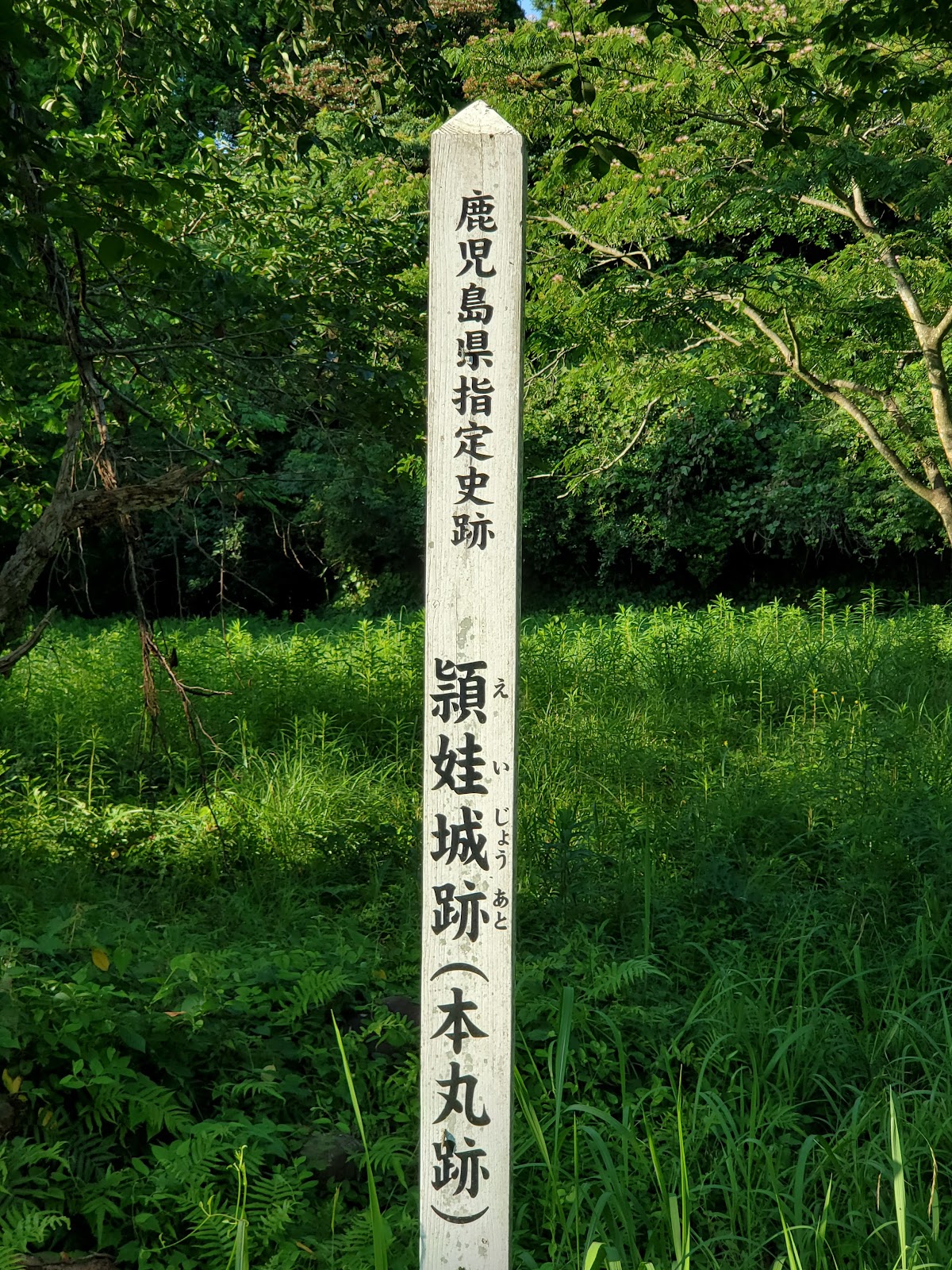
Located behind Kokubu Castle, the Hayato Castle ruins are now developed as “Kokubu Castle Hill Park.” Situated on a hill 192 meters above sea level, this park is a must-visit spot when visiting Kokubu Castle.
Views and Scenery
From Kokubu Shiroyama Park, you can enjoy a 360-degree panoramic view:
- North side: The majestic mountain range of Kirishima
- South side: The majestic figure of Sakurajima and the calm waters of Kinko Bay
- Below: The townscape of Kokubu
This spectacular view clearly illustrates the strategic location of Hayato Castle as a military observation post. On a clear day, you can see as far as the Osumi and Satsuma Peninsulas, making it easy to understand why the Shimazu clan considered this area so important.
Park Facilities
Kokubu Shiroyama Park has the following facilities that families can enjoy:
- Children’s playground
- Outdoor stage
- Go-kart track
- Ferris wheel
- Observation deck
Currently, it is a popular place for citizens to relax, and you can enjoy leisure activities in conjunction with historical walks.
Shimazu Yoshihisa and Kokubu Castle: The Later Years of a Famous Satsuma General
The Life of Shimazu Yoshihisa
Shimazu Yoshihisa (1533-1611) was the 16th head of the Shimazu clan, a Sengoku period daimyo who unified the three provinces of Satsuma, Osumi, and Hyuga, and was on the verge of conquering Kyushu.
Yoshihisa was known as an excellent strategist, and his retreat from the Battle of Sekigahara, famously known as the “Shimazu Retreat,” is considered one of the most noteworthy tactics in Japanese military history. However, it was actually his younger brother, Shimazu Yoshihiro, who fought at Sekigahara, while Yoshihisa himself remained in Satsuma.
Succession and Retirement
Shimazu Yoshihisa handed over the family headship to his younger brother, Shimazu Yoshihiro, in 1588 and retired. However, he continued to maintain substantial influence and played a crucial role in negotiations with Tokugawa Ieyasu after the Battle of Sekigahara.
Kokubu Castle was the setting for Yoshihisa’s retirement. Even amidst ongoing military tensions, Yoshihisa promoted cultural and commercial development in Kokubu, contributing to the stability and prosperity of Osumi Province.
Yoshihisa’s Legacy
The later years Shimazu Yoshihisa spent at Kokubu Castle were not merely retirement; they were a strategic period focused on the development of Osumi Province and the survival of the Shimazu clan. The Kyoto-style urban planning and the establishment of the Chinese Quarter demonstrate Yoshihisa’s forward-thinking vision.
After Yoshihisa’s death, the Shimazu clan continued as the Satsuma Domain throughout the Edo period, becoming a central force in the Meiji Restoration at the end of the Edo period. Shimazu Yoshihisa was one of the people who laid the foundation for this, and Kokubu Castle is a symbolic legacy of that.
Access and Tourist Information for Kokubu Castle
Transportation Access
Access by Train
- Approximately 15 minutes on foot from JR Nippo Main Line “Kokubu Station”
- Approximately 20 minutes by car from Kagoshima Airport
Access by Car
- Approximately 15 minutes from Kyushu Expressway “Mizobe Kagoshima Airport IC”
- Approximately 10 minutes from Higashi-Kyushu Expressway “Kokubu IC”
Parking
- Parking available at Osumi Kokubunji Temple Ruins Parking Lot
- Parking also available at Kokubu Castle Park
Points to Note During Your Visit
- Photographing the Vermilion Gate: The vermilion gate, a city-designated building, is a must-see. The morning light is ideal for taking beautiful photographs.
- Observing the Stone Walls and Moat: To understand the structure of the castle, carefully observe the construction of the stone walls and the layout of the moat.
- Visiting the Osumi Kokubunji Temple Ruins: Visiting the Osumi Kokubunji Temple Ruins in conjunction with Kokubu Castle allows you to experience the history of Kokubu from ancient times to the early modern period.
- Climbing to Kokubu Castle Hill Park (Hayato Castle Ruins): To understand the defensive structure of Kokubu Castle, visit the Hayato Castle Ruins (Kokubu Castle Hill Park) behind it. The view from the observation deck is breathtaking.
Nearby Tourist Spots
- Kirishima Shrine: An ancient shrine located at the foot of Mt. Kirishima. Approximately 30 minutes by car from Kokubu Castle.
- Kagoshima Shrine: The Ichinomiya (first-ranked shrine) of Osumi Province. Approximately 10 minutes by car from Kokubu Castle.
- Uenohara Jomon Forest: An interactive facility that recreates Jomon period ruins. Approximately 15 minutes by car from Kokubu Castle.
- Kirishima Onsenkyo: A hot spring resort area with abundant hot springs in the Kirishima mountain range. Approximately 40 minutes by car from Kokubu Castle.
Kokubu Castle Photo Spots
Here are some recommended photo spots when visiting Kokubu Castle:
Front View of the Vermilion Gate
The vividly colored vermilion gate is a representative subject of Kokubu Castle. Photographing from the front allows you to capture the structural beauty and color of the gate. Shooting in the soft morning light is especially recommended.
Details of the Stone Walls
When photographed from a macro perspective, the way the stone walls are stacked and the texture of the stones convey the sophistication of the early Edo period castle construction techniques. The moss-covered stones also have a charming appearance.
Castle Across the Moat
In areas where the moat remains, you can create elegant compositions by photographing the vermilion gate and stone walls reflected in the water. Early mornings on windless days are ideal.
Panoramic View from Kokubu Castle Hill Park
From the observation deck of Kokubu Castle Hill Park, the site of Hayato Castle, you can enjoy a panoramic view of the location of Kokubu Castle and the expanse of the castle town. A photograph of the Kokubu townscape with the Kirishima mountain range and Sakurajima in the background conveys the geographical and historical context of Kokubu Castle.
Satsuma Domain and Osumi Province: The Historical Positioning of Kokubu Castle
The Importance of Osumi Province
Osumi Province is the former name of a province corresponding to the eastern part of present-day Kagoshima Prefecture. Along with Satsuma and Hyuga Provinces, it formed the territory controlled by the Shimazu clan, and Osumi Province, in particular, held a crucial position as the eastern defense of the Satsuma Domain.
Kokubu Castle, located in the heart of Osumi Province, functioned as the political, military, and economic center of the eastern part of the Satsuma Domain. After the Battle of Sekigahara, the Shimazu clan, viewed with suspicion as an outside daimyo under the Tokugawa regime, considered the stability of Osumi Province a critical issue directly related to the survival of their domain. ### The Shimazu Clan’s Castle Network
The Shimazu clan established castles throughout the vast territories of Satsuma, Osumi, and Hyuga to control their domain:
- Kagoshima Castle (Tsurumaru Castle): The center of Satsuma Province, the seat of the domain’s government
- Kokubu Castle: The base of Osumi Province
- Obi Castle: The base of Hyuga Province
- Chiran Castle: The base in the southern part of the Satsuma Peninsula
Within this castle network, Kokubu Castle was positioned as the most important base in Osumi Province.
Preservation and Future Prospects of Kokubu Castle
Preservation as a Cultural Property
The vermilion gate of Kokubu Castle is protected as a designated building of Kirishima City and is carefully preserved as a valuable cultural heritage of the region. Efforts are also being made to maintain the current state of the stone walls and moat remains as much as possible.
Historical Education and Tourism Resource
Kokubu Castle serves as an important teaching material for local historical education. Local elementary and junior high schools provide opportunities for students to visit Kokubu Castle as part of their local history studies, learning about the achievements of Shimazu Yoshihisa and the structure of the castle.
It is also attracting attention as a tourist resource, drawing castle enthusiasts and history buffs from all over Japan. It is featured on castle information websites such as “Kojodan,” where visitor ratings and comments are shared.
Future Challenges and Prospects
The following are some of the future challenges for Kokubu Castle:
- Further Investigation and Preservation of Remains: Many remains have not yet been sufficiently investigated, and further excavations are expected to yield new discoveries.
- Improved Signage: Enhancing signboards and explanatory panels is needed to help visitors gain a deeper understanding of Kokubu Castle’s history.
- Integrated Development with Hayato Castle (Kokubu Castle Mountain Park): Taking advantage of Kokubu Castle’s unique combination of a flatland and mountain castle, integrated development as a historical heritage site with Hayato Castle ruins is desirable.
- Utilization of Digital Technology: By utilizing AR (Augmented Reality) and VR (Virtual Reality) technologies to recreate the appearance of Kokubu Castle in its heyday, it may be possible to provide a more engaging tourist experience.
Summary: Historical Significance of Kokubu Castle
Kokubu Castle holds significant historical importance as the castle where Shimazu Yoshihisa, a renowned general of the Sengoku period, spent his later years, and as the Satsuma Domain’s base in Osumi Province during the tense period following the Battle of Sekigahara.
Kokubu Castle embodies the advanced ideas and technologies of the time, including its defensive system with a mountain castle (Hayato Castle) positioned behind it despite being a flatland castle, its layout designed by Enatsu Tomokata, a naturalized immigrant from the Ming Dynasty, and the establishment of a Kyoto-style grid-patterned castle town and a Chinese district.
The surviving vermilion gate, stone walls, and moat remains are valuable cultural assets that convey history from over 400 years ago. By visiting Kokubu Castle, you can experience the character of Shimazu Yoshihisa, the history of the Satsuma Domain, and the regional history of Osumi Province.
When visiting Kagoshima Prefecture, be sure to visit Kokubu Castle and Kokubu Castle Mountain Park (Hayato Castle Ruins) to enjoy the history of Satsuma and the spectacular scenery. Kokubu Castle’s convenient location, within walking distance of JR Kokubu Station, is another of its attractions. Enjoyable not only for history buffs but also for families, Kokubu Castle is a proud historical heritage site of Kirishima City, Kagoshima Prefecture.