
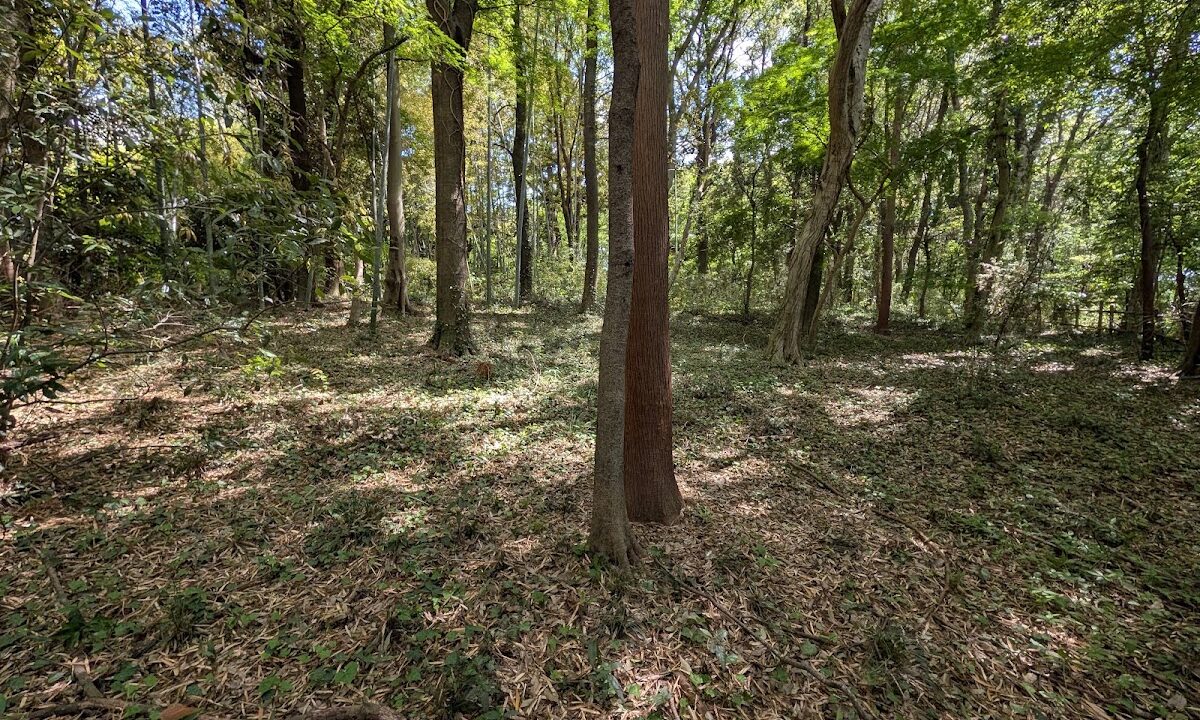
Takai Castle (Toride City, Ibaraki Prefecture) Complete Guide | History, Remains, and Access Explained in Detail
Located in Shimotakai, Toride City, Ibaraki Prefecture, Takai Castle is a valuable historical site that conveys the history of the Kanto region during the Sengoku period, as a medieval flatland castle in Shimosa Province. Currently, it is maintained as Takai Castle Ruins Park, a place of relaxation for citizens, while the remains such as earthworks and dry moats are well-preserved. This article comprehensively explains everything you need to know before visiting Takai Castle, from its history and castle structure to its highlights and access methods.
Overview and Location of Takai Castle
Takai Castle is a flatland castle built on a plateau on the south bank of the Kokai River in Takai, Shimosa Province (present-day Shimotakai, Toride City, Ibaraki Prefecture). The entire castle area is estimated to be about 200 meters square, and it has a typical medieval castle structure consisting of a main enclosure, multiple baileys, and an outer enclosure.
A key feature of its location is its use of the edge of a river terrace formed by the Kokai River. This topographical advantage gave the castle a natural stronghold, and the southern side allowed for defense utilizing the elevation difference of the plateau. While the surrounding area is currently being developed as a residential area, the castle ruins are preserved as a park, retaining some of the original topography.
It is sometimes called “Shimo-Takai Castle,” a name used to distinguish it from another Takai Castle in Tsuchiura City, Ibaraki Prefecture. This name originated because Takai Castle in Toride City belonged to Shimosa Province.
History of Takai Castle
Construction Period and Early History
Regarding the construction period of Takai Castle, there are no clear records, and many aspects remain unknown. However, based on the castle’s structure and the historical background of the surrounding area, it is estimated to have been built sometime between the Muromachi period and the early Sengoku period.
The castle’s name suggests that the Takai clan may have been the original lords. It is believed that the Takai clan ruled this area as local powerful families, but detailed historical records regarding their lineage and activities are scarce, and much remains speculative. In the medieval Kanto region, many samurai adopted place names as their surnames, and the Takai clan is thought to have been one such example.
Rule of the Shimosa Soma Clan
At the start of the Sengoku period, Takai Castle is believed to have come under the control of the Shimosa Soma clan. The Shimosa Soma clan was a samurai family descended from the Soma clan, a branch of the Chiba clan, and held power from northern Shimosa Province to southern Hitachi Province.
The Soma clan managed their territory by establishing multiple branch castles, and Takai Castle is thought to have functioned as one of these branch castles. Its location in the strategically important transportation hub of the Kokai River basin suggests that it was a militarily and economically important base.
In the late Sengoku period, the power of the Odawara Hojo clan expanded in the Kanto region, and many local lords came under their control. The Shimosa Soma clan also became subordinate to the Hojo clan, and Takai Castle was incorporated into the Hojo clan’s control of the Kanto region.
The Siege of Odawara in 1590 and the Castle’s Abandonment
A turning point in the history of Takai Castle came with Toyotomi Hideyoshi’s Siege of Odawara in 1590. This battle led to the downfall of the Hojo clan, and the entire Kanto region came under the control of the Toyotomi regime.
The Shimosa Soma clan, who had been subordinate to the Hojo clan, had their territories confiscated after the Siege of Odawara. Toyotomi Hideyoshi then granted Kanto to Tokugawa Ieyasu, who established Edo as his base and proceeded with the reorganization of Kanto. During this process, many small and medium-sized castles were abandoned, and Takai Castle was one of them.
After its abandonment, Takai Castle lost its function as a military facility, and it is believed that the land was converted to farmland or other uses. However, the main part of the castle ruins escaped development, leaving traces of earthworks and moats as part of the topography.
Structure and Layout of the Castle
Structure of the Main Enclosure (Honmaru)
The main enclosure (Honmaru), the heart of Takai Castle, is located on the highest point of the plateau. The main enclosure has a nearly square shape and exhibits the typical style of a medieval castle, surrounded by earthworks.
The main enclosure is estimated to be approximately 60 meters east-west and 50 meters north-south, a standard size for a small to medium-sized castle. Even today, parts of the earthworks surrounding the main enclosure remain well-preserved, with some sections reaching over 2 meters in height.
The main enclosure’s entrance (koguchi) is thought to have had a curved rather than straight structure, a defensive design. This was a technique to make enemy intrusion difficult, a common feature of castles from the Sengoku period.
Traces of earthen mounds, possibly watchtower bases, have also been confirmed within the main enclosure, suggesting the possibility of structures such as watchtowers existing there. Excavations have not revealed any building foundations or postholes, which is thought to be because the building was constructed using a post-and-beam structure.
Arrangement of the Enclosures
Several enclosures (kuruma) were arranged around the main enclosure. Two enclosures attached to the main enclosure are thought to have functioned as defensive lower enclosures.
These lower enclosures were located at a lower level than the main enclosure, preventing attacks on the main enclosure and providing space for defensive troops. The lower enclosures of Takai Castle are believed to have been located on the east and north sides of the main enclosure, cleverly utilizing the elevation differences of the terrain.
The outer enclosure was the outermost defensive line of the castle grounds, demarcated by earthworks and moats. It is presumed that there were soldier’s living quarters and storage facilities for supplies within the outer enclosure, but due to ongoing residential development, no clear remains can be confirmed today.
Arrangement of Dry Moats and Earthen Embankments
The dry moats and earthen embankments played a crucial role as defensive structures at Takai Castle. The use of dry moats rather than water moats was due to the castle’s location on a plateau, a common structure for castles in the Kanto region during the medieval period.
The dry moat surrounding the main enclosure is estimated to have been approximately 5-8 meters wide and 3-5 meters deep. Traces of the moat can still be seen in some sections today, exhibiting the typical characteristics of a medieval dry moat with a V-shaped cross-section.
The earthen embankments were constructed by piling up the soil excavated from the dry moat. Combining the moat and embankment effectively increased the difference in elevation. It is believed that fences or walls were built on top of the embankments, further enhancing the castle’s defensive capabilities.
Excavation and Preservation of Remains
Excavations in 1983 and 1993
The Takai Castle ruins were excavated twice by Toride City in 1983 (Showa 58) and 1993 (Heisei 5). These excavations provided much insight into the structure and scale of the castle.
The excavations confirmed the extent of the main enclosure and baileys, as well as the structure of earthworks and dry moats. Excavated artifacts include earthenware (kawarake), ceramic fragments, and iron products, providing clues to estimating the period when the castle was in use.
Of particular note is the prevalence of artifacts from the late 16th century, suggesting that Takai Castle was most actively used at the end of the Sengoku period (Warring States period). This is consistent with historical records indicating the castle’s abandonment in 1590 (Tensho 18), making it important evidence supporting the castle’s history.
Development of Takai Castle Ruins Park
Following the results of archaeological excavations, Toride City developed the castle ruins into Takai Castle Ruins Park. This park development aims to balance the preservation of the historical remains with providing a place of recreation for citizens.
Information boards indicating the site as a castle ruin are installed within the park, allowing visitors to learn about the castle’s history and structure. The main enclosure area has been developed into a flat area, and a portion of the earthworks has been preserved, evoking the castle’s former appearance.
Playground equipment and open spaces have also been provided, promoting daily use by local residents. This development, which harmonizes the value of the historical site with its function as a park, is a good example of utilizing local historical heritage.
Highlights of Takai Castle
Existing Earthworks
The biggest highlight when visiting Takai Castle Ruins Park is the existing earthworks. A portion of the earthworks surrounding the main enclosure is well-preserved, allowing visitors to observe the characteristics of medieval castle earthworks in terms of height and shape.
The earthen ramparts have withstood wind and rain for over 400 years, and their very existence conveys a sense of historical weight. Standing atop the ramparts, you can survey the interior of the main enclosure and the surrounding terrain, and truly appreciate the castle’s defensive structure.
The earthen ramparts on the west and south sides are particularly well-preserved and are a must-see for castle enthusiasts. Observing the cross-section of the ramparts reveals traces of rammed earth construction (a technique of compacting soil).
Traces of the Dry Moat
Traces of a dry moat remain around the main enclosure. While not in their complete form, the location of the moat can be identified as depressions in the terrain.
The traces of the moat are somewhat clearer, especially on the north and east sides, allowing for estimation of its depth and width. Walking along the bottom of the moat will give you a sense of the difficulty it would have been for attackers to cross it.
From spring to summer, the shape of the moat may be difficult to discern due to the overgrown vegetation. For observing the ruins, a visit from late autumn to winter is recommended.
View from the Main Enclosure
The main enclosure is located on a high plateau, offering panoramic views of the surrounding area. While residential areas now spread across the site, it’s likely that in the past, the plains of the Kokaigawa River basin could be seen from this vantage point.
The castle lord and defenders monitored enemy movements and gathered information from this elevated position. Good views are an important factor in castle location selection, and Takai Castle is no exception.
On a clear day, you can even see Mount Tsukuba in the distance, giving you a real sense of the vastness of the Kanto Plain.
Access Methods
Access by Public Transportation
If visiting Takai Castle Ruins Park by public transportation, the nearest stations are “Yumemino Station” or “Inatoi Station” on the Kanto Railway Joso Line.
From Yumemino Station
- Approximately 20 minutes on foot (approx. 1.1 km)
- Exit the station and head southwest. After passing through the residential area, you will arrive at the park.
- There are few signs along the way, so it is recommended to check the route using a map app beforehand.
From Inatoi Station
- Approximately 20-25 minutes on foot (approx. 1.6 km)
- This route heads south from the station.
Alternatively, you can transfer to the Kanto Railway Joso Line from JR Joban Line “Toride Station”. The journey from Toride Station to Yumemino Station takes approximately 10 minutes.
Access by Car
If traveling by car, the nearest interchanges are “Yawara IC” or “Yatabe IC” on the Joban Expressway.
From Tanihara IC:
- Approximately 20 minutes via National Route 294
- Head towards Toride city center, then take the prefectural road to the site.
From Yatabe IC:
- Approximately 25 minutes
- Take National Route 6 towards Toride city.
Takai Castle Ruins Park has a dedicated parking lot at the western foot of the hill. Parking is limited, so it may be full on holidays. Parking is free.
When searching with a car navigation system, it is recommended to search for “Takai Castle Ruins Park” or the address “Shimo-Takai, Toride City, Ibaraki Prefecture.”
Combinations with surrounding facilities
The following facilities are located near Takai Castle Ruins Park:
Toride Green Sports Center
- Approximately 10 minutes by car
- Features sports facilities and a park, making it suitable for family visits.
Toride City Buried Cultural Properties Center
- Approximately 15 minutes by car
- Exhibits archaeological materials from Toride City, and there is a possibility that artifacts excavated from Takai Castle are on display.
Visiting these facilities in conjunction with a tour of the castle ruins will allow you to gain a deeper understanding of Toride City’s history and culture.
Notes and Manners for Visitors
Clothing and Equipment for Visiting
Takai Castle Ruins Park is a well-maintained park, but the following equipment is recommended if you wish to observe the remains in detail.
- Comfortable walking shoes: Sneakers or light hiking boots are suitable for walking on earthworks and moat remains.
- Long sleeves and long pants: Effective for preventing insect bites due to the lush vegetation in summer.
- Hat: Essential, especially in summer, to protect from the sun.
- Drinking water: Bringing your own is recommended as there may not be vending machines in the park.
Visitor Etiquette
When visiting historical sites, please observe the following etiquette:
- Do not damage the remains: When climbing on earthworks or moats, avoid areas that are prone to collapse and proceed with caution.
- Take your trash home: There may not be trash cans in the park, so please be sure to take your trash home with you.
- No collecting plants: Collecting plants in the park is prohibited.
- Consider noise: As the park is adjacent to a residential area, please refrain from loud conversations.
Photography
Photography is generally permitted within Takai Castle Ruins Park, but please note the following:
- No Trespassing on Private Property: Entering private property outside the park for photography is strictly prohibited.
- Consideration for Other Users: Please be considerate and avoid including park users in your photos.
- Drone Photography: Flying drones over residential areas may be subject to legal restrictions; prior confirmation is necessary.
Takai Castle and Surrounding Medieval Castles
Shimosa Province Castle Network
Takai Castle functioned as part of a network of medieval castles in Shimosa Province. Multiple castles were scattered throughout the Kokaigawa River basin, and it is believed they cooperated to form a regional defense system.
Nearby castles include the following:
Moriya Castle (Moriya City)
- Located approximately 10km north of Takai Castle
- One of the Soma clan’s strongholds
- Possesses a larger-scale castle structure
Kobunma Castle (Toride City)
- Located approximately 5km southeast of Takai Castle
- Situated near the confluence of the Kokai River and Tone River
- A castle controlling a strategic point for water transport
By visiting these castles, you can understand the strategic placement of castles in Shimosa Province during the Sengoku period.
Differences from Takai Castle in Tsuchiura City
There is another castle with the same name, Takai Castle, in Tsuchiura City, Ibaraki Prefecture. To avoid confusion, let’s clarify the differences between the two.
Takai Castle in Toride City (Featured in this Article)
- Belongs to Shimōsa Province
- Located on a plateau on the south bank of the Kokai River
- Under the control of the Shimōsa Sōma clan
- Also known as: Shimo-Takai Castle
Takai Castle in Tsuchiura City
- Belongs to Hitachi Province
- Located in the Sakuragawa River basin
- Under the control of the Oda clan
- Also known as: Kami-Takai Castle
Both castles share the name “Takai Castle,” but they are separate fortresses located in different provinces and ruled by different lords. It is important to clearly distinguish between them when researching or visiting castles.
Characteristics of Medieval Castles Learned from Takai Castle
Site Selection for Hilltop Castles
Takai Castle is a typical example of a hilltop castle and a valuable case for learning the principles of site selection for medieval castles. By utilizing the edge of the plateau, it gained the following advantages:
- Utilizing Natural Elevation Differences for Defense: The difference in elevation between the plateau and the lowlands acts as a natural defensive wall.
- Securing Views: Makes it easy to monitor surrounding developments.
- Securing Water Resources: Easily obtains water from the Kokaigawa River below the plateau.
- Monitoring Transportation Routes: Allows control of transportation routes along the river.
These geographical conditions are common features of castles from the Sengoku period, and Takai Castle faithfully adheres to these principles.
Defense with Earthworks and Dry Moats
The defensive structures of Takai Castle are based on earthworks and dry moats. This is a typical structure of medieval castles that do not use stone walls.
The combination of earthworks and dry moats has the following characteristics:
- Ease of Construction: Requires no stone and can be constructed using only local soil.
- Ease of Repair: Damage can be repaired by rebuilding the soil.
- Low Cost: Less economical than stone walls.
On the other hand, it had the disadvantage of being less durable and defensive than stone walls. However, this type of civil engineering structure was mainstream for small to medium-sized castles, and Takai Castle is no exception.
Castle Styles of the Late Sengoku Period
The late 16th century, when Takai Castle is thought to have been most actively used, corresponds to the end of the Sengoku period. Castles from this period exhibit the following characteristics:
- Complexification of Entrances: Designs to make enemy intrusion difficult.
- Multi-layered Enclosures: A structure where the main enclosure is defended by multiple enclosures.
- Adoption of Flanking Fire: A structure that allows attacks from the flanks.
Some of these elements have been confirmed in Takai Castle, reflecting the development of castle construction technology during the Sengoku period.
Historical Significance of Takai Castle
Influence of the Toyotomi Regime in the Kanto Region
The abandonment of Takai Castle is directly linked to a crucial turning point in Japanese history: the Siege of Odawara in 1590. During Toyotomi Hideyoshi’s unification of Japan, the Kanto region transitioned from the rule of the Hojo clan to the Toyotomi regime, and then to the Tokugawa clan.
The abandonment of Takai Castle is a concrete example illustrating this major political upheaval. The abandonment of numerous small and medium-sized castles significantly reorganized the castle system in the Kanto region. Tokugawa Ieyasu established a new system of rule centered on Edo, adopting a policy of abandoning all but the major castles.
While Takai Castle fulfilled its role within this historical context, its remains serve as valuable historical evidence conveying the turbulent times of that era.
Position in Local History
Takai Castle is an important historical site for understanding the history of Toride City and the surrounding areas. This site provides concrete evidence of the political and military situation in this region during the transition from the medieval to the early modern period.
Takai Castle can also be used as important teaching material in local history education. Local children can deepen their understanding of and affection for their hometown by learning history through familiar historical sites.
Summary
Located in Shimotakai, Toride City, Ibaraki Prefecture, Takai Castle is a historical site of significant historical and academic value as a typical example of a medieval castle in Shimosa Province during the Sengoku period. Currently, it is maintained as Takai Castle Ruins Park, and remains such as earthworks and dry moats are well preserved.
Until its abandonment during the Siege of Odawara in 1590, Takai Castle functioned as an important regional base under the control of the Shimosa Soma clan. With a main enclosure and multiple baileys arranged within a castle area of approximately 200 square meters, and equipped with strong defensive facilities of earthworks and dry moats, it is a flatland castle that makes maximum use of the topographical advantage of its plateau on the south bank of the Kokai River. Excavations in 1983 and 1993 provided much insight into the castle’s structure and period of use, and it is now a popular recreational spot for locals. Its convenient location, approximately a 20-minute walk from Yumemino Station on the Kanto Railway Joso Line, also contributes to its accessibility as a historical site.
By visiting Takai Castle, one can experience firsthand, through concrete remains, the realities of castles in the Kanto region during the Sengoku period, the impact of Toyotomi Hideyoshi’s unification of Japan on the provinces, and the historical transition from the medieval to the early modern period. It is a historical site well worth visiting for castle enthusiasts and anyone interested in history.
-800x450.png)