Yamagata Castle (Hitachiomiya City) Complete Guide | History, Highlights, and Access Information
Yamagata Castle, located in the Yamagata district of Hitachiomiya City, Ibaraki Prefecture, is a historic castle that was ruled by a senior retainer of the Satake clan from the medieval period to the Sengoku period. Locally known affectionately as “Mijo” (御城), it is now a park with a symbolic observation deck. This article provides a detailed explanation of Yamagata Castle’s history, remains, highlights, and access methods.
History and Background of Yamagata Castle’s Construction
Relationship between the Builder, Yamagata Moritoshi, and the Satake Clan
Yamagata Castle is a flatland castle built between 1407 and 1408 by Yamagata Moritoshi (Noto-no-kami). Yamagata Moritoshi is said to have been a samurai of the Uesugi clan who moved from Yamagata in Mino Province to Hitachi Province as a guardian when Uesugi Yoshinori, son of Uesugi Norisada, succeeded to the Satake clan.
The Satake clan was a Sengoku period daimyo based in Hitachi Province (present-day northern Ibaraki Prefecture), and the Yamagata clan, as their senior retainers, played an important role in protecting strategic points along the Kuji River basin. Yamagata Castle functioned as a northern defensive base within the Satake clan’s territory and was strategically located to monitor and control water transport on the Kuji River.
Transition from Medieval to Early Modern Period
Yamagata Castle functioned as the Yamagata clan’s residence throughout the Sengoku period, but it is believed to have ceased its role as a castle when the Satake clan was transferred to Akita in 1602. Since then, the castle ruins have been carefully preserved by local people and have been affectionately known as “Oshiro” (the castle).
In modern times, the castle ruins have been developed as a local symbol, and a replica of a castle tower-style observation deck was constructed during the Showa and Heisei periods. This has made it a place that combines historical value with attractive tourist resources.
Layout and Structure of Yamagata Castle
Characteristics of a Concentric Hilltop Castle
Yamagata Castle is a concentric hilltop castle built on a hill approximately 30 meters high jutting out into the Kuji River. It skillfully utilizes the long, narrow hilly terrain, employing a typical medieval castle structure with multiple enclosures (kuruma) separated by three moats.
A concentric layout is a castle layout where multiple enclosures are arranged in a line, enhancing defensive capabilities and efficiently utilizing limited terrain. In the case of Yamagata Castle, the natural moat of the Kuji River further strengthened its defensive capabilities.
Details of Existing Remains
Valuable remains still exist at the Yamagata Castle site, allowing visitors to experience the atmosphere of a medieval castle.
Dry Moats (Karabori)
These are dry moats dug to separate the various enclosures of a castle, and are not filled with water. At Yamagata Castle, several dry moats can be seen, and the western moat, in particular, clearly retains its depth and width, allowing visitors to appreciate the scale of the defensive facilities at the time. Walking along the bottom of the moat is a valuable opportunity to experience the ingenuity used to prevent enemy intrusion.
Earthworks (Dorui)
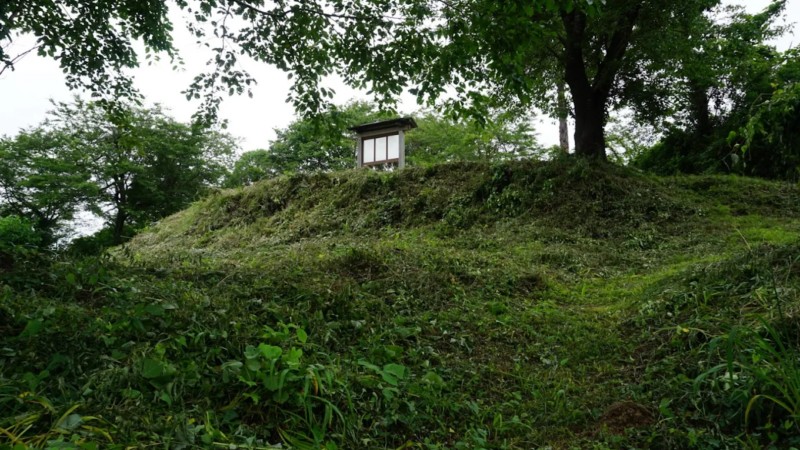
These are earthen walls built around the perimeter of an enclosure, serving as defensive barriers. The earthworks at Yamagata Castle, approximately 2-3 meters high, are well-preserved and clearly visible, especially around the main enclosure. Walking along the top of the earthworks allows visitors to appreciate the difference in elevation between the inside and outside of the castle, providing a good understanding of their function as defensive structures.
Enclosures (Kuruwa)
These are flat areas within the castle where buildings and soldiers’ quarters were located. At Yamagata Castle, multiple enclosures are arranged east-west around the main enclosure, allowing us to estimate the scale of the castle at the time based on the size and arrangement of each enclosure. ## The Charm and Highlights of the Castle Observation Deck
Overview and Architecture of the Observation Deck
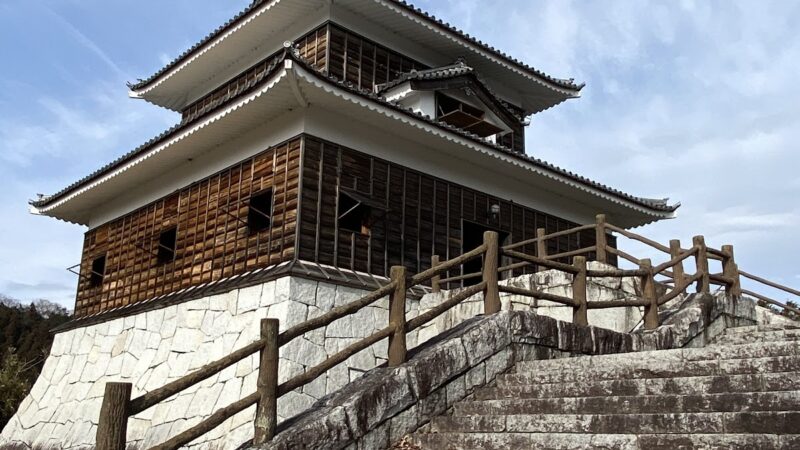
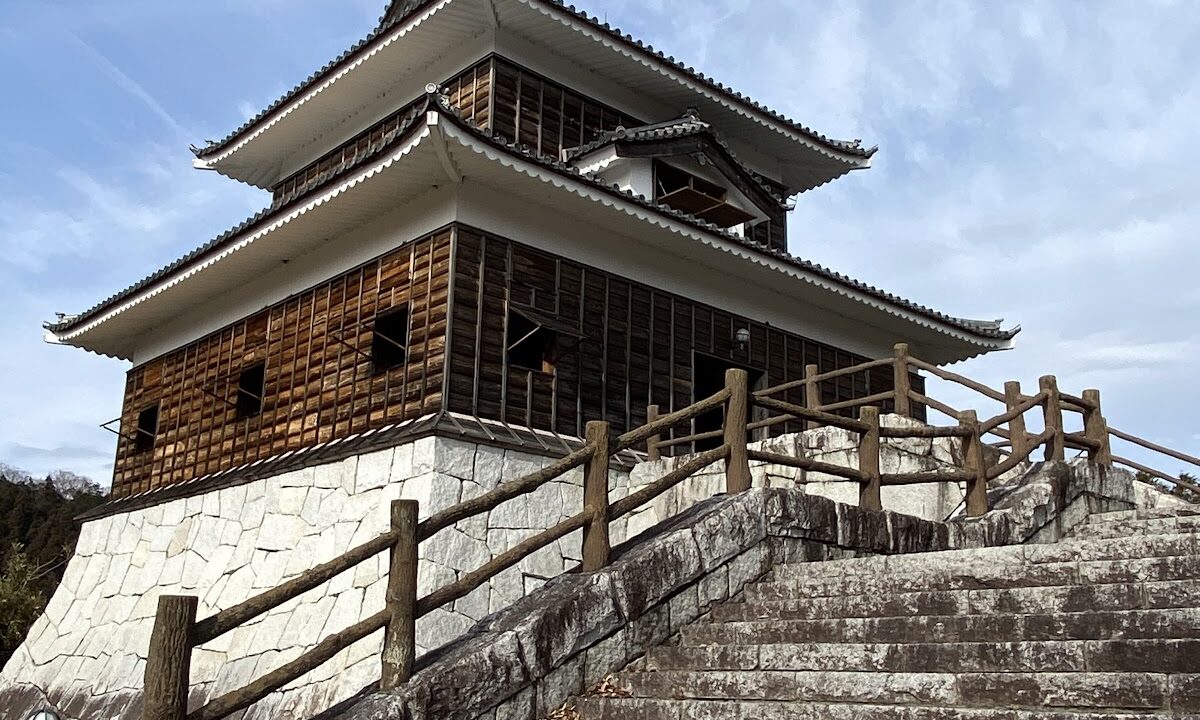
The “Castle Observation Deck” is a symbol of the Yamagata Castle ruins. This observation facility, shaped like a replica of a castle tower, is a prominent landmark visible from National Route 118.
The observation deck is a three-story reinforced concrete structure, with an exterior design modeled after Japanese castle architecture. While not a historically accurate reconstruction of a castle tower, it is a building prioritizing its role as a tourist and observation facility, and is cherished as a symbol that conveys the region’s history.
View from the Observation Deck
From the top floor of the Castle Observation Deck, a magnificent panoramic view of the Yamagata district of Hitachiomiya City unfolds. Below, the clear waters of the Kuji River flow, creating a beautiful landscape in harmony with the surrounding mountains.
Especially during the spring lush greenery and autumn foliage seasons, the vibrant natural beauty unfolds, making it a popular spot for photography. On clear days, you can see the distant mountain range, allowing you to imagine the view that the former lord of the castle must have gazed upon.
Observation Deck Usage Information
The castle observation deck is generally free to visit, but there may be set opening hours and closing days. It is recommended to check the latest information with the Hitachiomiya City Tourism and Products Association before visiting. The observation deck also functions as an educational facility, with exhibition panels on Yamagata Castle and the history of the region.
Yamagata Castle Ruins Park Walking Guide
Park Development Status
The Yamagata Castle ruins are currently developed as a park and are used as a place of relaxation for local residents. Walking paths are provided, allowing for a comfortable stroll while exploring the castle ruins.
Information boards and explanatory signs are installed within the park, making it easy for first-time visitors to understand the history and structure of the castle. Cherry trees are also planted, making it a popular spot for cherry blossom viewing in spring.
Recommended Sightseeing Route
Here’s a recommended route for efficiently exploring the Yamagata Castle Ruins.
- From the Parking Lot to the Castle Observation Deck: First, climb to the observation deck to understand the overall topography and surrounding environment of the castle ruins.
- Exploring the Main Enclosure: Walk around the main enclosure near the observation deck to observe the earthworks and the size of the enclosures.
- Visiting the Dry Moat: Carefully observe the remains of defensive structures, focusing on the dry moat on the west side.
- Moving Between Enclosures: Visit the enclosures that run east to west in order to experience the structure of a multi-enclosure castle.
The estimated time required is 30 minutes to 1 hour; for a thorough visit, allow about 1.5 hours.
Photo Spots
Yamagata Castle Ruins has many spots suitable for photography.
- Exterior View of the Castle Observation Deck: The view of the observation deck with the Kuji River in the background is picturesque.
- Bottom of the Dry Moat: You can take impressive photos from an angle looking up at the deep moat.
- From the Top of the Earthen Embankment: You can capture the atmosphere of the castle from a viewpoint overlooking the enclosure.
- View from the Observation Deck: You can take beautiful panoramic photos of the Kuji River and the surrounding natural scenery.
Castle Stamps and Castle Culture
Information on Yamagata Castle Stamps
In recent years, “castle stamps” (Gojoin) have become popular at castles throughout Japan, and Yamagata Castle may also offer them. Collecting castle stamps as a memento of visiting a castle is increasing, and it has become a new way to enjoy castles among castle enthusiasts.
Yamagata Castle stamps may be sold at the Hitachiomiya City Tourism and Products Association, the Yamagata Branch Office, and surrounding tourist facilities. The designs often feature motifs related to Yamagata Castle and the Yamagata clan, making them ideal souvenirs of your visit.
Sales locations, prices, and designs may change depending on the time of year, so we recommend checking official information before visiting.
Access Information and Surrounding Facilities
Location and Basic Information
- Address: Yamagata, Hitachiomiya City, Ibaraki Prefecture
- Postal Code: 319-3111
- Inquiries: Hitachiomiya City Tourism and Products Association
Access by Car
From the Joban Expressway
- Approximately 30 minutes from Naka IC via National Route 118
- Approximately 40 minutes from Mito IC via National Routes 123 and 118
Parking
There is parking space around the castle ruins, but the number of spaces is limited, so caution is advised during busy times.
Access by Public Transportation
JR Suigun Line
- Approximately 15-20 minutes on foot from Yamagata-juku Station
- Approximately 15 minutes by taxi from Hitachi-Omiya Station
Since the Suigun Line has limited service, it is recommended to check the timetable and plan your trip in advance.
Nearby Tourist Attractions
Kuji River
The Kuji River, which flows just below Yamagata Castle, is known for its clear waters and is a popular spot for ayu (sweetfish) fishing. You can enjoy the changing seasons along the riverside walking path.
Michi-no-Eki Hitachi-Omiya
This roadside station offers local specialties and fresh agricultural products, and is convenient for taking a break or having a meal. It is approximately a 15-minute drive from Yamagata Castle.
Nishikinasa Shrine
This ancient shrine in Hitachi-Omiya City is known for its grand festival held once every 72 years. Its historical shrine architecture and lush natural grounds are its main attractions.
Tatsunokuchi Waterfront Park
A waterfront park along the Kuji River, this popular spot for families offers water play and barbecues.
History of Hitachiomiya City and the Yamagata Region
Characteristics of the Yamagata Region
The Yamagata region is located in the northeastern part of Hitachiomiya City. It was formerly an independent municipality as Yamagata Town, but became part of Hitachiomiya City in 2004 due to municipal mergers. The Yamagata Branch Office is still located there, functioning as the center of the region.
The JR Suigun Line, National Route 118, and the Kuji River run through the region, maintaining its character as a transportation hub. This is the former site of Yamagata Commercial High School, which has now been integrated into Hitachiomiya Prefectural High School.
The Kuji River and its Connection to the Region
The Kuji River is a first-class river flowing through northern Ibaraki Prefecture and has been deeply involved in the history and culture of the Yamagata region. In the Middle Ages, the Kuji River served as a vital waterway for transporting goods, and it is believed that Yamagata Castle was built along the Kuji River with a strategic intention to control this water transport.
Even today, the Kuji River is an important natural resource for the region, providing diverse blessings such as the beauty of its clear waters, river fish like ayu (sweetfish), and the scenery along its banks.
To Deepen Your Understanding of Yamagata Castle’s Charm
Related Castles
When visiting Yamagata Castle, visiting the surrounding castles related to the Satake clan will allow you to understand the history more deeply.
Satake Clan’s Main Castle – Ota Castle (Hitachiota City)
The base of the Satake clan and the residence of the lord whom the Yamagata clan served.
Nukata Castle (Naka City)
One of the Satake clan’s important strongholds, functioning at the same time as Yamagata Castle.
Yamairi Castle (Hitachiomiya City)
The residence of the Yamairi clan, who were in conflict with the Satake clan, and is important for understanding the region’s Sengoku period history. ### Learning Materials and Information Sources
For those who want to learn more about Yamagata Castle, the following resources are helpful:
- Hitachiomiya City History: Contains detailed records of the region’s history.
- Books on Medieval Castles in Ibaraki Prefecture: Several research books covering castles in the prefecture have been published.
- Castle Information Websites such as Kojodan: Offers abundant visitor reviews and photos, and provides the latest information.
- Official Information from the Hitachiomiya City Tourism and Products Association: Provides the latest information on events and sightseeing.
Points to Note and Manners When Visiting
Clothing and Equipment When Visiting
While Yamagata Castle Ruins are maintained as a park, please note the following points when visiting the castle remains:
- Comfortable Walking Shoes: Non-slip shoes are suitable for walking on earthworks and moats.
- Seasonal Clothing: Sun protection and insect repellent are necessary in summer, and warm clothing is required in winter. – Caution during rainy weather: The earthen remains become slippery in the rain, so please pay attention to the weather.
Manners for protecting the remains
To preserve this valuable historical heritage for future generations, please observe the following manners:
- Do not damage the earthworks or moats
- Do not jump or run on the remains
- Always take your trash with you
- Take care of the plants and animals
- Respect the signs and fences
Summary: Experience the charm of Yamagata Castle
Yamagata Castle is a valuable medieval castle ruin remaining in Hitachiomiya City, Ibaraki Prefecture. It is a castle site with diverse attractions, including its history built by Yamagata Moritoshi, a senior retainer of the Satake clan, its location overlooking the Kuji River, its well-preserved dry moats and earthworks, and the castle observation deck, a symbol of the region.
While it has been developed as a park and is easily accessible, it retains a strong atmosphere of a medieval castle, making it a spot that can be enjoyed by a wide range of people, from history buffs to families. Combined with the beautiful natural scenery of the Kuji River, this is a precious place where you can experience the history and culture of Hitachiomiya City.
When visiting northern Ibaraki Prefecture, be sure to visit Yamagata Castle and experience the spirit of the Sengoku period and the history of the region. The view from the castle observation deck, exploring the ruins, and the clear waters of the Kuji River will surely be a memorable experience.