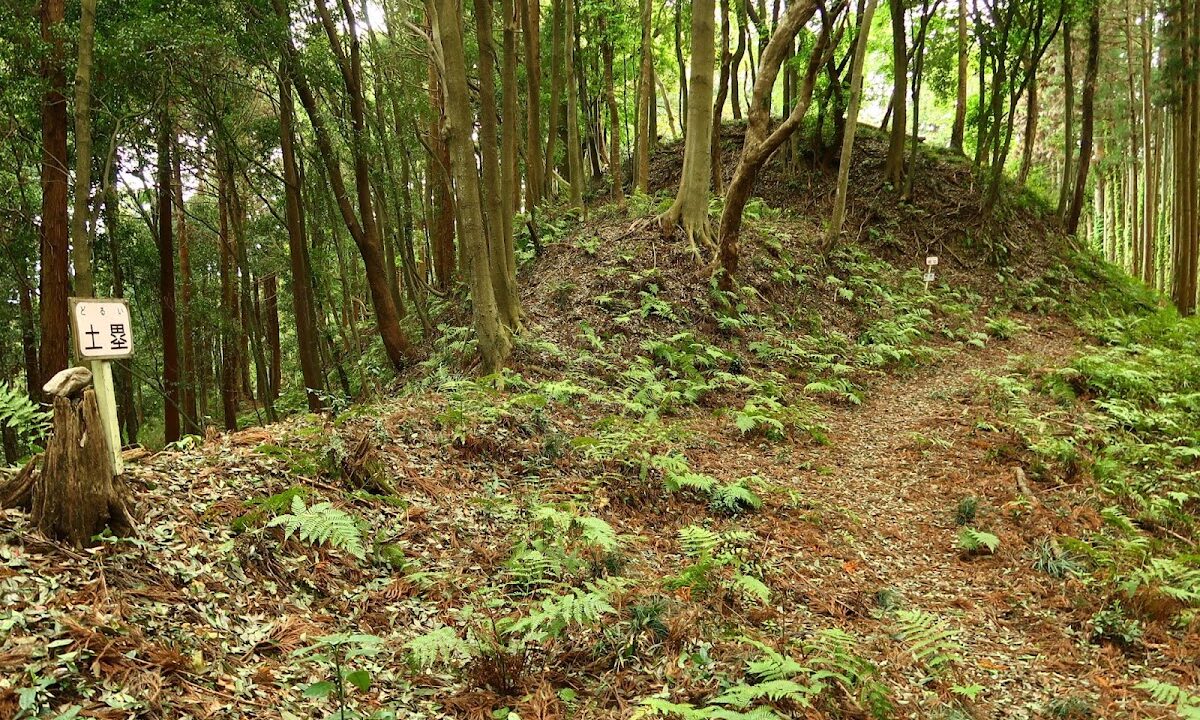
History and Remains of Kume Castle (Hitachiota City, Ibaraki Prefecture) – The Stage of the Battles Between the Satake and Yamairi Clans
Basic Information on Kume Castle
Kume Castle is a medieval mountain castle located in Kume-cho, Hitachiota City, Ibaraki Prefecture. Built on a hill 104 meters above sea level where Kashima Shrine is located, it is known as a vast castle complex spanning approximately 250 meters east-west and 500 meters north-south.
Location and Access
Location: Kume-cho, Hitachiota City, Ibaraki Prefecture
Postal Code: 〒313-0123
Former Province: Hitachi Province
Access Method:
- Take a bus from JR Suigun Line “Hitachiota Station” (limited number of buses)
- Access by car is convenient; a dedicated parking lot for the castle ruins is available.
- Rental bicycles are also recommended.
Castle Classification and Structure
Classification: Mountain Castle
Structure: Renka-shiki (concentric castle)
Keep Structure: None (Medieval Castle)
Builder: Daijo clan (legend), effectively Kume clan
Year of Construction: Kamakura period (legend)
Main Renovators: Satake Yoshiharu, Satake Yoshitake
Main Lords: Kume clan, Satake Kita family (Satake Yoshinobu lineage)
Year of Abandonment: In 1602 (Keicho 7), when the Satake clan was transferred to Akita,
Designated Cultural Property: Currently, none are designated.
Reconstructed Building: None.
History of Kume Castle
Kamakura to Muromachi Periods – The Era of the Daijo and Kume Clans
The origins of Kume Castle are said to date back to the Kamakura period. The Daijo clan, a powerful local family in Hitachi Province, is believed to have first established a residence here. Subsequently, the Kume clan, a branch of the Onozaki clan, made this their castle for generations. The Kume clan, as a branch of the Onozaki clan, grew into an important force in the Hitachiota region.
The Onozaki clan was a powerful clan that controlled northern Hitachi Province, and the Kume clan ruled the Kume area as a branch of that clan. During this period, Kume Castle is thought to have functioned as a base for regional control, while gradually being developed as a defensive structure.
The Sengoku Period – The Castle of the Satake Kita Family
From the late Muromachi period to the Sengoku period, Kume Castle was incorporated into the sphere of influence of the Satake clan. The Satake Kita family, descended from Satake Yoshinobu, the fourth son of Satake Yoshiharu, made Kume Castle their residence. The Satake Kita family, known as “Kita-dono,” played an important role as assistants to the main Satake family, whose base was Ota Castle.
With the Satake Kita family establishing their base at Kume Castle, the castle transformed from a mere local lord’s residence into a crucial stronghold defended by a branch of the Satake clan, the largest Sengoku daimyo in Hitachi Province. The castle’s fortifications were also extensively developed, and many of the large-scale moats and earthen bridges seen today are believed to have been constructed during this period.
Fierce Battles with the Yamairi Clan
In the early Sengoku period, the Satake clan was plagued by internal conflicts. At the center of these conflicts was the Yamairi clan, based at Yamairi Castle. The Yamairi clan, while also a member of the Satake family, rebelled against the main family, leading to a prolonged period of civil war.
As the Yamairi clan’s power grew, Kume Castle became the front line of their attacks. To prepare for the Yamairi attacks, Satake Yoshiharu moved the Kume clan to Butare Castle and appointed his own son, Satake Yoshitake, as the lord of Kume Castle. This demonstrated the strategic importance of Kume Castle and was a strategic move anticipating a decisive battle with the Yamairi clan.
The Death of Satake Yoshitake and Satake Yoshiharu’s Recapture
The Yamairi clan’s attacks were fierce, and the young lord, Satake Yoshitake, defended the castle desperately, but ultimately succumbed to his injuries and died in battle. Upon learning of his son’s death, Satake Yoshiharu was enraged and personally led a large army to Kume Castle.
Satake Yoshiharu’s counterattack was fierce, not only recapturing Kume Castle but also successfully killing the main force of the Yamairi clan. This battle marked a crucial turning point in the conflict between the Satake and Yamairi clans, establishing the superiority of the main Satake family.
The fierce battle at Kume Castle served as a reminder of the importance of castle defenses and is thought to have influenced subsequent castle development.
The Satake Clan’s Transfer to Akita and the Abandonment of Kume Castle
After the Battle of Sekigahara, Satake Yoshinobu was ordered by Tokugawa Ieyasu to transfer from Hitachi (540,000 koku) to Dewa (Akita) (200,000 koku). In 1602 (Keicho 7), the Satake family moved to Akita, and Kume Castle was abandoned.
The Satake Kita family also followed the main family to Akita, and Kume Castle disappeared from the stage of history. After its abandonment, it lost its function as a castle and was used as grounds for Kashima Shrine, among other things.
Remains of Kume Castle
Overall Structure of the Castle
Kume Castle is a mountain castle of the Renka style, composed of four main sections: the “North Outpost,” the “West Castle,” the “East Castle,” and the “South Outpost.” The main enclosure of the “East Castle” is the main castle (honmaru), situated on a relatively gentle slope.
The castle grounds are vast, requiring about an hour and a half to walk around, and it is known as one of the largest medieval castles in the Hitachiota City area. Each section is clearly demarcated by moats and vertical trenches, and the layout is characterized by its emphasis on defense.
A Treasure Trove of Moats
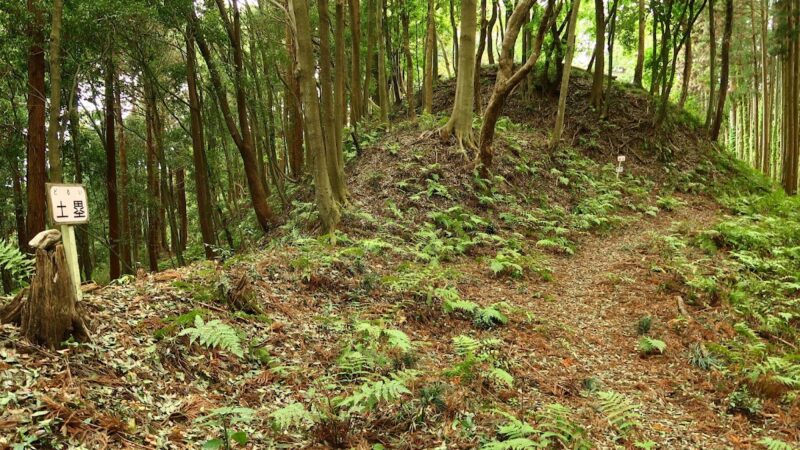
The greatest highlight of Kume Castle is the countless moats scattered throughout the castle grounds. So many moats remain that it’s often described as “moats, moats, and more moats,” making them valuable remains for learning about medieval castle defensive techniques.
The presence of a triple moat is particularly noteworthy. The continuous arrangement of three trenches effectively prevented enemy incursions. These trenches retain their substantial depth and width, preserving their original appearance from the time of construction.
The trenches cleverly utilize the terrain, cutting across the ridgelines. This forced attackers to expend energy each time they crossed a trench, creating a favorable situation for the defenders.
Horizontal and Vertical Trenches
In addition to trenches, Kume Castle also boasts well-preserved horizontal trenches (ditches dug horizontally). These trenches encircled the baileys, preventing attacks from the flanks.
Vertical trenches (ditches dug vertically along slopes) are also found throughout the castle, restricting the movement of enemy soldiers climbing the slopes. These trenches are still clearly visible as part of the terrain, demonstrating the advanced castle-building techniques of the time.
Earthen Bridges
Several earthen bridges, used to cross the trenches, can also be found. The earthen bridges were created by leaving a portion of the moat unexcavated to serve as passageways, and were essential facilities for movement within the castle. In wartime, destroying the earthen bridges could completely block enemy incursions.
The earthen bridges at Kume Castle were designed to be narrow, preventing large numbers of soldiers from passing through at once. This made it easier for a small number of defenders to hold them off if the enemy reached the bridges.
Enclosures (Kuruwa)
Each section of the castle contains multiple enclosures. The main enclosure, “Eastern Castle,” utilizes relatively flat terrain, making it a suitable space for building structures. It is presumed that the lord’s residence and important facilities were located here.
“Northern Outpost,” “Western Outpost,” and “Southern Outpost” are each structured to function as independent defensive units, reflecting the concept of multi-layered defense. Each enclosure is demarcated by earthen ramparts and steep slopes, demonstrating various measures to enhance defensive capabilities.
Cut Slopes
The castle grounds are surrounded by cut slopes (artificially carved steep slopes). These slopes are steeper than natural slopes, making them a defensive structure that made it difficult for enemy soldiers to climb. The cut slopes of Kume Castle remain clearly visible today, demonstrating the advanced civil engineering technology of the time.
Kashima Shrine
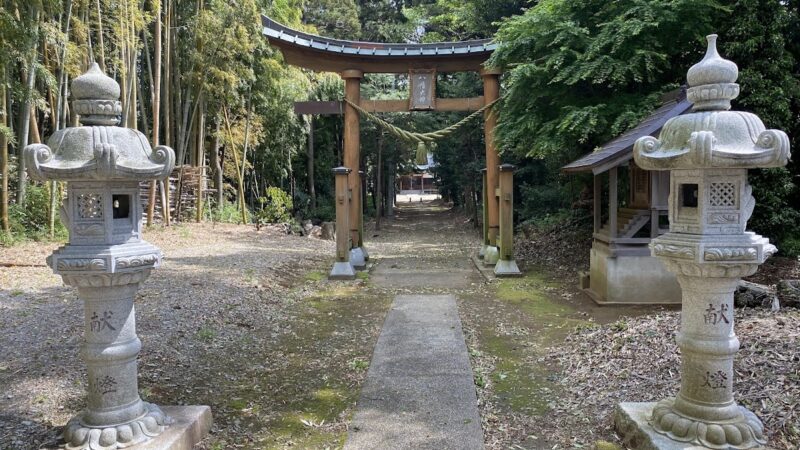
Kashima Shrine is located on the castle site and remains a place of worship for the local community. The shrine grounds occupy part of the castle site, resulting in a coexistence of castle remains and the shrine. Kashima Shrine is an important presence that conveys the history of Kume Castle to the present day.
Preservation and Maintenance of Kume Castle
Kume Castle ruins are known as one of the best-preserved medieval castle ruins in Ibaraki Prefecture. With the cooperation of local preservation societies and Hitachiota City, efforts are underway to protect the remains and improve the viewing environment.
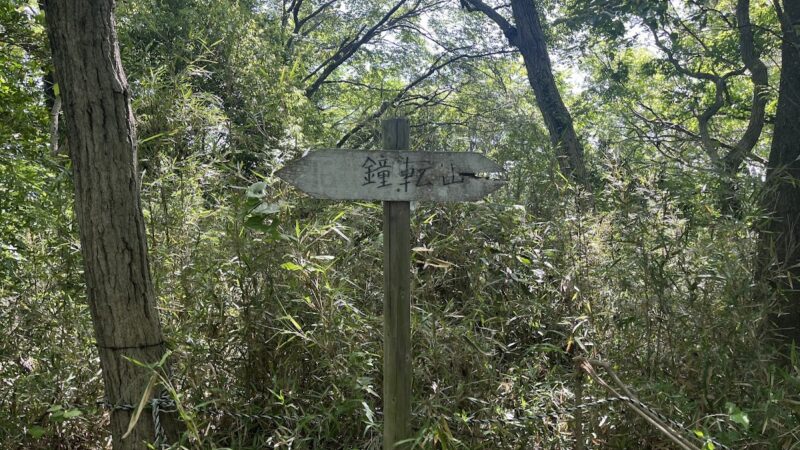
A dedicated parking lot is provided at the castle site, and walking paths are maintained from there. Walking sticks are provided in the parking lot, which is helpful when exploring the vast castle grounds. Signposts and explanatory panels are appropriately placed, creating an environment where even first-time visitors can easily understand the castle’s structure.
The walking trails are designed to efficiently visit the main remains, including moats, earthen bridges, and baileys. However, because the castle grounds are vast and hilly, it is recommended to allocate 1.5 to 2 hours for your visit.
Thanks to the dedicated efforts of those responsible for maintenance, Kume Castle is highly regarded by castle enthusiasts as a castle ruin that offers a truly “inspiring experience.”
Related Historical Sites Around Kume Castle
When visiting Kume Castle, exploring the surrounding related historical sites will allow you to gain a deeper understanding of the medieval history of the Hitachiota region.
Ota Castle (Hitachiota City)
Located approximately 3.3 kilometers from Kume Castle, Ota Castle is an important castle that functioned as the base of the Satake clan. Ota Castle was the main residence of the Satake clan and a central hub overseeing the surrounding castles, including Kume Castle. Understanding the history of Ota Castle clarifies the position of Kume Castle.
Yamairi Castle (Hitachiota City)
Located approximately 7.0 kilometers from Kume Castle, Yamairi Castle was the base of the Yamairi clan, who fiercely opposed the Satake clan. A visit to Yamairi Castle is essential for understanding the background of the fierce battle at Kume Castle. The conflict of the Yamairi clan is an important episode in the Sengoku period history of Hitachi Province.
Nukata Castle (Naka City)
Located approximately 6.5 kilometers from Kume Castle, Nukata Castle is known as the base of the Onozaki clan. Since the Kume clan is descended from the Onozaki clan, considering the relationship between the two castles is an interesting topic.
Other Surrounding Castles
Numerous medieval castles are scattered around Hitachiota City, including Urizura Castle, Minamisakaide Castle, Ishigami Castle, and Sukegawa Castle. These castles worked together to form a defense network in northern Hitachi Province. If time permits, a tour of multiple castle ruins is highly recommended.
Key Points for Visiting Kume Castle
Best Time to Visit
Kume Castle is open year-round, but the best times to visit are spring (April-May) and autumn (October-November). The weather is mild during these periods, making it ideal for extended walks. In summer, overgrown vegetation may obscure the ruins, while in winter, fallen leaves make the ruins easier to see, but cold weather precautions are necessary.
Clothing and Equipment
As this is a mountain castle, the following equipment is recommended:
- Comfortable walking shoes (trekking shoes are ideal)
- Long-sleeved shirt and long pants (to protect against insect bites and injuries from branches)
- Hat and sunscreen
- Drinking water
- Towel
- Rain gear (in case of changing weather)
- Camera (for documenting the ruins)
Borrowing a walking stick from the parking lot will make navigating the hilly castle grounds easier.
Time Required
If you plan to thoroughly explore the entire castle grounds, we recommend allocating about two hours. Even if you only plan to visit the main ruins, one hour is necessary. Please plan your visit with ample time.
Photography Tips
Kume Castle offers the following photography opportunities:
- A panoramic view of the triple moat
- An angle capturing the deep moat from the side
- A combination of the earthen bridge and moat
- A view of the surrounding area from the bailey
- An angle showing the steepness of the cliffs
Including people in your photos is effective in conveying the scale of the ruins.
Historical Value of Kume Castle
Kume Castle holds a very important position in the study of medieval castles in Ibaraki Prefecture. Its value can be summarized in the following points:
Excellent Defensive Structures
With countless moats, horizontal moats, vertical moats, and earthen bridges, it is an important example in the history of castle construction technology, as a castle that fully utilized the defensive techniques of medieval mountain castles. In particular, the triple moat is an outstanding example of a castle structure in Hitachi Province.
Important Historical Material for the Study of the Satake Clan
As the residence of the Satake Kita family, it is a valuable historical site for understanding the activities of the Satake clan. As the site of specific historical events such as the conflict with the Yamairi clan and the death of Satake Yoshitake in battle, it is an important place that connects documentary records with archaeological remains.
Excellent State of Preservation
Despite more than 400 years having passed since its abandonment, the fact that the main remains are well-preserved is particularly noteworthy. Having escaped the tide of development and thanks to the preservation efforts of local residents, this is a precious castle site that still allows us to imagine its former glory.
Importance in Local History
Kume Castle is an indispensable part of understanding the history of Hitachiota City. As a site that concretely illustrates the history of medieval Hitachi Province—including the changes in regional governance from the Kamakura period to the Sengoku period, the formation and development of samurai groups, and the rule of territories by Sengoku daimyo—it is also used in local history education.
Access and Visiting Information for Kume Castle
Detailed Transportation Access
By Public Transportation:
- Get off at Hitachi-Ota Station on the JR Suigun Line
- Take a local bus from the station (bound for Kume)
- Get off at the “Kume” bus stop and walk for about 10 minutes
- *Since the number of buses is limited, it is essential to check the timetable in advance.
By Car:
- Approximately 30 minutes from Naka IC on the Joban Expressway
- Approximately 20 minutes from Hitachi-Minami-Ota IC on the Joban Expressway
- Kume Castle Ruins parking lot (free) is available
- Car navigation setting: Search for “Kashima Shrine, Kume-cho, Hitachi-Ota City, Ibaraki Prefecture”
Rental Bicycle:
- Rental bicycles are available around Hitachi-Ota Station (advance confirmation recommended)
- Electric-assist bicycles are recommended
Visiting Information
Visiting Hours: No restrictions (daytime visits recommended)
Admission Fee: Free
Closed Days: None
Parking: Available (Free)
Restrooms: Portable restrooms available near the parking lot
Inquiries: Hitachiota City Board of Education, Cultural Affairs Division
Summary
Kume Castle is a masterpiece of medieval mountain castles remaining in Hitachiota City, Ibaraki Prefecture. From the Kamakura period to the Sengoku period, the castle changed hands several times, with the Daijo clan, the Kume clan, and the Satake Kita family serving as lords. It has a history of fierce battles, particularly with the Yamairi clan.
The numerous moats, triple moats, horizontal moats, vertical moats, and earthen bridges—a collection of medieval castle defensive techniques—are still well-preserved after more than 400 years. The vast castle grounds, which require 1.5 to 2 hours to explore, allow visitors to truly appreciate how cleverly medieval castles were designed.
Thanks to the dedicated efforts of the local preservation society, the site is well-maintained and a great place to visit, making it a recommended historical site not only for castle enthusiasts but for anyone interested in history. When you visit Hitachiota City, be sure to stop by Kume Castle ruins and experience the atmosphere of the Sengoku period.
Although Kume Castle was abandoned after the Satake clan’s transfer to Akita, its remains still quietly tell the story of the turbulent times in Hitachi Province.