The history of Miki Castle and the complete story of Miki’s battle
Miki Castle Overview
Miki Castle (Miki-jo) is a plain castle in Kaminomaru-cho, Miki City. Also known as Busan Castle, Issho Castle, Gocha Castle of the Yokodera clan, Aka Castle of the Kazumiki clan, also known as an important fort among the “Three Great Castles of Harima.”
Miki Castle was built on the left bank of the Meihe River, located on the north bank of a plateau approximately 50 meters away from Yuhai, a key strategic point for the war, and located in the middle of the Yulu River. Miki Castle site has a length of about 600 meters in the east and west, a distance of about 700 meters from north to south, the south side has Gunsan temple grounds, three sides have three walls, and is a well-known natural fortress.
At present, the Miki Castle site is designated as a national historical monument, and the name is “Miki Castle Site and Attached Castle Site/Hijikata Engineering”, a typical example of the construction of a castle in the country, and an important position in the history of castles in Japan.
History of Miki Castle’s construction and other clan’s history
Built by Mr. Miki Kasho
Built at the end of the 15th century by Nobuyoshi Miki Castle, the chief householder of the Miki Hasho clan. However, it is possible that the castle pond was built in 1492, but it is still possible for the castle to be built in different places in Changchun in the future. It is a universal theory at present, and in practice it was constructed during the reign.
Another person’s force attack
Mr. Miki Seisho was a powerful local owner of Harima, and since its construction, Miki Castle has been the main focus of foreign castles, and has been restrained in the eastern part of Harima. Several generations have passed since the restoration of the clan, and it has been one of the most powerful forces in Harima.
Under the jurisdiction of the different clans, there were multiple castles, including Ogawa Castle, Noguchi Castle, Takagi Castle and Hashidani Castle, and Miki Castle was the center of the castle, forming a single defensive structure. Since then, Miki’s battle has been an important part of the battle.
Miki’s battle story (Miki’s meal)
Battle background
In 1578 (Tensho 6), there was a serious misfortune in the affairs of the Harima Province. The original copy was provided by Nobutagata Nobuhiro’s mission in the Chugoku region, where Hashiba Hideyoshi collaborated and suddenly rebelled elsewhere in Changchun.
There was no trust, and after that, there were many different factors and elemental combinations, including other Yomori clan lines, and others that were related to the Araki Village Rebellion, and since then, there have been many other cases of treatment within the Kita family. Elsewhere, the Yomori clan alliance was established in Changharu, and the Yomori clan’s defense was confirmed.
The beginning of the castle
In March 1578 (Tensho 6), Hashiba Hideyoshi began the attack on Miki Castle. However, Miki Castle, the most solid fortress in Harima Province, was destroyed and fell into ruin. The vassal Hideyoshi evacuates and advances the frontal attack, which means that he takes control of the castle and fights the battle, and uses a method of exhaustion and defensive physical strength.
Hideyoshi was in Miki Castle and completed the construction of the castle attached to Tuda (Tsukejiro). The other commanders are located in Mt. Hirai, and have formed a bird’s-eye view of Miki Castle’s castle network. This is a small affiliated city that still exists today, and the size of the city’s castle was as large as the one that existed in the same year.
Conquest Attached Castle
In front of Miki Castle, which was occupied by Hideyoshi, it was occupied by an affiliated castle in the surrounding area. Other affiliated castles of Miki Castle, such as Ogawa Castle, Noguchi Castle, Hashidani Castle, and Miki Castle, which were completely isolated.
During this period, the castle was divided into a large number of other areas, and the castle of Kanagata and Shikata Castle fell apart, and the bottom of the castle was cut off, and the connection between the castle and Miki Castle was completed. The commander Hideyoshi’s army was restrained by the Harima Sea, and the sea line was cut off.
“Mikijo’s Feast”
Miki Castle was completely destroyed, changes occurred over time, and food in the castle began to dry up. It was the first edible rhizome to be used as a food source for the castle’s military. At the bottom of this field, the castle was called “Miki Castle’s Deliciousness”, and after the commander’s post he wrote about it.
It took 1 year and 10 months to complete the operation. The castle was constantly manned, and the military’s combat power was rapidly declining. However, in other places, at the beginning of the spring, they finally refused to surrender, and the resistance finally reached the end.
Mikijo’s surrender and Changchun’s fall elsewhere
In January 1580, the final surrender of Changshun took place. Of course, the condition of submitting to others is that one’s own life is replaced by the life of a castle guard.
On January 17th of the same year, all the residents of Choshun and the other towns committed suicide, and Miki Castle officially fell. Installation length: 23 years or 25 years at the time of death. The tragedy of this year’s episode left a serious impression on many people.
Miki Castle Miki Castle after the Battle of Miki
Hideyoshi Hashiba’s healing
Conquered Miki Castle, Hideyoshi Hashiba built and built the castle himself, and was appointed as the first castle keeper to manage Miki Castle. Hideyoshi himself ended his conquest of the Chinese region and completed his final run on a Japanese-style road.
Hidemasa Nakagawa Yoshihide era
In August 1585, Hidemasa Nakagawa moved to Miki Castle. Hidemasa was a high-ranking vassal of Hideyoshi, but he died in 1592 during the Imperial War. His younger brother Hidenari Nakagawa accepted a different position, but in 1594 he was sent to the country.
Early Jiang Dynasty
In 1600, after the invasion of Kanbara, Ikeda Ryomasa became the lord of the castle, and Iki Tadatsugu was appointed as the lord of Miki Castle, with a salary of 30,000 koku. However, in 1615, the law of “one country, one castle” was established, and Miki Castle was built.
At this time, the construction of the castle was destroyed, and some of the stones were destroyed. The history of Miki Castle has been around 120 years.
Miki Castle Structure
Cloth and terrain usage
Miki Castle was built on the formation of the Meihe River, and its construction was cleverly used to make use of the natural topography. The place is located on the North Plateau, the three-faced building is built on the cliffs of the mountains, and it is a natural fortification.
Shiroike Yuhonmaru, 2-ring (2-ring) Washin Castle completed. The length of the eastern and western parts of the city was approximately 600 meters, the distance between north and south was approximately 700 meters, and the area was large, with a large number of soldiers.
Honmaru and main construction
The main enclosure is the core of the castle fort, the residence of the castle lord, and an important construction site. The central area of Uhonmaru, where Jokin’s Kaminomaru Park was established. When the castle tower was located, the castle tower was built in a similar manner to a small castle tower.
Hijikata Construction Works Waho Castle River
The main defensive works of Miki Castle are the Hijikata construction and the stone burial mound. The envoy is here now, and some of the earthworks are still in existence, and we understand that the construction of the castle and the pond will be provided at that time.
From the river to the river, the natural mountains and valleys are artificially developed and the river stages are jointly constructed. Specially, it is a deep valley to the south, which has reached the natural river effect.
Mizui Kazusuigen
Miki Castle has been in residence for a long time, and Mizui has been in the castle for a long time. Among them, it is called “Separate Long Spring Washing Well”, which still exists. However, according to historical records, during the 1 year and 10 month period in the city, the food intake was short and the water consumption was heavy.
Miki Castle ruins and current situation
National History Museum
Miki Castle Site was designated as a national historical monument in 1983, and the name was “Miki Castle Site and Other Defense Works and Hijikata Project”. The main castle of Miki Castle is designated as an integral part of the castle, and the external defense works built by Hideyoshi, the general commander of the castle, are a rare historical site that shows the true appearance of the castle during the current era.
Existing legacy
Now, the Miki Castle ruins are preserved and the following history:
Hijikata process: Partial preservation of Hijikata process, main concentration of the castle tower and surrounding areas. Hijikata’s engineering height is different, however, some areas are reserved for approximately 2 US altitudes.
Mizui’s history: A bite of Mizui, originally called “Another Long Spring Washing Well”, now perfectly preserved. The original appearance of the partial stone structure.
Fortifications: Comprehensive castle tower, two castles, and other castle-like topographical features are preserved, and envoys can feel the ability to reach the fort’s Hongyong.
Dry and dry castle river trace: Partial area can be seen as dry and dry castle river trace.
Outer cape defense construction history
It is a long time since the defense work on the outer castle of Miki Castle was completed by Hideyoshi, a vassal. Among them, the Hiraiyama outer capitol defense construction was modeled by Hiroshi Hijikata, and the construction of the Japanese castle was completed. This is an important historical resource for research on foreign defense construction and siege operations during the time of the war. ### Opening and Park Construction
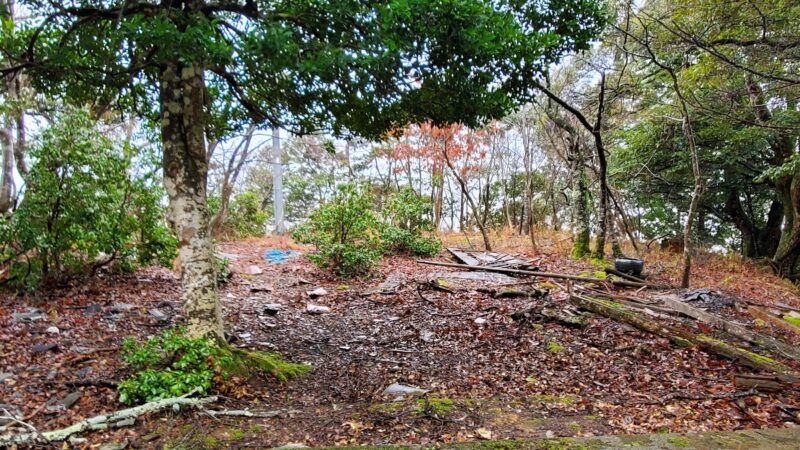
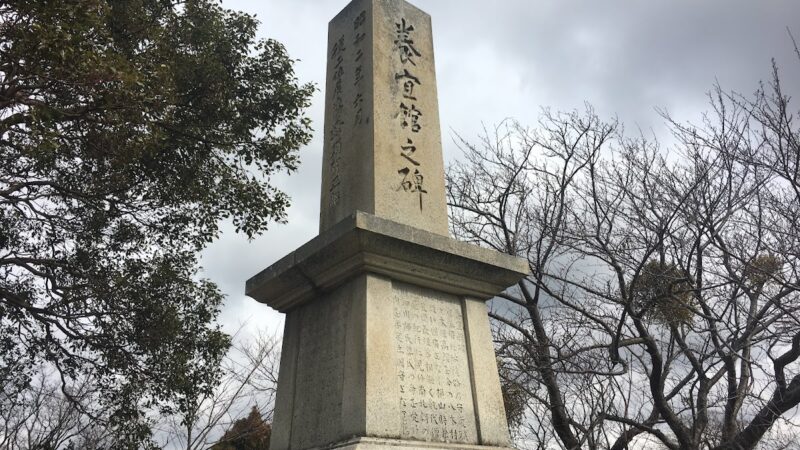
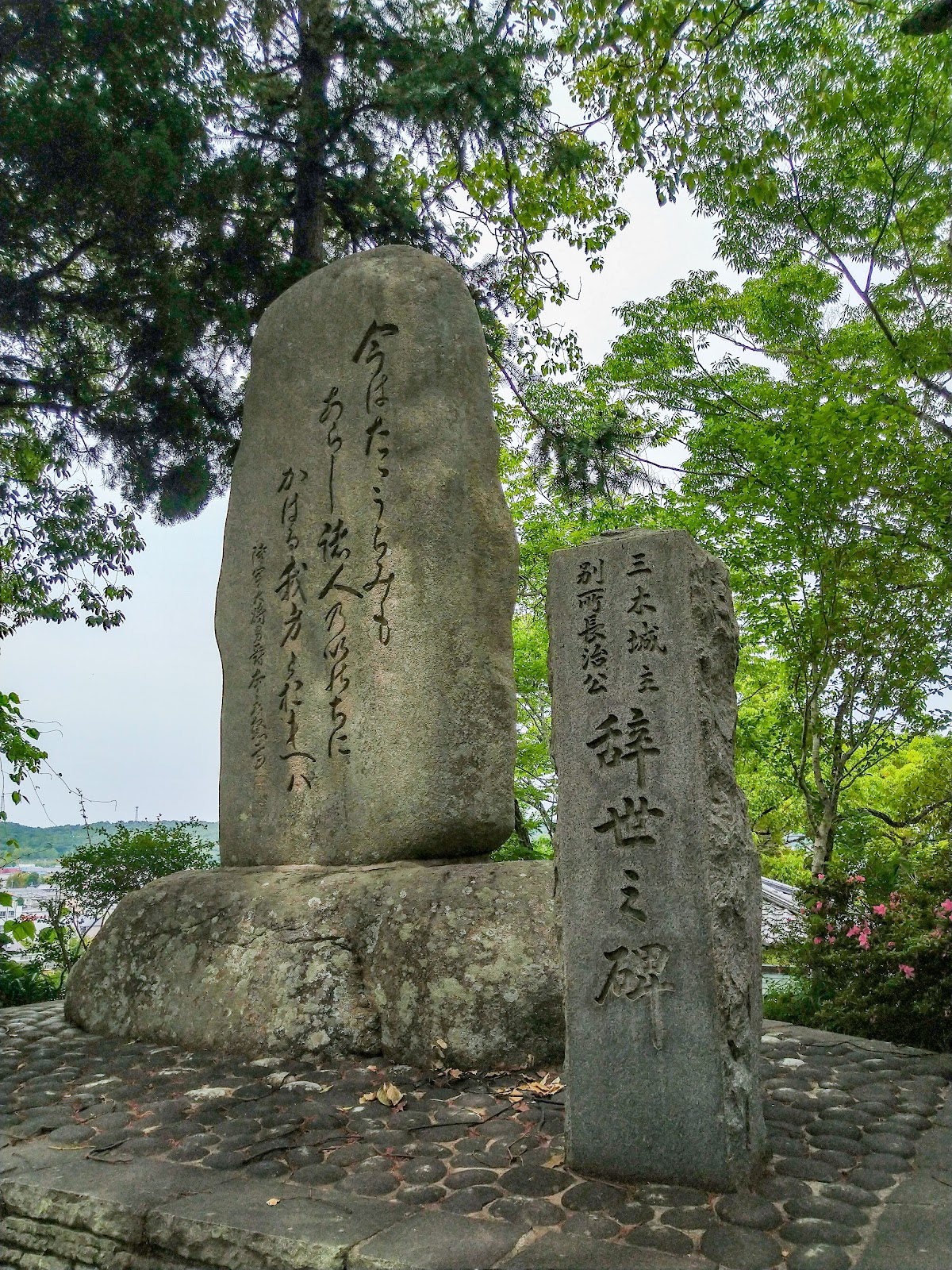
The central area of the Miki Castle ruins is now open to Kaminomaru Park, a rest area provided to the public. In the park, there is a bronze statue of Long Spring, with an explanation of the plaque.
In recent years, we have been proposing to explore the history of the site, to work directly in the opening of the relevant department, and to develop a comprehensive archaeological plan.
Former Miki Castle Ruins
Public transportation
Fire car: Take the train from Miki Kaminomaru station on the seated train, and the train can be reached in about 5 minutes from Miki Castle Estate (Kaminomaru Park). The road to the station is flat and very convenient.
JR Wazan Electric Railway’s passenger demand is located on the Blue Imperial Line.
Bashi: Shinkibaji, seated at the Central Station of the Central Station in Miki City, Miki City, takes approximately 10 minutes to reach the station.
Car route
Shanyang Expressway: Distance: approximately 5 minutes by car from Mimoku-East Interchange Road, approximately 10 minutes by car from Mimoku-Ono Interchange Road.
Parking: Parking area for public use within Kaminomaru Park, but nearby parking area for Miki City government and private parking area. During the closing date, a Miki City government parking lot will also be opened.
Learn about the game
Visit Miki Castle, free of charge, no demand ticket. Yuyu Park, open all year round.
If you are just visiting the castle grounds, it will take about 30 minutes; if you are looking around the city, it will take about 2-3 minutes.
History of Zhou Guan
Miki City Miki History Museum
A large number of exhibits from Miki Castle and Miki Castle are now on display in the museum. A detailed understanding of the history of Miki Castle, including excavated cultural artifacts, ancient documents, and three-dimensional models.
Other Changchun Cemetery
To the east of Miki Castle, Hohaiji Temple is a separate cemetery for Changshun and its family members. Every year, on the day of death, a ceremony is held in the city, attracting many visitors.
Attached castle ruins
Surrounding Miki Castle, the attached castle ruins were built by Hideyoshi, a feudal vassal. Among them are the typical castle ruins attached to Mt. Arihira, the castle ruins of Mt. Takao, the castle ruins of Takagi Otsuka, and the ruins of the castle, all of which are perfectly preserved. Let’s take a closer look to understand the true story of the castle.
Dahou Castle Ruins
The Empress Castle is one of the castles attached to Miki Castle, and during the battle in Miki Castle, the battle was fierce. Nowadays, the castle’s inner temple is still perfectly preserved, and visitors are welcome to visit the mountain castle.
History of Mikijo
Historical status of the country at war
Hideyoshi, a retainer of Hashiba in Miki Castle, played an important role in Japanese road costumes. Hideyoshi, the victorious envoy of Miki, completed the subjugation of Harima Province and established the foundations of the conquest of the Chugoku region.
In addition to this, the name of the battle in this area is “Miki Fudan no Battle”, which is the attack in the battle area, and is recognized as such. The appearance of Hideyoshi’s military style, which was observed in the film, was followed by the attack on Odawara Castle.
Castle Fort History
Miki Castle is a rare example of fort construction from the medieval period to the early modern transition period. Its defensive works were mainly carried out by local engineering, and the medieval elements were put on hold, and the construction of the city’s castle ponds and spiritual centers was also developed.
In addition, we have comprehensively assisted in the defense work and have completed the preservation of the historical sites in the country, and we have also completed the preservation of the historical sites in the country, and the important historical resources in the construction of the mission and the construction of the castles throughout the country.
Regional History Importance
Miki Castle’s main role in the historical performance of Harima Province. The production is located in a separate area, which is the military base of the Japanese military, and is an important component of the plastic production area.
To this day, Miki City still remembers the power of Miki Castle and other parts of Changshun, and the local arrogance, and the envoys to the Chengdu Shrine area are an important part of history.
Miki Castle story and story
Another long spring life
In other places, he held the title of head of the household at a young age, and was one of the most powerful feudal lords in Harima Province. At the beginning, Nobunaga Kita followed others, and was aided by Hideyoshi Hashiba, who attacked Harima, but later, due to various reasons, Nobunaga Kita ended up treason.
Chōshunya is a samurai who has cultivated the culture of the first place, and is well-versed in waka and Japanese tea ceremony. After that, he became the number one samurai warrior in history, and ended up killing himself as a savior.
围城乇
During the war in the castle for a year and ten months, the students completed a tragic story. Yuyu’s food short story, many people died in the city, the number of deaths reached the thousands.
At the end of the day, the defenders of the castle resisted directly, but according to historical records, the number of people who were killed was far greater than the number of people who fought. This is the origin of the name “Mikijou Castle Battle”.
Hideyoshi’s strategy
When Miki Castle was in the attack, Hideyoshi Hashiba evacuated and attacked from the front, so they chose to go to the castle. This is a rational decision that will reduce the potential to the maximum extent possible, but will also ensure that the ability is not destroyed.
Hideyoshi Seishin’s preparations, divisional implementation of the cutting line, attack and occupation of the annexed fort, reconstruction of the fort’s strategy, and the final envoy surrendering to Miki Castle. This was followed by a review of Hideyoshi’s military strategy and its deep impact.
Miki Castle research status and challenges
Archaeological excavation results
As the Miki Castle ruins have been expanded, multiple archaeological excavations have been carried out, providing a new perspective on the history of the castle. In particular, the excavation work around the main castle has revealed the construction of the castle, the history of Mizui, and other cultural artifacts, such as pottery, and the true appearance of the castle fort.
While the construction of the affiliated castle site was underway, Hideyoshi’s chief vassal attacked in a systematic manner, resulting in the establishment of a correct and clear system.
History research
However, many details are unclear in historical documents such as the New Dynasty Official Record and the Taiko Record. In recent years, the research on ancient literature in the area has been progressing, and the hope is to explore new historical facts.
Challenge the future
The protection and utilization of the Miki Castle ruins is an important challenge for the future. It is necessary to preserve its works as a historical site, and also as a cultural park for its citizens.
In addition to this, the protection of the attached castle ruins is also a challenge. How to use the protection system in a slightly decentralized manner is a common problem in the area.
During the human and military period, the generals opened their travels, and since then they have been thinking about the history of Miki Castle.
overview
Miki Castle was one of the three great castles of Harima, and held an important position during the war. In another place, Miki’s battle between Hideyoshi Yobashiba and Hideyoshi Yobashiba in Long Spring, which is also known as “Miki Banjo”, is one of the most brutal battles in the history of castle forts in Japan.
Nowadays, the Miki Castle site is a well-preserved national historical site, and a place for citizens to relax and live. Hijikata construction work during the ruins, defense construction work in the surrounding area since Mizui, etc., the capital’s rare historical materials, and the real face of the city’s castle during the country’s era.
I understand the history of Miki Castle, the circumstances of Harima during the war, the history of Hideyoshi Hashiba, and the life of a prince during the war. When you travel to a military base, what do you not see in this historical fortress site?