Kinoyama Castle (Harima Province) Completion Guide: The oldest mountain castle in the military center, the place where ancient and modern Yamashiro still exists
Kinoyama Castle is located in Shinmiya-cho, Tatsuno City, Ubei-ku, and is one of the most important mountain castles in the history of Japanese castles. The construction of the troupe at the end of the 7th century, the ancient mountain castle, the construction of the 14th century medieval mountain castle, the same mountaintop, the history of the envoy’s development, the history of the castle construction techniques in Japan, and the history of the Japanese castle construction technique.
Kinoyama Castle Overview
Kinoyama Castle Zarakyu Nori 458 Rice’s Kinoyama Sanke, On the right bank of the Ibogawa River. The most notable feature of the castle fort is that ancient and modern mountain castles coexisted at the same location in different eras.
Shiroyama Castle is an ancient mountain castle built by a group of artists, and is one of the most famous Wudayama castles in the western part of Japan. In 663 (the second year of Emperor Tenchi’s reign), the Yamato Imperial Court joined the military forces in the Tang Dynasty. Shiroyama Castle belongs to the upper rock type mountain castle, and it is recognized that it is the oldest mountain castle in existence in the military.
Sakutou troupe medieval Seiyama Castle, Shiroyama Castle and Shirohata Castle, important location of the Akamatsu clan, the feudal lord of Harima Province. In fact, Kosuke Akamatsu died in the Kakitsu War in 1441.
History of Shiroyama Castle
Construction of an ancient mountain castle
The history of Shiroyama Castle was traced back to the end of the 7th century. In 663, after the invasion of Hakujiang, Japan (Yamato court) disappeared, and in the early 19th century, the influence of half an island and the invasion of the Tang Dynasty army. Due to this crisis, Emperor Tenji ordered construction of mountain castles and defensive fortifications throughout Western Japan.
The city of Shiroyama Castle is one of the ancient mountain castles that were being renovated at this time, and its strategic position was excellent, and the enemy who was able to attack the city and invade the inland sea. Shiroyama castle, mountain castle construction, bird’s-eye view of Ihogawa River, kayojo Kamishoku-style mountain castle construction technique, general construction, mountain peak prison defense.
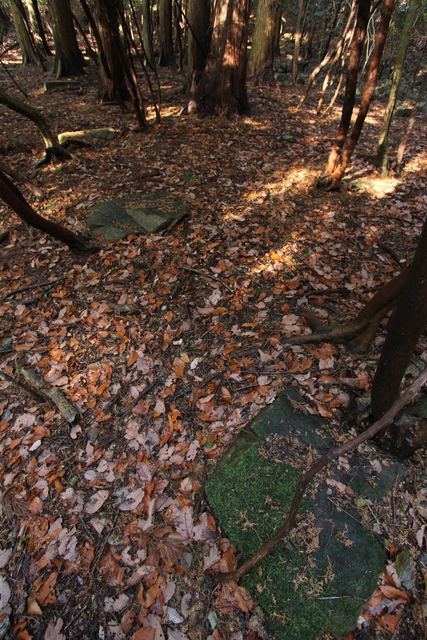
Nowadays, you can see many stone castles in Shiroyama Castle. Among them, the C-tier castle is 41 meters long, the high school is 3 meters, and this is the largest tier in Shiroyama Castle. In addition, the base stone of the castle gate (also known as the “castle gate stone”) was also excavated, and the remains of the ancient mountain castle have been preserved since its construction.
Reuse during the Middle Ages and Akamatsu clan era
Shiroyama Castle was the first ancient mountain castle, and the temple was used by Empress Jiancheng and Zeng. Later, during the Nanboku-machi period, the Akamatsu clan became the guardian daimyo of Harima Province, and later rebuilt the medieval Seiyama Castle.
Records of historical materials such as “Toji Hyakku Bunjo”, Akamatsu Kunishin’s triple son, Akamatsu Nasuke, were born in 1352 (Shohei 7/Kanno 3), and completed construction of Shiroyama Castle in more than 20 years. The choice was made to build a mountain castle, a new residence, the replacement of Shirahata Castle, the use of ancient mountain castle heritage, a combination of medieval fort construction techniques, and the modern construction of a solid mountain castle.
Akamatsu Yosuke completed the construction of other castle forts, such as Kanjoyama Castle and Long Water Castle, and the Akamatsu clan was now in full control of Harima Province. Shiroyama Castle is the main location of the Akamatsu clan, and is the ultimate defensive fortress in times of crisis.
Kakizu no Ran Yoshiroyama Castle Fall
Shiroyama Castle’s head appears on stage in 1441 (Kakizu 1st year), during the Kakizu Rebellion. At that time, the head of the Akamatsu clan, Mitsusuke Akamatsu, was killed by Ashikaga, the sixth general of the Muromachi shogunate.
After being stabbed to death by Ashikaga, Kosuke fled to Harima, and was sent to Shiroyama Castle. The Muromachi shogunate dispatched Yamana Sozen (Mochiken) and a large army to attack Yamashiro. Under the fierce attack of the Shogunate’s military forces, Shiroyama Castle finally falls, and Kosuke becomes self-defeating. The Akamatsu clan’s main family is where this incident came to an end.
During the Kakinzu War, Shiroyama Castle Battle is an important historical example of a medieval castle battle.
Modern presentation research
The construction of Shiroyama Castle and the new construction of the ancient mountain castle are only a matter of recent years. In the 20th and 1980s, Toshihiko Yoshino of the Takano City Board of Education said that a site similar to Shiroyama Castle had appeared, a relic of ancient Yamashiro, and before this, people directly recognized that Shiroyama Castle was medieval Shiyama Castle. This is the beginning of the first chapter of the academic world.
Shiroyama Castle is an important archaeological site, and the history of Japanese castle construction techniques and theaters from ancient times to the Middle Ages. At present, the research program is currently underway, and new knowledge is constantly being accumulated.
Shiroyama Castle’s structure and history
Geolocation topography
Shiroyama Castle is located on the right bank of the Ibo River, 458 meters in length. “Kinoyama” is a local mountain name, and the area is well known since ancient times.
A bird’s-eye view of the Ibo River basin and central Waharima plains. In ancient times, this area was an important strategic strategic point along the inland invasion route to the Inland Sea. In medieval times, this area was an ideal base for the Harima country’s restraint system.
The formation of mountainous landforms in Shangyeong was a natural defensive barrier, and the envoys were able to defend themselves against the enemy and conquer the enemy.
Ancient Yamashiro Ruins
The site of Shiroyama Castle is an ancient mountain castle, and today it is a typical mountain castle construction style – Yamashiro style (Kōgoishi). The mountain castle style is a type of stone burial mound, which is a unique construction method for the mountains and mountains, and has been accepted and influenced by the Asahi Peninsula.
Stone burial
In front of me, the intellectual stone burial mound is a few steps, divided into stone burial mounds a, b, c and d. Among them, the largest stone crow is 41 meters long and 3 meters high. As a result of the construction of natural stone, it is now an advanced civil engineering technology.
Stone citadels along mountains, etc., high-altitude construction, existing defenses and invasions, and areas within the castle.
City Gate Foundation Stone
The castle gate foundation stone, also known as the “castle gate building stone”, has an excavation, which shows the entrance to the ancient mountain castle. The position of the castle gate has been carefully designed, and there is an urgent situation when the enemy invades.
The current situation is ongoing research, and the basic layout of the system is a comprehensive structure of the city gate.
Medieval Xishan Castle Ruins
Shiroyama Castle is a medieval castle built by Akamatsu Mitsusuke, and its construction has been fused with ancient mountain castles and medieval castle construction techniques.
Guil tile (围场)
Built on top of a mountain, the multiple grounds (flat area) and the main castle grounds (main enclosure) are arranged in stages. This area is already a residential area, it is also a defensive fortress, and the purpose of its design is to carry a large amount of soldiers under an emergency situation.
Kojo Kayo Hijikata construction
Its construction includes defensive works typical of medieval Seiyama castles, the traverse of the castle river (horikiri), the mountain spine, and the appearance of earthworks (earth cutting). This is a small medieval defense technique that did not exist in ancient mountain castles, and was left behind by the Akamatsu clan.
Mizui Ruins
After a long period of attack, the city was attacked and the castle was dug up by Taguchi Mizui. Water source security is very important in mountain castles, so protection of water sources in mountain castles is not considered important.
Castle structure special expedition
The castle structure of Shiyama Castle is unique, and the combination of technology has completed the dual special expeditions of ancient Japanese and medieval Shiyama Castle.
The production of the ancient mountain castle, the construction of the “围城” style, and the use of the stone troupe led to the formation of a mountain structure. In the morning, when the various technologies were received, the impact of the city of Pishan was due to the influence of the city.
Castle Fortress Structure Special Features
The structure of Shiroyama Castle is very unique, and the combination of equipment has completed the double special expedition of Shiyama Castle in the ancient Japanese and medieval times. Construction: Medieval Lishan Castle, equipped with a “continuous gate style” structure, main castle location: U-shan wall, surrounding enclosure: multiple walls. A typical medieval mountain castle shape has been revealed, along the mountain, the construction of the castle, the river, and the enemy’s intrusion, the key position is to build a tunnel (橹) for the defense of the castle.
The fusion of castles and castles is an example of the development of historical technology in the history of Japanese castle forts.
Akamatsu clan Yoshiroyama Castle
Mr. Akamatsu’s launch
The Akamatsu family was a samurai family from Harima Province, and from the time of Nanbokucho to Muromachi, they had great strength. Kunishin Akamatsu (legal name, common name Tenmura) was a samurai, Takauji Ashikaga, and was also appointed as a military official in the Three Kingdoms of Harima, Hazen, and Mimasaka.
Akamatsu’s three children, Akamatsu’s father and father’s will, and the power of the Akamatsu clan. The castle was built by Nasuke, however, the castle was built as a solid fortification, and the construction of the mountain castle was started.
Yoshirohata Castle Series
Built by Shirahata Castle and Akamatsu Kaishin, this was the Akamatsu clan’s point of view. However, Fanshu chose Shiroyama Castle and built Shirahata Castle as his new residence.
The cause of selection is as below:
- Nori further development: Nori 458 rice, Gaoyu sea 440 rice, Shirahata Castle, Obino further development.
- Using ancient mountain castles: Currently using stone tombs and other construction materials, allowing for less construction time and manpower.
- Battle position: Shiroyama Castle is located in the Inami River basin, a key strategic point in the Inami River basin, and the central area of Harima Province.
After the construction of Shirahata Castle and Shiroyama Castle, Akamatsu Domain’s “twin castle system” was established, with Shirahata Castle used during the peace period and Shiroyama Castle used during the war.
Kakizu no Ran with Mitsuke Akamatsu
Mitsusuke Akamatsu was the sixth head of the Akamatsu clan, and was also one of the most powerful guardians of the Muromachi Shogunate. Of course, other commanders and armies of Ashikaga and other troops were converted to Japan. On June 24, 1441 (Kakizu 1st year), Kosuke’s unconventional activities occurred: when he arrived at his own residence, the general was stabbed to death.
This incident was also known as the “Kakitsu no Ran”, and was a major incident in the Muromachi shogunate during the Seiga Earthquake. After the attack on Ashikaga, Kosuke fled to Harima Province, and Shiroyama Castle, the guardian of the castle, was attacked by the Shogunate’s army.
The shogunate dispatched Yuzan’s famous Sozen (Mochiken), a large army that attacked a mountain castle with a high rate of river control. Shiroyama Castle was guarded by thousands of people, and the Shogunate army was guarded by tens of thousands of people, but others used Shiroyama Castle’s mountainous topography to resist it.
However, despite the great military strength in Yuyu, the castle lasted a long time, and Shiroyama Castle finally fell on September 10th. Mitsuke’s self-exhaustion led to the end of the Akamatsu clan. However, since the Akamatsu clan came to power, they continued to live in Harima Province and became a powerful feudal lord.
Zhouguan historical environment
Shiroyama Castle is located in Shinmiya-cho, Tatsuno City, an important historical stage from ancient times to present.
History of the Inaga River basin
The Inagawa River is a major river running north and south of Harima Province, and has been an important transportation route since ancient times. A bird’s-eye view of Shiroyama Castle, Iha River, and a view of the river control waterway.
Zhoukan City Fort
Akamatsu clan built Taza castle fort scattered around Shiroyama castle:
- Shirahata Castle: Akamatsu clan’s main castle, built by Yuakamatsu Doshin
- View of Yamashiro: Yamashiro built by Akamatsu Misuke
- Changsui Castle: Akamatsu clan’s branch castle
The castle forts were connected to each other, and the Akamatsu clan established a control system in Harima Province.
Ancient Yamashiro Network
Statue of ancient mountain castles distributed throughout western Japan. On the coast of the Inland Sea, the castle pond was built by Zeng Shu:
- Yajima Castle (Yashima Castle, now Kagawa Province)
- Kinojo (备China, now Jishanku)
- Ono Castle (Chikuzen Province, Imafuku Castle)
Once the castle was built, the defense lines were set up, and the enemy invaded the castle. Shiroyama Shiroya’s observation is part of the road’s defense.
Shiroyama Castle’s current situation and protection
Current situation
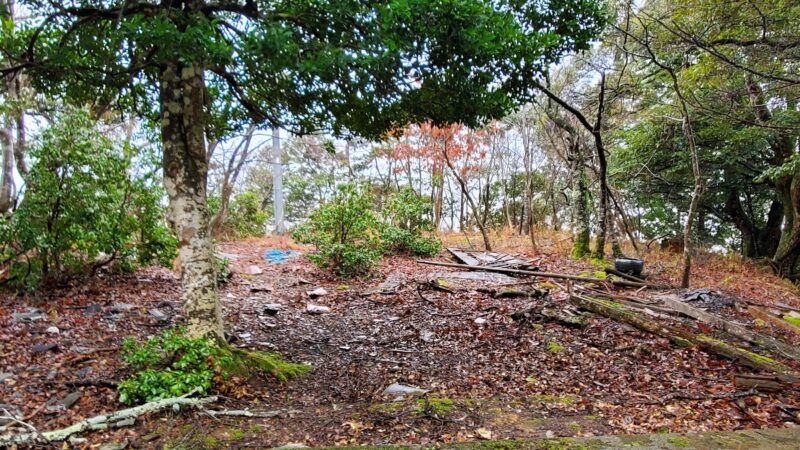
The remains of Shiroyama Castle, including the forest cover, stone mounds, and outer forts, have been preserved in perfect condition. The castle has a climbing path, which is convenient for history lovers and Japanese walking enthusiasts to visit.
When the demand for mountain climbing is high, the demand for mountain climbing can be increased depending on the demand. However, the mountain scenery is quite magnificent, and the panoramic view of the Ibo River basin and the Waharima plains can be seen from above.
Culture purchase approval
Because of its important historical significance, Shiroyama Castle is also considered an important historical site by Tatsuno City. In addition, we will study the current situation, the military, and the national culture.
Protection and utilization work
Takano City Board of Education’s work on the protection and utilization of Shiroyama Castle:
- Archaeological excavation: Archaeological excavation work is carried out step by step in detail.
- Information Plate Installation:Information Plate installed along the main route of the route of the visitor, providing mutual information for the visitor.
- Public promotion activities: Public promotion, promotion of the research group, etc., and promotion of the city mountain city.
Maeoshiroyama Castle
Transportation method
Public transportation
- It takes about 30 minutes to reach the starting point of the climbing route from the JR Shinkansen Harima Shinmiya Station.
- From the starting point of the trail to the mountain, you can reach the mountain in about 1 hour.
Self-indulgence
- From Chugoku Expressway Yamazaki IC, it takes approximately 20 minutes to arrive.
- There is a parking area near the starting point of the mountain trail (limited parking spaces).
Precautions for visiting Shiroyama Castle: Please note the following: Please read more about the history of Shiroyama Castle:
- C Stone Mound: The largest stone mound in Shiroyama Castle, which can be observed from a close distance using ancient mountain castle construction techniques.
- Castle Gate Foundation: The history of the ancient mountain castle gate, which can be imagined at that time.
- **Main wall (mountain wall): The central part of the medieval Qishan castle, open field, spectacular scenery.
- 护城川: Large-scale defensive construction during the medieval period, horizontal mountain spine.
Precautions for viewing
-Yuyu is a mountain castle, wearing Japanese mountain climbing clothing and Japanese sandals.
- Hydration zero food for drinking.
- Summer demand for mosquito protection, winter demand for warm clothing.
- Be cautious and protect yourselves.
- Avoid climbing under the harsh weather conditions.
Shiroyama Castle’s academic world
Ancient mountain castle research significance
Shiroyama Castle: An important position occupied during research on ancient mountain castles in Japan. The structure of the stone-style mountain castle has been reserved as a good place for exploration, and it is a treasure trove of construction technology in the late 7th century.
The theory behind this idea is that the construction of stone mounds in Shiroyama Castle and the formation of castle gates is important. The construction of Shiroyama Castle was established, and after the invasion of Shirojiang in Japan, the prestige of the university was reached, and the university’s academic institutions were established.
Meaning of research on castle forts in medieval times
Shiroyama Castle is an important archaeological site and a powerful force in the Harima Province during the Muromachi era and the Muromachi era, when the Akamatsu clan lived in the Nanbokucho era. This is the famous “Kakitsu no Ran” material, which is a valuable example of literary materials and archeology and comparative research.
In addition, the use of the ancient Yamashiro site, the construction of Medieval Xishan Castle, the history of Japanese castle forts in Germany, and the use of the fort construction technology for the study of castle fort construction techniques is important.
Future research direction
Guanyu Seongshan City, there are many areas still unknown, demand progress research:
- Comprehensive overview of ancient mountain castles: Many areas have not yet been fully researched, such as the construction of the stone wall and the construction of the castle.
- Details of Medieval Kiyama Castle: The details of the Akamatsu clan’s ongoing construction of Kiyama Castle, and the details of its defensive construction during the Kakizu War.
- Model of use over time: How was Yamashiro used during the period when mountain castles were built in the medieval period?
- Different system of Yoshu’s castle fort: Current status of the defense structure of Yoshu’s Akamatsu clan’s fort (for example, Shirahata Castle).
Throughout the course of archaeological excavation and literature research, we have accumulated new knowledge, and the answers to these questions are trivial.
overview
Seongshan Castle is located in Gushan, Yubeing, Gushan, Longno City, a perfectly preserved historic site, and an ancient Japanese and medieval mountain castle built on a tiered crossroads. Shiroyama Castle was first built at the end of the 7th century, and was used as a defensive fortress during the Battle of Baijiang; during the 14th century, under the Akamatsu clan, it was rebuilt and built as a medieval castle.
A bird’s-eye view of the Harima Plain from 458 U.S. mountains. In ancient times, the village was an important strategic point for invasions; in the medieval period, the village was the main castle of the Akamatsu clan in Harima Province. In addition, during the Kakizu War, Akamatsu Mitsusuke died in this area, and Shiroyama Castle was an important historical fact.
The ancient ruins of Chengshan Castle, the ruins of the castle gate of Rushi, the ruins of medieval Xishan Castle, the ruins of the castle river, and the capital have been perfectly preserved. Based on the scientific angle, the envoy will be able to use one of the tools at the site, so the envoy will have the ability to observe the techniques of the Japanese fortress.
The research is still in progress, and there are many more reports from the Automobile Computing Future Society. If you are a lover of Chinese history, visit the castle in the mountains, it will be a great opportunity to visit, and you will have the opportunity to experience Japanese history from ancient to medieval times.