.png)
Complete Guide to Ozekiyama Castle (Miyoshi City, Hiroshima Prefecture) | Thorough Explanation of History, Remains, and Access
Located in the heart of Miyoshi City, Hiroshima Prefecture, Ozekiyama Castle is a fortress built on a strategic point where the Gonokawa and Masegawa rivers merge. Currently, it is a popular park known for its cherry blossoms and autumn foliage, but it is also a historical castle site that played an important role from the Sengoku period to the early Edo period. This article comprehensively introduces information you should know before visiting Ozekiyama Castle, including its history, remains, highlights, and access methods.
History and Transformation of Ozekiyama Castle
Sengoku Period: As a Branch Castle of the Miyoshi Clan
The history of Ozekiyama Castle dates back to the Sengoku period. Initially, this mountain was called “Komaruzumiyama,” and during the Tensho era (1573-1591), it functioned as a branch castle of the Miyoshi clan, a powerful local lord of Bingo Province. The Miyoshi clan’s base was Higumayama Castle, and Ozekiyama Castle was strategically positioned as its branch castle. The castle was ruled by Kamizato Echigo-no-kami Morimitsu, a senior retainer of the Miyoshi clan. Built on a mountaintop 202 meters above sea level, overlooking the confluence of the Gonokawa and Masegawa rivers, this castle served as a crucial base for monitoring the vital waterway and controlling the Miyoshi Basin. It is believed that the castle’s structure at the time was a typical example of a medieval mountain castle, utilizing the natural terrain.
Early Edo Period: The Fukushima Clan and Ozeki Masakatsu
The origin of the name Ozekiyama Castle lies in a major turning point that occurred in 1601 (Keicho 6). When Fukushima Masanori, who distinguished himself in the Battle of Sekigahara, was granted Hiroshima as a daimyo with a domain of 498,000 koku in Aki and Bingo provinces, his senior retainer, Ozeki Iwami-no-kami Masakatsu, was granted 20,000 koku and entered this area.
Ozeki Masakatsu was a highly trusted retainer of Fukushima Masanori and undertook the construction of the castle in order to govern this region. From this time onward, “Komaruzumiyama” came to be called “Ozekiyama,” a place name that continues to this day. Under the rule of the Fukushima clan, Ozekiyama Castle functioned as the administrative center of the Miyoshi region and contributed to the development of the castle town.
However, in 1619, Fukushima Masanori was dismissed from his position for violating the Shogunate’s Laws for Military Households and transferred to Kawanakajima in Shinano Province. Consequently, Ozekiyama Castle was temporarily abandoned.
The Asano Clan Era: The Establishment of the Miyoshi Domain and Hatsumo-kaku
The Asano clan took over the rule of this area from the Fukushima clan. In 1632, when Asano Nagaakira, the lord of the Hiroshima Domain, died, his illegitimate eldest son, Asano Inaba-no-kami Nagaharu, was granted 50,000 koku and established the Miyoshi Domain. This marked the beginning of the Bingo Miyoshi Domain.
Asano Nagaharu designated Ozekiyama as an important base for the domain and developed a secondary residence at its foot. Even more noteworthy is the establishment of the “Hatsumokaku” observatory on the mountaintop (202 meters above sea level). Hatsumokaku functioned as an astronomical observatory and became a cutting-edge center of learning for its time.
Throughout the Edo period, Ozekiyama played a central role in the culture and learning of the Miyoshi domain, and the lord’s villa and gardens were developed there. After the Meiji Restoration, its function as a castle was completely lost, but it was subsequently developed as a park, which it remains to this day.
Layout and Structure of Ozekiyama Castle
Location and Topographical Characteristics
Ozekiyama Castle is a flatland castle built on an isolated hill 202 meters above sea level. The Gonokawa River flows to the east and north of the castle, and the Masegawa River flows to the south, making it a natural stronghold surrounded on three sides by rivers. This geographical advantage is the reason why it was considered important from the Sengoku period to the early Edo period.
From the mountaintop, one can see a panoramic view of Miyoshi city, and it is in an excellent position to monitor the confluence of the Gonokawa and Masegawa rivers, as well as the surrounding roads. The relative height is approximately 50 meters, a height that would make it difficult for attackers to capture, yet not so high that it would be an excessive burden for daily ascents.
Arrangement of Enclosures and Remains
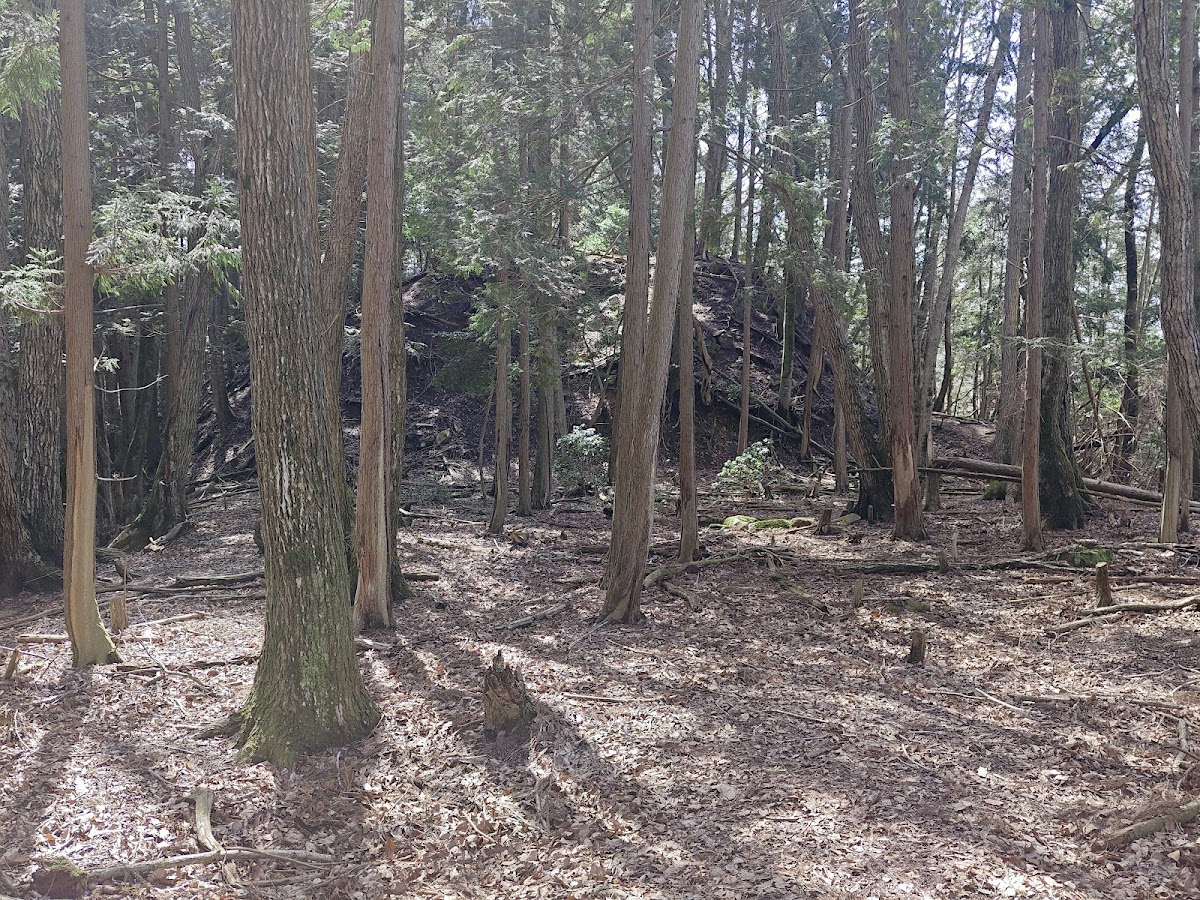
Within the current Ozekiyama Park, traces of the former castle can be seen in many places. The main enclosure was located at the mountaintop, and traces remain of the enclosures arranged in stages from there. While many parts have been altered during the development of the park, careful observation of the terrain reveals traces of artificially created flat areas and cut slopes.
Of particular note are the remaining stone walls. These stone walls are thought to have been built during the Fukushima or Asano clan period, and are valuable remains that convey the castle-building techniques of that time. The stonework of the stone walls shows the transitional characteristics from rough-hewn stonework to fitted stonework, clearly representing the features of castle architecture from the early Edo period.
Hatsumo-kaku Ruins and Observation Deck
At the summit are the ruins of the Hatsumo-kaku observatory, built during the Asano clan’s rule. An observation deck now stands on this site, offering panoramic views of Miyoshi city, the townscape of Tokaichi, and even the distant Chugoku Mountains.
Hatsumo-kaku was not merely an astronomical observation facility, but also a symbolic building representing the domain’s promotion of learning. The establishment of an observatory in a regional domain during the Edo period was rare, demonstrating the high cultural level of the Miyoshi domain. The view from the current observation deck allows one to imagine the starry sky that the astronomers of that time gazed upon.
Highlights of Ozekiyama Park
As a Cherry Blossom Spot
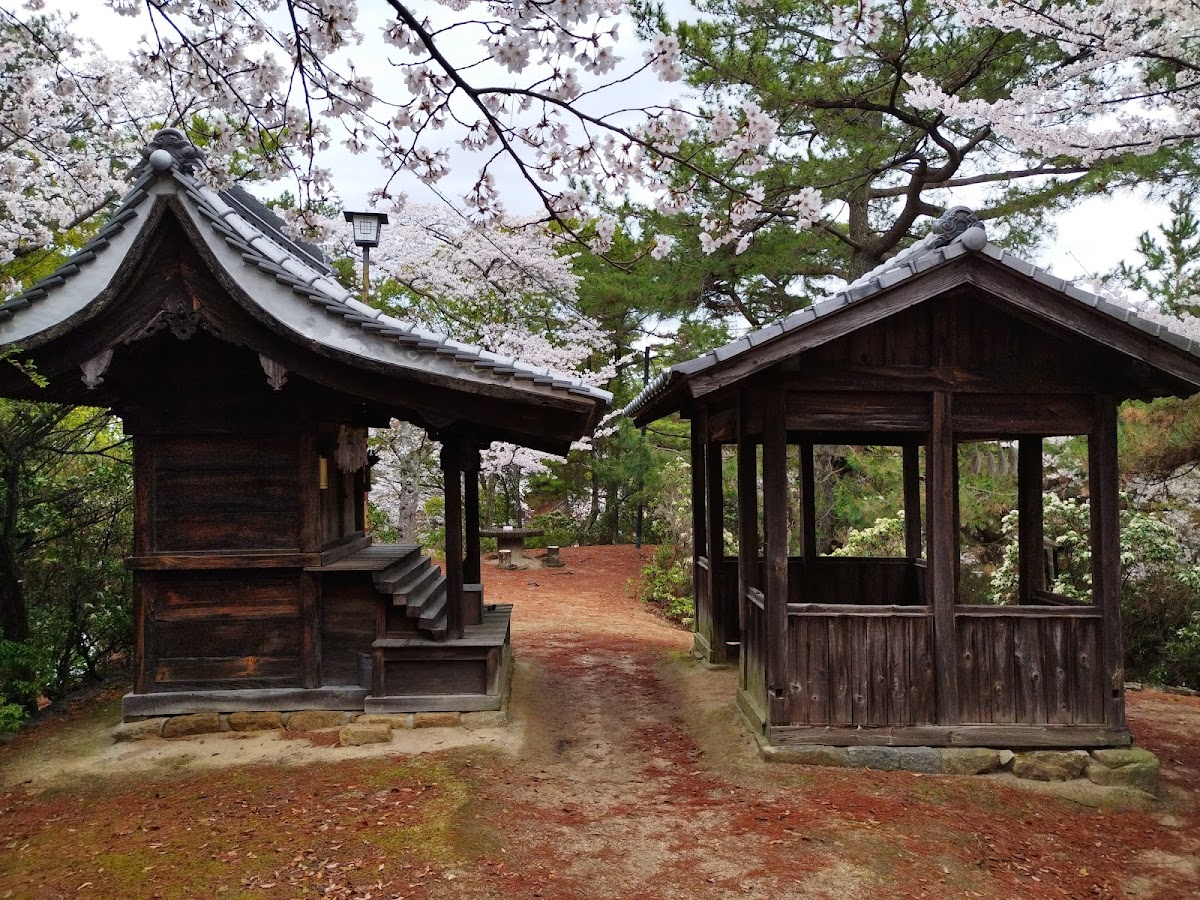
Ozekiyama Park is known as one of the leading cherry blossom viewing spots in Hiroshima Prefecture. The park is home to approximately 500 Somei Yoshino cherry trees, which typically reach their peak bloom from late March to early April. The sight of the entire mountain bathed in cherry blossom pink is breathtaking, attracting many visitors every year.
The nighttime cherry blossoms are particularly spectacular. The illuminated blossoms reflected on the surface of the Gonokawa River create a magical scene, offering a different charm than during the day. The sea of cherry blossoms viewed from the mountaintop observation deck is truly a magnificent sight.
Autumn Foliage Spot
Equally famous as the cherry blossoms are the autumn foliage. From late October to mid-November, the maple and other trees in the park turn a brilliant red, transforming the entire mountain into a fiery spectacle. During the autumn foliage season, the “Ozekiyama Maple Festival” is held, featuring sales of local specialties and various events.
The best spots for viewing the autumn foliage are not limited to the mountaintop; there are also many along the walking trails. One of the charms of Ozekiyama Park is that you can enjoy the autumn foliage from various angles while strolling leisurely. The contrast between the autumn leaves along the Gonokawa River and their reflection on the river surface is magnificent, making it a popular spot for photography enthusiasts.
Nature in Every Season
Ozekiyama Park is worth visiting in seasons other than cherry blossoms and autumn leaves. In early summer, the fresh greenery is beautiful, making it ideal for a walk while enjoying forest bathing. In summer, the shade of the trees is cool, allowing you to spend a quiet time away from the hustle and bustle of the city.
In winter, you can enjoy a snowy landscape, and the contrast between snow-covered Ozekiyama and the townscape of Miyoshi is deeply picturesque. It is also known as a spot for bird watching, and birdwatching enthusiasts sometimes visit.
Points to See for Castle Ruins
Even though it is currently maintained as a park, you can still see castle ruins if you observe carefully. The main points to see are as follows:
Stone Wall Ruins: The stone walls remaining in several places within the park are valuable relics that show the castle construction techniques of the time. The stone walls, particularly near the summit and on the mountainside, are in excellent condition.
Remains of Enclosures: Multiple remains of flat, constructed enclosures can be identified. Many areas now used as park plazas and walking paths were formerly enclosures.
Cut Slopes: Traces of artificially carved steep slopes (cut slopes) remain. These are important remains for understanding the defensive function of the site.
Remains of Moats: Traces of moats cutting across the mountain ridge can also be found in some areas.
How to Access Ozekiyama Castle
Access by Public Transportation
By JR
- Get off at JR Geibi Line “Miyoshi Station,” approximately 15 minutes on foot.
- Previously, JR Sanko Line “Ozekiyama Station” was the nearest station, but the Sanko Line was discontinued in 2018.
By Bus
- From Miyoshi Station, take a Chugoku Bus (towards Koyama Bus Depot) and get off at the “Ozekiyama Park” bus stop.
- Bus service is limited, so it is recommended to check the timetable in advance.
Access by Car
From the Expressway
- Approximately 10 minutes from Chugoku Expressway “Miyoshi IC”
- Approximately 15 minutes from Matsue Expressway “Miyoshi Higashi IC”
Parking Information
- There is free parking at Ozekiyama Park (approximately 50 regular cars).
- It gets crowded during cherry blossom and autumn foliage seasons, so early arrival is recommended.
- If the parking lot is full, you can use the public parking lots in Miyoshi city center and access the park on foot.
Location and Contact Information
Address: 439-3 Nakasho, Miyoshi-cho, Miyoshi City, Hiroshima Prefecture
Management: Hiroshima Prefecture (Prefectural Urban Park)
Opening Hours: Always open (the hiking trail to the observation deck is also accessible 24 hours a day)
Admission Fee: Free
Inquiries: Miyoshi City Tourism Association or Hiroshima Prefecture Park Management Office
Nearby Tourist Attractions
Highlights of Miyoshi City Center
Miyoshi city center, which developed as a castle town of Ozekiyama Castle, has many historical sights.
Miyoshi Doll Museum: A museum exhibiting “Miyoshi Dolls,” a traditional craft that has continued since the Edo period. It is within walking distance of Ozekiyama Park.
Miyoshi Winery: A facility that manufactures and sells wine produced in Hiroshima Prefecture, where you can enjoy tastings and shopping. It is about a 10-minute drive away.
Okuda Gensō & Koyume Museum: This museum exhibits works by Japanese painter Okuda Gensō and doll artist Okuda Koyume.
Nearby Castles
For castle enthusiasts, other castle ruins around Miyoshi are worth visiting.
Hikumayama Castle: The main castle of the Miyoshi clan, which was the residence of Ozekiyama Castle. A full-fledged mountain castle built on a mountaintop approximately 500 meters above sea level, the remains are well-preserved. Approximately 20 minutes by car.
Miyoshi Jinya Ruins: The site where the Miyoshi Domain’s administrative office was located, now situated in the center of Miyoshi city. While few remains exist, an information board has been installed.
Kōyama Castle: A mountain castle located in Sera District, with well-preserved remains from the Sengoku period. Approximately 40 minutes by car.
Notes and Recommended Ways to Enjoy Your Visit
Clothing and Equipment
While there is a well-maintained walking path to the mountaintop observation deck, there is a certain degree of incline. We recommend wearing comfortable walking shoes. Particular caution is needed after rain, as the path can become slippery.
In summer, insect repellent spray is recommended; in winter, warm clothing will ensure a comfortable visit. Also, since there is little shade at the summit, a hat and sunscreen are advisable on sunny days.
Photography Tips
Ozekiyama Castle Ruins (Ozekiyama Park) is a very attractive photography spot.
From the Mountaintop Observation Deck: A spectacular viewpoint offering panoramic views of Miyoshi city and the confluence of the Gonokawa River. Photos are especially beautiful during the morning and evening slanted light.
Stone Walls and Cherry Blossoms/Autumn Leaves: Photos combining the castle ruins with seasonal colors express the harmony of history and nature.
From the Riverside: Photographing the entire Ozekiyama mountain from the opposite bank of the Gonokawa River creates a picture that conveys the excellent location of the mountain castle.
Estimated Time Required
- Round trip to the mountaintop observation deck: Approximately 30-40 minutes
- Thoroughly exploring the castle ruins: Approximately 1-1.5 hours
- Enjoying a stroll during cherry blossom or autumn foliage season: Approximately 1.5-2 hours
- Combining with surrounding tourist spots: Half a day to a full day
Historical Value and Modern Significance of Ozekiyama Castle
Importance in Regional History
Ozekiyama Castle is a castle that symbolizes the transition period from the medieval to the early modern period in Bingo Province. From the rule of the Miyoshi clan, a local lord during the Sengoku period, to the Fukushima clan under the Toyotomi regime, and then to the Asano clan under the Edo shogunate, the character of the castle changed with the times.
This transition is not merely the history of a single castle, but also provides important clues for understanding the regional history from eastern Hiroshima Prefecture to western Shimane Prefecture. In particular, the significant historical event of Fukushima Masanori’s dismissal and the subsequent establishment of the Miyoshi Domain concretely illustrate the characteristics of the Edo period’s shogunate-domain system during its establishment.
Cultural and Historical Significance of the “Hatsumokaku” Observatory
The “Hatsumokaku” observatory, established by the Asano clan on the mountaintop, is noteworthy in cultural history as an example of the promotion of learning in a regional domain. During the Edo period, astronomy was both a practical discipline essential for calendar creation and timekeeping, and a cutting-edge science.
The establishment of an observatory by a small domain like the Miyoshi Domain demonstrates the lord’s high level of cultural interest and his desire to educate his subjects. The name “Hatsumokaku” itself expresses the educational intention of “enlightening from ignorance,” indicating that it held meaning beyond a simple astronomical observation facility.
Role as a Park in Modern Times
Currently, Ozekiyama Park functions as a place of relaxation for citizens while maintaining its value as a historical heritage site. Not only does it attract many tourists as a famous spot for cherry blossoms and autumn leaves, but it is also used by local residents who enjoy daily walks and jogging.
This “transformation of a castle ruin into a park” is a good example of preserving historical heritage while making modern use of it. By developing it as a park without destroying the remains, it has become a place that is familiar to people who are not interested in history, and as a result, the significance of the castle ruins has been widely recognized.
Summary: The Charm of Ozekiyama Castle
Ozekiyama Castle is a valuable castle ruin that conveys the history from the Sengoku period to the early Edo period. It has passed through three eras, under the rule of the Miyoshi, Fukushima, and Asano clans, and has imbued with the characteristics of each era. Currently, it is developed as Ozekiyama Park, a spot that combines the value of a historical heritage site with the charm of being a famous spot for cherry blossoms and autumn leaves.
The view from the mountaintop at an altitude of 202 meters is magnificent, offering a panoramic view of Miyoshi city and the flow of the Gonokawa River. Parts of the castle ruins remain, and you can imagine its former appearance from the stone walls and bailey remains. Furthermore, the site of the “Hatsumokaku” observatory is an interesting place for understanding the academic culture of the Edo period.
When you visit Miyoshi City, be sure to stop by the Ozekiyama Castle ruins. It’s a recommended spot not only for history buffs, but also for those who want to enjoy nature and photography. Experience the harmony of history and nature at Ozekiyama, which shows different expressions in each of the four seasons.