Niho Castle (Hiroshima Prefecture) Complete Guide: History and Highlights of the Coastal Castle Built on Kogane-yama Mountain
What is Niho Castle?
Niho Castle (Niho-jo) was a Japanese castle (mountain castle) located near the summit of Kogane-yama Mountain in Minami-ku, Hiroshima City, Hiroshima Prefecture. Also known as “Nihojima Castle (Nihojima-jo/Nihoshima-jo),” it was an important base with the characteristics of a coastal castle built on Nihojima Island, which was once an island floating in Hiroshima Bay.
Although Kogane-yama Mountain is now connected to the mainland, before the land reclamation project in the Edo period, it was an independent island. Built on its 222-meter-high summit, the fortified mountain castle played a strategic role in controlling a key point for maritime traffic in Aki Province.
Basic Information on Niho Castle
- Location: Niho-cho, Minami-ku, Hiroshima City, Hiroshima Prefecture (near the summit of Kogane-yama Mountain)
- Elevation: 222 meters
- Relative Height: 222 meters
- Construction Period: Late Muromachi period (around the 15th century)
- Lords: Shirai clan, Kagawa Mitsukage, Miura Mototada
- Castle Structure: Mountain castle (with characteristics of a coastal castle)
- Year of Abandonment: Unknown (estimated to be the early Edo period)
History of Niho Castle
Construction and the Era of the Shirai Clan
The exact construction date of Niho Castle is unclear, but it is believed to have existed around the 15th century during the late Muromachi period. Initially, it functioned as one of the branch castles of the Fuchu Shirai clan, who were part of the Aki Takeda clan’s guard force (a group of samurai responsible for maritime security).
In 1495 (Meiō 4), Takeda Motonobu confirmed to Shirai Mitsutane, the lord of Fuchū Castle, the right to collect maritime taxes and rights related to sea transport in the waters off Niho. This historical document indicates that the Shirai clan controlled maritime transport from Niho Castle and played a part in controlling the seas of Hiroshima Bay.
As vassals of the Takeda clan, the Shirai clan played a crucial role in maritime security and securing economic interests in the region. Taking advantage of the geographical location of Niho Island, they fully functioned as a maritime fortress, monitoring and managing ships entering and leaving Hiroshima Bay.
The Fall of the Takeda Clan and the Conquest by Mōri Motonari
In the mid-16th century, the situation in Aki Province changed dramatically. In 1523 (Daiei 3), Mōri Motonari inherited the family headship and gradually expanded his power. When the Aki Takeda clan fell in 1541, the Shirai clan, who had been subordinate to the Takeda, was also attacked and captured by the forces of the independent Mori Motonari.
After capturing Niho Castle, Mori Motonari renovated and strengthened it. In particular, it is believed that he reinforced Niho Castle and the surrounding fortifications in preparation for the decisive battle against Sue Harukata in 1555.
The Era of the Kagawa and Miura Clans
Under the control of the Mori clan, Kagawa Mitsukage served as the castle guard (a position responsible for defending the castle). As important retainers of the Mori clan, the Kagawa clan continued to play a role in managing maritime traffic in Hiroshima Bay, using Niho Castle as their base.
Later, Miura Mototada also served as a castle lord. The Miura clan, as vassals of the Mori clan, also defended this strategic location.
Changes in the Edo Period and the Abandonment of the Castle
After the Battle of Sekigahara, the Mori clan’s territory was reduced to the two provinces of Suo and Nagato, and Fukushima Masanori was appointed to Hiroshima. Later, in 1619 (Genna 5), Asano Nagaakira became the lord of the Hiroshima domain.
In the Edo period, with the reclamation work of Higashi-Shinkai (present-day Shinonome, etc.) in 1662 (Kanbun 2), Nihojima Island became connected to the mainland of Hiroshima Castle town, including Hijiyama. This land reclamation project diminished the strategic value of Niho Castle as a sea castle, and it is believed that it was eventually abandoned.
Structure and Layout of Niho Castle
Overall Structure
Niho Castle is a mountain castle built around the 222-meter-high summit of Kogane-yama mountain. The castle complex consisted of two mountain peaks, north and south, and a saddle-shaped enclosure (a lower part of the ridge) between them.
As a mountain castle, it was relatively large in scale and is presumed to have had a complex structure with multiple kuruwa (flat areas within the castle). Taking advantage of its location facing the sea, it had a unique structure that combined the functions of a mountain castle, prepared for attacks from land, and a coastal castle, providing surveillance and defense from the sea.
Major Remains
Currently, the Niho Castle site is maintained as Kogane-yama Park, and many clear remains have disappeared due to later alterations. However, the atmosphere of the castle remains can still be felt on the mountaintop and ridge, and traces of the following remains remain:
- Kuruwa Remains: Traces of kuruwa can be seen on the flat area at the mountaintop.
- Cut-off Embankment: Traces of artificial leveling can be seen in some areas.
- Ridge Topography: Natural terrain used for defense remains.
Overall, the atmosphere of the castle remains can be felt, but due to park development and the installation of observation decks, it is difficult to clearly confirm the remains from that time.
Characteristics as a Coastal Castle
When Nihojima Island floated in Hiroshima Bay, Niho Castle functioned as a typical coastal castle. The entire island was surrounded by a natural moat, making land attacks impossible without the use of ships.
At the same time, the mountaintop offered a panoramic view of Hiroshima Bay, providing an ideal location for monitoring maritime traffic. Niho Castle played a crucial role as a strategic point controlling the maritime routes of the Seto Inland Sea.
Highlights of Niho Castle
View from the Summit of Kogane-yama Mountain
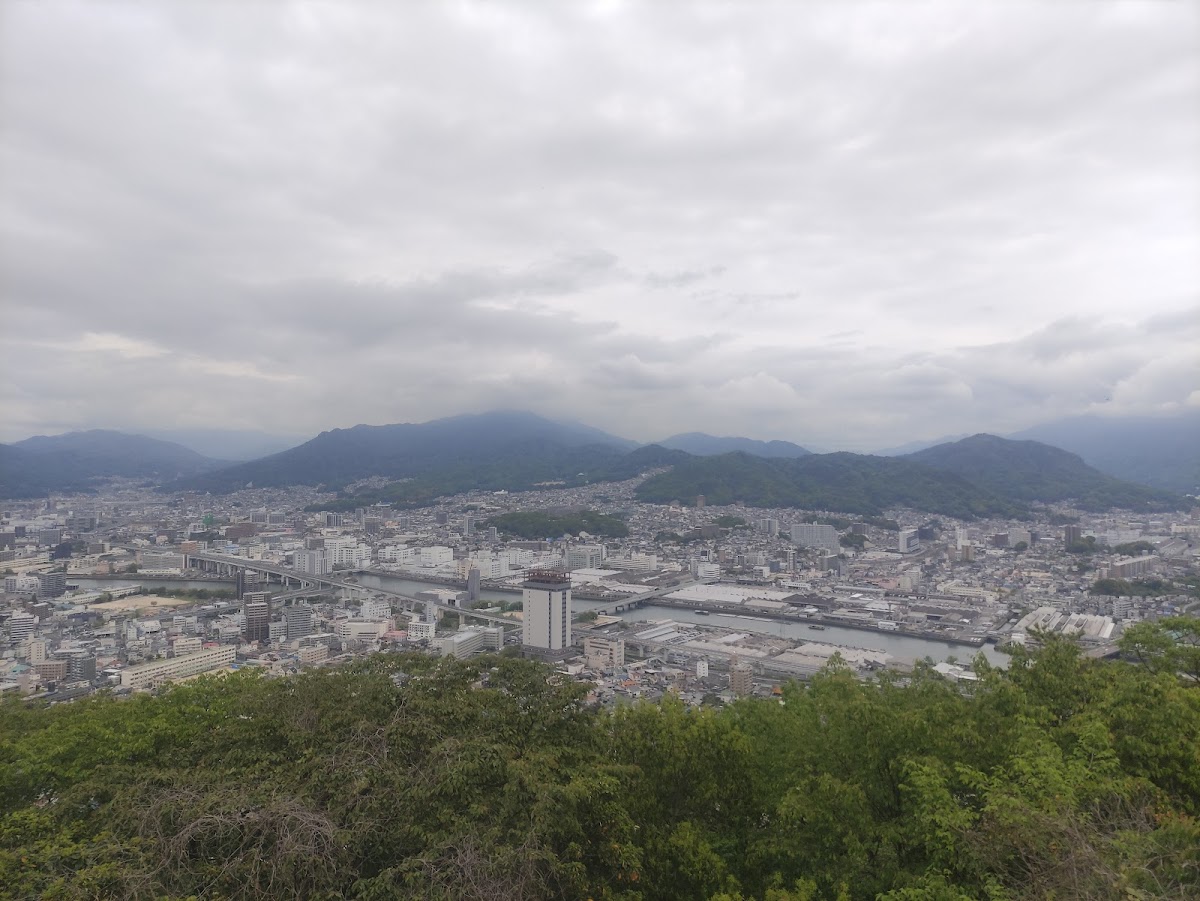
Currently, an observation deck is located at the summit of Kogane-yama Mountain, offering a panoramic view of Hiroshima city, Hiroshima Bay, and the islands of the Seto Inland Sea. The former castle lords likely monitored maritime traffic while gazing at the same scenery. Especially on clear days, Miyajima and Etajima islands can be seen, highlighting the ideal location for a coastal castle.
Walking Trails in Kogane-yama Park
Kogane-yama Mountain has been developed as a park, with several walking trails. Walking these paths allows you to experience the scale and topography of the former castle. While the path to the summit has some steep sections, you can climb while imagining the difficulties of attacking the mountain castle in those days.
Understanding the Historical Background
When visiting Niho Castle, it’s important to understand that it was not merely a mountain castle, but also a coastal castle, and that it transformed from an island to mainland due to land reclamation during the Edo period. Although difficult to imagine from the current topography, the fact that this was once an island floating in the sea is key to a deeper understanding of the castle’s value.
Access Methods
Access by Public Transportation
By JR
- Approximately 30 minutes on foot from JR Sanyo Main Line “Mukaiyo Station” to the Kogane-yama trailhead
- Approximately 30-40 minutes on foot from the trailhead to the summit
By Hiroshima Electric Railway (Streetcar)
- Get off at “Kogane-yama-shita” tram stop on Hiroshima Electric Railway Line 5, then approximately 25 minutes on foot to the trailhead
- Or get off at “Mukaiyo-shinmachi” tram stop on Hiroshima Electric Railway Line 3, then approximately 30 minutes on foot to the trailhead
By Bus
- Get off at “Kogane-yama Trailhead” bus stop on Hiroshima Bus, then approximately 5 minutes on foot to the trailhead
Access by Car
- Approximately 10 minutes from “Shinonome Exit” on Hiroshima Expressway Line 2
- Free parking available near the summit of Kogane-yama (approximately 50 cars)
- Set your car navigation system to: “Kogane-yama Park” or “Kogane-yama-cho, Minami-ku, Hiroshima City”
Hiking Routes
There are several hiking routes to Mt. Kogane, but the main routes are as follows:
- Front Hiking Trail: The most common route. It’s a paved path, making it safe for beginners.
- Eastern Hiking Trail: There are some slightly steep sections, but the distance is short.
- Road: A paved road leads to the summit, making it accessible by car.
Nearby Tourist Attractions
Kogane-yama Water Distribution Reservoir
A historical water distribution facility near the summit, offering insights into Hiroshima City’s water supply history.
Moto-Ujina
Like Niho Castle, Moto-Ujina was once an island. As part of the Seto Inland Sea National Park, it offers opportunities for nature walks.
Hiroshima Port
The current Hiroshima Port was once a hub for maritime traffic in Hiroshima Bay, monitored by Niho Castle. Ferries to Miyajima and Kure depart from here.
Hijiyama Park
Another historical mountain in Hiroshima City, home to the Hiroshima City Museum of Contemporary Art and a manga library.
Points to Note When Visiting
Clothing and Equipment
- Suitable hiking shoes (sneakers or better) are recommended.
- Take precautions against the sun in summer and warm clothing in winter.
- Bringing drinking water is recommended.
- Insect repellent spray is useful (especially in summer).
Best Time to Visit
- Spring (March-May): The weather is mild and ideal for hiking. The cherry blossom season is particularly beautiful.
- Autumn (October-November): The autumn foliage is beautiful, and the temperature is comfortable.
- Summer (June-September): Beware of the heat and insects. Early morning or evening visits are recommended.
- Winter (December-February): The air is clear and the views are excellent, but warm clothing is essential.
Estimated Time Required
- From the trailhead to the summit: Approximately 30-40 minutes on foot
- Sightseeing and rest at the summit: 30 minutes to 1 hour
- Descent: Approximately 25-35 minutes on foot
- Total: Allow approximately 2-3 hours.
Castles Related to Niho Castle
Hiroshima Castle
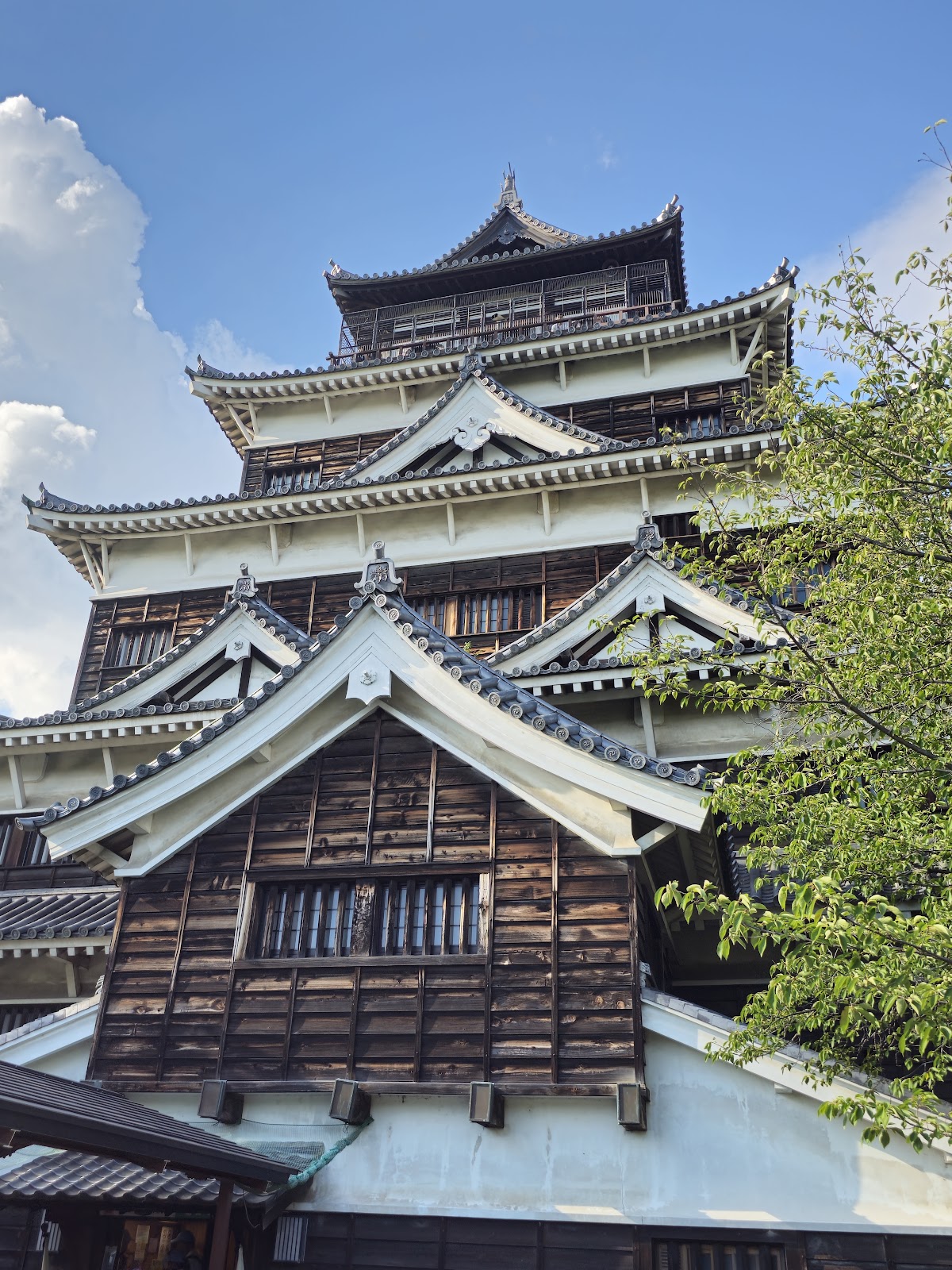
Hiroshima Castle, built by Mori Terumoto, became the center of Aki Province after Niho Castle was abandoned. Located in Naka Ward, Hiroshima City, its reconstructed keep is open to the public.
Kusatsu Castle
Another coastal castle facing Hiroshima Bay, it played a role in controlling a key point for maritime traffic, similar to Niho Castle.
Fuchu Castle (Aki Fuchu)
Fuchu Castle, the base of the Shirai clan, was located in Fuchu-cho, Aki-gun. These are important related castles for understanding the history of Niho Castle.
Yoshida-Kōriyama Castle
Yoshida-Kōriyama Castle, the base of Mōri Motonari, is a large mountain castle located in Aki-Takata City. It was the base of the Mōri clan during the period when they captured Niho Castle.
Historical Significance of Niho Castle
Strategic Point for Maritime Transportation
The greatest historical significance of Niho Castle lies in its strategic location controlling the maritime transportation routes of the Seto Inland Sea. Taking advantage of its location on an island in Hiroshima Bay, it functioned as a base that simultaneously achieved maritime security and secured economic benefits.
Symbol of the Power Transfer from the Takeda Clan to the Mōri Clan
The capture of Niho Castle symbolized the power transfer from the Takeda clan to the Mōri clan in Aki Province. Mōri Motonari’s securing of Niho Castle, a key point for maritime transportation, greatly contributed to his subsequent expansion of power during his unification of Aki Province.
A Historical Witness to Topographical Change
The history of Nihojima Island, once an island, becoming integrated with the mainland through land reclamation projects during the Edo period, is a valuable example of topographical change in Hiroshima. The Niho Castle ruins also serve as a testament to the history of large-scale topographical alteration by human hands.
Related Books
For those who wish to learn more about Niho Castle and castles in Hiroshima Prefecture, the following books are recommended:
*Medieval Castles and Residences of Hiroshima Prefecture*
A comprehensive survey report published by the Hiroshima Prefectural Board of Education covering medieval castles and residences in Hiroshima Prefecture. It includes detailed descriptions of Niho Castle.
*Comprehensive Survey of Japanese Castles, Vol. 13: Hiroshima and Okayama*
The Hiroshima and Okayama volume of the *Comprehensive Survey of Japanese Castles* series published by Shin Jinbutsu Oraisha. It systematically explains castles in the region, including Niho Castle.
*Everything About Mori Motonari*
A book detailing the life and achievements of Mori Motonari. It deepens understanding of Motonari’s military actions, including the capture of Niho Castle.
Castles of the Seto Inland Sea
This book provides a specialized explanation of coastal castles along the Seto Inland Sea. You can learn about the characteristics and roles of coastal castles like Niho Castle.
Summary
Niho Castle (Nihojima Castle) was a mountain castle located on Kogane-yama in Minami-ku, Hiroshima City, Hiroshima Prefecture. It is an important historical site with the characteristics of a coastal castle built on an island in Hiroshima Bay. It functioned as a branch castle of the Shirai clan in the late Muromachi period. After the fall of the Takeda clan, it was captured by the forces of Mori Motonari, and thereafter the Kagawa and Miura clans served as castle guards.
Although much of the remains have been lost, it has been developed into Kogane-yama Park, where you can enjoy the view from the mountaintop. By visiting with an understanding of its historical background as an island, you can more deeply appreciate the strategic value and historical significance of this castle.
It is relatively easy to access from Hiroshima City, making it an attractive spot where you can enjoy both historical and nature walks. This is a recommended spot not only for those interested in Hiroshima’s history and castle enthusiasts, but also for those who want to enjoy the beautiful scenery of the Seto Inland Sea.