Ogurayama Castle (Hiroshima Prefecture, Yamagata District) Complete Guide | The 170-Year Residence of the Kikkawa Clan and the Highlights of its Remains
What is Ogurayama Castle?
Ogurayama Castle is a mountain castle located in Ogurayama, Shinjo, Kitahiroshima-cho, Yamagata District, Hiroshima Prefecture. It is a historical castle that functioned as an important base for the Kikkawa clan in Aki Province for approximately 170 years. Also known as Ogura Castle, Ogurayama Castle, and Momijiyama Castle, it is built on a hill 460m above sea level and approximately 80m above ground level, on the north side of the Shinjo Basin.
On August 28, 1986, along with six other sites related to the Kikkawa clan, it was designated a National Historic Site as the “Kikkawa Clan Castle Site,” and is currently maintained as a historical park. As a typical example of a medieval mountain castle in the Chugoku region, it holds an important position in castle research.
History of Ogurayama Castle
From Construction to the Kikkawa Clan’s Base
Ogurayama Castle was built in the late 14th century, at the end of the Nanboku-cho period, by Kikkawa Tsunemi. When Kikkawa Tsunemi moved from his previous base, Surugamaru Castle, to Shinjo, he chose Ogurayama to build his castle. Its strategic location overlooking the Shinjo Basin and its ability to control surrounding transportation routes are considered to be the reasons for its selection as a castle site.
The Kikkawa clan was a samurai family that had existed since the Kamakura period and was expanding its power in Aki Province. By making Ogurayama Castle their base, they established control over the entire Shinjo Basin and solidified their power base for the Sengoku period.
The Development of the Kikkawa Clan and Ogurayama Castle
From the Muromachi period to the Sengoku period, the Kikkawa clan expanded its power centered around Ogurayama Castle. During this period, in Aki Province, local lords were engaged in diplomacy and strategy for survival, caught between powerful forces such as the Ouchi and Amago clans.
The Kikkawa clan was no exception, maintaining their own sphere of influence while sometimes aligning themselves with the Ouchi and sometimes with the Amago clans. Ogurayama Castle continued to function as the political and military center of the Kikkawa clan during this turbulent era.
Relocation to Hinoyama Castle and the End of Ogurayama Castle
In 1550, the 11th head of the Kikkawa clan, Kikkawa Motoharu, built a new castle, Hinoyama Castle (Hiyama Castle), and moved the base there, thus ending the role of Ogurayama Castle. Kikkawa Motoharu was born the second son of Mori Motonari and is known as a renowned general who inherited the Kikkawa family.
The relocation to Hinoyama Castle is believed to have been aimed at creating a larger fortification and strengthening its defensive capabilities. Ogurayama Castle served as the residence of the Kikkawa clan for approximately 170 years before being abandoned. However, its remains were preserved in good condition.
Structure and Layout of Ogurayama Castle
Layout Centered on the Main Enclosure (Honmaru)
Ogurayama Castle is a mountain castle with a series of enclosures, centered on the main enclosure (Honmaru) at the summit of Mount Ogurayama. The second enclosure (Ninokuruwa) is located to the northwest, the third enclosure (Sannomaru) to the northeast, and the lord’s quarters (Gozasho) to the southwest. The main enclosure measured approximately 50m east-west and 30m north-south, and functioned as the central part of the castle.
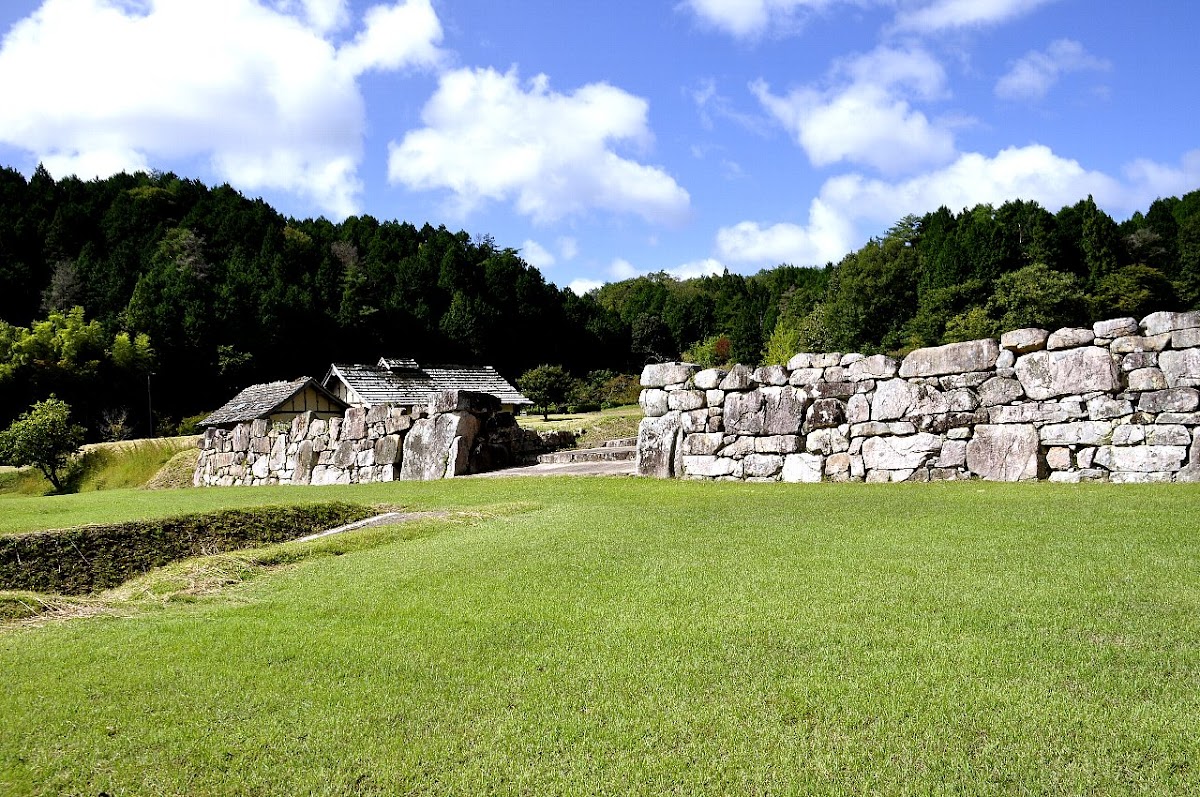
Earthworks surrounded the main enclosure, and their remains can still be clearly seen today. The height of the earthworks varies depending on the location, but up to approximately 2m remains, conveying the appearance of the defensive facilities at the time.
Layout of the Second and Third Enclosures
The second enclosure, located northwest of the main enclosure, was the second most important enclosure after the main enclosure and is thought to have been used as living quarters for retainers and a defensive base. A moat was constructed between the second bailey and the main bailey, enhancing its defensive capabilities.
Similarly, the third bailey, located to the northeast, is an important enclosure that constitutes the castle’s defensive system. These baileys functioned as part of a multi-layered defensive system protecting the main bailey.
The Lord’s Residence and Living Space
The lord’s residence, located to the southwest, is believed to have been the site of the lord’s living quarters. It is presumed that buildings were arranged utilizing the relatively flat terrain. Excavations around the lord’s residence have yielded pottery fragments believed to have been used in daily life, confirming its function as a living space.
Moats and Defensive Structures
Ogurayama Castle features multiple moats, designed to prevent enemy intrusion by blocking the ridgeline. In particular, the moats between the main bailey and the second bailey, and those separating each bailey, remain today as clearly defined geographical features approximately 3-5 meters deep.
These moats not only cut through the terrain but also restricted enemy movement, creating a favorable combat environment for the defenders.
Current Status of Ogurayama Castle Ruins and Development
Development as a Historical Park
The Ogurayama Castle ruins are currently being developed as a historical park. Access paths and information boards have been installed to allow visitors to safely view the remains. A parking lot is also available, with space for approximately 80 cars.
The access path is relatively gentle, and it takes about 15-20 minutes on foot to reach the main enclosure. Information boards are installed along the way, allowing visitors to learn about the castle’s history and structure as they ascend.
Preservation of the Remains
The remains of Ogurayama Castle are still well-preserved, even after approximately 470 years since its abandonment. The layout of the main enclosure, second enclosure, and third enclosure is clear, and defensive structures such as earthworks and moats are clearly visible.
In particular, the earthworks around the main enclosure are well-preserved, making them valuable remains that allow visitors to experience the defensive system of a medieval mountain castle. Furthermore, the elevation differences and cliffs of each enclosure remain clearly visible, allowing visitors to experience the layout of the castle at that time.
Highlights of the Visit
The main highlights of the Ogurayama Castle Ruins are as follows:
- Main Enclosure Earthworks: The earthworks protecting the central part of the castle remain well-preserved, allowing for an understanding of the defensive structure of a medieval mountain castle.
- Moats: The moats separating each enclosure remain clearly visible, allowing for a real appreciation of their defensive function.
- Enclosure Layout: The clearly defined layout of the castle, centered around the main enclosure, allows for an understanding of the overall structure of the castle.
- View: From the main enclosure, one can enjoy a panoramic view of the Shinjo Basin, demonstrating the strategic importance of this location.
- Lord’s Residence Site: This is believed to be the site of the lord’s residence, offering insight into the castle’s function as a living space.
Access Information and Visitor Guide
Location
Ogurayama, Shinjo, Kitahiroshima-cho, Yamagata-gun, Hiroshima Prefecture
Transportation Access
Access by Car:
- Approximately 5 minutes from Oasa IC on the Hamada Expressway
- Approximately 20 minutes from Chiyoda IC on the Chugoku Expressway
- Parking: Free (approximately 80 spaces)
Access by Public Transportation:
- Approximately 70 minutes by Hiroden Bus (towards Kitahiroshima-cho) from JR Hiroshima Station, get off at “Shinjo” bus stop, then approximately 15 minutes on foot
Visiting Information
- Admission Fee: Free
- Visiting Hours: Open all day (however, daylight hours before sunset are recommended)
- Estimated Time Required: Approximately 40-60 minutes round trip from the parking lot to the main enclosure
- Restrooms: Available near the parking lot
- Notes: As it is a mountain castle, comfortable clothing and shoes are recommended.
Related Historical Sites in the Surrounding Area
When visiting Ogurayama Castle, we recommend also visiting the following historical sites related to the Kikkawa clan:
- Hinoyama Castle Ruins: The next base of operations for Kikkawa Motoharu after he moved from Ogurayama Castle
- Surugamaru Castle Ruins: The Kikkawa clan’s base before Ogurayama Castle
- Kitahiroshima Town Historical and Folk Museum: A facility where you can learn about the history of the Kikkawa clan and the region
Historical Significance of the Kikkawa Clan and Ogurayama Castle
The Kikkawa Clan’s Position in Aki Province
The Kikkawa clan played an important role as a powerful local lord in Aki Province from the medieval period to the Sengoku period. The period when Ogurayama Castle was their base was a crucial time when the Kikkawa clan solidified their foundation as a regional power, laying the foundation for the remarkable development later under Kikkawa Motoharu.
Kikkawa Motoharu was born as the second son of Mori Motonari, and after inheriting the Kikkawa family, he played an active role as a powerful branch castle of the Mori clan. The foundation for this was the sphere of influence and retainer group established during the time of Ogurayama Castle.
Value in Medieval Mountain Castle Research
Ogurayama Castle holds an important position in castle research as a typical example of a medieval mountain castle in the Chugoku region. Its academic value is highly regarded as a site that demonstrates the development process of mountain castles from the late Nanboku-cho period to the Sengoku period.
In particular, the layout of the castle, centered around the main enclosure, and the arrangement of defensive facilities such as earthworks and moats, are valuable resources for understanding the castle construction techniques and tactical thinking of the time.
Significance of National Historic Site Designation
The designation as a National Historic Site in 1986 signified the official recognition of Ogurayama Castle’s historical and academic value. The designation of six sites, including Ogurayama Castle, as the “Yoshikawa Clan Castle Sites” meant that the group of sites would be preserved and utilized as a comprehensive historical site that allows for a thorough understanding of the Yoshikawa clan’s historical changes.
Seasons and Best Time to Visit Ogurayama Castle
Spring at Ogurayama Castle
Spring (March to May) is a beautiful season with fresh greenery, making it ideal for strolling around the mountain castle. The weather is mild, the climbing paths are easy to walk, and it’s recommended even for first-time visitors.
Summer at Ogurayama Castle
Summer (June to August) is characterized by lush greenery and cool shade, but insect repellent is necessary. Visiting in the early morning or evening is recommended.
Autumn at Ogurayama Castle
Autumn (September to November) is a season when the autumn leaves are beautiful, allowing you to truly appreciate the origin of its nickname, “Autumn Leaves Castle.” The best time to see the autumn leaves is from late October to early November, attracting many visitors. The views are excellent, making it an ideal season for photography.
Winter at Ogurayama Castle
Winter (December to February) may see snow, so caution is advised when visiting. However, the snow-covered mountain castle offers a fantastical and unique winter landscape. We recommend checking the weather and road conditions before your visit.
Precautions and Manners When Visiting Ogurayama Castle
Clothing and Equipment
The following equipment is recommended for visiting the mountain castle:
- Comfortable walking shoes (trekking shoes or sneakers)
- Comfortable clothing
- Hat (for sun protection)
- Drinking water
- Insect repellent spray (spring to autumn)
- Camera (for commemorative photos)
Safety Precautions
- Be careful as the ground can be slippery during and after rain.
- Visiting in a group is recommended over visiting alone.
- Plan your time carefully to descend before sunset.
- Check your cell phone signal strength in advance.
Manners for Protecting Historical Sites
- Be careful not to damage the remains.
- Always take your trash with you.
- Refrain from collecting plants or feeding animals.
- Take care of information boards and signs.
Photo Spots at Ogurayama Castle
View from the Main Enclosure
From the main enclosure, you can enjoy a panoramic view of the Shinjo Basin, giving you a real sense of why the Kikkawa clan made this their base. It’s an especially excellent photo spot during the autumn foliage season.
Remains of Earthworks
The earthworks around the main enclosure are well-preserved, making it a valuable location for photographing the defensive structures of a medieval mountain castle. Photographing from angles that emphasize the cross-section and height of the earthworks conveys their scale effectively.
Topography of the Moats
The moats separating each enclosure are most effective when photographed from angles that allow you to appreciate their depth and width. The moat between the main enclosure and the second enclosure is particularly large and suitable for photography.
Summary
Ogurayama Castle is an important mountain castle that functioned as the base of the Kikkawa clan for approximately 170 years, from the end of the Nanboku-cho period. Built at an altitude of 460m overlooking the Shinjo Basin in Kitahiroshima-cho, Yamagata-gun, Hiroshima Prefecture, Ogurayama Castle boasts a well-preserved layout with a series of interconnected enclosures centered around the main keep, as well as well-preserved remains such as earthworks and moats.
Also known as Ogura Castle, Kokurayama Castle, and Momijiyama Castle, it was designated a national historic site in 1986 as the “Yoshikawa Clan Castle Site.” Currently, it is maintained as a historical park with complete facilities including parking and restrooms, making it easily accessible.
From its construction by Yoshikawa Tsunemi to its relocation to Hinoyama Castle by Yoshikawa Motoharu, this valuable historical site tells the story of the Yoshikawa clan’s development in Aki Province, making it a recommended destination not only for castle enthusiasts and history buffs but also for general tourists. Be sure to visit Ogurayama Castle, where you can experience the romance of medieval history along with the beautiful scenery of the Shinjo Basin.