Kimura Castle (Takehara City, Hiroshima Prefecture) Complete Guide | History, Remains, and Access to the Mountain Castle Associated with Kobayakawa Takakage
Located in Shinjo-cho, Takehara City, Hiroshima Prefecture, Kimura Castle is a mountain castle with a history of approximately 300 years, serving as the residence of the Takehara Kobayakawa family, who controlled a strategically important transportation hub on the Seto Inland Sea during the Sengoku period. It has attracted particular attention among Sengoku history enthusiasts because Kobayakawa Takakage, known as the third son of Mori Motonari, served as its lord in his youth. Built on the summit of a 351m-high hill, the castle retains well-preserved characteristic remains of a medieval mountain castle, including stone walls, vertical moats, ridged vertical moats, and trenches, and is protected as a Hiroshima Prefecture designated historical site.
History of Kimura Castle
Establishment of the Takehara Kobayakawa Family and Construction of Kimura Castle
The history of Kimura Castle dates back to the second year of Shoka (1258). The history of the Takehara Kobayakawa family began when Kobayakawa Masakage, the fourth son of Numata Kobayakawa Shigehira, was granted the Tsuu-Takehara estate and a portion of Nashiha-go in Numata estate, and settled in this area. Masakage obtained the position of jitō (land steward) of Takehara estate and built Kimura Castle on a hill 351 meters above sea level, making it his residence.
Masakage became the first head of the Takehara Kobayakawa family, establishing a powerful presence in the region as an independent branch from the main Numata Kobayakawa family. Takehara had long flourished as a port town facing the Seto Inland Sea, and by controlling this strategically important maritime transportation hub, the Kobayakawa family gained a crucial base both economically and militarily.
Prosperity of the Takehara Kobayakawa Family
The Takehara Kobayakawa family, based at Kimura Castle, continued to rule this area for approximately 300 years. From the Muromachi period to the Sengoku period, the Takehara Kobayakawa family controlled maritime traffic by controlling the port of Takehara, and accumulated economic power through salt production and shipping.
The Takehara Kobayakawa family used Kimura Castle as their base for 13 generations and grew into a powerful local lord in eastern Aki Province. They particularly expanded their power by leveraging their geographical advantage in the struggle for control of the Seto Inland Sea.
The Death of Kobayakawa Okikage and the Succession Problem
In 1541, Kobayakawa Okikage, the 13th head of the Takehara Kobayakawa family, participated in the attack on Sato Ginzan Castle (present-day Takedayama, Asaminami-ku, Hiroshima City) alongside Mori Motonari. However, Okikage died of illness in the camp.
Okikage had no male heir, and the succession of the Takehara Kobayakawa family became a major problem. Okikage’s wife was a niece of Mori Motonari (the daughter of Motonari’s older brother, Mori Okimoto), and this blood relation becomes key to the next development.
The Entry of Mori Motonari’s Third Son, Takakage
In 1544, Takakage, the third son of Mori Motonari, inherited the Takehara Kobayakawa family at the young age of 12 and entered Kimura Castle as the 14th head of the family. This was an adoption based on the marital relationship between the Mori and Kobayakawa families.
The young Takakage used Kimura Castle as his base to gain experience as the head of the Takehara Kobayakawa family. During this period, Takakage learned how to build relationships with maritime powers in the Seto Inland Sea and the fundamentals of domain management. It can be said that the origins of Takakage, who would later become famous as a “warrior of the sea,” were laid during this time at Kimura Castle.
Inheritance of the Numata Kobayakawa Family and Relocation to Takayama Castle
In 1550 (Tenbun 19), Takakage was adopted by Kobayakawa Shigehira, the head of the main Numata Kobayakawa family, thus inheriting the main Kobayakawa family as well. This unified the Takehara Kobayakawa and Numata Kobayakawa families, making Takakage the head of the entire Kobayakawa clan.
The following year, in 1551 (Tenbun 20), Takakage moved to Takayama Castle (Hongo-cho, Mihara City, Hiroshima Prefecture), the headquarters of the Numata Kobayakawa family. This marked the end of Kimura Castle’s role as the main castle of the Takehara Kobayakawa family for approximately 300 years.
Abandonment of Kimura Castle and its Aftermath
After Takakage moved to Takayama Castle, Kimura Castle is believed to have been abandoned. However, some historical sources suggest the possibility that it was maintained as a subsidiary castle, and researchers are divided on whether it was completely abandoned or retained some function.
In any case, it is certain that Kimura Castle lost its role as the political and military center of the Takehara Kobayakawa family. Afterward, Takakage, as a senior retainer of the Mori family, gained control of the Seto Inland Sea and grew into a renowned general who played an active role in Toyotomi Hideyoshi’s Kyushu campaign and the Korean invasions.
Kimura Castle’s Layout and Structure
Location and Utilization of Topography
Kimura Castle is a typical medieval mountain castle built on the top of a hill 351 meters above sea level. Located north of Takehara city, it boasts an excellent location overlooking the Seto Inland Sea. This topographical advantage allowed for both monitoring maritime traffic and defending the port town of Takehara.
As a mountain castle, Kimura Castle has a defensive structure that skillfully utilizes the steep terrain. By making maximum use of the natural terrain and combining it with artificial defensive structures, it became an extremely difficult fortress to attack.
Major Remains
The Kimura Castle ruins still retain a variety of remains that are characteristic of medieval mountain castles.
Stone Walls
Stone wall remains have been confirmed at Kimura Castle. Since stone walls were not necessarily common in medieval mountain castles, this demonstrates the high economic power and technical skill of the Takehara Kobayakawa family. The existing stone walls are valuable resources for understanding the castle construction techniques of the time.
Vertical Moats
Vertical moats dug along the mountain slopes were important defensive structures to prevent attacks from the enemy’s flanks. Multiple vertical moats have been confirmed at Kimura Castle, and they played a role in preventing incursions from the ridges.
Ridge-Shaped Vertical Moats
Ridge-shaped vertical moats are a distinctive feature of Kimura Castle. This is a layout of multiple parallel vertical trenches, providing a highly effective defense against enemies climbing the slope. The ridged vertical trenches demonstrate late Sengoku period castle construction techniques, indicating that Kimura Castle incorporated the latest defensive theories.
Moat
Moats dug to cut across ridges are crucial defensive lines that block enemy advances. Kimura Castle features multiple moats, forming a multi-layered defensive structure.
Characteristics of the Castle Layout
Kimura Castle’s layout exhibits characteristics of a transitional period from medieval to Sengoku period mountain castles. While fundamentally relying on terrain-dependent defensive structures, it also incorporates new Sengoku period techniques such as ridged vertical trenches.
The castle grounds are relatively large, and it is believed that multiple enclosures were arranged around the main enclosure. Each enclosure was demarcated by moats and vertical trenches, creating a structure that allowed for tiered defense.
Highlights of Kimura Castle
Well-Preserved Ruins
The greatest highlight of Kimura Castle is the well-preserved ruins, even after its abandonment approximately 470 years ago. The ridged trenches, in particular, are clearly visible, offering a valuable glimpse into the castle-building techniques of the Sengoku period.
The stone wall remains are also important resources for understanding the development of stonework techniques in medieval mountain castles. The technique of stacking natural stones (nozurazumi) can be observed, offering a glimpse into the level of stonemasonry at the time.
Views and Historical Landscape
From the mountaintop at an altitude of 351m, you can enjoy a panoramic view of Takehara city and the beautiful Seto Inland Sea. Kobayakawa Takakage likely strategized his control of this strategically important maritime transportation point while gazing at this view.
Especially on clear days, you can see the islands of the Seto Inland Sea, giving you a real sense of why this area was so important to maritime powers.
Value as a Hiroshima Prefecture Designated Historic Site
Kimura Castle Ruins are protected as a Hiroshima Prefecture designated historic site and are an important cultural property that conveys the history of Aki Province from the medieval period to the Sengoku period. As a castle that nurtured the approximately 300-year history of the Takehara Kobayakawa family and the famous Sengoku general Kobayakawa Takakage, its historical value is extremely high.
Access and Visiting Information for Kimura Castle
Location
Address: Shinjo-cho, Takehara City, Hiroshima Prefecture
Kimura Castle Ruins are located in the mountainous area north of the city center of Takehara.
Transportation Access
Public Transportation
- Approximately 15 minutes by car from JR Kure Line “Takehara Station”
- Taking a taxi from Takehara Station is convenient
By Car
- Approximately 20 minutes from Sanyo Expressway “Kawachi IC”
- There is parking space near the castle entrance, but it is limited, so caution is advised.
Precautions When Visiting
Kimura Castle is a full-fledged mountain castle, and the following preparations and precautions are necessary when visiting. Clothing and Equipment
- Suitable hiking boots (trekking shoes recommended)
- Comfortable clothing
- Drinking water
- Insect repellent spray in summer
- Warm clothing in winter
Climbing Time
- Approximately 30-40 minutes on foot from the entrance to the main enclosure
- Allow 2-3 hours round trip if you want to thoroughly explore the ruins
- Plan with ample time to descend before sunset
Safety Considerations
- The mountain path has steep sections, so watch your step
- Visiting in a group is safer than climbing alone
- Avoid climbing in bad weather
- Check cell phone signal strength in advance
Best Time to Visit
Kimura Castle Ruins are open year-round, but the following times are especially recommended:
Spring (March-May)
The season of fresh greenery and mild weather makes it ideal for climbing.
Autumn (October-November)
The autumn foliage is beautiful, and the temperature is suitable for hiking. The view is also excellent.
Times to Avoid
- Rainy season (June-July): Mountain paths are slippery and dangerous
- Mid-summer (July-August): High risk of heatstroke
- During snowfall: Hiking trails are dangerous
Nearby Tourist Attractions
Takehara City Historic Townscape Preservation District
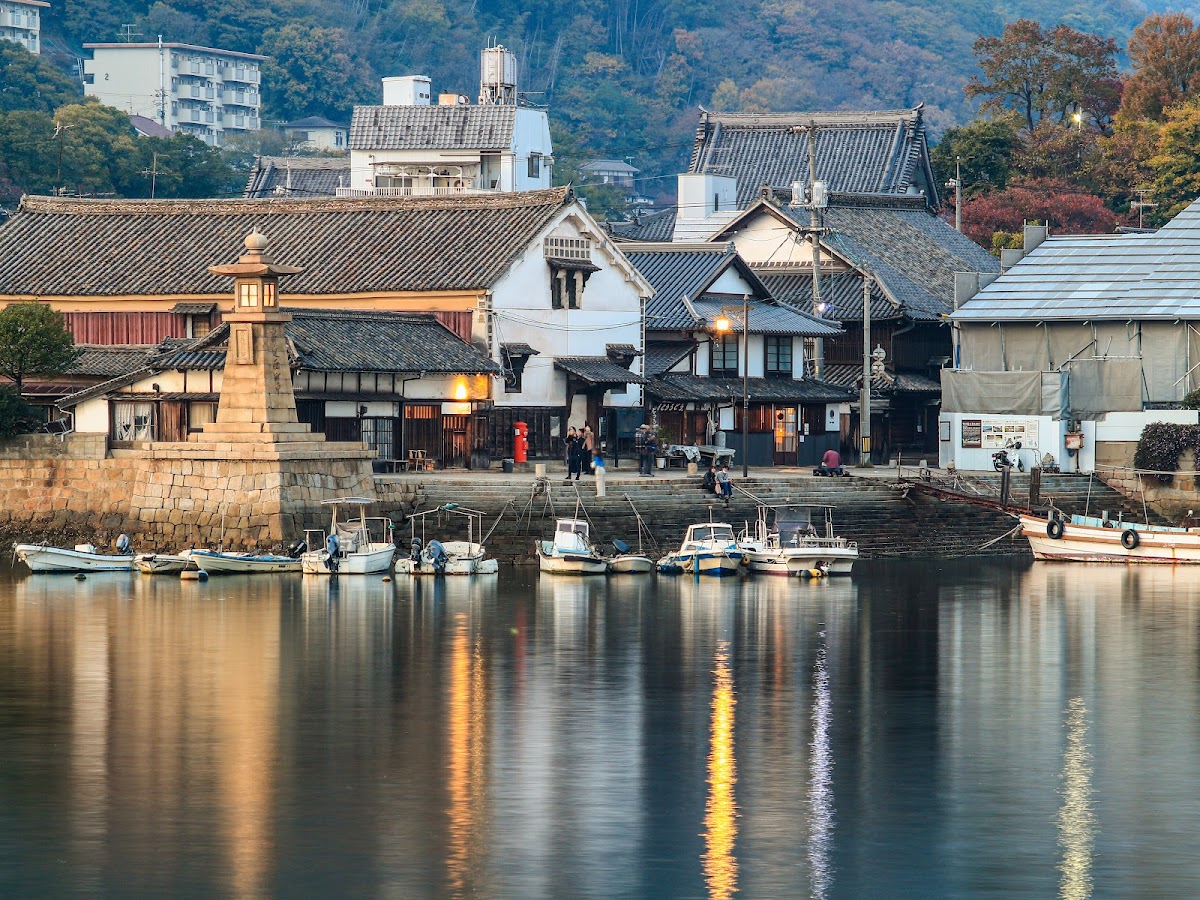
When visiting Kimura Castle, be sure to also visit the historic townscape preservation district in Takehara city. The townscape from the Edo period, when it prospered from salt production, is preserved, and you can enjoy the beautiful scenery known as “Aki’s Little Kyoto.” It was designated as an Important Preservation District for Groups of Traditional Buildings in 1982.
Takayama Castle Ruins
Visiting the Takayama Castle Ruins (Hongo-cho, Mihara City), where Kobayakawa Takakage moved from Kimura Castle, in conjunction with Kimura Castle will give you a deeper understanding of Takakage’s footsteps. Takayama Castle was the base of the Numata Kobayakawa family, and it became Takakage’s residence after he unified the two families.
Temples and Shrines Associated with the Kobayakawa Family
Numerous temples and shrines associated with the Kobayakawa family are scattered throughout Takehara City. Visiting these will allow you to gain a deeper understanding of the history and culture of the Takehara Kobayakawa family.
Kimura Castle and Kobayakawa Takakage
Takakage’s Time at Kimura Castle
Kobayakawa Takakage entered Kimura Castle at the tender age of 12. For the young Takakage, the six years at Kimura Castle were a crucial period for building his foundation as a military commander.
In Takehara, Takakage learned about negotiations with maritime powers in the Seto Inland Sea and the practicalities of domain management. His understanding of the economic structure of the Takehara Kobayakawa family, based on shipping and salt production, is believed to have contributed to his later success as a “military commander of the sea.”
Takakage’s Achievements and the Historical Significance of Kimura Castle
After moving from Kimura Castle to Takayama Castle, Kobayakawa Takakage achieved numerous accomplishments as a senior retainer of the Mori family. His achievements are too numerous to list, including his exploits in the Battle of Itsukushima, his control of the Seto Inland Sea, and his position as one of the Five Great Elders under the Toyotomi regime.
Kimura Castle occupies an important position in Sengoku period history as the castle that nurtured such a great general and as a castle that has marked the 300-year history of the Takehara Kobayakawa family.
Research and Preservation Activities of Kimura Castle
Protection as a Hiroshima Prefecture Designated Historic Site
Kimura Castle ruins are legally protected as a Hiroshima Prefecture designated historic site. This restricts the destruction and alteration of the remains, and preserves the historical landscape.
The Takehara City Board of Education’s Culture and Lifelong Learning Division is at the forefront of preserving, managing, and utilizing the castle ruins. Regular grass cutting and the installation of information boards are being carried out to create an environment where visitors can safely enjoy the site.
Future Challenges and Prospects
Several challenges remain in the preservation and utilization of Kimura Castle ruins.
Preservation Challenges
- Measures against weathering of remains and erosion by vegetation
- Protection of fragile remains such as stone walls
- Risk management of damage from natural disasters (typhoons, heavy rains, etc.)
Utilization Challenges
- Improvement of access routes and safety
- Enhancement of explanatory signs and information displays
- Promotion of utilization as a local tourism resource
- Information dissemination linked to increasing the recognition of Kobayakawa Takakage
It is hoped that by addressing these challenges, Kimura Castle ruins will be passed down to future generations as a valuable historical asset of the region.
Summary
Kimura Castle in Takehara City, Hiroshima Prefecture, is a historic mountain castle that served as the residence of the Takehara Kobayakawa family for approximately 300 years. From its construction in 1258 (Shoka 2) until its abandonment in 1551 (Tenbun 20), it functioned as a base for powerful local lords in eastern Aki Province.
Kimura Castle holds significant importance in Sengoku period history, particularly as the castle where Kobayakawa Takakage, the third son of Mori Motonari, spent his formative years from age 12 to 18. Takakage’s experiences at Kimura Castle formed the foundation for his later rise to become a renowned general known as a “warrior of the sea.”
The current Kimura Castle ruins retain well-preserved remnants of a medieval mountain castle, including stone walls, vertical moats, ridged vertical moats, and trenches, and are protected as a Hiroshima Prefecture designated historical site. From the 351m-high summit, one can enjoy a panoramic view of Takehara city and the Seto Inland Sea, truly appreciating why this location was considered a crucial point for maritime traffic.
While a visit to Kimura Castle requires preparation for a hike, it is a valuable historical site where one can feel the spirit of the Sengoku period, making it a must-visit for history buffs. A visit to the castle ruins along with the beautiful townscape of Takehara will provide a deeper understanding of the history and culture of Takehara under the rule of the Kobayakawa family.