Kannari Castle (Tomioka City, Gunma Prefecture): A Complete Guide to its History and Highlights | A Thorough Explanation from a Branch Castle of the Obata Clan to its Remains
What is Kannari Castle?
Kannari Castle is a Sengoku period mountain castle located in Yoshida Kannari, Tomioka City, Gunma Prefecture. It functioned as one of the branch castles of the Obata clan, a powerful local lord in Kanra District, Kozuke Province, and served as an auxiliary castle to Miyazaki Castle, located to the east.
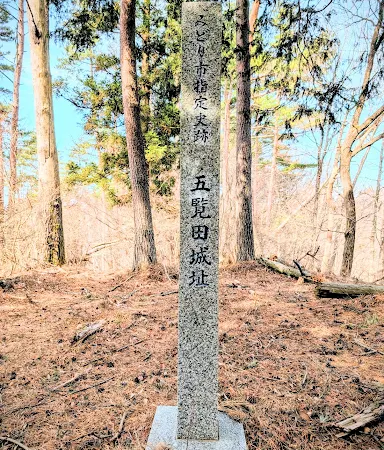
Built on Mount Kannari, approximately 288 meters above sea level, this castle was the second largest among the Obata clan’s castle complex, after their main base, Kunimine Castle, and was an important military base in Kozuke Province during the Sengoku period. Currently, it is maintained as the “Kannari Mountain Hiking Course,” and is a valuable historical site where remains such as earthworks, moats, and baileys can be seen in good condition.
History of Kannari Castle
Construction History and the Obata Clan
While there are no clear records regarding the exact construction date or detailed history of Kannari Castle, it is believed to have been built by the Obata clan, who ruled Kanra District in Kōzuke Province during the Sengoku period. The Obata clan expanded their power throughout Kanra District from their base at Kunimine Castle, and Kannari Castle was an important part of their network of branch castles.
The castle lord was Obata Zushōnosuke Kagesada, a member of the Obata clan who operated from Kannari Castle. The Obata clan, as a local lord subordinate to the Uesugi clan (the Kantō Kanrei, or Deputy Shogun of the Kanto region), sought to survive amidst the complex political situation in the Kanto region during the Sengoku period.
Alliance with Nagano Narimasa and the Capture of Kunimine Castle
During the Eiroku era (1558-1570), Obata Zushonosuke Kagesada allied himself with Nagano Narimasa, the lord of Minowa Castle, and launched a military operation to expel Obata Shigesada, the lord of Kunimine Castle. Nagano Narimasa was a powerful daimyo in Kozuke Province and a warrior known for his fierce resistance against the invasion of Takeda Shingen.
With the support of the Nagano clan, Kagesada captured Kunimine Castle and succeeded in gaining control of the Obata clan’s base. It is believed that Kannari Castle played an important role as a base for Kagesada’s military operations during this period. However, this rule did not last long.
Takeda Invasion and the Fall of the Castle
In 1561 (Eiroku 4), the forces of Takeda Shingen, a daimyo of Kai Province, invaded Kozuke Province, and Kannari Castle was captured by the Takeda clan. The Takeda clan expanded its power from Shinano Province to Kōzuke Province, and the territory of the Obata clan was no exception.
After the fall of Kannari Castle, Obata Shigesada re-entered Kunimine Castle, and the Obata clan was incorporated under the Takeda clan’s control. It is presumed that Kannari Castle functioned as a branch castle of the Takeda clan from this period onward, but detailed records do not remain.
Changes after the Tenshō Period
Entering the Tenshō period (1573-1593), amidst the turbulent events of the late Sengoku period, such as the fall of the Takeda clan (1582), the death of Oda Nobunaga, and Toyotomi Hideyoshi’s conquest of the Kanto region, the role of Kannari Castle is thought to have changed. The Obata clan ultimately became subordinate to Tokugawa Ieyasu and survived as hatamoto (direct retainers of the Tokugawa shogunate) during the Edo period.
It is unclear when Kannari Castle was abandoned, but it is presumed that it lost its function as a military base with the end of the Sengoku period and was subsequently abandoned.
Structure and Layout of Kannari Castle
Location as a Mountain Castle
Kannari Castle is a typical mountain castle built on the summit of Mt. Kannari, at an altitude of approximately 288 meters. With a relative height difference of about 80 meters, it boasts a highly defensible structure utilizing the steep terrain. Access routes from the foot of the mountain were limited, functioning as a natural stronghold to deter enemy incursions.
To the east of the castle was Miyazaki Castle, and Kannari Castle was positioned as its auxiliary castle (tsume-no-shiro). An auxiliary castle, in a castle system combining a residence (negoya) during peacetime with a mountain castle, refers to the fortress section on the mountaintop where one would take refuge in emergencies.
Arrangement of the Main Enclosure and Baileys
At the center of Kannari Castle is the main enclosure (shukaku), surrounded by multiple baileys (kuruwa) arranged in a stepped fashion. The main enclosure is located at the highest point of the castle and is thought to have functioned as the lord’s residence and command post.
The baileys are skillfully arranged to follow the terrain, and each is designed to function as an independent defensive unit. The baileys are separated by earthworks and moats, creating a structure that gradually prevents enemy incursions.
Characteristics of Earthworks
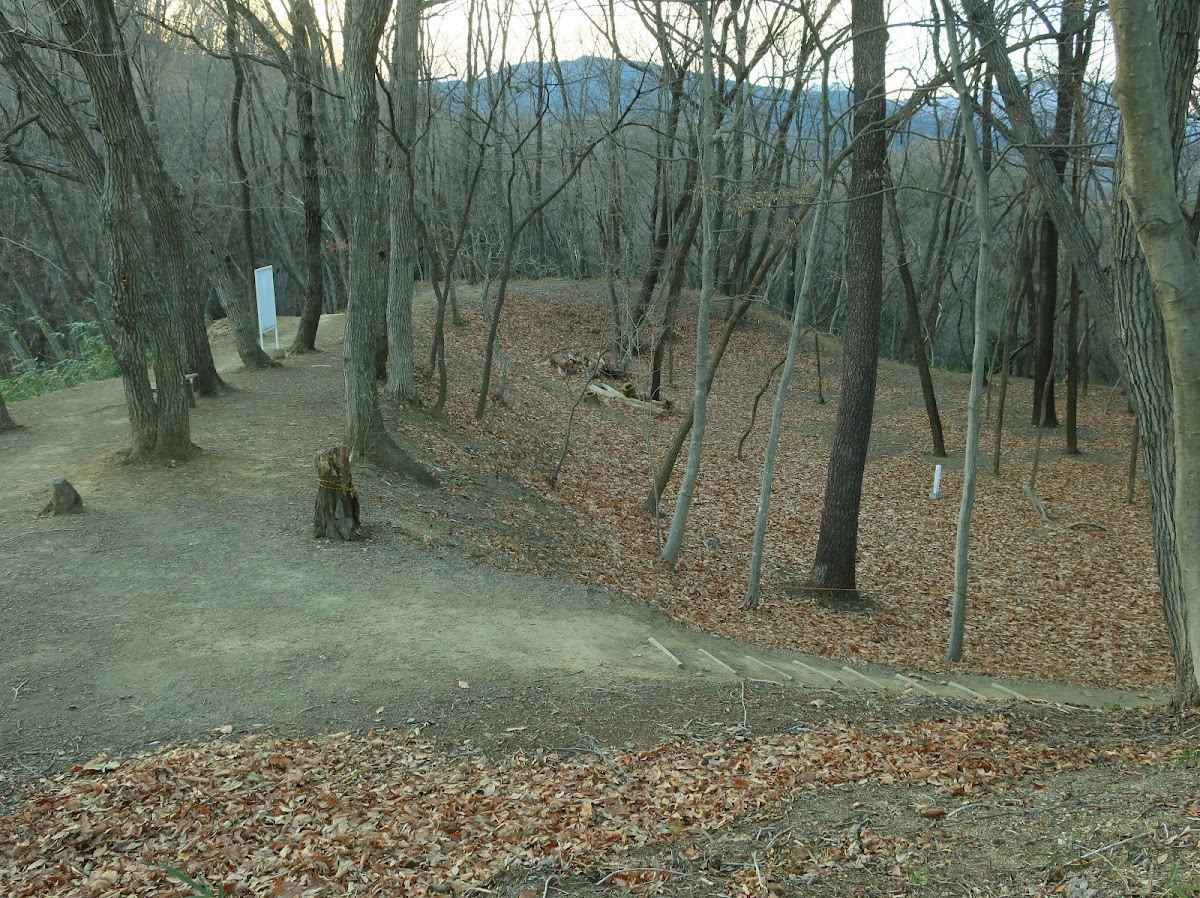
A particularly noteworthy feature of the remains of Kannari Castle is the well-preserved earthworks. These earthworks were built surrounding the baileys and served as defensive walls. Even today, earthworks approximately 2-3 meters high remain in various places, providing valuable information for understanding the castle construction techniques of the time.
It is presumed that fences or walls were built on top of the earthworks, functioning as defensive structures to protect the castle from enemy arrows and firearms. Observation of the earthwork structure reveals that it was carefully constructed using the rammed earth technique.
Moats and Defensive Structures
Kannari Castle has multiple moats, which are an important element in enhancing the castle’s defensive capabilities. The moats, dug to cut across the ridge, served to prevent enemy intrusion and clearly define the boundaries within the castle.
In particular, some of the moats around the main enclosure reach depths of over 5 meters, preserving traces of the large-scale civil engineering work of the time. The bottom of the moats is dug at a sharp angle, making them difficult to climb.
Observation Posts and Surveillance Functions
It is believed that observation posts were established at key points within the castle. These posts were facilities for monitoring the surrounding terrain and detecting enemy movements early. Kannari Castle’s location offered excellent views of the surrounding plains, providing ideal conditions for effective military surveillance.
Even today, from near the main enclosure, one can enjoy a panoramic view of Tomioka city and the surrounding mountains, experiencing the strategic perspective that a castle from the Sengoku period possessed.
Highlights of Kannari Castle
Well-Preserved Earthworks and Moats
The greatest highlight of a visit to Kannari Castle is the remarkably well-preserved remains from the Sengoku period (Warring States period). The earthworks and moats, in particular, are remarkably well-preserved, allowing visitors to concretely visualize the castle’s structure at the time.
The earthworks are arranged to surround the baileys, and their height and width reveal the defensive tactics of the era. Multiple moats are present, and comparing their size and shape allows for an understanding of the castle’s defensive system.
View from the Main Enclosure
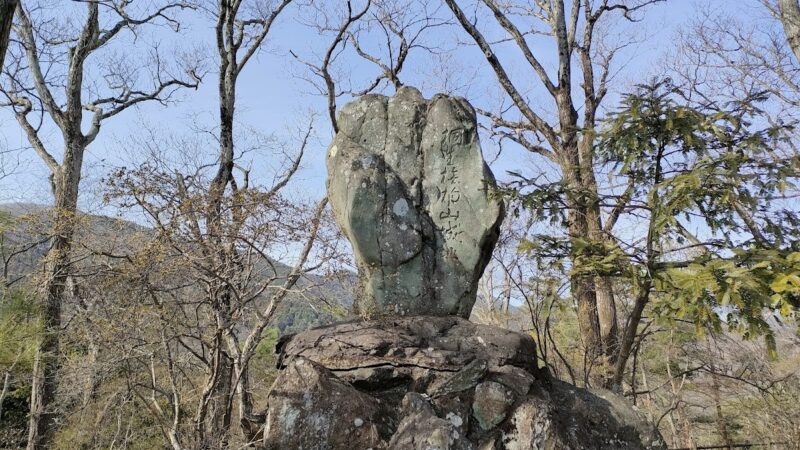
Upon reaching the main enclosure, visitors can enjoy a panoramic view of the beautiful scenery of western Gunma Prefecture. Not only can you see the city of Tomioka, but on clear days, you can even see famous peaks such as Mount Asama, Mount Haruna, and Mount Myogi in the distance.
This view is not merely aesthetically pleasing, but also important for understanding the military function of the castle during the Sengoku period. The castle lord monitored the surrounding area and made military decisions from this location.
View from the Main Enclosure ### Layout and Design of the Enclosures
The layout of the enclosures at Kannari Castle is an excellent example of the skillful use of terrain in castle construction techniques during the Sengoku period. Each enclosure is positioned with varying elevations, allowing for tiered defense. Walking through the enclosures allows you to experience the overall structure and defensive philosophy of the castle.
In particular, the flow of movement from the main enclosure to the lower enclosures is designed with both defense and daily use in mind, making it an interesting element for understanding the practicality of medieval castles.
Attractions as a Hiking Course on Mt. Kannari
Currently, the Kannari Castle ruins have been developed into the “Mt. Kannari Hiking Course,” where you can enjoy a nature walk while viewing the castle remains. The hiking trail is relatively well-maintained, making it popular not only with history enthusiasts but also with general hikers.
Information boards are installed along the course, providing explanations of the remains and the history of the castle. The beauty of the fresh greenery in spring and the autumn foliage makes it an attractive place to enjoy history while experiencing nature in all four seasons.
Access to Kannari Castle
Location
Kannari Castle is located in Yoshida Kannari, Tomioka City, Gunma Prefecture. Tomioka City is known for the World Heritage Site “Tomioka Silk Mill,” and Kannari Castle is located in the southwestern part of Tomioka City.
Access by Car
If traveling by car, it’s about a 15-minute drive from the Tomioka Interchange on the Joshinetsu Expressway. Take National Route 254 towards Tomioka city center. The trailhead to the castle ruins is near Tomioka Nishi Junior High School, and parking spaces are available nearby.
If using a car navigation system, it’s best to set “Yoshida Kannari, Tomioka City” or “Tomioka Nishi Junior High School” as your destination.
Access by Public Transportation
If traveling by train, the nearest station is Joshu-Tomioka Station on the Joshin Electric Railway Joshin Line. From the station, it’s about a 30-40 minute walk, or about a 10-minute taxi ride to the trailhead.
Since bus services are limited, we recommend planning your trip with plenty of time to spare. Rental bicycles are available near Joshu-Tomioka Station, making cycling another option.
Time Required for Climbing the Castle
The time required from the trailhead to the main keep is approximately 30-40 minutes one way at a leisurely pace. Including time to carefully explore the castle ruins, it’s advisable to allow 2-3 hours round trip.
The hiking trail is relatively well-maintained, but there are steep slopes typical of mountain castles, so we recommend wearing comfortable shoes and clothing.
Nearby Tourist Attractions
Tomioka Silk Mill
When visiting Kannari Castle, we highly recommend also visiting the Tomioka Silk Mill, a UNESCO World Heritage Site. Built during the Meiji era, it was Japan’s first full-fledged mechanized silk reeling factory and a valuable industrial heritage symbolizing Japan’s modernization. It’s approximately a 15-minute drive from Kannari Castle.
Kunimine Castle Ruins
The ruins of Kunimine Castle, the base of the Obata clan, are a historical site worth visiting along with Kannari Castle. It was a larger mountain castle than Kannari Castle and is an important site for understanding the center of the Obata clan’s power. Located in the northwestern part of Tomioka City, it’s about a 20-minute drive from Kannari Castle.
Miyazaki Castle Ruins
Located east of Kannari Castle, Miyazaki Castle was a castle closely related to Kannari Castle. Since Kannari Castle functioned as a fortified outpost for Miyazaki Castle, visiting both castles together provides a deeper understanding of the castle system of the Sengoku period.
Mount Myogi
Mount Myogi, considered one of Japan’s three most spectacular scenic spots, is a scenic area located southwest of Tomioka City. Its unique mountain shape, with its series of strangely shaped rocks and boulders, is breathtaking, and it’s a great place for hiking and climbing. It’s about a 20-minute drive from Kannari Castle.
Preservation and Maintenance of Kannari Castle
Current State of Preservation
Fortunately, the Kannari Castle ruins have remained relatively well-preserved due to the absence of development. Major structures such as earthworks and moats are clearly visible, making them valuable resources for castle research.
In recent years, preservation activities have been carried out by local history enthusiasts and the local government, including maintenance such as preventing collapse of the remains and mowing the grass.
Development as a Hiking Course
The Kannari Castle ruins have been developed as the “Kannariyama Hiking Course,” ensuring that visitors can safely view the remains. Guide signs are installed along the hiking trail, and explanatory boards are provided at major structures.
However, due to the nature of a mountain castle, there are steep slopes and areas with poor footing, so appropriate equipment and caution are necessary when visiting.
Kannari Castle and the Obata Clan’s Castle Network
The Obata Clan’s Territory
The Obata clan was a local lord that expanded its power primarily in Kanra District, Kōzuke Province, and controlled its territory by building multiple castles. With Kunimine Castle as its base, it established a network of interconnected castles, including Kannari Castle, Miyazaki Castle, and Ichigoyama Castle.
This castle network is a prime example of regional governance during the Sengoku period, and Kannari Castle was a crucial component of it.
Its Place in the History of the Sengoku Period in the Kanto Region
Kannari Castle played a significant role in the complex political situation of the Kanto region during the Sengoku period. Amidst the power struggles of major forces such as the Uesugi, Takeda, and Hojo clans, local lords like the Obata clan constantly shifted their alliances in a desperate fight for survival.
The alliance between Obata Zushōsuke Kagesada and Nagano Narimasa at Kannari Castle, and its subsequent capture by the Takeda clan, symbolizes the power struggles of this era.
Points to Note When Visiting
Clothing and Equipment
Since Kannari Castle is a mountain castle, appropriate clothing and equipment for mountain climbing are necessary when visiting. Prepare comfortable walking shoes (trekking shoes are ideal), comfortable clothing, drinking water, and a towel.
In summer, be sure to carry insect repellent, and in winter, warm clothing. Also, since the ground can become slippery during or immediately after rain, it is recommended to check the weather before visiting.
Safety Considerations
When visiting the remains of a mountain castle, there are areas where you can easily slip, such as steep slopes and the edges of moats. Please be very careful when viewing the remains and avoid taking unnecessary risks.
In particular, avoid visiting alone; it is recommended to go with multiple people if possible. Checking the cell phone signal strength beforehand is also a good idea.
Protection of the Remains
The Kannari Castle ruins are a valuable cultural asset. Please refrain from damaging the remains or collapsing the earthworks. Please be sure to take your trash with you and be mindful of protecting the natural environment.
Photography is permitted, but please be careful not to trample on the vegetation or climb on the ruins.
Research on Kannari Castle and Future Prospects
Value in Castle Research
Kannari Castle is a valuable research subject for understanding the structure of mountain castles from the Sengoku period. In particular, there are many historical and archaeological research themes, such as its position within the Obata clan’s castle complex and its role in the Takeda clan’s invasion of Kozuke Province.
Further detailed surveys and excavations could reveal even more information.
Utilization as a Tourism Resource
Tomioka City is a tourist city boasting the World Heritage Site, Tomioka Silk Mill, but historical sites like Kannari Castle can also be important tourism resources. It is expected to be an attractive spot not only for castle enthusiasts and history buffs, but also for general tourists who enjoy hiking, and further development and information dissemination are anticipated.
It is also expected to be used as a place for local history education, playing a role in passing on the region’s history and culture to future generations. ## Summary
Kannari Castle is a valuable mountain castle ruin from the Sengoku period (Warring States period) located in Tomioka City, Gunma Prefecture. It played an important role as a branch castle of the Obata clan, and its history, including its alliance with Nagano Narimasa and the invasion of the Takeda clan, tells the story of the turbulent history of the Kanto region during the Sengoku period.
Currently, it has been developed as a hiking course on Mount Kannari, making it a valuable spot where visitors can see the remains, such as earthworks and moats, up close. Visiting it in conjunction with the Tomioka Silk Mill allows you to enjoy a fascinating tourist route that allows you to experience both modern and medieval history.
Kannari Castle is recommended not only for those interested in history but also for those who enjoy nature walks. Why not visit it and feel the spirit of the Sengoku period?