Terao Chausuyama Castle (Takasaki City, Gunma Prefecture) Complete Guide: The History and Highlights of a Strategic Fortress Passed Down from the Nitta Clan to the Takeda Clan
What is Terao Chausuyama Castle?
Terao Chausuyama Castle is a medieval mountain castle located in Terao-cho, Takasaki City, Gunma Prefecture. Also known as Chausuyama Castle, Terao Senusu Castle, Terao Old Castle, Chausu Castle, and Takanosu Castle, it functioned as an important base in Kozuke Province from the Kamakura period to the Sengoku period.
Currently, it is built on a mountain approximately 170 meters above sea level, north of the Shiroyama-cho housing complex. It is maintained as a park, making it easily accessible for visitors. The remains of the main enclosure, southern enclosure, moats, trenches, and earthworks are well-preserved, making it a valuable historical site for learning about the structure of mountain castles during the Sengoku period.
History of Terao Chausuyama Castle
Kamakura Period: The Residence of Nitta Yoshishige
The history of Terao Chausuyama Castle dates back to the Kamakura period. During this time, the castle is said to have been the residence of Nitta Yoshishige. Nitta Yoshishige was a member of the Minamoto clan and a warrior who built his power base in Kozuke Province. Utilizing the terrain of Chausuyama, the castle was strategically important for monitoring and controlling the Takasaki area.
Nitta Yoshishige’s grave is said to be located within the grounds of Eifuku-ji Temple, near the castle ruins, and can still be visited today. Turning left from the main hall, then turning right and ascending through the cemetery, you will reach the grave of Nitta Yoshishige, the lord of the castle.
Nanboku-cho Period: The Base of Wakiya Yoshisuke
During the Nanboku-cho period, Terao Chausuyama Castle became the residence of Wakiya Yoshisuke, the younger brother of Nitta Yoshisada. Wakiya Yoshisuke, along with his brother Nitta Yoshisada, was a warrior who supported Emperor Go-Daigo’s Kenmu Restoration, and it is believed that he utilized Terao Chausuyama Castle as an important base for the Southern Court.
During this period, Kōzuke Province was one of the front lines where the forces of the Southern and Northern Courts were evenly matched, and Terao Chausuyama Castle’s strategic importance increased.
Muromachi Period: Rule of Wada Kotarō
Records indicate that during the Muromachi period, Wada Kotarō ruled Terao Chausuyama Castle as its lord. Although many details of this period remain unclear, it can be inferred that a powerful local samurai maintained the castle and that it functioned as a governing center for the surrounding area.
Sengoku Period: Renovation by Takeda Shingen
During the Sengoku period, Terao Chausuyama Castle underwent a major transformation. In 1568, Takeda Shingen, a powerful daimyo of Kai Province, invaded Kōzuke Province and brought the region under his control. It is believed that Takeda Shingen renovated Terao Chausuyama Castle, and much of the current layout was established during this period.
Takeda Shingen also built Negoya Castle between Terao Chausuyama Castle and Yamana Castle, strengthening the defense system around Takasaki by linking these three castles. The remains of Terao Chausuyama Castle exhibit characteristics of Takeda-style castle construction, such as deep moats, horizontal trenches, and high cliffs, making it highly likely that the Takeda clan carried out large-scale renovations.
Post-Early Modern Period: Abandonment and Preservation
With the end of the Sengoku period, Terao Chausuyama Castle was abandoned and ceased to serve its military purpose. However, the remains were relatively well preserved and are now protected as a cultural property of Takasaki City. Even as residential development progresses, the castle ruins have been developed into a park, serving as a place of relaxation for citizens while continuing to convey its historical value.
Structure and Layout of Terao Chausuyama Castle
Features of the Main Enclosure (Honmaru)
The main enclosure of Terao Chausuyama Castle is located at the mountaintop and forms the core of the castle. An earthen rampart surrounds the south side of the main enclosure, enhancing its defensive capabilities. The northernmost eastern end of the main enclosure served as the entrance (koguchi), from which entry and exit to the castle were controlled.
The cliff face (kirigishi: a steeply cut slope) of the main enclosure is built very high, demonstrating a design intended to make enemy intrusion difficult. This high cliff face is one of the characteristics of the Takeda clan’s castle-building techniques, representing a robust defensive design based on the assumption of actual combat.
Moat and Southern Enclosure
A large moat, reaching a depth of approximately 8 meters, is located between the main enclosure and the southern enclosure. This moat is one of the greatest highlights of Terao Chausuyama Castle and leaves a strong impression on visitors. The moat was designed to prevent enemy incursions from the south and to allow for continued defense from the southern enclosure in the event of the main enclosure’s fall.
The southern enclosure was the second most important enclosure after the main enclosure, playing a supporting role in its defense. The southern ridge was completely blocked by a large moat, creating a strong defensive structure.
Horizontal Moats and Defensive System
Horizontal moats surround the main enclosure from the north to the east. Horizontal moats are dug horizontally along the slope, effectively preventing enemy lateral movement and making them easier targets for gunfire. The horizontal moats of Terao Chausuyama Castle are well-preserved, making them valuable remains that allow for actual observation of Sengoku period castle construction techniques.
Remnants of a warrior’s path (mushabashiri: a passage for defensive soldiers to move) have also been confirmed around the horizontal moats, indicating that a practical defensive system was in place.
Well Remains and Living Facilities
Well remains are also found within the castle grounds. Securing water was a matter of life and death for mountain castles, and the presence of wells was essential when considering siege warfare. The well remains at Terao Chausuyama Castle indicate that this castle functioned not merely as a watchtower, but as a full-fledged mountain castle capable of withstanding prolonged sieges.
Earthworks and Enclosure Arrangement
Multiple enclosures are arranged around the main enclosure, each demarcated by earthworks. These earthworks protected soldiers from enemy arrows and firearms, and also clearly defined the boundaries of the enclosures. The earthworks at Terao Chausuyama Castle are sufficiently high and wide, demonstrating a full-fledged structure designed for actual combat.
Highlights of Terao Chausuyama Castle
The Impressive Depth of the Moat
The most striking feature when visiting Terao Chausuyama Castle is the 8-meter-deep moat separating the main enclosure from the southern enclosure. Standing there, one is overwhelmed by its depth and steepness. The height of the cliff face, viewed from the bottom of the moat, speaks volumes about the advanced castle-building techniques of the Sengoku period.
Preservation of the Horizontal Moat
The horizontal moat, running from north to east, is well-preserved, making it easy to imagine its original appearance. Walking along the moat allows you to experience the elevation differences of the baileys and the ingenuity of the defensive lines.
View from the Main Enclosure
From the main enclosure, you can see the city of Takasaki and the surrounding mountains. On a clear day, you can even see the direction of Negoya Castle and Yamana Castle, built by Takeda Shingen, helping to understand the relative positions of the three castles. This view makes you realize that Terao Chausuyama Castle was ideally located for monitoring the surrounding area.
Well-Maintained Walking Paths
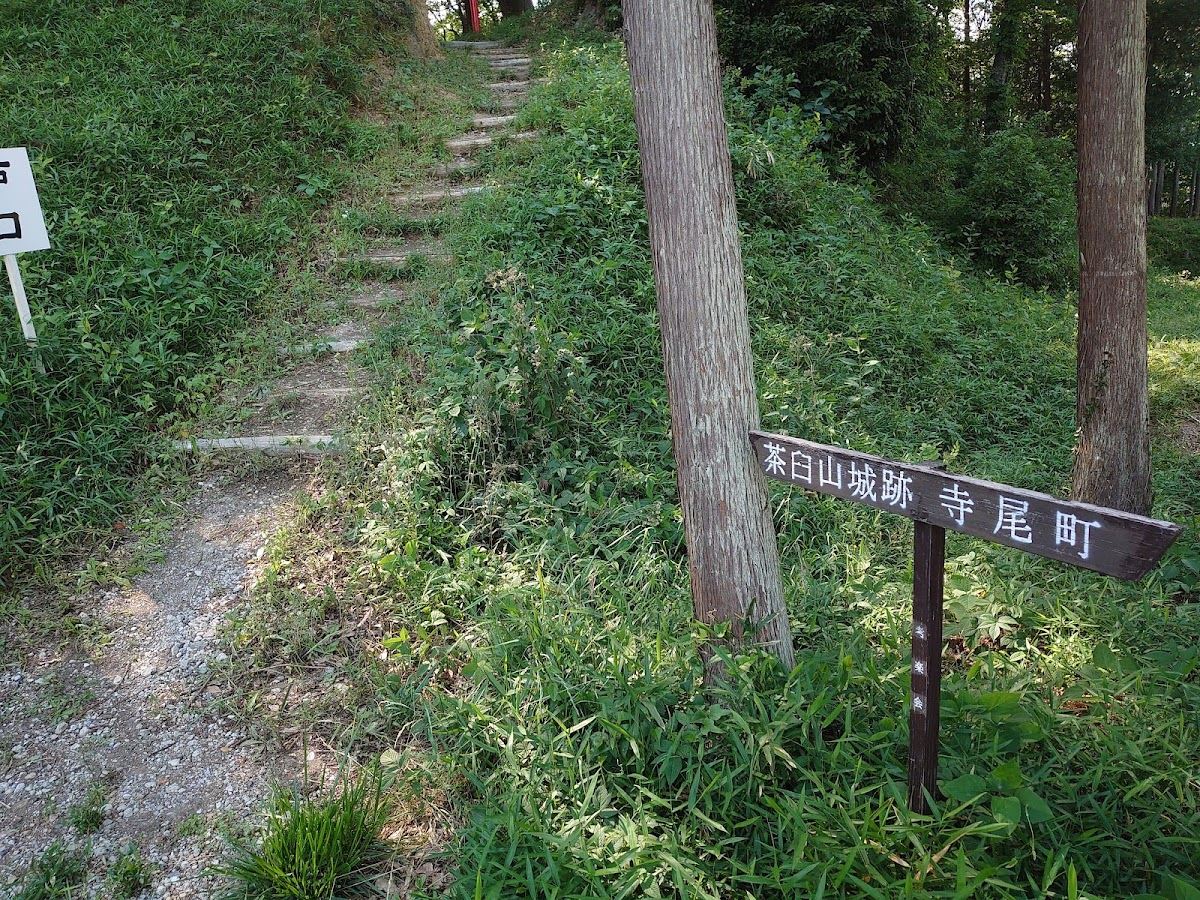
The castle ruins have been developed into a park, with walking paths that circle the main remains. Stairs are also provided, making it relatively easy to climb to the main enclosure. However, due to the elevation differences typical of mountain castles, comfortable walking shoes are recommended.
The Grave of Nitta Yoshishige at Eifuku-ji Temple
Near the castle ruins is the grave of Nitta Yoshishige, believed to be the castle’s lord, at Eifuku-ji Temple. Visiting this grave in conjunction with a tour of the castle ruins will allow you to gain a deeper understanding of the history of Terao Chausuyama Castle.
Access and Visiting Information
Access by Public Transportation
When visiting Terao Chausuyama Castle by public transportation, the nearest station is Negoya Station on the Joshin Electric Railway Joshin Line. The castle ruins are approximately a 25-minute walk from Negoya Station. Heading northwest from the station through the residential area, you will arrive at the Shiroyama-cho housing complex, and the castle ruins are located to the north of it.
Access by Car and Parking
When visiting by car, it is approximately a 15-minute drive from the Takasaki Interchange on the Kan-Etsu Expressway. However, since there is no confirmed dedicated parking for visitors, using public transportation is recommended. If visiting by car, please be considerate of the surrounding area.
Points to Note When Visiting
Terao Chausuyama Castle is open to the public as a park, but it has the characteristic undulations of a mountain castle. Please note the following points when visiting:
- Wear comfortable walking shoes
- Take insect repellent in summer
- Be careful as the ground can be slippery after rain
- Be careful not to damage the ruins
- Please take all your trash with you
The relative height (height from the base) is about 50 meters, making it a manageable climb even for those without much physical strength.
Nearby Castle Ruins and Tourist Spots
Negoya Castle
Located about 1 kilometer east of Terao Chausuyama Castle, Negoya Castle was built by Takeda Shingen in 1568. Situated between Terao Chausuyama Castle and Yamana Castle, it formed a coordinated defensive system with the other two castles. Negoya Castle also has remaining ruins, and visiting both will help you understand the Takeda clan’s strategy.
Yamana Castle
Located west of Terao Chausuyama Castle, Yamana Castle is known as the residence of the Yamana clan. It was an important base during Takeda Shingen’s invasion of Kozuke Province. The remains of Yamana Castle are well-preserved, making it a must-see spot for castle enthusiasts.
Terao Nakajo Castle
Near Terao Chausuyama Castle lies Terao Nakajo Castle. While many aspects of its detailed history remain unclear, it is believed to have been part of a castle network in the Terao region.
Kuragano Castle
Takasaki City also boasts other important castle ruins from the Sengoku period, such as Kuragano Castle. If you have the time, a “Takasaki Castle Tour” visiting these ruins is highly recommended.
Takasaki City Sightseeing
Takasaki City, as the central city of Gunma Prefecture, offers a variety of tourist attractions. Visiting places like Takasaki Kannon, Shorinzan Daruma-ji Temple, and Takasaki Castle Ruins Park allows you to fully appreciate the charm of Takasaki, where history and modernity blend seamlessly.
Cultural Value of Terao Chausuyama Castle
Archaeological Value
Terao Chausuyama Castle is an important archaeological site listed on the Gunma Prefecture Castle Distribution Map. As a medieval (details unknown) castle, it is registered in the Nara National Research Institute for Cultural Properties’ Cultural Properties WebGIS, and its academic value is recognized.
Its location is listed as 1080/1082/1146, Chausu, Terao-cho, Takasaki City, Gunma Prefecture, and other locations. The site is recorded as “City Distribution Map, Castle.”
Excellent State of Preservation
In modern times, with increasing residential development, the excellent preservation of the Terao Chausuyama Castle remains is noteworthy. Major remains such as moats, lateral moats, earthworks, and cliffs are clearly visible, making it a valuable teaching material for learning about the structure of mountain castles during the Sengoku period.
Contribution to Local History Education
Terao Chausuyama Castle is also utilized in local history education. The development of the site as a park has made it a place for local elementary and junior high school students to learn about local history, serving as an excellent example of the preservation and utilization of historical heritage.
Significance of Visiting Terao Chausuyama Castle
From the Nitta Clan to the Takeda Clan: A Layered History Across Time
The greatest appeal of Terao Chausuyama Castle lies in its layered history, passed down through generations from Nitta Yoshishige of the Kamakura period to Wakiya Yoshisuke of the Nanboku-cho period, Wada Kotaro of the Muromachi period, and finally to Takeda Shingen of the Sengoku period. Multiple historical periods are etched into a single castle site, making it a valuable place for a three-dimensional understanding of Japanese medieval history.
An Example of Takeda-Style Castle Construction
Terao Chausuyama Castle, with traces of renovations by Takeda Shingen remaining, is a valuable site where one can learn about Takeda-style castle construction firsthand. You can observe the practical castle construction techniques favored by the Takeda clan, such as deep moats, effectively placed horizontal moats, and high cliffs.
Easy Access and Visiting
Terao Chausuyama Castle’s appeal lies in its well-preserved remains despite its convenient location in Takasaki City. Because it’s maintained as a park, even castle novices can visit with ease, making it ideal for historical walks with family.
The Four Seasons of Terao Chausuyama Castle
Spring: Fresh Greenery and Cherry Blossoms
In spring, Terao Chausuyama Castle is beautifully adorned with fresh greenery, adding color to the castle ruins. Cherry trees are also present in the surrounding area, allowing visitors to enjoy cherry blossom viewing while exploring the castle grounds.
Summer: A Lush Green Mountain Castle
In summer, the greenery deepens, making the mountain castle a cool and shady spot. However, it’s also a season with many insects, so insect repellent is essential.
Autumn: A Famous Spot for Autumn Foliage
In autumn, the autumn leaves are beautiful, harmonizing the historical atmosphere with the beauty of nature. The temperature is mild, making it the perfect season for exploring the castle ruins.
Winter: The Season of the Best Views
Winter is the season when the leaves fall from the trees, making the view from the main enclosure the best. The air is clear, allowing you to see distant mountains.
Summary: The Charm of Terao Chausuyama Castle
Terao Chausuyama Castle (Takasaki City, Gunma Prefecture) is a historically significant mountain castle associated with important figures in Japanese history: Nitta Yoshishige, Wakiya Yoshisuke, and Takeda Shingen. The remains, such as deep moats, lateral moats, and earthworks, are well-preserved, making it a valuable historical site where you can learn about Sengoku period castle construction techniques firsthand.
It has been developed as a park and is relatively easy to access, making it a place that can be enjoyed not only by castle enthusiasts but also by history buffs and families. When you visit Takasaki City, be sure to visit Terao Chausuyama Castle and experience the layered history that transcends time and the spirit of the Sengoku period.
By visiting nearby castles such as Negoya Castle, Yamana Castle, and Terao Nakajo Castle, you can gain a deeper understanding of the entire defense network built by Takeda Shingen and have a more profound historical experience. Why not experience the romance of medieval history at Terao Chausuyama Castle, a hidden gem of Gunma Prefecture?