Complete Guide to Naganohara Castle (Gunma Prefecture): A Thorough Explanation of the History and Highlights of the Mountain Castle Associated with the Sanada Clan
Naganohara Castle is a Sengoku period mountain castle located in Naganohara Town, Agatsuma District, Gunma Prefecture. Also known as Hakoiwa Castle, it is known as an important base during Takeda Shingen’s invasion of Kozuke Province and as a castle deeply connected to the history of the Sanada clan. This article comprehensively explains information useful for castle enthusiasts and history buffs, from the history and layout of Naganohara Castle to its highlights and access methods.
Overview and Basic Information of Naganohara Castle
Naganohara Castle is a mountain castle located on the left bank of the Agatsuma River in Naganohara, Agatsuma District, Kozuke Province (present-day Naganohara, Agatsuma District, Gunma Prefecture). The main keep is situated on a mountaintop at an altitude of approximately 752 meters, with a relative height of approximately 80 meters. It was designated a Naganohara Town Historic Site on March 27, 1990 (Heisei 2). ### Basic Data
- Location: Naganohara, Naganohara-machi, Agatsuma-gun, Gunma Prefecture
- Alternate Name: Hakoiwa Castle
- Castle Structure: Mountain Castle
- Construction Period: Sengoku period (Warring States period)
- Main Lords: Hao clan, Tsuneda Takanaga (a member of the Sanada clan), Sanada clan
- Remains: Enclosures, moats, earthworks, stone walls
- Designated Cultural Property: Naganohara Town Designated Historic Site (March 27, 1990)
History of Naganohara Castle
Hao Clan Era: As a Base for Local Lords
Naganohara Castle was originally under the control of the Hao clan, a local lord of Agatsuma-gun. While the Hao clan’s base was Haneo Castle, it is said that Naganohara Castle was ruled by Hao Doun Nyudo (the eldest of the three Hao brothers).
The Hao clan held considerable power in Agatsuma County, but constant conflicts arose with the neighboring Kamahara clan (a branch of the Sanada clan) over border disputes. This region, a strategically important transportation hub along the Agatsuma River, was highly valued and therefore a target of conflict among various powers.
Takeda Shingen’s Invasion of Joshu and the Achievements of Sanada Yukitaka
The history of Naganohara Castle underwent a major transformation in 1562. When Takeda Shingen began his full-scale invasion of Agatsuma County in Joshu Province, Sanada Yukitaka (father of Sanada Masayuki) served as the vanguard.
At that time, Saito Norihiro of Iwagutsu Castle, a powerful figure in Agatsuma County, belonged to the Uesugi clan (Nagao Kagetora, later Uesugi Kenshin), and Naganohara Castle was under their control. Through skillful stratagems and military maneuvers, Sanada Yukitaka succeeded in capturing Naganohara Castle.
After capturing the castle, Yukitaka appointed his younger brother, Tsuneda Takanaga, as the castle commander, making it a Takeda base. Although Tsuneda Takanaga was Yukitaka’s brother, he used the Tsuneda surname, suggesting he held a unique position within the Sanada clan.
Recapture in 1563 and the Death of Tsuneda Toshitsuna
However, Takeda rule did not last long. In 1563, the brothers Hao Nagato-no-kami and Noto-no-kami, lords of Hao Castle and allies of Saito Norihiro, launched a counterattack. The Hao brothers recaptured Naganohara Castle, and Tsuneda Takanaga’s son, Toshitsuna, who had been the castle commander, was killed in battle.
This event demonstrates the intense power struggle between the Takeda and Uesugi clans in Agatsuma County. Although the Takeda had once seized control, resistance from local forces remained strong, and their rule was unstable.
The Later History of Naganohara Castle
While detailed historical records are scarce and many aspects of Naganohara Castle’s history after 1563 (Eiroku 6) remain unclear, it is believed to have ultimately come under the control of the Sanada clan. When Sanada Masayuki established his base at Iwagutsu Castle and began controlling Agatsuma County, it is presumed that Naganohara Castle functioned as part of his network of subsidiary castles.
After the end of the Sengoku period and the beginning of the Edo period, Naganohara Castle was abandoned, but its remains have been preserved in relatively good condition to this day.
Layout and Structure of Naganohara Castle
Naganohara Castle is a typical mountain castle, characterized by defensive structures that skillfully utilize the natural terrain.
Honmaru (Main Enclosure)
Located on the mountaintop at an altitude of approximately 752 meters, the Honmaru is the central part of the castle. A relatively flat enclosure is formed, and it is thought that the lord’s residence and command post were located here. From the Honmaru, one can overlook the Agatsuma River valley and surrounding roads, making it a suitable location for surveillance and defense.
Large Moat and Enclosures
A large moat is located on the southwest side of the main enclosure. This moat is an important defensive structure that prevents enemy intrusion by cutting off the ridge. Multiple enclosures are positioned on both sides of the moat, forming a multi-layered defensive structure.
Earthworks remain in various places, suggesting that they were built to surround the enclosures.
Defensive Structures on the East
Two shallow moats have been identified on the eastern ridge. These were structures designed to make it difficult to approach the main enclosure. Additionally, the enclosure at the site of the Akiba Shrine and an outwork called Hakoiwa Demaru can be seen at the eastern end.
Hakoiwa Demaru is believed to be the origin of the castle’s alternative name, “Hakoiwa Castle,” and is thought to have been a defensive base utilizing the distinctive rocky terrain.
Stonework and Civil Engineering Techniques
Traces of stonework can also be seen in parts of Naganohara Castle. Relatively advanced civil engineering techniques were used for a mountain castle of the Sengoku period, suggesting the possible influence of the Takeda clan’s castle-building techniques.
Highlights of Naganohara Castle
Preservation of the Remains
The greatest highlight of Naganohara Castle is the group of remains that convey the appearance of a mountain castle from the Sengoku period. The moats, earthworks, and baileys are relatively well-preserved, allowing visitors to experience the castle’s structure at the time.
The large moat, in particular, is impressive in scale and a valuable relic for understanding the defensive system of a mountain castle. Visiting the site allows you to experience the sheer power of the moat that completely cuts off the ridge.
Views
The view from the main keep is another highlight. You can see the Agatsuma River valley, the town of Naganohara, and the surrounding mountains, giving you a real sense of the castle’s strategic location in monitoring a key transportation hub. On a clear day, you can even see Mount Asama in the distance.
Castle Ruins Monuments
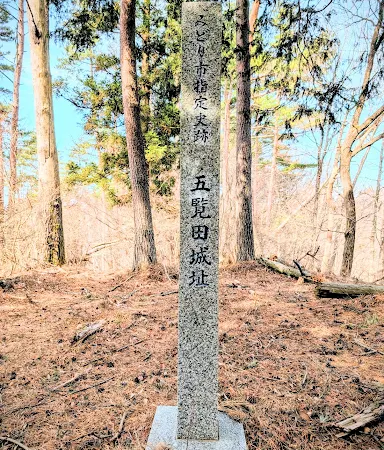
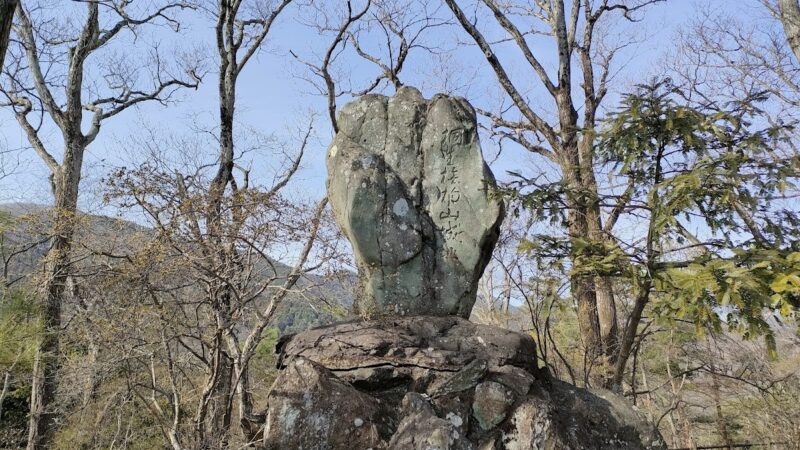
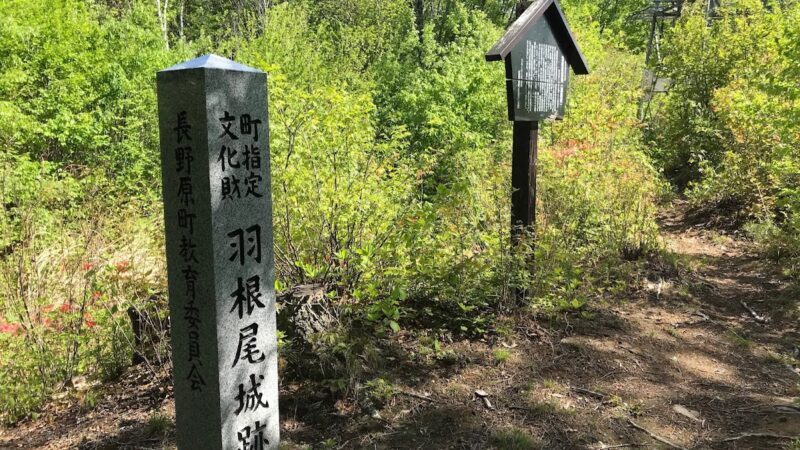
Stone monuments marking the Naganohara Castle ruins are installed near the entrance to the castle and the main keep. These are important landmarks that convey the castle’s history and are popular spots for commemorative photos.
Natural Environment
Naganohara Castle Ruins are surrounded by abundant nature, allowing visitors to enjoy the scenery of each season. The fresh greenery in spring and the vibrant autumn foliage make it a perfect spot to enjoy both historical walks and nature observation.
Access and Visit Information
Access by Public Transportation
JR Agatsuma Line
- Nearest Station: Naganohara-Kusatsuguchi Station
- Approximately 20-30 minutes on foot from the station to the castle entrance
- Taxis are also available from the station to the castle entrance (approximately 5 minutes)
Access by Car
Via Kan-Etsu Expressway
- Approximately 1 hour from Shibukawa-Ikaho IC via National Route 145
- Parking is available in the center of Naganohara town (there is no dedicated parking lot for the castle ruins, so please use public parking lots or roadside stations)
Via Joshin-Etsu Expressway
- Approximately 1 hour and 15 minutes from Usui-Karuizawa IC via National Route 146 and National Route 145
Parking Information
There is no dedicated parking lot for Naganohara Castle Ruins, but you can use the parking lots of the following facilities:
- Yamba Furusato-kan Roadside Station: A tourist hub in Naganohara town. Naganohara Castle’s official stamp is also available for purchase (TEL: 0279-83-8088)
- Public parking lots around Naganohara Town Hall
Notes for Visiting the Castle
- Estimated Time: Approximately 15-20 minutes on foot from the entrance to the main keep, 1-1.5 hours including sightseeing
- Attire: Comfortable clothing and walking shoes are essential as you will be walking on mountain paths
- Season: Insect repellent in summer, be aware of snow and ice in winter
- Facilities: There are no toilets or vending machines at the castle ruins, so please prepare in advance
- Opening Hours: No specific restrictions (daytime visits are recommended)
- Admission Fee: Free
Castle Stamp Information
Naganohara Castle’s official stamp can be purchased at the Michi-no-Eki Yamba Furusato-kan (Roadside Station Yamba Furusato-kan). Many castle enthusiasts collect them as a memento of their castle tour along the Sanada Kaido (Sanada Road).
Nearby Tourist Attractions
Iwagutsu Castle Ruins
Iwagutsu Castle, which had a close relationship with Naganohara Castle, is about a 15-minute drive away. It is a famous castle that was captured by Sanada Yukitaka and his son Masayuki, and is an important castle designated as a National Historic Site. Visiting it together with Naganohara Castle will give you a deeper understanding of the power struggles in Agatsuma County during the Sengoku period.
Haneo Castle Ruins
Haneo Castle, the base of the Haneo clan, is also an important related castle for understanding the history of Naganohara Castle. It is about a 10-minute drive away.
Kamahara Castle Ruins
The residence of the Kamahara clan, a branch of the Sanada clan. It bordered Naganohara Castle and has a history of frequent conflict.
Yamba Dam
Completed in 2020, the Yamba Dam is a new tourist attraction in Naganohara Town. At the Yamba Furusato-kan roadside station, you can learn about the dam and the history of the region.
Kusatsu Onsen
A representative hot spring resort in Japan, located about 30 minutes by car from Naganohara Town. A soak in the hot springs after visiting castle ruins is especially wonderful.
The Relationship Between Naganohara Castle and the Sanada Clan
Naganohara Castle is one of the essential castles when discussing the history of the Sanada clan. When Sanada Yukitaka, under orders from Takeda Shingen, conquered Agatsuma County, Naganohara Castle became a crucial base.
Sanada Yukitaka’s Strategy for Agatsuma County
Sanada Yukitaka was a senior retainer of the Takeda family, known as “Sekiryu Danjo” (Attack Danjo), and demonstrated outstanding abilities in both strategy and military affairs. In the conquest of Agatsuma County, he is said to have skillfully employed negotiation and appeasement with local forces, not just military force.
The conquest of Naganohara Castle was also a stepping stone to the conquest of Iwagutsu Castle. It is believed that the strategy was to isolate Iwagutsu Castle by controlling transportation along the Agatsuma River.
Tsunoda Takanaga and the Sanada Clan
Tsunoda Takanaga, who was appointed as the castle commander, was the younger brother of Sanada Yukitaka, yet he used the Tsunoda surname. This may have been a strategy by the Sanada clan to use multiple surnames to enable them to control a wider area.
The death of Tsunoda Toshitsuna was a blow to the Sanada clan, but they continued to expand their power in Agatsuma County, eventually establishing a firm control centered on Iwagutsu Castle.
The Era of Sanada Masayuki
During the era of Sanada Masayuki, the son of Sanada Yukitaka, Naganohara Castle is thought to have functioned as part of a network of branch castles centered on Iwagutsu Castle. Masayuki maintained control of Agatsuma County even after the fall of the Takeda clan, and later built Ueda Castle, moving the Sanada clan’s base there.
Historical Significance of Naganohara Castle
Role in the Takeda Clan’s Invasion of Kozuke Province
Naganohara Castle was one of the front-line bases in Takeda Shingen’s invasion of Kozuke Province. Agatsuma District, located on the transportation route connecting Shinano Province and Kōzuke Province, was a strategically important region for the Takeda clan. Securing Naganohara Castle was a crucial step towards conquering Iwagutsu Castle and ultimately gaining control of the entire Kōzuke Province.
Relationship between Local Lords and Sengoku Daimyo
The history of Naganohara Castle illustrates the complex relationship between local lords and Sengoku daimyo during the Sengoku period. Local forces like the Hao clan were forced to make choices for survival among powerful forces such as the Takeda and Uesugi clans.
The fact that Naganohara Castle was repeatedly fought over speaks to the strength of the local resistance and the difficulty of control by powerful forces.
Study of Mountain Castle Construction Techniques
The layout of Naganohara Castle is valuable material for studying mountain castle construction techniques of the Sengoku period. The arrangement of moats, earthworks, and baileys allows us to understand the defensive philosophies and civil engineering techniques of the time.
It’s possible the site was renovated under the influence of the Takeda clan, and there may be remains exhibiting characteristics of Takeda-style castle construction. Further detailed investigation and research are anticipated.
Recommended Routes for Visiting Naganohara Castle
Half-Day Course (Naganohara Castle Only)
- Start from Naganohara-Kusatsuguchi Station or Michi-no-Eki Yamba Furusato-kan
- From the castle entrance to the main keep (approx. 15-20 minutes)
- Visit the main keep, the large moat, Hakoiwa Outpost, etc. (approx. 30-40 minutes)
- Descend from the castle and take a break at the Michi-no-Eki, purchase a castle stamp
Full-Day Course (Visiting Surrounding Castles)
- Morning: Visit Iwagutsu Castle Ruins (approx. 2 hours round trip to the main keep)
- Lunch: Naganohara town or Michi-no-Eki Yamba Furusato-kan
- Afternoon: Visit Naganohara Castle Ruins (approx. 1-1.5 hours)
- Visit Haneo Castle Ruins or Kamahara Castle Ruins (if time permits)
- Purchase a castle stamp and choose souvenirs at the Michi-no-Eki
2-Day/1-Night Tour (Enjoying the Sanada Road)
Day 1
- Morning: Visit Ueda Castle (Nagano Prefecture)
- Lunch: Ueda City
- Afternoon: Visit the Sanada Clan’s Main Castle Ruins and Sanada Clan Residence Ruins
- Evening: Travel to Kusatsu Onsen, Overnight Stay
Day 2
- Morning: Visit Iwagutsu Castle Ruins
- Lunch: Naganohara Town
- Afternoon: Visit Naganohara Castle Ruins and Haneo Castle Ruins
- Collect Castle Stamps at Michi-no-Eki Yamba Furusato-kan
Materials and Research on Naganohara Castle
Regarding Naganohara Castle, the following materials and research exist:
Excavation Report
An excavation survey was conducted by the Naganohara Town Board of Education, and the report “Naganohara Castle Ruins/Hayashi Nakahara 1 Site” has been published. You can learn about the details of the remains and excavated artifacts.
Related Books
- *Medieval Castle Sites in Gunma Prefecture* (Gunma Prefectural Board of Education)
- *The Three Generations of the Sanada Clan* (by Yu Hirayama): Useful for understanding the general history of the Sanada clan
- *Takeda Shingen’s Invasion of Kozuke Province*: Detailed account of the Takeda clan’s strategy in Kozuke Province
- *Comprehensive Survey of Japanese Castles*, Volume 4 (Shin Jinbutsu Oraisha): Covers castles in the Kanto region, including Naganohara Castle
Online Resources
- Kojodan: Abundant visitor photos and castle siege notes
- Jōkaku Hōrōki: Detailed castle layout maps and explanations
- National Archaeological Site Reports: Digital archive of excavation reports
Summary: The Charm of Naganohara Castle
Naganohara Castle, though not large in scale, is a valuable historical site that conveys the power struggles in Agatsuma County during the Sengoku period. It can be said that this castle encapsulates the drama of the Sengoku period, including the exploits of Sanada Yukitaka and Tsuneda Takanaga, the resistance of the Hao clan, and the conflict between the Takeda and Uesugi clans.
The remains are well-preserved, and by walking around and seeing the moats, earthworks, and baileys, you can experience what a mountain castle from the Sengoku period looked like. The view from the main keep is magnificent, and you can truly appreciate that this castle was a strategic base for monitoring important transportation routes.
When visiting Naganohara Town, be sure to visit Naganohara Castle ruins along with other tourist spots such as Yamba Dam and Kusatsu Onsen. As a castle associated with the Sanada clan and a quintessential example of a Sengoku period mountain castle, it’s a castle well worth visiting for history buffs.
By obtaining a castle stamp at the Yamba Furusato-kan roadside station and visiting Naganohara Castle as part of a tour of castles along the Sanada Road, you can gain a deeper understanding of Agatsuma County during the Sengoku period. Be sure to visit Naganohara Castle and fully experience the charm of Gunma Prefecture’s mountain castles.