Satomi Castle (Takasaki City, Gunma Prefecture) Complete Guide – History, Highlights, and Access Information
What is Satomi Castle?
Satomi Castle is a medieval mountain castle located in Kojō, Shimosatomi-machi, Takasaki City, Gunma Prefecture. It was a mountain castle with a double-enclosure style, serving as the ancestral home of the Satomi clan, a branch of the Nitta clan, and holds a historically significant position as the birthplace of the Satomi clan.
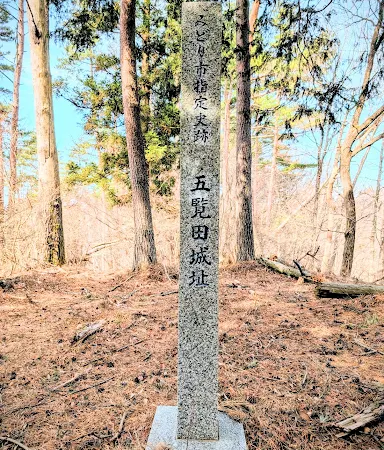
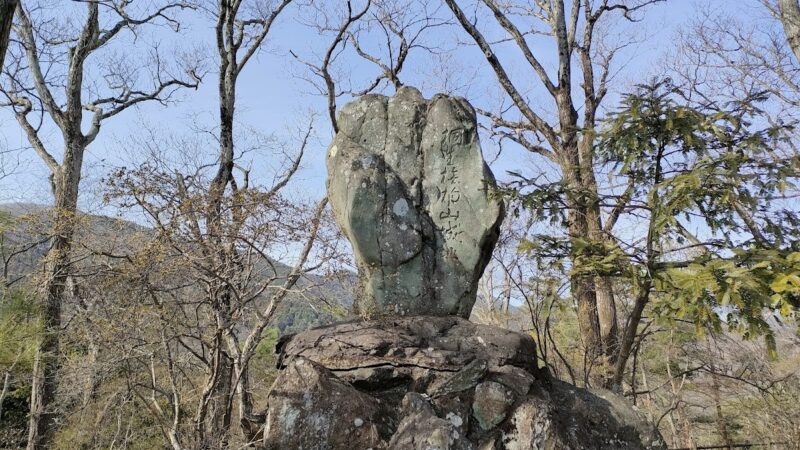
Currently, the remains are located on the mountaintop behind the west side of Shiroyama Inari Shrine, and an information board has been installed in the main enclosure area. While part of the mountaintop is used for residential and agricultural land, the castle remains, such as high earthworks and dry moats, can still be seen, making it a valuable historical site that allows us to imagine its former appearance.
History of Satomi Castle
Construction and the Beginning of the Satomi Clan
Satomi Castle is believed to have been built by Nitta Yoshitoshi (Satomi Yoshitoshi), the son of Nitta Yoshishige. There are various theories regarding the year of its construction, but the most widely accepted is that it was built around 1156 (Hogen 1). Nitta Yoshishige was a grandson of Minamoto no Yoshiie, and his son, Yoshitoshi, entered Satomi-go (present-day Shimosatomi-cho, Takasaki City), built a castle there, and adopted the name Satomi, marking the beginning of the Satomi clan.
Satomi Yoshitoshi held an important position within the Nitta family and expanded his power from this base. Satomi Castle is believed to have functioned not only as a military base but also as the political and economic center of the Satomi clan.
The Satomi Clan’s Prosperous Period
For over 260 years after its construction, Satomi Castle served as the residence of successive generations of the Satomi clan. From the Kamakura period through the Nanboku-cho period and the Muromachi period, the Satomi clan was a powerful branch of the Nitta family in Kozuke Province (present-day Gunma Prefecture).
In particular, during the Nanboku-chō period (Northern and Southern Courts period), there are records of the Satomi clan’s active participation on the Southern Court’s side in response to Nitta Yoshisada’s uprising. The Satomi clan, along with the main Nitta family, opposed the Ashikaga clan and formed the core of the Southern Court’s forces in Kōzuke Province.
The Yuki War and Migration to Bōsō
The Satomi clan’s history in Kōzuke Province reached a major turning point in the mid-15th century. In 1441, the 10th lord of the castle, Satomi Yoshimoto, was killed in the Yuki War. His son, the 11th lord, Satomi Yoshizane, migrated to Shirahama in Bōshū (present-day Minamibōsō City, Chiba Prefecture) from 1441 through the turbulent period following the Eikyō Rebellion.
As a result, Satomi Castle was abandoned, and the Satomi clan’s base shifted from Kōzuke Province to Awa Province (Bōsō Peninsula). This migration to Bōsō marked the beginning of the Bōsō Satomi clan, later known from the “Nansō Satomi Hakkenden” (The Eight Dog Heroes of Nansō Satomi). The Satomi clan, who moved to Boso, developed into a powerful daimyo family during the Sengoku period, ruling over Awa and Kazusa provinces.
Satomi Castle After its Abandonment
After the Satomi clan moved to Boso, Satomi Castle was abandoned, but the castle ruins have been preserved as a historical symbol of the region. Currently, it is designated as a cultural property of Takasaki City and is an important historical site that conveys the history of the region.
Structure and Layout of Satomi Castle
Characteristics of a Parallel-Enclosure Mountain Castle
Satomi Castle was built as a parallel-enclosure mountain castle. A parallel-enclosure castle is a layout where multiple enclosures (kuruma) are arranged side-by-side, differing from a linear-enclosure castle where enclosures are lined up along a ridge. This style, which balances defense and the provision of living space, was widely adopted in medieval mountain castles.
The main part of the castle is located on the mountaintop behind the west side of Shiroyama Inari Shrine, and its layout skillfully utilizes the mountain’s topography. While some parts of the mountaintop are currently used for residential areas and farmland, the main remains are well-preserved.
Structure of the Main Enclosure
The main enclosure is located at the northwestern end and is the most important section of the Satomi Castle ruins. An information board indicating the Satomi Castle ruins is installed in this main enclosure, allowing visitors to confirm that it is a castle site.
The main enclosure is characterized by its large open space and high earthen ramparts. The ramparts were built surrounding the enclosure, enhancing its defensive capabilities and clearly defining the internal space. These ramparts remain clearly visible today and are a particularly impressive part of the Satomi Castle ruins.
Dry Moat and Defensive Structures
A dry moat remains on the east side of the main enclosure. A dry moat is a moat that does not hold water and is an important defensive structure that prevents enemy intrusion. The dry moat of Satomi Castle functioned in conjunction with the earthen ramparts, separating the enclosures and obstructing the path of attackers.
The remaining dry moats are valued as valuable relics that demonstrate a typical defensive structure of a medieval mountain castle. The shape and scale of the dry moats suggest that Satomi Castle functioned not merely as a residence, but as a full-fledged military base.
Other Remains
Besides the earthworks and dry moats, the remains of several other enclosures have been confirmed. These enclosures were arranged around the main enclosure, and it is presumed that each served functions such as living spaces, warehouses, and watchtowers.
The castle grounds extended over a wide area on the mountaintop, indicating that the Satomi clan possessed considerable power. The arrangement of the remains suggests a planned layout, demonstrating a high level of castle construction technology.
Highlights of Satomi Castle
High Earthworks
The most impressive feature when visiting Satomi Castle is the high earthworks remaining around the main enclosure. While the height of the earthworks varies depending on the location, the clearly remaining sections convey the imposing presence of the defensive facilities of the time.
Walking along the top of the earthworks allows you to experience the castle’s defensive line and imagine how enemy incursions were prevented. There is a difference in elevation between the inside and outside of the earthworks, and it is clear that this difference in elevation played an important defensive role.
Remains of the Dry Moat
The dry moat on the east side of the main enclosure is an important remains for understanding the defensive structure of Satomi Castle. The difference in elevation from the bottom of the moat to the top of the earthworks is considerable, giving a real sense of how difficult it would have been to attack over it.
The shape of the dry moat is a valuable resource for understanding medieval castle construction techniques and is an important subject of investigation for castle researchers. The cross-sectional shape, width, and depth of the moat allow us to discern the construction period and traces of renovations.
Information Board and Preservation of the Historic Site
An information board explaining the Satomi Castle ruins is installed in the main enclosure, allowing visitors to learn about the castle’s history and structure. The board includes the history of the Satomi clan and an overview of the castle, making it easy to understand the castle ruins even without prior knowledge.
The remains are well-preserved, and the shapes of the earthworks and dry moats can be clearly seen. While some areas have been altered by residential and agricultural development, the main parts retain their original appearance, allowing visitors to fully experience the atmosphere of a medieval mountain castle.
Shiroyama Inari Shrine
The Shiroyama Inari Shrine is located at the entrance to Satomi Castle. Passing through the shrine’s torii gate and proceeding along the approach path provides access to the castle ruins. The integrated landscape of the shrine and castle ruins is unique to Japanese castle sites, creating a historical atmosphere.
The Shiroyama Inari Shrine itself is cherished as an object of local worship, and a visit to the shrine is recommended when visiting Satomi Castle ruins.
Views
From Satomi Castle, a mountain castle, you can enjoy panoramic views of the surrounding landscape. The lords of the Satomi clan likely surveyed their territory from this spot, observing the conditions of their ruled areas. While some areas are now covered with trees, open spaces offer views of Takasaki city and the surrounding mountains.
The Connection Between the Satomi and Boso Satomi Clans
From the Ueno Satomi to the Boso Satomi Clans
The Satomi clan, based at Satomi Castle in Takasaki City, Gunma Prefecture, and the Boso Satomi clan, which flourished as a Sengoku-period daimyo in southern Boso, Chiba Prefecture, belonged to the same family. The Satomi clan, originally based at Satomi Castle in Ueno Province, migrated to Boso in the mid-15th century, giving rise to the Boso Satomi clan.
This migration was influenced by the complex political situation in the Kanto region. The defeat in the Yuki War and the conflict between the Ashikaga and Uesugi clans in Kanto (the Kyotoku Rebellion) are believed to have prompted the Satomi clan’s move to Boso.
Relationship with “Nansō Satomi Hakkenden”
The Satomi clan, after moving to Boso, grew into a powerful daimyo ruling Awa and Kazusa during the Sengoku period. “Nansō Satomi Hakkenden,” written by the Edo period literary giant Kyokutei Bakin, uses this Boso Satomi clan as a model.
“Nansō Satomi Hakkenden” is a representative long-running fantasy novel of the Edo period, making the name of the Satomi clan known throughout Japan. While the story is primarily set on the Bōsō Peninsula, the Satomi clan’s roots lie in Satomi Castle in Takasaki City, Gunma Prefecture. In other words, Satomi Castle is the starting point of the Satomi clan in “Nansō Satomi Hakkenden.”
The Satomi Clan’s Lineage and Successive Lords
The successive lords of Satomi Castle ranged from the first lord, Satomi Yoshitoshi, to the eleventh lord, Satomi Yoshizane. Each lord, as part of the Nitta clan and as an independent powerful family, operated in Kōzuke Province, exerting significant influence on regional politics and military affairs.
Even after moving to Bōsō, the Satomi clan maintained their lineage and became a powerful daimyo during the Sengoku period, confronting the Hōjō and Takeda clans. Ultimately, the Satomi clan survived as a samurai family for approximately 500 years until their confiscation of their domain in the early Edo period.
Access Information
Location
- Address: Kojō, Shimosatomi-machi, Takasaki City, Gunma Prefecture
- Nearest Landmark: Shiroyama Inari Shrine
Access by Car
Access to Satomi Castle is most convenient by car.
- Approximately 20 minutes from Takasaki IC on the Kan-Etsu Expressway
- Approximately 25 minutes from Maebashi IC on the Kan-Etsu Expressway
- Approximately 15 minutes from Yoshii IC on the Joshin-Etsu Expressway
There is parking space around Shiroyama Inari Shrine, but the number of spaces is limited, so please be careful when visiting. A few cars can be parked near the shrine’s torii gate and along the approach to the shrine, but please be considerate of local residents.
Access by Public Transportation
If using public transportation, the nearest station is Takasaki Station on the JR Takasaki Line.
- Take a bus or taxi from JR Takasaki Station.
- If taking the bus, take the bus bound for “Shimosatomi” and walk from the nearest bus stop.
- If taking a taxi, it takes about 20 minutes.
Public transportation is limited, so we recommend checking the timetable in advance.
Points to Note When Visiting
- As it is a mountain castle, please wear comfortable shoes and clothing.
- In summer, please take precautions against insects, and in winter, please take precautions against the cold.
- To protect the remains, please be careful not to damage the earthworks or dry moats.
- Some areas are private property, so please do not enter restricted areas.
- Please follow the signs and observe proper etiquette.
Estimated Visiting Time
It is recommended to allow approximately 30 minutes to 1 hour for visiting Satomi Castle. 30 minutes is sufficient to leisurely view the main enclosure and major remains, while 1 hour is a good guideline if you include photography and detailed observation.
Nearby Tourist Attractions
Nearby Castle Ruins
Many other medieval castle ruins are scattered around Satomi Castle.
Takadome Castle
A medieval mountain castle located in Takasaki City, this castle ruin is also associated with the Nitta clan, like Satomi Castle. Visiting it together with Satomi Castle will give you a deeper understanding of the medieval history of this region.
Minowa Castle Ruins
Minowa Castle, a nationally designated historical site, is a representative flatland castle of the Kanto region during the Sengoku period. It is a later castle than Satomi Castle, larger in scale, and its remains such as earthworks and moats are well-preserved. It is easily accessible from Takasaki City and is worth visiting along with Satomi Castle.
Kuragano Castle Ruins
A flatland castle ruin located in Kuragano-cho, Takasaki City, this was an important base from the medieval to the early modern period. It was situated at a key point on the Tone River waterway and played a vital role as a transportation hub.
Tourist Facilities in Takasaki City
Takasaki Castle Ruins
Located in the heart of Takasaki City, these are the remains of a modern castle, now developed as Takasaki Castle Ruins Park. Remains such as the Inui Turret and the East Gate remain, making it a popular recreational spot for citizens.
Gunma Prefectural Museum of History
This museum comprehensively exhibits the history and culture of Gunma Prefecture, housing a rich collection of materials from ancient to modern times. It also features exhibits on medieval castles, including Satomi Castle, making a prior visit to the castle ruins a more enriching experience.
Haruna Shrine
Located on the slopes of Mount Haruna in northern Takasaki City, this ancient shrine is also popular as a power spot. The magnificent shrine buildings and the harmonious blend of nature and surrounding landscape make it well worth a visit.
Castle Stamp and Related Goods Information
Obtaining Castle Stamps
Several types of castle stamps are sold at Satomi Castle. Castle stamps are popular as souvenirs of visits to castle ruins and are highly sought after by collectors. Twelve types of castle stamps (Goshuin) have been confirmed for Satomi Castle (including those no longer sold), and they offer a wide variety of designs and variations.
For information on how to obtain and purchase these castle stamps, we recommend checking the latest information on castle information websites such as Kojodan or Takasaki City’s tourism information.
Related Books
For those who want to learn more about Satomi Castle and the Satomi clan, the following books may be helpful:
- Historical books on the Nitta clan
- Research books on medieval castles in Gunma Prefecture
- Books related to “Nansō Satomi Hakkenden” (for understanding the Bōsō Satomi clan)
- Takasaki City history and local historical materials
These books are available at libraries and specialty bookstores.
Points to Note When Visiting Satomi Castle
Enjoying the Seasons
Spring
In the season of fresh greenery, the natural beauty of the mountain castle is stunning, and the mild weather makes it ideal for visiting. It’s also a time to enjoy the surrounding cherry blossoms.
Summer
The greenery deepens, enhancing the castle’s mountain castle atmosphere. However, insect repellent is essential due to the increased number of insects.
Autumn
During the autumn foliage season, the scenery around the castle ruins is vibrant with color, offering beautiful views. The weather is pleasant, making it an ideal time for visiting.
Winter
The fallen leaves make it easier to see the shape of the ruins. The air is clear and the views are excellent, but don’t forget to dress warmly.
Photography Tips
When taking photos at Satomi Castle, pay attention to the following points:
- High earthen ramparts of the main enclosure: Choose an angle that clearly shows the height and shape of the ramparts.
- Cross-section of the dry moat: Show the difference in elevation from the bottom of the moat to the top of the ramparts.
- Information boards and ruins: As records indicating that it is a castle site.
- Torii gate of Shiroyama Inari Shrine: Make the approach to the castle ruins impressive.
- Surrounding scenery: The view from the castle and the surrounding environment.
Historical Learning Tips
Understanding the following historical background will allow you to enjoy your visit to Satomi Castle more deeply.
- The relationship between the Nitta clan and the Minamoto clan
- The Kanto region from the Kamakura to Muromachi periods
- The Yuki War and the Satomi clan’s migration to Boso
- The development of the Boso Satomi clan and “Nansō Satomi Hakkenden”
- Medieval mountain castle construction techniques and defensive structures
Summary
Satomi Castle (Takasaki City, Gunma Prefecture) is a mountain castle with a parallel enclosure style, built by Satomi Yoshitoshi, son of Nitta Yoshishige. It is a historically important castle site as the birthplace of the Satomi clan. It functioned as the Satomi clan’s residence for approximately 260 years, and served as their base in Kōzuke Province until the 11th lord, Satomi Yoshizane, moved to Boso.
Even today, the remains of high earthworks and dry moats around the main enclosure are well-preserved, making it a valuable historical site for understanding the structure of medieval mountain castles. The castle ruins, approached from Shiroyama Inari Shrine, are full of historical atmosphere and are recommended not only for castle enthusiasts but also for anyone interested in history.
Satomi Castle, the ancestral home of the Boso Satomi clan, famous from the novel “Nansō Satomi Hakkenden,” is an indispensable historical site when discussing the medieval history of Gunma Prefecture. When visiting Takasaki City, be sure to pay a visit.
When visiting, please wear comfortable clothing and shoes, and while being mindful of protecting the remains, try to imagine the era in which medieval samurai flourished. The remains, such as earthworks and dry moats, are valuable historical witnesses that convey the castle-building techniques and defensive philosophies of the time. An experience at Satomi Castle will surely deepen your understanding of Japanese medieval history.