Iwabitsu Castle, Gunma | A Complete Overview and Visitor Guide to the Natural Fortress that Became an Important Base for the Sanada Clan
Iwabitsu Castle, located in Higashiagatsuma Town, Agatsuma District, Gunma Prefecture, is a mountain castle built on the slopes of Mt. Iwabitsu, at an altitude of 802 meters. It is believed that Sanada Nobushige (Yukimura) spent his childhood there, and it played an important role as a base for the Sanada clan’s control of the Agatsuma region. In October 2019, it was registered as a National Historic Site and was also selected as one of the Continued Top 100 Japanese Castles.
History and Construction of Iwabitsu Castle
Construction and Early Lords
There are various theories regarding the construction period and builder of Iwabitsu Castle, and it is not clearly known. The main theories are as follows:
The 1405 (Oei 12) theory suggests that Saito Noriyuki built the castle. Furthermore, according to the Kamakura period theory, there is a tradition that it was first built by Azuma Taro Sukesuke. During the Nanboku-cho period, the Azuma clan ruled the area, and later Yukimori became the lord of the castle, but it is said that he committed suicide in 1349 after being attacked by the Satomi clan.
Conquest and Control by the Sanada Clan
Iwagutsu Castle first appeared on the historical stage in the mid-Sengoku period. Initially, the castle was controlled by the Saito clan, who were subordinates of Uesugi Kenshin. However, Sanada Yukitaka (Yukitsuna), a subordinate of Takeda Shingen, captured Iwagutsu Castle between 1563 and 1566, bringing it under the control of the Sanada clan.
The Sanada clan aimed to expand into the Azuma region, and the capture of Iwagutsu Castle was strategically extremely important. After capturing the castle, Sanada Yukitaka developed the area as a base for the Sanada clan’s control of Agatsuma Province. Later, his son, Sanada Masayuki, served as the castle lord.
Development as a Sanada Clan Base
Sanada Masayuki extensively renovated Iwagutsu Castle, making it a crucial strategic point on the route connecting Numata Castle and Nagurumi Castle in Tone District, northern Kozuke Province, with Ueda Castle in Shinano Province. This role as an intermediate point on the “Sanada Road” was essential for maintaining the Sanada clan’s power.
Even after the fall of the Takeda clan in 1582, the Sanada clan continued to maintain their power from Iwagutsu Castle. There is a legend that Sanada Nobushige (Yukimura) spent his childhood at this castle, which also attracted attention in the historical drama “Sanada Maru.”
The Abandonment of the Castle and Its Aftermath
After the Battle of Sekigahara in 1600, the Sanada clan shifted their control to Ueda Castle, and the importance of Iwagutsu Castle declined. In 1615, under the One Castle Per Province Edict, the castle was officially abandoned and disappeared from the stage of history.
The Structure and Layout of Iwagutsu Castle
Topography as a Natural Fortress
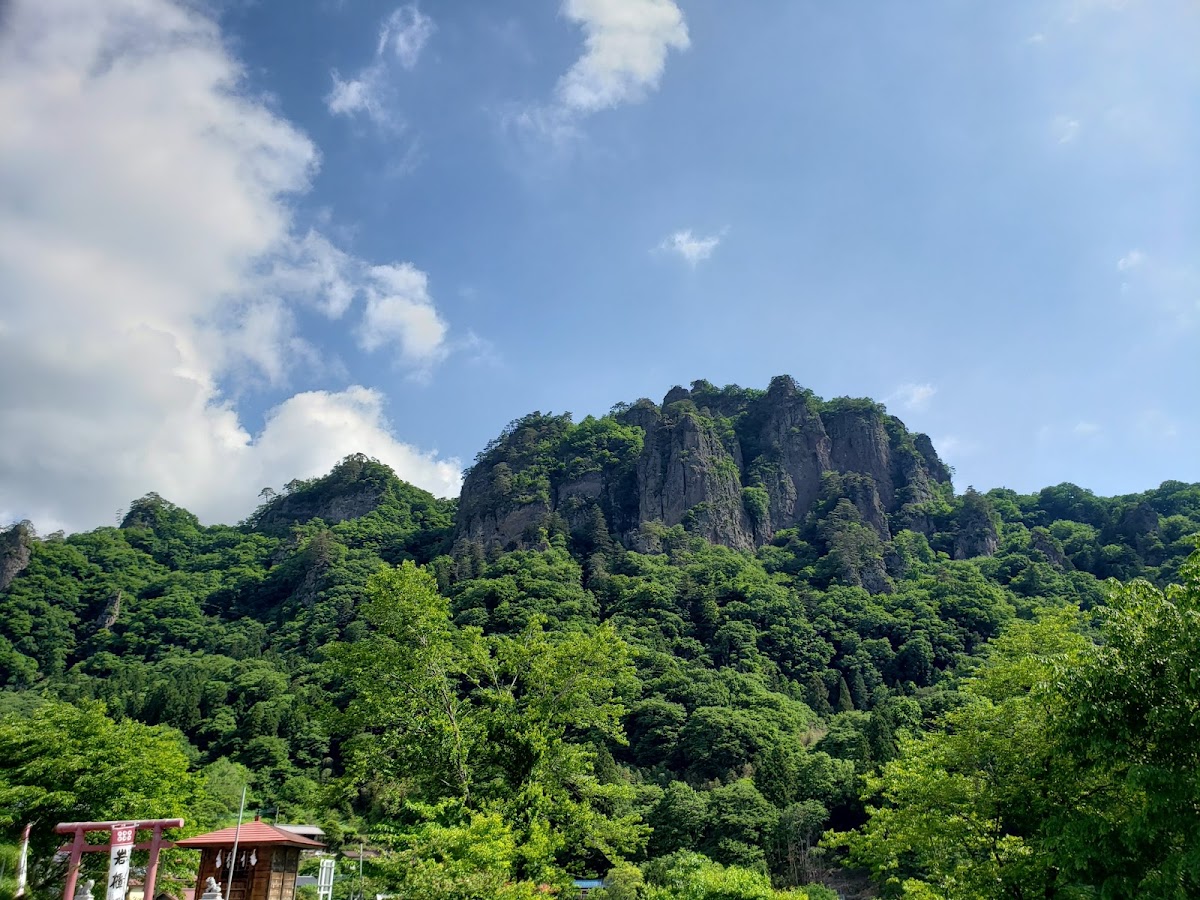
The most distinctive feature of Iwagutsu Castle lies in its location. Mount Iwagutsu is a rugged mountain covered with strangely shaped rocks and boulders, with sheer cliffs serving as a natural defensive wall. The castle’s layout, which made maximum use of this terrain, was feared as an “impregnable castle.”
The castle was built at an altitude of approximately 600 to 700 meters, with multiple baileys arranged around the main keep. The layout, utilizing the steep terrain, made it extremely difficult for attackers to penetrate.
Major Remains
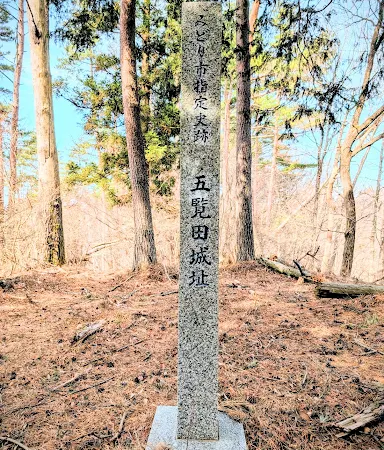
The Honmaru (main enclosure) site is the central part of Iwagutsu Castle, and the remains of the flat area are still clearly visible today. From here, one can see the Agatsuma River basin and the surrounding mountains, and its function as a military observation post can be understood.
The Ninomaru (second enclosure) site and Sannomaru (third enclosure) site are also relatively well preserved, and the arrangement of the enclosures allows us to infer the castle’s structure at the time. Furthermore, traces of defensive facilities such as horikiri (moat) and tatebori (vertical moat) can be seen in various places, allowing us to learn about the defensive systems unique to mountain castles.
The remains of stone walls** also remain in some places, and are thought to have been constructed during renovations by the Sanada clan. The stone wall technology was state-of-the-art at the time, showing how much importance the Sanada clan placed on this castle.
Ascent Routes and Defensive System
There were multiple ascent routes to Iwagutsu Castle, but all were steep, making them advantageous to the defenders. Multiple enclosures were arranged along the main ascent routes that utilized the ridges, allowing for staged defense. The current hiking trail utilizes part of the original castle approach, allowing visitors to experience the battles of the Sengoku period firsthand.
Highlights of Iwagutsu Castle (Castle Notes)
View from the Main Enclosure
From the main enclosure, you can enjoy a 360-degree panoramic view of the plains of the Agatsuma River basin and the surrounding mountains. On clear days, you can even see the mountains of Numata and Ueda, other strongholds of the Sanada clan, giving you a real sense of the castle’s strategic importance.
The fresh greenery in spring and the vibrant autumn foliage make it a charming place to enjoy the scenery throughout the seasons.
The Cliffs of Mount Iwagutsu
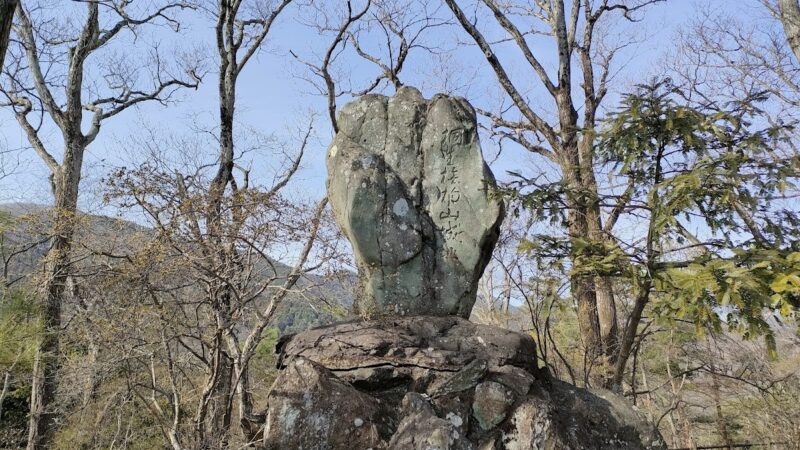
The cliffs of Mount Iwagutsu, towering behind the castle, are a natural fortress. The sheer cliffs are extremely difficult to climb, and it was this terrain that made Iwagutsu Castle considered impregnable.
The sheer scale of the rock face viewed from the hiking trail is breathtaking, making it a popular spot for photography.
Moats and Vertical Ditches
Several moats and vertical ditches remain within the castle grounds, providing valuable historical relics for understanding the defensive system of a mountain castle. Moats cutting across the ridges, in particular, were crucial structures for preventing enemy intrusion.
Exploring them firsthand allows you to appreciate the high level of castle-building technology of the time.
Stone Wall Remains
The stone walls, believed to have been constructed during renovations by the Sanada clan, are relatively rare for a mountain castle. The rough-hewn stone walls demonstrate the high level of skill in combining natural stones.
Iwagutsu-yama Hirasawa Trailhead Tourist Information Center
The Iwagutsu-yama Hirasawa Trailhead Tourist Information Center, the starting point for the climb to the castle, features exhibits on the history and highlights of Iwagutsu Castle. Gathering information here before your climb will allow for a deeper understanding of the castle.
The information center has brochures and maps available, and staff can also provide advice on climbing the castle.
Tourist Information and Access
Basic Information
- Location: Haramachi, Higashiagatsuma-machi, Agatsuma-gun, Gunma Prefecture
- Designation: National Historic Site, Continued Top 100 Japanese Castles (No. 131)
- Admission Fee: Free
- Visiting Hours: No restrictions (however, visiting during daylight hours is recommended)
- Parking: Free parking available at the Iwagutsuyama Hirasawa Trailhead Tourist Information Center
Access Methods
Access by Train
- Get off at Gunma-Haramachi Station on the JR Agatsuma Line, approximately 40 minutes on foot (approx. 3km)
- Approximately 10 minutes by taxi
Access by Car
- Approximately 50 minutes from Shibukawa-Ikaho IC on the Kan-Etsu Expressway via National Route 353
- Approximately 1 hour 20 minutes from Usui-Karuizawa IC on the Joshin-Etsu Expressway
- Set your car navigation system to “Iwabitsu-yama Hirasawa Trailhead Tourist Information Center” or “Haramachi, Higashiagatsuma Town”.
Time Required for Climbing the Castle
From the Iwabitsu-yama Hirasawa Trailhead Tourist Information Center to the main keep ruins, it takes approximately 20-30 minutes on foot along the mountain trail. Including time to leisurely explore the castle grounds, allow 1.5 to 2 hours round trip.
Precautions When Climbing the Castle
- As it is a mountain castle, appropriate clothing and shoes for hiking are necessary.
- Always bring drinking water.
- Insect repellent spray is useful in summer.
- Be careful as the ground can be slippery in rainy weather or after rain.
- In winter, there is a possibility of snow and ice, so check the information beforehand.
Nearby Tourist Facilities
Forest Resort Conifer Iwabitsu
This accommodation is located at the foot of Iwabitsu Castle and features hot springs and a restaurant. It is convenient for resting or staying overnight after climbing the castle.
Historical Sites Associated with the Sanada Clan
Nearby in Higashiagatsuma Town are numerous historical sites related to the Sanada clan. Visiting these sites along with Iwagutsu Castle will provide a comprehensive understanding of the Sanada clan’s rule over Agatsuma.
Agatsuma Valley
A scenic spot located about 20 minutes by car from Iwagutsu Castle, offering stunning views of the valley created by the Agatsuma River.
Nearby Castles
Numata Castle (Numata City, Gunma Prefecture)
Approximately 30km north of Iwagutsu Castle. A key stronghold controlled by the Sanada clan, it was connected to Iwagutsu Castle by the Sanada Road.
Nagurumi Castle (Minakami Town, Gunma Prefecture)
A mountain castle that functioned as a branch castle of Numata Castle. Known as the castle that triggered Toyotomi Hideyoshi’s siege of Odawara.
Minowa Castle (Takasaki City, Gunma Prefecture)
One of the famous castles in the Kanto region, and a nationally designated historical site. This castle was also associated with the Sanada clan for a period.
Relationship between Iwagutsu Castle and the Sanada Clan
Conquest by Sanada Yukitaka
Sanada Yukitaka, acting on orders from Takeda Shingen, embarked on a campaign to conquer the Agatsuma region. At the time, the Saito clan, who controlled Iwagutsu Castle, were loyal to Uesugi Kenshin, making it a crucial target for the Takeda clan.
Through skillful strategy and military maneuvering, Yukitaka successfully captured Iwagutsu Castle during the Eiroku era. This achievement solidified the Sanada clan’s position in the Agatsuma region.
The Era of Sanada Masayuki
After the death of Sanada Yukitaka, his son, Sanada Masayuki, became the lord of Iwagutsu Castle. Masayuki possessed excellent castle-building skills and undertook a large-scale renovation of Iwagutsu Castle. It is believed that the renovation incorporated elements of early modern castles, such as the construction of stone walls and the improvement of baileys.
During Masayuki’s time, Iwagutsu Castle functioned as an important military and political base within the Sanada clan’s sphere of influence. As a relay point on the Sanada Road connecting Ueda Castle and Numata Castle, it played a crucial role in logistics and information dissemination.
The Childhood of Sanada Nobushige (Yukimura)
There is a legend that Sanada Nobushige (Yukimura) spent his childhood at Iwagutsu Castle. It is believed that Nobushige grew up in this area during the period when his father, Masayuki, used Iwagutsu Castle as his base.
Life in a rugged mountain castle may have influenced the formation of Nobushige’s qualities as a military commander. The historical drama “Sanada Maru” depicted Nobushige during this period, increasing attention to Iwagutsu Castle.
Designation as a National Historic Site and Part of the Continued Top 100 Japanese Castles
Significance of National Historic Site Designation
In October 2019, the Iwagutsu Castle ruins were designated as a National Historic Site. This signifies that the historical and academic value of Iwagutsu Castle has been recognized at the national level.
Its excellent layout as a mountain castle, its connection to the Sanada clan, and its importance in the Agatsuma region during the Sengoku period were all evaluated, leading to its designation as a cultural property that should be preserved and utilized.
Selection as one of the Continued Top 100 Japanese Castles
Iwagutsu Castle has also been selected as one of the “Continued Top 100 Japanese Castles,” making it a popular castle among castle enthusiasts. The stamp for the Continued Top 100 Japanese Castles can be obtained at the Iwagutsu-yama Hirasawa Trailhead Tourist Information Center.
For those who enjoy visiting castles throughout Japan, Iwagutsu Castle is a historical site worth visiting as a representative mountain castle of Gunma Prefecture.
Best Season to Visit Iwagutsu Castle
Spring (April-May)
This is the season of fresh greenery, when the trees along the hiking trails are a beautiful shade of green. The weather is mild, making it the perfect time to climb the castle.
Summer (June-August)
The greenery is lush, making it a great time for forest bathing. However, temperatures are high and insects are abundant, so adequate equipment and precautions are necessary.
Autumn (September-November)
This is the season of autumn leaves, when the mountains surrounding Iwagutsu Castle are dyed in red and yellow. The best time to visit is especially from late October to early November. The weather is stable, making it an ideal time to visit the castle.
Winter (December-March)
While Iwagutsu Castle is also beautiful in a snowy landscape, climbing becomes difficult due to snow and ice. Winter visits are recommended for experienced hikers, and adequate equipment and caution are essential.
Preservation and Utilization of Iwagutsu Castle
Local Preservation Activities
Higashiagatsuma Town is actively working on the preservation and utilization of the Iwagutsu Castle ruins. Regular maintenance, including trail maintenance, signpost installation, and grass cutting, is carried out.
Local volunteer groups are also participating in preservation activities, and efforts to protect the historical site are underway throughout the community.
Utilization as a Tourism Resource
Iwagutsu Castle is positioned as an important tourist resource in Higashiagatsuma Town. As a historical site associated with the Sanada clan, it attracts many tourists, especially history and castle enthusiasts.
The Iwagutsu-yama Hirasawa Trailhead Tourist Information Center provides information and sells merchandise related to Iwagutsu Castle, serving as a tourist hub.
Educational Activities
Local schools conduct local history lessons using Iwagutsu Castle as a subject. This provides children with an opportunity to learn about local history and deepen their attachment to their hometown.
In addition, lectures and guided tours by experts are regularly held, providing opportunities to learn more about the history of Iwagutsu Castle.
To Fully Enjoy the Charms of Iwagutsu Castle
Recommended Prior Study
Before visiting Iwagutsu Castle, acquiring basic knowledge about the history of the Sanada clan and the Agatsuma region during the Sengoku period will deepen your understanding on site. We recommend preparing by studying books, websites, or videos.
Utilizing Guided Tours
Guided tours are sometimes held in Higashiagatsuma Town depending on the season. Climbing the castle while listening to explanations from a professional guide will allow you to learn about points of interest and historical background that you might not notice on your own.
Photography Tips
Iwagutsu Castle is also an attractive spot for photography. There are plenty of subjects to photograph, including the view from the main keep, the sheer cliffs, and the stone wall remains.
In particular, the light in the morning and evening is beautiful, allowing you to take dramatic photos. Also, the autumn foliage season is the best time to take colorful photographs.
Exploring the Surrounding Sites Associated with the Sanada Clan
By visiting not only Iwagutsu Castle but also the surrounding historical sites associated with the Sanada clan, you can gain a comprehensive understanding of the Sanada clan’s rule over Agatsuma. If you have time, consider visiting Numata Castle and Nagurumi Castle as well.
Summary
Iwagutsu Castle, located in Higashiagatsuma Town, Gunma Prefecture, is a mountain castle that functioned as an important base for the Sanada clan and is designated as a National Historic Site and one of the Continued Top 100 Japanese Castles. Built on the slopes of Mt. Iwagutsu at an altitude of 802 meters, this natural fortress is a valuable historical site that conveys the castle-building techniques of the Sengoku period and the strategies of the Sanada clan.
With its history spanning three generations of the Sanada clan—including its conquest by Sanada Yukitaka, renovations by Sanada Masayuki, and the legend that Sanada Nobushige (Yukimura) spent his childhood there—this castle is a must-see spot for history buffs.
The views from the main keep, the sheer cliffs, and the remains of moats and stone walls offer a full appreciation of the charm of a mountain castle. Its easy accessibility—a 20-30 minute walk from the Iwagutsuyama Hirasawa trailhead tourist information center—is one reason why it’s so popular.
Accessible from Gunma-Haramachi Station on the JR Agatsuma Line, the surrounding area boasts hot spring facilities and other historical sites associated with the Sanada clan, making it a place you can thoroughly enjoy for a full day. The natural beauty changes with the seasons, making it a fascinating castle ruin where you can discover something new with each visit.
By visiting Iwagutsu Castle, you can trace the footsteps of the Sanada clan during the Sengoku period and experience the awe-inspiring power of this natural fortress. As a representative mountain castle of Gunma Prefecture, Iwagutsu Castle, where you can enjoy both its history and nature, is an essential spot for castle tours in the Kanto region.