Takaoyama Castle (Gunma Prefecture) Complete Guide: History, Remains, Access, and Castle Stamp Information
Takaoyama Castle is a mountain castle built on the summit of Mt. Takaoyama, at an altitude of 766m, located on the border between Ishizumi-cho and Hocchi-shinden-cho in Numata City, Gunma Prefecture. This castle, which played an important role during the turbulent Sengoku period, still retains well-preserved remains such as earthworks and baileys, attracting attention from castle enthusiasts and mountain climbing lovers.
This article will introduce the charm of this mountain castle in its entirety, from its historical background and castle structure to access methods and information on the recently popular castle stamp.
History of Takaoyama Castle
Construction History and the Hocchi Clan
Takaoyama Castle is said to have been built by the Hocchi clan, a branch of the Numata clan. The Hachi clan held considerable power as influential local lords in the Numata region, and by constructing a castle in this strategically important location, they established it as a defensive base for the Numata Basin.
Located at an altitude of 766m, Mount Takaoyama offered a strategic advantage, providing a panoramic view of the surrounding area and making it an ideal location for a military base. The castle’s layout, with the main keep at the summit and multiple baileys along the ridge, maximized its defensive capabilities as a mountain castle.
Conflicts with the Sanada Clan
The most important event in the history of Takaoyama Castle was the conflict following the capture of Numata Castle by Sanada Masayuki. During the Tensho era (1573-1593), when Sanada Masayuki seized Numata Castle, the former Numata clan resisted.
Numata Heihachiro Kageyoshi, who ruled this area, established his headquarters at Takaoyama Castle and attempted to recapture Numata Castle from the Sanada clan. Takaoyama Castle is thought to have served more as a forward base and fort for the recapture of Numata Castle than as a simple castle.
Taking advantage of its elevation and the defensive capabilities unique to mountain castles, Takaoyama Castle functioned as a base of resistance against the Sanada clan for a certain period. However, it is presumed that the Sanada clan’s rule was eventually established, and Takaoyama Castle ceased to fulfill its role.
The Numata Region in the Sengoku Period
The Numata region is located in the northern part of Kōzuke Province (present-day Gunma Prefecture) and was a crucial transportation hub to Echigo (Niigata Prefecture) and Shinano (Nagano Prefecture). Therefore, during the Sengoku period, it became a target of conflict among powerful daimyo such as the Uesugi, Takeda, Hojo, and Sanada clans.
Takaoyama Castle can be seen as a historical witness to the efforts of local lords to maintain their power amidst these powerful forces. In contrast to the large-scale flatland castle of Numata Castle, Takaoyama Castle is thought to have served as an emergency refuge and a base of resistance.
Layout and Remains of Takaozan Castle
Basic Structure of the Castle
Takaozan Castle is a tiered mountain castle built around the summit of Mt. Takaozan, which is 766m above sea level. The main remains are arranged as follows:
Main Enclosure (Honmaru)
- Located at the mountaintop, the main enclosure has a diameter of approximately 40m.
- Low earthen ramparts remain today, providing traces of the defensive facilities of the time.
- A relatively flat space is secured, suggesting that it functioned as a command center.
Arrangement of Enclosures
Centered around the main enclosure, stepped enclosures are arranged along multiple ridges:
- North Ridge Enclosures: Several levels of enclosures are constructed on the ridge extending north from the main enclosure.
- West Ridge Enclosures: Enclosures responsible for defense to the west are arranged in a stepped pattern.
- Southeast Ridge Enclosures: Enclosures also extend to the southeast, designed to prepare for attacks from multiple directions.
These enclosures are cleverly positioned utilizing the ridge terrain, creating a structure that prevents enemy incursions in stages.
Characteristics of Defensive Structures
The defensive structures of Takaoyama Castle have the following characteristics:
Earthworks
A low earthwork remains in the main enclosure, indicating the defensive line of the time. In mountain castles, earthworks, rather than stone walls, were often the primary defensive structures, and Takaoyama Castle is a typical example.
Absence of Moats
Interestingly, no clear moats have been identified at Takaoyama Castle. This is thought to be because the steep terrain itself provided natural defense, reducing the need for artificial moats.
Utilization of Natural Terrain
Located at an altitude of 766m, and surrounded by steep slopes, the castle’s layout, which maximizes the use of this natural fortification, is its most distinctive feature.
Condition of Existing Remains
Currently, the remains of Takaoyama Castle are preserved in relatively good condition within the forest. The earthworks of the main enclosure, the flat surfaces of each enclosure, and the ridge topography allow us to imagine the appearance of a mountain castle from the Sengoku period.
However, due to years of weathering and overgrown vegetation, some of the remains are unclear. When visiting, paying attention to changes in the terrain and subtle differences in elevation will help you discover more of the remains.
How to Access Takaoyama Castle
Access by Car
Route from the Kan-Etsu Expressway
The nearest interchange is Tsukiyono IC, and Takaoyama is located approximately 3km northeast from there.
- After exiting Tsukiyono IC, head north on National Route 17.
- Take the road connecting Prefectural Roads 266 and 265.
- There is a signpost at the entrance to the forest road, making it relatively easy to find.
Using the Takaoyama Forest Road
To get to Takaoyama Castle, use the Takaoyama Forest Road. There is a signpost at the entrance to the forest road that reads “Takaoyama Forest Road Takaoyama”.
Follow the forest road, and you will find a parking area at the end. This is the junction of the trails to Mt. Togami and Mt. Takao, and serves as the starting point for the climb. There are a few parking spaces available, but it can get crowded on weekends, so early arrival is recommended.
Access by Public Transportation
If using public transportation, the nearest station is Numata Station on the JR Joetsu Line. However, the distance from the station to the entrance of the Takao Mountain forest road is considerable, so taking a taxi is more practical.
Hiking Route
A well-maintained hiking trail leads from the parking lot to the main citadel at the summit.
Estimated Time: Approximately 30-40 minutes one way
Difficulty: Intermediate (Suitable for those familiar with mountain trails)
Elevation Difference: Approximately 310m
Since the trail goes through a mountain forest, the following equipment and preparations are recommended:
- Trekking shoes or hiking boots
- Long-sleeved shirt and long pants (for protection against bushes and insects)
- Drinking water
- Map or GPS app
- Bear bell (for protection against wild animals)
Especially from spring to autumn, be careful of insects and snakes. Also, in winter, there is a possibility of snow and ice, so it is best to avoid this route unless you are an experienced hiker.
Takaoyama Castle Stamp Information
Gunma Sengoku Castle Stamp Summit
The Takaoyama Castle stamp is issued as part of the Gunma Sengoku Castle Stamp Summit. Of particular note is the special stamp sold as the 7th edition.
This series features a unique concept where collecting all eight castle stamps completes the Shoho Castle Map, making it popular among collectors. The Takaozan Castle stamp is one of these eight.
How to Obtain the Castle Stamp
The Takaozan Castle stamp is primarily available at the following locations:
Joshu Sanada Samurai Troupe Shop Matsunoya
The “Joshu Sanada Samurai Troupe Shop Matsunoya,” located in Numata City, carries castle stamps for various castles in Gunma Prefecture, including Takaozan Castle. You can obtain them all at once when visiting Numata Castle and surrounding castles.
Other Sales Locations
- Numata City Tourist Information Center
- Gunma Sengoku Castle Stamp Summit related event venues
- Some online shops
Sales availability may vary depending on the time of year, so it is recommended to inquire in advance.
Types of Castle Stamps
In addition to the regular version, there may be special editions of castle stamps at Takaozan Castle. There are also event-limited editions and limited-time designs, so collectors are advised to check the latest information.
Castle stamps include the castle name, text indicating the lord and historical background, and a design, making them valuable as a memento of your visit and a tool for historical learning.
Attractions at Takaozan Castle and Surrounding Areas
Connection to Numata Castle
When visiting Takaozan Castle, we highly recommend also visiting Numata Castle. Numata Castle was an important base ruled by the Sanada clan and is essential for understanding the history of Takaozan Castle.
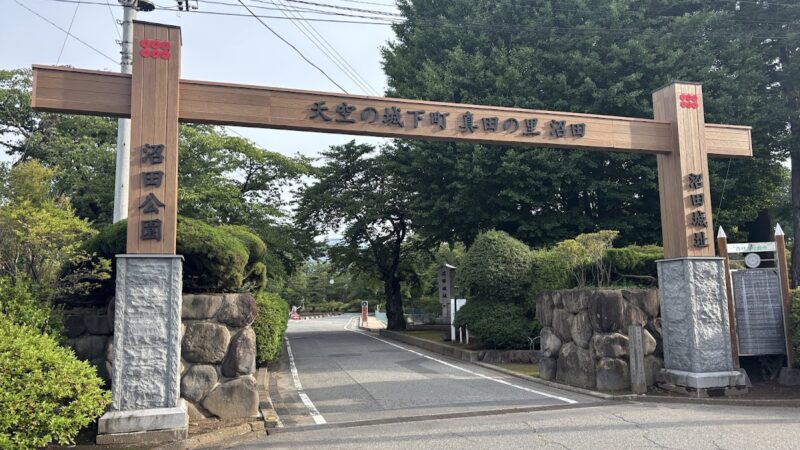
The current Numata Castle site is maintained as Numata Park, and remnants such as stone walls and moats remain. There is also a facility exhibiting materials related to the Sanada clan, allowing you to learn more about the Sengoku period history of this region.
Togami-yama
The parking lot at Takao-yama is also the trailhead for Togami-yama. Togami-yama is a mountain with a rich historical background, and if you have time, a course that visits both mountains is recommended.
Tanigawa-dake/Hotaka-san Area
More broadly speaking, Takao-yama belongs to the Tanigawa-dake/Hotaka-san area. This region is a representative mountainous area of Gunma Prefecture and is known as a popular spot for mountain climbing and hiking. Visiting Takao-yama Castle is a good opportunity to explore the surrounding mountains as well.
Precautions When Visiting Takao-yama Castle
Safety Precautions
- Mountain Climbing Preparation: Visiting a mountain castle requires the same preparation as mountain climbing. Ensure you have appropriate equipment and physical fitness.
- Weather Check: Avoid climbing in bad weather and choose a sunny day.
- Avoid Solo Activities: Try to travel in groups and inform family or friends of your climbing plans.
- Wildlife: There is a possibility of wild animals such as bears and wild boars inhabiting the area. Carrying a bear bell is recommended.
Manners and Preservation
- Protection of Historical Structures: Please be careful not to damage historical structures such as earthworks and baileys.
- Take Your Trash Home: To protect the natural environment, please be sure to take your trash home with you.
- Protection of Vegetation: Please refrain from venturing off the hiking trails.
- Photography: You are free to take photographs of the historical structures, but please be considerate of other hikers.
The Charm and Value of Takaoyama Castle
Historical Value
Takaoyama Castle holds significant historical value as a castle of a local powerful family during the Sengoku period and as a base for resisting the Sanada clan’s control of Numata. Its preservation of its original appearance, largely due to the lack of major alterations, is also invaluable.
The Ingenuity of Topography and Layout
The castle’s layout, utilizing the 766m-high mountaintop, is a classic example of a Sengoku period mountain castle that made maximum use of the natural terrain. It offers a valuable lesson in how efficiently defensive positions were constructed in an era with limited civil engineering technology.
Stunning Views
From the mountaintop, you can enjoy panoramic views of the Numata Basin and the surrounding mountains. This view is the reason why Takaozan was chosen as a military base, and it remains a major attraction for modern visitors.
A Fusion of Hiking and Castle Exploration
Takaozan Castle is a rare spot where you can enjoy both hiking and castle exploration simultaneously. You can experience both the sense of accomplishment from a moderate hike and the historical romance of exploring historical remains.
Summary: Visit Takaozan Castle
Takaozan Castle in Numata City, Gunma Prefecture, is a Sengoku period mountain castle built on a 766m-high mountaintop. Built by the Hachi clan and the site of battles against the Sanada clan, this castle still retains well-preserved remains such as earthworks and baileys.
Despite its relatively easy accessibility—approximately 3km from the Tsukiyono Interchange on the Kan-Etsu Expressway—it’s a valuable spot where you can experience the atmosphere of an authentic mountain castle. You can drive to the parking lot via the Takaoyama Forest Road, and from there, a 30-40 minute hike will take you to the main bailey at the summit.
The castle stamps issued at the Gunma Sengoku Castle Stamp Summit are also popular and can be obtained at places like “Matsunoya, the Joshu Sanada Samurai Troop Shop” in Numata City. The fact that collecting eight stamps completes a Shoho Castle Map is a major attraction for collectors.
When visiting, please be sure to have the necessary hiking gear and take safety precautions while enjoying the appearance of this Sengoku-era mountain castle and the magnificent views. Visiting this castle along with other nearby historical sites such as Numata Castle will allow you to gain a deeper understanding of the Sengoku history of this region.
Takaoyama Castle is a fascinating spot worth visiting for history buffs, castle enthusiasts, and hiking aficionados alike. Be sure to visit Takaoyama Castle, where you can experience the rich history and nature of Gunma Prefecture.