Nitayama Castle (Gunma Prefecture) Complete Guide | A Thorough Explanation of the Remains and History of a Mountain Castle from the Nanboku-cho Period
What is Nitayama Castle?
Nitayama Castle is a mountain castle from the Nanboku-cho period located in Kawauchi-cho, Kiryu City, Gunma Prefecture. Built on Mt. Sekison, at an altitude of approximately 503 meters, this castle functioned as a fortress, taking advantage of its rugged location with a relative height of approximately 265 meters.
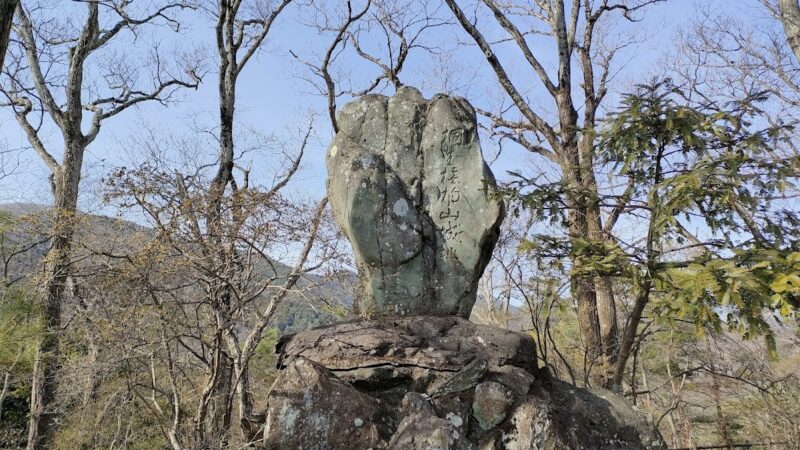
Located around present-day Kawauchi-cho 5-chome, Kiryu City, it was used as an important military base in the region from the Nanboku-cho period to the Sengoku period. The name Sekison-yama originates from the stone shrine enshrined near the summit, suggesting that it was also an object of local worship.
As a mountain castle, Nitayama Castle employs a typical mountain castle style, built on a long, narrow ridge, and is characterized by defensive facilities that skillfully utilize the natural terrain. Looking up from the Nitayama settlement at the foot of the mountain, its ruggedness and strategic importance are immediately apparent.
History of Nitayama Castle
Construction during the Nanboku-cho period and the Yamada clan
The construction of Nitayama Castle dates back to the Nanboku-cho period. It is believed to have been built by the Yamada clan, who ruled this area, and functioned as a base for regional control at the time. As local lords governing Nitayama village, the Yamada clan maintained their influence over the surrounding area by constructing a castle on this rugged mountain.
In 1351 (Kanno 2), Nitayama Castle underwent a significant historical turning point. Records show that Yamada Chikugo-no-kami Noriyuki was attacked and destroyed at this castle by Kiryu Kunitsuna, the lord of Kiryu Castle. This incident holds significant meaning in regional history as it symbolizes the rise and fall of regional powers during the Nanboku-cho period.
Changes in the mid-Muromachi period
In the mid-Muromachi period, Nitayama Castle entered a new phase. During the time of Ashikaga Yoshimasa, the regional political situation changed dramatically, and the castle’s rulers also changed. During this period, complex power struggles were unfolding in the Kanto region, and it is believed that Nitayama Castle was also affected by these conflicts.
A connection to the Nikaido clan has also been pointed out, suggesting that this family may have been involved in the castle’s control at one time. The Nikaido clan was a samurai family active in the Kanto region and had relationships with various forces vying for control of Nitayama village.
The Sengoku Period and the Satomi Clan
At the start of the Sengoku period, the Satomi clan is believed to have become the lords of Nitayama Castle. The Satomi clan was a powerful daimyo based on the Boso Peninsula, but their sphere of influence extended to Kozuke Province (present-day Gunma Prefecture). While there are various theories regarding the exact period of the Satomi clan’s control of Nitayama Castle, there is no doubt that this castle played an important role in the complex power dynamics of the Sengoku period.
When Uesugi Kenshin advanced into the Kanto region, the area around Nitayama Castle also attracted attention as a strategically important location. Uesugi Kenshin, as the Kanto Kanrei (governor of the Kanto region), aimed to unify the Kanto region, and castles around Kiryu were also affected by his military actions. While there are few clear records regarding the role Nitayama Castle played during this period, it is presumed to have continued to function as a regional defensive stronghold.
Layout and Remains of Nitayama Castle
Characteristics of the Castle Structure
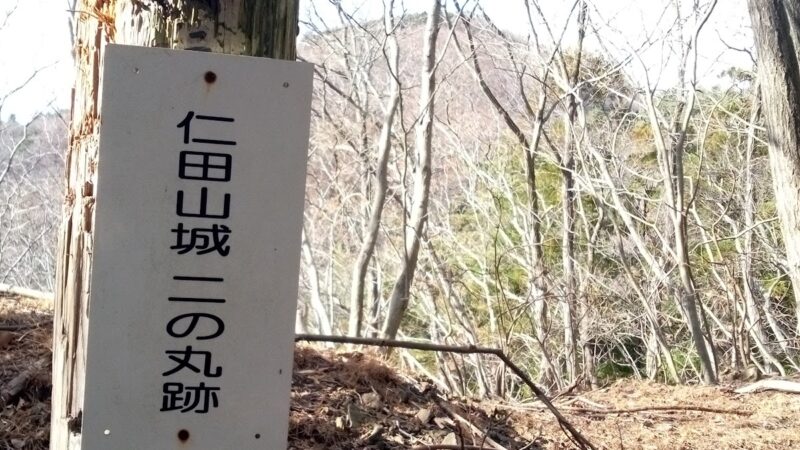
Nitayama Castle is a multi-bailey mountain castle built on the long, narrow ridge of Mt. Sekison. Multiple baileys are arranged towards the north from the main bailey, each separated by a moat. This structure is a clever design to prevent enemy incursions in stages and is a typical defensive system for mountain castles.
The castle grounds extend long and narrow from north to south, making maximum use of the ridge’s topography. The main bailey has a relatively large flat area and is thought to have functioned as the lord’s living space and command post. Traces of earthworks can also be seen around the main bailey, indicating measures taken to enhance defensive capabilities.
Moats and Defensive Facilities
The most distinctive feature of Nitayama Castle is the well-preserved multiple moats. A moat (horikiri) is a dry moat dug to cut across a ridge, serving as an important defensive structure to prevent enemy advances. At Nitayama Castle, moats are located in multiple places, such as between the main enclosure and the second enclosure, and between the second and third enclosures, forming a tiered defensive line.
These moats are still clearly visible today, and their depth and width reveal the high level of castle-building technology of the time. The moat north of the main enclosure is particularly large, indicating its crucial role in the castle’s defense.
Besides the moats, defensive structures unique to mountain castles, such as the layout of the enclosures and the cut slopes (artificial steep slopes), can be seen throughout the site. These remains are valuable resources for studying the evolution of castle-building technology from the Nanboku-cho period to the Sengoku period.
Layout of the Main and Secondary Enclosures
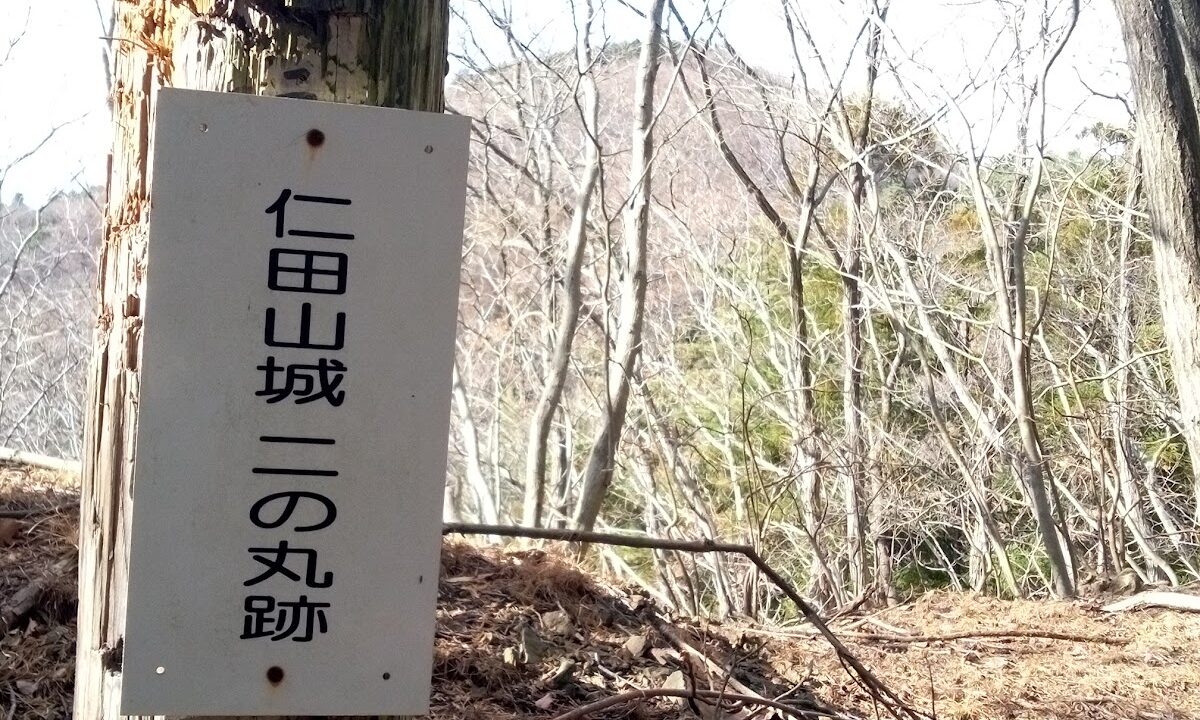
The main enclosure (honkuruwa) is located in the center of the castle and forms the largest flat area. Below the main enclosure is a smaller enclosure, where, interestingly, a bell is located. The origin and installation date of this bell are unclear, but it suggests the possibility that it was used as some kind of religious facility in later times.
The castle is arranged in a series of interconnected enclosures, with the second and third enclosures continuing north from the main enclosure. Each enclosure is clearly separated by a moat. This arrangement creates an effective defensive system, requiring the enemy to break through multiple lines of defense before reaching the main enclosure.
Each enclosure is smaller than the main enclosure and is presumed to have been used as a garrison for soldiers or a storage area for supplies. Because it is built on a narrow ridge, the width of each enclosure is limited, but there is relatively ample length, providing sufficient space to fulfill the necessary functions.
Remains of Residences at the Foot of the Mountain
It is said that the residences of the Yamada and Satomi clans were located at the foot of Nitayama Castle, a mountain castle. Terraced flat areas remain in what is now the Nitayama settlement, and these are believed to be the remains of these residences.
In medieval mountain castles, it was common practice to live in a residence at the foot of the mountain during peacetime and only retreat to the castle on the mountaintop during wartime. It is believed that Nitayama Castle also operated in this manner, with the residence at the foot of the mountain functioning as the center of daily political and economic activity.
While houses now line the area around the former residence site, careful observation of the terrain reveals traces of artificially created flat areas and geographical features that likely divided the residences. These remains provide important clues to understanding the overall structure of the castle.
Access to and Visiting Nitayama Castle
Location and Transportation
Nitayama Castle is located around 2197, Kawauchi-cho 5-chome, Kiryu City, Gunma Prefecture. Access by car is most convenient; from Kiryu city center, take National Route 122 towards Kawauchi-cho. When using a car navigation system, setting “Sekisonzan” or “Kawauchi-cho 5-chome” as your destination is recommended.
If using public transportation, you will need to take a bus or taxi from Kiryu Station, but since the number of services is limited, it is recommended to check the timetable in advance. Considering the distance to the trailhead, visiting by car is the most efficient option.
Parking and Trailhead
There is no dedicated parking lot around the trailhead of Nitayama Castle, but there are a few parking spaces next to private houses near the trailhead. However, since this is also a local road, please be considerate of the surroundings when parking and be careful not to obstruct traffic.
There is a signpost at the trailhead indicating the hiking trail to Ishizonoyama. From the trailhead to the main enclosure at the summit, it is a steep climb with a relative elevation difference of 265 meters, so sufficient preparation is necessary. The hiking trail is well-maintained, but there are many steep sections, so sturdy footwear such as hiking boots is recommended.
Precautions When Climbing
The following points should be noted when climbing Nitayama Castle:
First, the elevation difference of 265 meters requires considerable physical strength. The hike should take approximately 40 minutes to an hour each way, and the round trip may take more than two hours. Especially in summer, be sure to prepare adequate hydration to prevent heatstroke.
The mountain trail has many steep sections, so pay particular attention to your footing, especially when descending. It becomes slippery after rain, so it is recommended to visit on a day with good weather. Also, there are areas with sudden changes in terrain, such as moats and steep slopes, which are characteristic of mountain castles, so proceed carefully, checking your footing.
There are few signposts in the mountains, so understanding the castle’s structure beforehand using a map will deepen your understanding of the remains. Also, there are areas with poor cell phone reception, so it is safer to visit in a group rather than climbing alone.
Nitayama Castle and Surrounding Castles
Relationship with Kiryu Castle
An essential aspect of understanding the history of Nitayama Castle is its relationship with Kiryu Castle. The record that Yamada Chikugo-no-kami Noriyuki was attacked and destroyed by Kiryu Kunitsuna, the lord of Kiryu Castle, in the second year of Kanno (1351), indicates a close relationship between the two castles.
Kiryu Castle was located near the center of Kiryu City and functioned as the political center of the region. Kiryu Kunitsuna, as the head of the Kiryu clan, sought to unify the surrounding local lords, and the Yamada clan of Nitayama Castle became a target.
This battle was not simply a fight between castles, but part of a power struggle against the backdrop of the complex political situation of the Nanboku-cho period. While there are various theories regarding which factions the Kiryu and Yamada clans belonged to, it is an important event symbolizing the shift in the power balance in this region.
Taniyama Fort and Sarakubo Fort
Around Nitayama Castle, there are related castle ruins such as Taniyama Fort and Sarakubo Fort. These are thought to have functioned as subsidiary castles or outposts of Nitayama Castle, forming a network to defend the entire Nitayama region.
Taniyama Fort was located near Nitayama Castle and played a part in the defense line of Nitayama Village. Although smaller in scale than Nitayama Castle, it was built in a strategically important location and is presumed to have played a role in early detection of enemy incursions and relaying the information to Nitayama Castle.
Sarakubo Fort similarly functioned as part of a network of fortresses centered around Nitayama Castle. While these fortresses could not withstand large armies individually, they enhanced the overall defense of the region by coordinating with Nitayama Castle.
Castles and Residences of Nitayama Village
Nitayama Village contained not only Nitayama Castle, a mountain castle, but also several other castles and residences, including residences at the foot of the mountain and surrounding fortresses. These are believed to have formed a wide-ranging defensive system, known as the “Nitayama Regional Castles,” spanning approximately 3,000 meters east-west and 5,000 meters north-south.
Such a wide-area defensive system is characteristic of regional control from the Nanboku-cho period to the Sengoku period. Rather than relying on a single castle, the coordinated operation of multiple strongholds enabled more effective defense and territorial control.
The Nitayama clan residence, Iga residence, and Eimeiji fort may have also functioned as part of this group of castles, suggesting that the entire Nitayama region functioned as a single fortified zone.
Highlights of Nitayama Castle
Natural Environment of Ishizonoyama
Ishizonoyama, where Nitayama Castle was built, is a 503-meter-high mountain that characterizes the landscape of Kawauchi-cho, Kiryu City. From the summit, you can enjoy a panoramic view of Kiryu city and the surrounding mountains, offering a magnificent vista on clear days.
The name Ishizonoyama originates from the stone shrine enshrined near the summit. This shrine has been revered since ancient times, and even after the castle was abandoned, it continued to be cherished as an object of worship for the local people. A torii gate still stands there today, giving it a religious significance.
The mountain’s natural environment is also one of its attractions. You can enjoy the vegetation throughout the four seasons, and the fresh greenery of spring and the vibrant autumn foliage make it an ideal time to visit, combining hiking and castle exploration. However, since there are many steep mountain paths, it is essential to take sufficient precautions for safety while enjoying nature.
Preservation of the Remains
Despite being over 600 years old, the remains of Nitayama Castle are in relatively good condition. The moats, in particular, are clearly visible, allowing you to appreciate the defensive system of the time.
The flat areas of each enclosure, while showing signs of natural erosion, clearly show traces of artificial construction. The height and angle of the cliffs provide insight into the level of technology and defensive considerations at the time of construction.
By comparing the traces of earthworks and the layout of the enclosures with the castle’s layout map, you can gain a three-dimensional understanding of the castle’s overall structure. While there are almost no stone remains such as stone walls, this is a common characteristic of mountain castles in the Kanto region, demonstrating the high level of earthwork castle construction technology.
Historical Value
Nitayama Castle is an important historical site that tells the story of eastern Gunma Prefecture from the Nanboku-cho period to the Sengoku period. The existence of a specific historical record of its capture by Kiryu Kunitsuna in 1351 is invaluable for castle history research.
Furthermore, as a castle involving multiple forces such as the Yamada, Satomi, and Nikaido clans, it is an important resource for studying the complex power relationships of the medieval period. Considering the role this castle played in the larger historical flow of Uesugi Kenshin’s expansion into the Kanto region deepens our understanding of regional history during the Sengoku period.
From the perspective of a defensive system at the regional level of Nitayama-go, this castle has high research value and is a valuable case study for considering the nature of regional governance in the medieval period.
Investigation and Research of Nitayama Castle
Archaeological Investigation
Nitayama Castle has been the subject of multiple archaeological investigations and castle research. As part of a comprehensive survey of castle ruins in Gunma Prefecture, layout and surveying work has been conducted, revealing the castle’s structure.
These investigations have accumulated specific data, including the number and size of moats, the arrangement of baileys, and the height of cliffs. Although the number of excavated artifacts is small, attempts have been made to estimate the castle’s period of use based on pottery fragments and other findings.
It is mentioned in the “Comprehensive Survey of Japanese Castles” and various castle-related books, and is recognized as one of Gunma Prefecture’s representative medieval mountain castles. However, large-scale excavations have not been conducted, leaving open the possibility of new discoveries through future detailed investigations.
Comparison with Historical Documents
Correction with historical documents is crucial in unraveling the history of Nitayama Castle. The defeat of Yamada Chikugo-no-kami Noriyuki in 1351 is recorded in local history books and temple records.
However, there are few clear records regarding the castle’s subsequent changes, and much remains to be seen through speculation. Regarding the period of Satomi clan rule and their connection to Uesugi Kenshin, reliable historical sources are limited, and further research is needed.
Many details about the castle’s condition during the time of Ashikaga Yoshimasa in the mid-Muromachi period remain unclear, necessitating comparative research with historical records from surrounding areas. Local traditions and oral traditions may also provide clues to historical unraveling.
The Position of Nitayama Castle in Gunma Prefecture’s Mountain Castle Culture
Numerous mountain castles remain in Gunma Prefecture, and Nitayama Castle holds a significant position among them as a castle from the Nanboku-cho period. Unlike castles with large stone walls, such as Kanayama Castle (Ota City), it is a typical Kanto mountain castle centered on earthen defensive structures, making it a valuable example for understanding the evolution of castle construction techniques.
As a core element of the medieval castle network in the Kiryu region, Nitayama Castle is also important in regional history research. Studying its relationship with surrounding castles such as Kiryu Castle and Hishakuyama Castle will shed light on the structure of medieval society in this region.
Located at an elevation of 265 meters, Nitayama Castle is among the most rugged of all mountain castles in Gunma Prefecture. It is a quintessential example of a defensively-oriented mountain castle, attracting attention from castle enthusiasts and researchers. Because the remains are still well-preserved, it is a valuable historical site where one can experience a medieval mountain castle, and its preservation and utilization are highly anticipated.
Summary
Nitayama Castle is a mountain castle from the Nanboku-cho period, built on Mt. Sekison in Kawauchi-cho, Kiryu City, Gunma Prefecture. Despite its rugged location at an elevation of 265 meters, the remains of moats and baileys are remarkably well-preserved. Built by the Yamada clan, it was captured by Kiryu Kunitsuna in 1351. Its history includes involvement by multiple forces, including the Satomi clan, illustrating the complex power dynamics of the medieval period.
The castle’s structure, arranged in a series of baileys along a long, narrow ridge, exhibits a typical form of a mountain castle. The tiered defensive system using multiple moats demonstrates the advanced castle-building techniques of the time. The defensive network of the entire Nitayama region, including the remains of the residence at the foot of the mountain and the surrounding forts, is an important example for understanding the nature of regional governance in the medieval period.
Although hiking trails are still maintained, allowing castle enthusiasts and history buffs to visit, the steep mountain paths require careful preparation and caution. Nitayama Castle, where the natural environment of Mt. Sekison and historical remains are harmoniously integrated, is a valuable historical site where one can experience the medieval history of Gunma Prefecture. It is an important cultural property that is expected to continue to be preserved and researched.