Usui Pass Castle (Gunma Prefecture) Complete Guide | A Thorough Explanation of the Fortified Site and Historical Background from the 1590s
Located in Matsuida-cho, Annaka City, Gunma Prefecture, Usui Pass Castle is a fortified site built in 1590, during the late Sengoku period. Constructed by Uesugi Kagekatsu to confront the Hojo-held Usui Castle during Toyotomi Hideyoshi’s Odawara campaign, the castle ruins remain a valuable historical site where remnants of the original structure can still be seen.
Basic Information on Usui Pass Castle
Usui Pass Castle is a mountain castle built on the Gunma Prefecture side of Usui Pass, located on the border between Gunma and Nagano Prefectures. Also known as “Sadamitsu Castle,” it functioned as an important military base during the Sengoku period.
Location and Geographical Characteristics
- Location: Sakamoto, Matsuida-machi, Annaka City, Gunma Prefecture
- Elevation: Approximately 960m
- Topography: Triangular plateau approximately 50m north-south x 60m east-west
- Water System: Watershed between the Tone River and Shinano River systems
Usui Pass has been known since ancient times as a crucial transportation hub connecting Kanto with Shinano and Hokuriku, and occupied an extremely important military position. This geographical characteristic is closely related to the reason for the construction of Usui Pass Castle.
Year of Construction and Builder
- Year of Construction: Tensho 18 (1590)
- Builder: Uesugi Kagekatsu
- Purpose of Construction: A fortified camp for the Northern Army during the Siege of Odawara
Historical Background of Usui Pass Castle
The Siege of Odawara and the Strategic Importance of Usui Pass
In Tensho 18 (1590), Toyotomi Hideyoshi began his campaign against the Odawara Hojo clan as the final step in unifying Japan. During this Siege of Odawara, Usui Pass became a crucial route for the Northern Army (the forces of Uesugi Kagekatsu, Maeda Toshiie, and others) to enter the Kanto region.
The Hojo clan, anticipating an invasion via the Usui Pass route by the Northern Army, built “Usui Castle” (Atagoyama Castle) in Sakamoto, Matsuida-cho, Annaka City, Gunma Prefecture, as a defense. Usui Castle was one of the frontline castles for the Hojo clan’s defense of the Kanto region.
Construction of Usui Pass Castle by Uesugi Kagekatsu
When the northern army led by Uesugi Kagekatsu crossed the Usui Pass to enter the Kanto region, they needed to confront the Hojo-held Usui Castle. Therefore, Kagekatsu constructed a temporary fort near the Usui Pass, which became Usui Pass Castle.
This fort functioned as a forward base for attacking the Hojo-held Usui Castle and is structured specifically for short-term military operations. Built in 1590, at the end of the Sengoku period, it features a practical layout designed with actual combat in mind.
Relationship between Usui Pass Castle and Usui Castle
Several castles exist around Usui Pass, and they are sometimes confused. To summarize, the following points can be made:
- Usui Pass Castle (Sadamitsu Castle): A fortified camp (near the pass) built by Uesugi Kagekatsu in 1590 (Tensho 18).
- Usui Castle (Atagoyama Castle): A defensive base built by the Hojo clan (Sakamoto, Matsuida Town).
These two castles were in a hostile relationship during the Odawara campaign of 1590 (Tensho 18), facing each other across the Usui Pass.
Remains and Characteristics of Usui Pass Castle
Castle Structure
Usui Pass Castle, which attracted renewed attention in 2017 with a newspaper report about the “discovery of castle ruins at Usui Pass,” has the following characteristics in its remains.
Characteristics of the Fortification
- Size: A triangular plateau approximately 50m north-south x 60m east-west
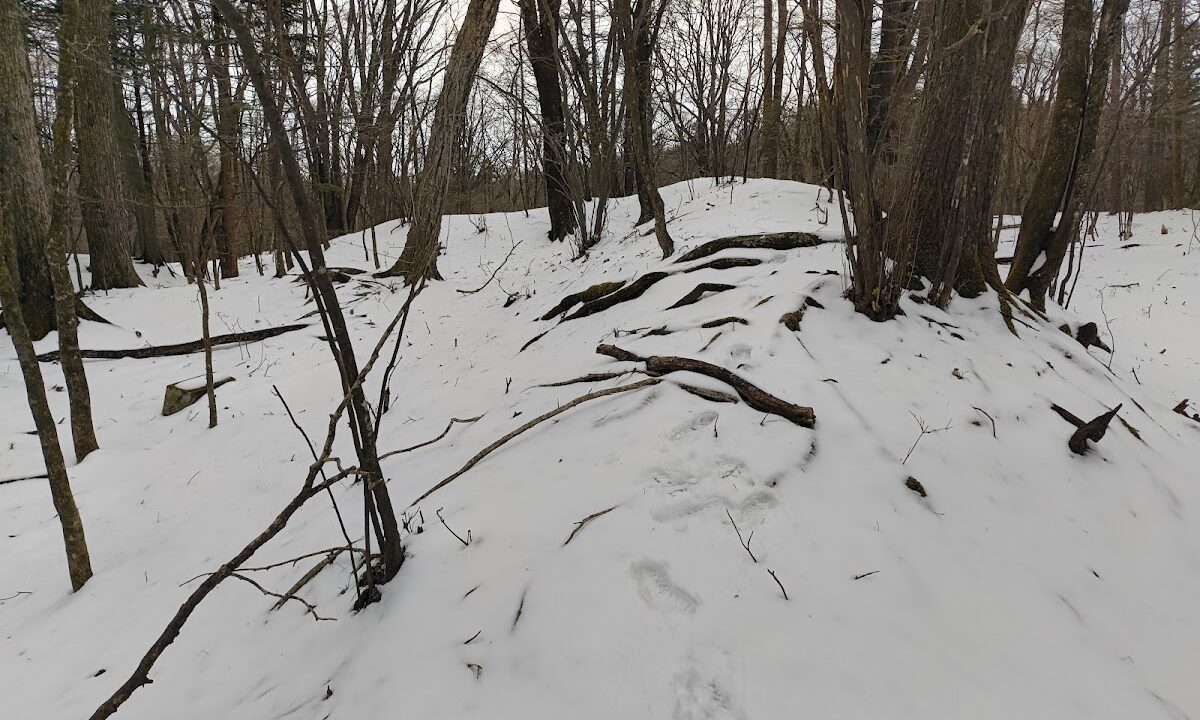
- Enclosures: Multiple leveled enclosure remains can be identified
- Dry Moats: Remains of dry moats for defense remain
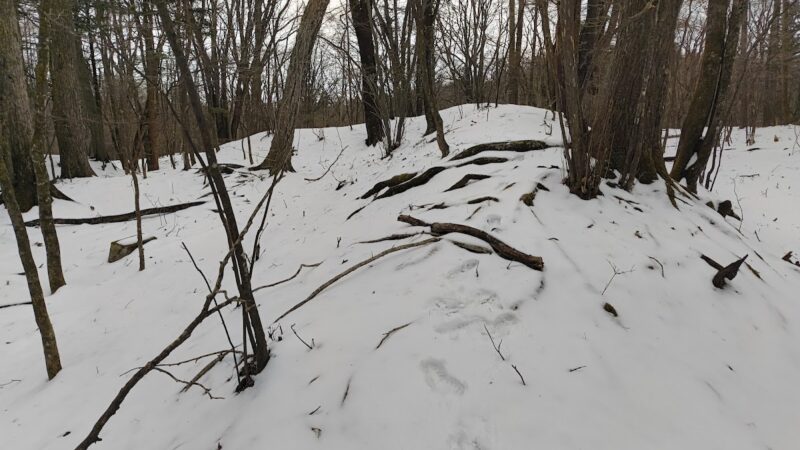
- Earthworks: Remains resembling earthworks can be seen
Due to its nature as a temporary fortified camp, there are no permanent stone walls or keeps; the fortifications are primarily simple defensive structures created through civil engineering. However, despite being built in a short period, it is designed to be highly effective for military purposes.
Local Conditions
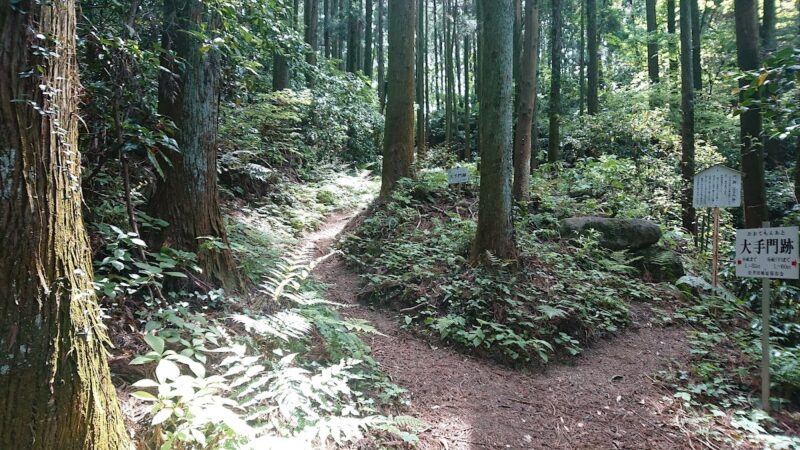
Searching for “Usui Pass Castle” on Google Maps will show its approximate location. The site is located in a forest, and remains such as leveled enclosures, dry moats, and earthworks can be observed.
When visiting, please note the following:
- Appropriate equipment (hiking boots, long-sleeved shirt and long pants, etc.) is necessary as it is in a mountainous area.
- There are few clear signposts or well-maintained walking trails.
- Using a map app or GPS is recommended.
- Be careful as the ground can be slippery in winter or rainy weather.
Historical Spots Around Usui Pass
When visiting Usui Pass Castle, exploring the surrounding historical spots will allow you to understand the history more deeply.
Highlights of Usui Pass
Kumano Kōtaijinja Shrine
This shrine is located at the summit of Usui Pass, on the border between Gunma and Nagano prefectures. The main hall straddles the prefectural border, making it a rare example of a shrine treated as separate shrines on the Gunma and Nagano sides.
Observation Deck
This observation spot near the summit of Usui Pass offers views of the Kanto Plain and Mount Asama. Known as a sunset spot, it offers beautiful views at dusk.
Abt Railway Trail and Meganebashi Bridge
At Usui Pass, there is the “Abt Railway Trail,” a hiking course built on the tracks of the abandoned Usui Line. Along this trail is the Meganebashi Bridge (Usui Third Bridge), one of Japan’s largest brick arch bridges, which is a popular railway heritage site from the Meiji era.
By exploring the history of Usui Pass Castle and visiting these modern heritage sites, you can experience the multifaceted history of Usui Pass.
How to Access Usui Pass Castle
Using Public Transportation
- Nearest Station: JR Shin’etsu Main Line “Yokogawa Station”
- Access from Station: Take a taxi or bus towards Usui Pass
- Travel Time: Approximately 20-30 minutes from Yokogawa Station
Public transportation access is limited, so it is recommended to check bus timetables in advance or consider taking a taxi.
Using a Car
- Expressway: Approximately 30 minutes from Joshin’etsu Expressway “Matsuida Myogi IC”
- General Roads: Take National Route 18 (former Nakasendo) towards Nagano
- Parking: Parking spaces are available around Usui Pass (limited number of spaces)
Access by car is the most convenient, but in winter, there is a possibility of snow and ice, so studded tires or carrying snow chains are necessary.
Points to Note When Visiting Usui Pass Castle
Best Time to Visit
- Spring (April-June): Beautiful fresh greenery and mild weather
- Autumn (September-November): Stunning autumn foliage, ideal for hiking
- Summer (July-August): Cool due to high altitude, but insect repellent is necessary
- Winter (December-March): Snow cover, suitable for experienced hikers
Equipment to Bring
- Hiking boots or non-slip shoes
- Long-sleeved shirt and long pants (to protect from insects and branches)
- Map app or GPS device
- Drinking water and snacks
- Camera (for documenting the ruins)
- Insect repellent spray (Spring-Autumn)
Precautions When Visiting
- Do not trespass on private property
- Do not damage the ruins or take away soil or stones.
- Always take your trash with you.
- Be aware of wild animals such as bears (carrying a bell is recommended).
- Avoid going alone; visit in groups if possible.
Usui Pass Castle and Research on Castles of the Sengoku Period
Characteristics as a Camp Castle
Usui Pass Castle was not a permanent residence, but a “camp castle” built in a short period of time in conjunction with military operations. Camp castles have the following characteristics:
- Short-term construction: Completed in a few days to a few weeks.
- Simple structure: Few stone walls or tiled buildings; mainly civil engineering work.
- Strategic placement: Built in a location suitable for attacking or besieging enemy castles.
- Disposable: Often abandoned after the end of combat.
Usui Pass Castle also possesses these characteristics, and it is believed to have been built for a specific military operation, the Siege of Odawara, and then abandoned.
Castle Construction Technology of the 18th Year of Tensho
The 18th year of Tensho (1590) was the end of the Sengoku period, and castle construction technology was highly advanced. The layout of Usui Pass Castle reflects the following technologies of the time:
- Layout Utilizing the Terrain: Maximizing the use of the natural terrain of a triangular plateau
- Efficient Defensive Line: Designed to achieve maximum defensive effect with limited time and effort
- Arrangement of Enclosures: Arranging multiple enclosures to achieve layered defense
Mountain Castle Culture of Gunma Prefecture and Usui Pass Castle
Representative Castles of Gunma Prefecture
Numerous castle ruins remain in Gunma Prefecture, and Usui Pass Castle is one of them. The following are some of the representative castles in Gunma Prefecture:
- Minowa Castle: A nationally designated historical site, known for Nagano Narimasa
- Kanayama Castle: One of Japan’s 100 Famous Castles, famous for the beauty of its stone walls
- Tatebayashi Castle: The residence of Sakakibara Yasumasa, one of the Four Heavenly Kings of Tokugawa
- Usui Castle: The Hojo clan’s frontline defense base
- Asobō Castle
- Hotoda Castle
- Sōja Castle
- Momoi Castle
By comparing these castles with Usui Pass Castle, we can understand the diversity and different roles of castles in Gunma Prefecture during the Sengoku period.
Usui Pass in the Sengoku History of Kōzuke Province
Kōzuke Province (present-day Gunma Prefecture) held an important position as a border region between Kanto and Shinano throughout the Sengoku period. Usui Pass was a strategically important military point in the region and served as the stage for the following historical events:
- Takeda Shingen’s Invasion of Kanto: He advanced into Kanto by crossing Usui Pass.
- Uesugi Kenshin’s Campaign to Kanto: He also utilized the Usui Pass route.
- The Siege of Odawara: The advance route of the Northern Army led by Uesugi Kagekatsu.
Thus, Usui Pass repeatedly served as the stage for military operations throughout the Sengoku period, demonstrating its importance.
Preservation and Utilization of Usui Pass Castle
Current Situation and Challenges
Usui Pass Castle attracted renewed attention in 2017 due to media coverage, but it faces the following challenges regarding its preservation and utilization:
- Low Awareness: Low recognition as a general tourist destination
- Difficulty of Access: Located in a mountainous area, requiring certain preparations for visits
- Lack of Maintenance: Limited maintenance of signposts and walking trails
- Need for Research: Detailed archaeological excavations and academic research are needed
Future Possibilities
On the other hand, Usui Pass Castle has the following potential uses:
- Site for Historical Education: Educational material for learning about the Siege of Odawara and fortified camps of the Sengoku period
- Tourist Resource: A sightseeing route combining Usui Pass with other tourist spots
- Castle Research: A valuable sample for studying the structure and construction techniques of fortified camps
- Regional Development: Forming Regional Identity as a Local Historical Heritage Site
It is hoped that local governments, research institutions, and castle enthusiasts will cooperate to rediscover the value of Usui Pass Castle and ensure its appropriate preservation and utilization.
Voices of Visitors to Usui Pass Castle
Castle enthusiasts and history fans have visited Usui Pass Castle and documented their experiences with photographs and other records. Community sites such as Kojodan (Castle Enthusiast Group) share the experiences and photos of those who have actually visited, providing valuable information for those planning to visit.
Many visitors rely on Google Maps to find their way to the site, confirming remains such as leveled baileys, dry moats, and earthworks. Since the exploration takes place in a mountainous area, prior information gathering and appropriate equipment are emphasized as crucial.
Summary: The Historical Value of Usui Pass Castle
Usui Pass Castle is a fortified camp built by Uesugi Kagekatsu during the Odawara Campaign of 1590, a significant turning point in Japanese history. Although not large in scale, it possesses the following historical value:
- Concrete Evidence of the Siege of Odawara: Remains that show the reality of Toyotomi Hideyoshi’s unification of Japan
- Example of a Fortified Camp: A valuable sample for understanding the structure of military facilities built in a short period of time
- Strategic Importance of Usui Pass: Tells the story of Usui Pass’s role as a key point connecting Kanto and Shinano
- Military Actions of Uesugi Kagekatsu: Traces of Uesugi Kagekatsu, a renowned general of Echigo,’s advance into Kanto
Nearby in the mountainous forests of Annaka City, Gunma Prefecture, Usui Pass Castle is a valuable historical heritage site that conveys the memory of the Siege of Odawara, which marked the end of the Sengoku period. When visiting Usui Pass, why not visit this Sengoku period fortified camp site, along with the beautiful natural scenery and modern heritage, and reflect on the history of over 400 years ago?
A visit to Usui Pass Castle is more than just sightseeing; it’s a valuable experience that allows you to feel the end of the Sengoku period, the process of unifying Japan, and the historical importance of the Usui Pass region. We recommend visiting this historical site with proper preparation and respect.