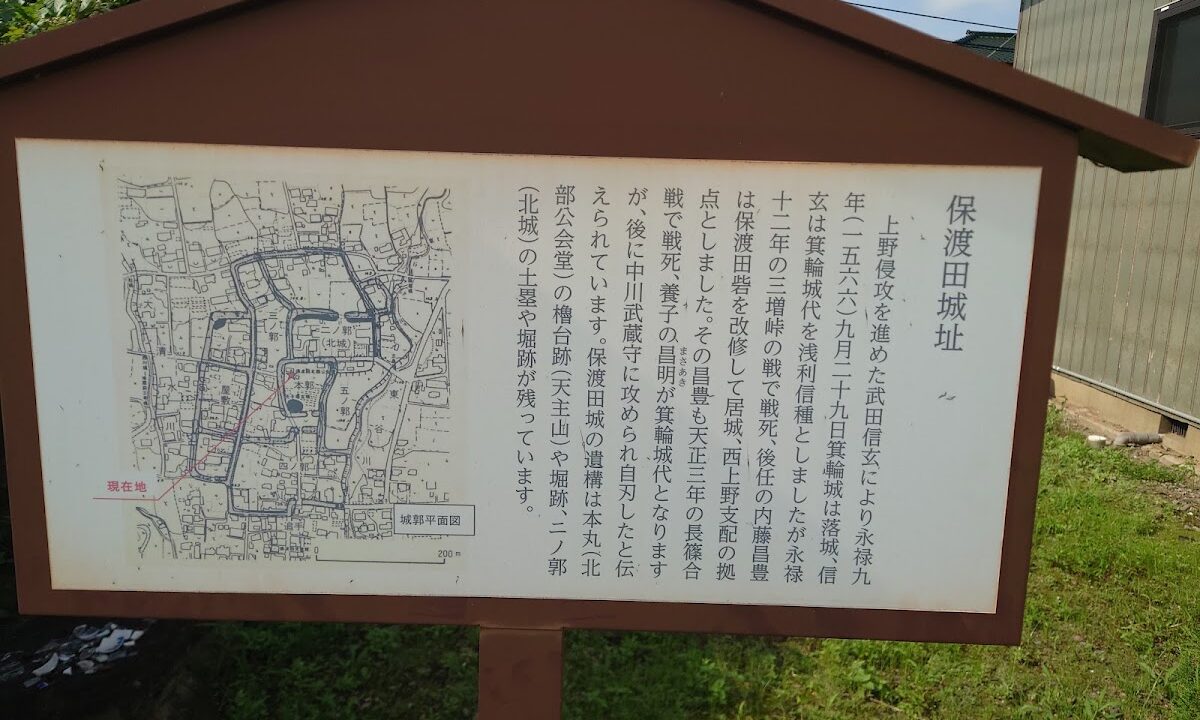
Hodota Castle (Gunma Prefecture) Complete Guide | History and Highlights of the Spiral-Style Flatland Castle Built by Naito Masatoyo, a Senior Retainer of Takeda Shingen
What is Hodota Castle?
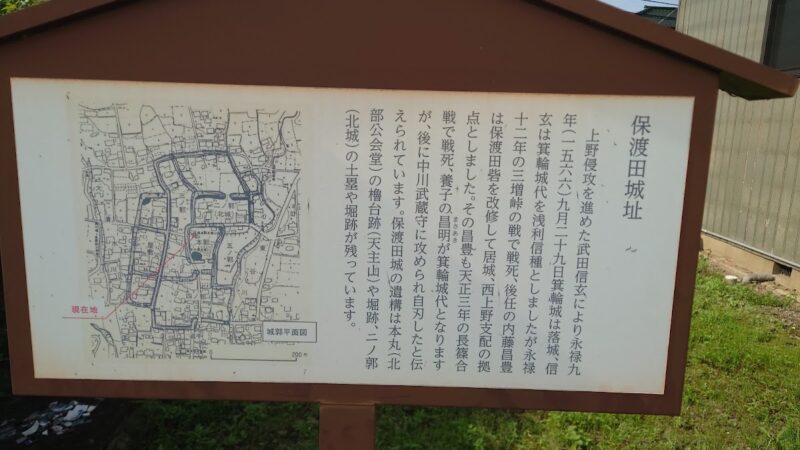
Hodota Castle is a flatland castle from the Sengoku period located in Hodota-cho, Takasaki City, Gunma Prefecture. It was built in 1566 by Naito Masatoyo (also known as Masahide), a senior retainer of Takeda Shingen and one of the Four Heavenly Kings of the Takeda clan. It played an important role as a base of operations for the Takeda clan in western Kozuke Province (present-day Gunma Prefecture).
Currently, most of the castle ruins have been lost due to residential development, but it is located near Kamitsuke-no-Sato Park, and important historical sites such as the Hodota Kofun Cluster are scattered around the area.
History of Hotoda Castle
Background of Construction: Takeda Shingen’s Invasion of Kozuke Province
The construction of Hotoda Castle is closely related to Takeda Shingen’s invasion of Kozuke Province. On September 29, 1566 (Eiroku 9), the Takeda army succeeded in capturing Minowa Castle, which had resisted for many years. Minowa Castle was a strong fortress defended by Nagano Narimasa and his son, Narimasa, but after Narimasa’s death, it finally fell into the hands of the Takeda clan.
After the fall of Minowa Castle, Takeda Shingen initially appointed Asari Nobutane as the castle’s deputy. However, in 1569 (Eiroku 12), during the Battle of Mimase Pass in Sagami Province, Asari Nobutane was killed in battle against the Hojo clan.
Construction of the Castle and Control of Western Kōzuke Province by Naito Masatoyo
Following the death of Asari Nobutane in battle, Takeda Shingen appointed Naito Masatoyo as the new person in charge of controlling western Kōzuke Province. Naito Masatoyo decided not to simply take up residence in Minowa Castle, but to build a new castle in a more strategically advantageous location. This was Hotoda Castle.
The Hotoda area is situated on a river terrace between the Ōshimizu River and a tributary of the Ino River, providing excellent defensive advantages. Furthermore, it offered good access to the central part of Kōzuke Province, making it an ideal location for governing the surrounding region.
Naito Masatoyo extensively renovated and expanded the existing Hotoda Fort, developing it into the headquarters for controlling western Kōzuke Province. Using this castle as his base, Masatoyo solidified the Takeda clan’s power in western Kōzuke Province.
Hotoda Castle After the Fall of the Takeda Clan
When the Takeda clan fell in 1582, Kōzuke Province came under the control of Takigawa Kazumasu, a subordinate of Oda Nobunaga. However, after Oda Nobunaga’s death in the Honnō-ji Incident, Kōzuke Province once again became a battleground.
Subsequently, as the Hōjō, Uesugi, and Tokugawa clans vied for control of Kōzuke Province, the strategic importance of Hotoda Castle gradually declined. After Toyotomi Hideyoshi’s siege of Odawara and Tokugawa Ieyasu’s entry into the Kantō region, Hotoda Castle is believed to have disappeared from the historical stage.
Structure and Characteristics of Hotoda Castle
Unique Layout: A Spiral-Style Flatland Castle
The most distinctive feature of Hotoda Castle lies in its unique “spiral-style” layout. A spiral-style castle is a design method in which baileys are arranged in a spiral pattern around a central main enclosure. This structure is considered one of the characteristic features of the Takeda clan’s castle construction techniques.
The main enclosure measured approximately 80 meters square, surrounded by multiple baileys. This arrangement required the enemy to break through several layers of defense before reaching the center of the castle, thus increasing its defensive efficiency.
Location Utilizing the Topography
Hotoda Castle was built skillfully utilizing the topography of a river terrace between the Ōshimizu River and a tributary of the Ino River. The rivers acted as natural moats, and the elevation difference of the terrace enhanced its defensive capabilities.
Despite being a flatland castle, by maximizing these topographical advantages, it became a castle that was difficult to attack and easy to defend. This location selection reflects the castle-building techniques and strategic vision of Naitō Masatoyo.
Existing Remains
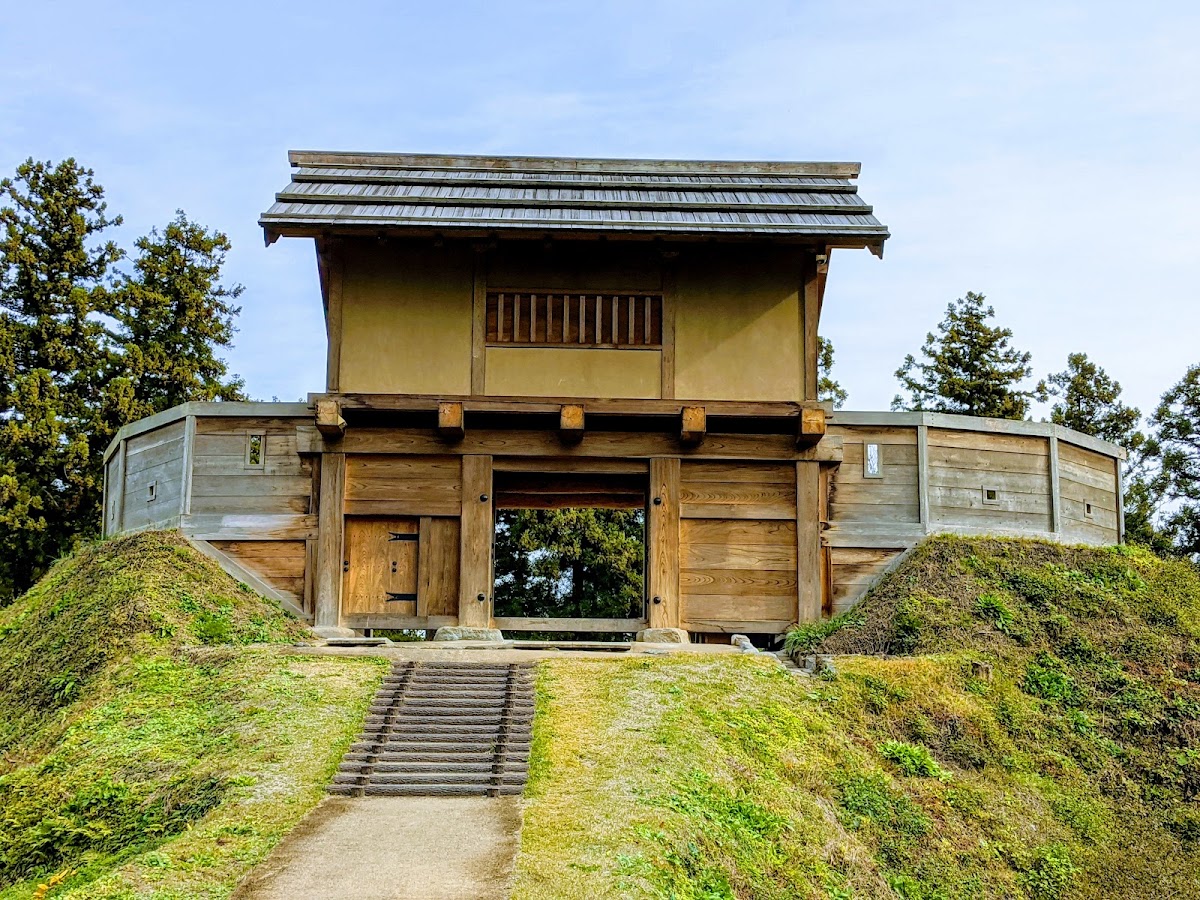
Unfortunately, very few remains of Hotoda Castle remain today. Due to residential development since the Meiji era, major structures such as baileys and moats have been lost.
Even walking around the castle ruins today, only slight undulations of the terrain allow one to imagine its former appearance. However, traces of the former castle structure can sometimes be found in the surrounding land divisions and road layouts.
The Person Naito Masatoyo (Masahide)
One of the Four Heavenly Kings of Takeda
Naito Masatoyo is known as a particularly outstanding warrior among the senior retainers who served Takeda Shingen. He is counted as one of the Four Heavenly Kings of Takeda, and is mentioned alongside Baba Nobuharu, Yamagata Masakage, and Kosaka Masanobu.
Regarding Masatoyo’s name, two spellings, “Masatoyo” and “Masahide,” appear in historical documents, and there is debate as to which is correct. Generally, the spelling “Masatoyo” is more commonly used, but the theory that it should be “Masahide” also persists.
Activities in Military and Politics
Naito Masatoyo demonstrated outstanding abilities not only as a warrior but also as a politician and administrator. Even in his rule over western Kōzuke Province, based at Hotoda Castle, Masatoyo is believed to have focused not only on military control but also on the administration of his territory and civil affairs.
The relative stability of the Takeda clan’s rule over Kōzuke Province is largely attributed to Masatoyo’s governing skills. It is presumed that he implemented a wide range of measures, including building relationships with local influential figures and promoting economic activity.
His End at the Battle of Nagashino
Naito Masatoyo was killed in the Battle of Nagashino in 1575. This battle was a decisive battle between the Takeda army, led by Takeda Katsuyori, and the allied forces of Oda Nobunaga and Tokugawa Ieyasu, in which the Takeda army suffered a devastating defeat.
Masatoyo, along with Yamagata Masakage and Baba Nobuharu, were killed in this battle. The loss of three of the Takeda’s Four Heavenly Kings in this battle was an immeasurable loss for the Takeda clan and contributed to their subsequent decline.
Highlights of Hotoda Castle
Current Status of the Castle Ruins
As mentioned above, very little remains of Hotoda Castle exist, but visiting the castle ruins allows you to experience the atmosphere of the Sengoku period. The central part of the castle ruins is considered to be around 1330 Hotoda-cho, Takasaki City, Gunma Prefecture.
Walking through the current residential area and imagining that this was once an important base for the Takeda clan is one way to enjoy the romance of history.
Connection to Kamitsuke-no-Sato Park
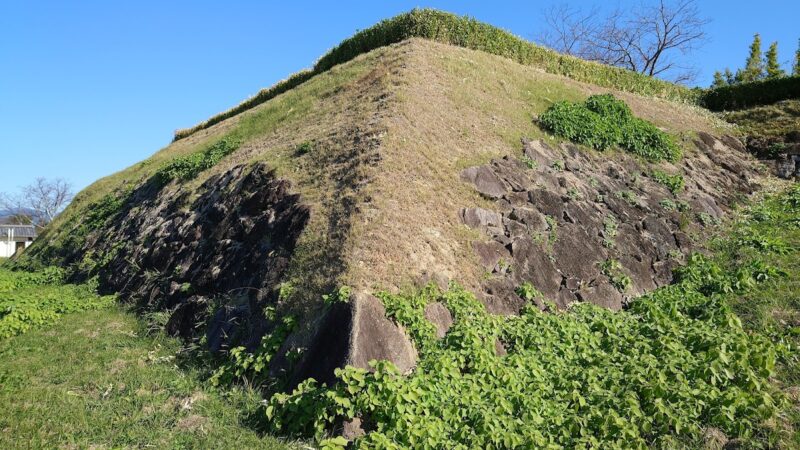
Kamitsuke-no-Sato Park is located very close to the Hotoda Castle ruins. This park is a historical site park centered around the Hotoda Kofun Group, built in the latter half of the 5th century, and is an important facility for understanding Kozuke Province during the Kofun period.
The Hotoda Kofun Group includes the Hachimanzuka Kofun, Futagoyama Kofun, and Yakushizuka Kofun, and is designated as a national historical site. When visiting Hotoda Castle, visiting these burial mounds in conjunction will allow you to gain a more comprehensive understanding of Hotoda’s history from ancient times to the Sengoku period.
Nearby Historical Sites Related to the Takeda Clan
Several historical sites related to the Takeda clan’s invasion of Kozuke Province exist around Hotoda Castle. Minowa Castle, in particular, is known as an important fortress captured by Takeda Shingen and is now designated a national historic site.
Minowa Castle ruins are about a 20-minute drive from Hotoda Castle, and the remains are relatively well-preserved. Visiting both Hotoda Castle and Minowa Castle will allow you to gain a deeper understanding of the Takeda clan’s rule over Kozuke Province.
Access Information
Location
Around 1330 Hotoda-cho, Takasaki City, Gunma Prefecture 370-3533
Access by Public Transportation
From JR Takasaki Station, take the Gunma Bus bound for “Kamitsuke-no-Sato Museum” and get off at the “Kamitsuke-no-Sato Museum” bus stop. It’s approximately a 5-minute walk from there. Since bus service is limited, it’s recommended to check the timetable in advance.
Access by Car
Approximately 15 minutes from the Kan-Etsu Expressway “Maebashi IC” or approximately 20 minutes from the “Takasaki IC”. Parking is available at Kamitsuke-no-Sato Park (free).
If using a car navigation system, setting “Kamitsuke-no-Sato Museum” (1514 Ide-cho, Takasaki City, Gunma Prefecture) as your destination is convenient.
Estimated Visiting Time
Approximately 15-20 minutes is needed to visit the Hotoda Castle Ruins themselves. However, since very few remains are left, those without an interest in history may find it underwhelming.
If visiting in conjunction with Kamitsuke-no-Sato Park and the Hotoda Kofun Cluster, allow 1-2 hours.
Hotoda Castle’s Evaluation and Visitor Feedback
Among castle enthusiasts, Hotoda Castle receives mixed reviews due to the lack of remaining structures. According to data from Kojodan (a castle-building website), the average rating is around 2.0-2.2 stars, which is not particularly high.
However, visiting with an understanding of the historical context of the Takeda clan’s rule over Kozuke Province offers a different perspective. Especially for those interested in the history of the Takeda clan and the figure of Naito Masatoyo, it is a historical site worth visiting.
Visitor reviews include comments such as, “While you can’t expect many remains, its historical significance is great,” and “Visiting it in conjunction with Kamitsuke-no-Sato Park made for a fulfilling experience.”
Points to Note When Visiting Hotoda Castle
Recommended Prior Study
Since very few remains of Hotoda Castle exist, we strongly recommend studying its historical background beforehand. Learning about Takeda Shingen’s invasion of Kozuke Province, the siege of Minowa Castle, and the life of Naito Masatoyo will enrich your experience at the site.
Combining with Nearby Historical Sites
Visiting Hotoda Castle in combination with other nearby historical sites, such as Kamitsuke-no-Sato Park, the Hotoda Kofun Cluster, and Minowa Castle, will make for a more fulfilling historical exploration than visiting Hotoda Castle alone. Minowa Castle, in particular, has well-preserved remains, and the contrast with Hotoda Castle is fascinating.
Regarding Photography
The area around the castle ruins is a residential area, so please be considerate of the privacy of local residents when taking photographs. Avoid photographing private homes and property without permission.
Season and Weather
Since Hotoda Castle is an outdoor historical site, we recommend visiting on a day with good weather. Kamitsuke-no-Sato Park is beautiful during the cherry blossom season in spring and the autumn foliage season, making it ideal for a stroll.
Historical Significance of Hotoda Castle
Symbol of the Takeda Clan’s Rule over Kozuke Province
Hotoda Castle holds significant importance as evidence of the Takeda clan’s rule over western Kozuke Province. Functioning not merely as a military base but as the center of territorial administration, this castle is a valuable example for understanding the Takeda clan’s governing system.
Example of a Spiral-Style Castle
Hotoda Castle, with its unique spiral-style layout, is also important for studying castle construction techniques of the Sengoku period. It is attracting attention among castle researchers as an example demonstrating the characteristics of Takeda-style castle construction.
Position in Local History
The Hotoda area has been an important region since the Kofun period, and it once again became a stage for history during the Sengoku period. The historical continuity from the Hotoda Kofun cluster to Hotoda Castle is interesting as it demonstrates the historical layering of this region.
Summary
Although very few remains of Hotoda Castle exist, it is a historically significant castle built by Naito Masatoyo, a senior retainer of Takeda Shingen, as a base for controlling western Kozuke Province. Understanding this castle requires considering its unique spiral layout, its location utilizing a river terrace, and its historical context of the Takeda clan’s invasion of Kozuke.
While it is difficult to imagine its former glory due to residential development, visiting it in conjunction with the surrounding Hotoda Kofun burial mounds and Minowa Castle allows for a multifaceted experience of the history of Kozuke Province from ancient times to the Sengoku period.
For those interested in the history of the Takeda clan, castles of the Sengoku period, or those who want to learn more about the history of Gunma Prefecture, Hotoda Castle is a historical site worth visiting. Why not combine a visit to the burial mounds at Kamitsuke-no-Sato Park with a visit to Hotoda Castle?