Kawada Castle (Gunma Prefecture) Complete Guide | A Strategic Point on the Tone River Built by the Numata Clan
What is Kawada Castle?
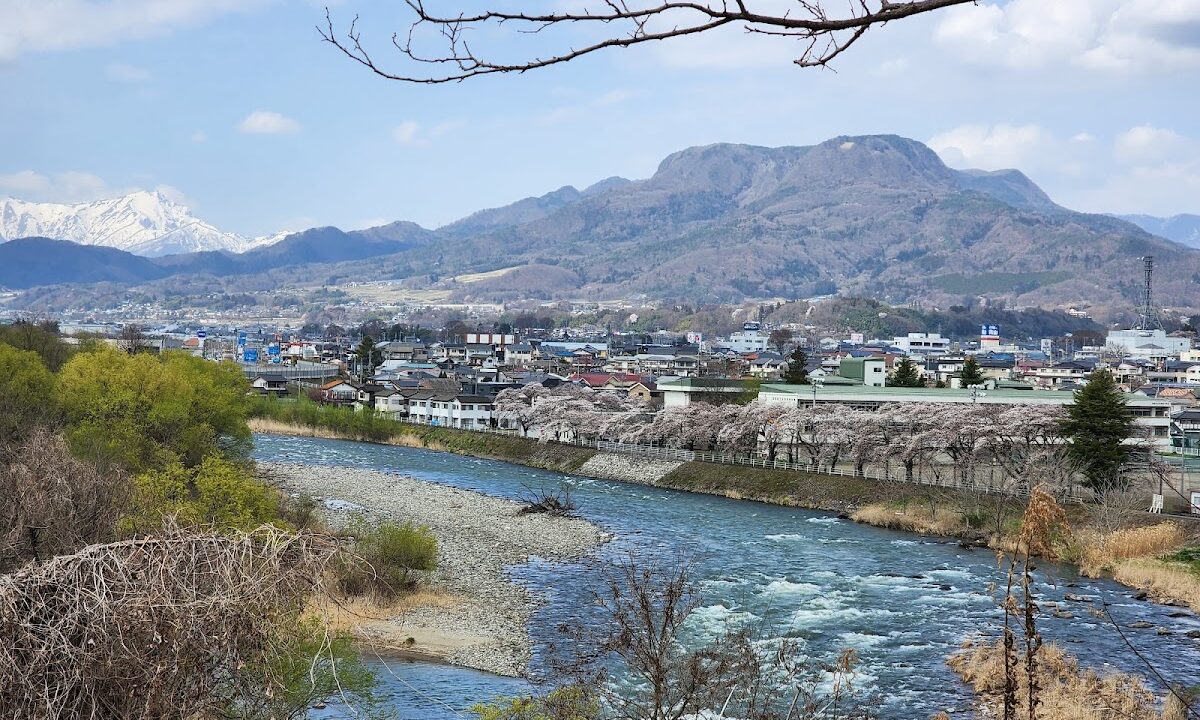
Kawada Castle (Kawada-jō) is a medieval castle located in Shimokawada-machi, Numata City, Gunma Prefecture. Also known as “Shimokawada Castle,” it is known as a cliffside castle built on a river terrace on the right bank of the Tone River.
As the residence of the Kawada clan, a branch of the Miura-lineage Numata clan, it played a crucial role in protecting the Numata clan’s territory across the Tone River from the Muromachi period to the Sengoku period. Currently designated as a historical site by Numata City, the remains that retain traces of its former glory are preserved.
Basic Information on Kawada Castle
- Location: Shimokawada-cho, Numata City, Gunma Prefecture
- Alternate Name: Shimokawada Castle
- Castle Structure: Cliffside Castle, Hill Castle
- Construction Period: Early Muromachi Period (Early 15th Century)
- Builder: Kawada Shiro Kagenobu
- Main Lords: Kawada Clan
- Year of Abandonment: Tensho 8 (1580)
- Designated Cultural Property: Numata City Designated Historic Site
History of Kawada Castle
Construction History and the Establishment of the Kawada Clan
The construction of Kawada Castle is closely related to the territorial expansion accompanying the branching off of the Numata clan. It is said to have been built when Kawada Shiro Kagenobu, the fourth son of Numata Kagehisa, the 6th head of the Miura-line Numata clan, established a branch family.
Kagehisa controlled the Tone-Numata region from his base at Numata Castle, but as his power expanded, he needed to deploy his family members to various locations. He gave his fourth son, Kagenobu, the Shimokawada region on the right bank of the Tone River, and allowed him to adopt the name Kawada. This period was the early Muromachi period, a time when the conflict between the Kamakura Shogun and the Kanto Kanrei (deputy shogun of the Kanto region) was intensifying in the Kanto area.
Kawada Castle’s location was strategically important. It utilized the natural moat of the Tone River in front of it and functioned as a defensive structure taking advantage of the elevation difference of the river terraces. It is thought to have served as a subsidiary castle of Numata Castle, playing a role in preparing for invasions from the east.
The Battle of Oei (1406)
Kawada Castle clearly appears in history in the Battle of Oei 13 (1406). In that year, Murakami Dewa-no-kami, based in Kokubu, Gunma County (near present-day Kokubu-cho, Takasaki City), attacked Kawada Castle.
During this period, the Kanto region was experiencing a serious conflict between the Kamakura Shogun Ashikaga Mitsukane and the Kanto Kanrei (Deputy Shogun of the Kanto region), Uesugi Ujinori (Zenshu). In 1416, the Uesugi Zenshu Rebellion erupted, but skirmishes were occurring throughout the region as a prelude to it. Murakami Dewa-no-kami’s attack is thought to have occurred amidst this political turmoil.
Kawada Castle repelled this attack and continued to exist as the residence of the Kawada clan. The castle lords, Nobumitsu, Nobukiyo, and Mitsukiyo, passed down through generations, and the Kawada clan ruled the castle for approximately 170 years.
Kawada Castle in the Sengoku Period
With the arrival of the Sengoku period (Warring States period), the situation surrounding Kawada Castle became even more complex. In the Kanto region, the Hojo clan (later Hojo clan) expanded their power from their base in Odawara, Sagami Province, and engaged in fierce conflict with the Uesugi clan.
The Numata region was located in the northern part of Kōzuke Province and was a point of contact for the three major powers: the Uesugi clan of Echigo, the Hōjō clan of Kantō, and the Takeda clan of Kai. Therefore, Kawada Castle was also caught up in the turbulent times.
One theory suggests that it temporarily fell in 1552 (Tenbun 21) after an attack by the Hōjō clan. However, it seems that the Kawada clan continued to rule afterward, and its final demise was not until the Tenshō era.
The Fall of Kawada Castle
Kawada Castle met its end amidst the turmoil of the late Sengoku period. In 1579 (Tenshō 7), the forces of the Odawara Hōjō clan invaded the Numata region, and Kawada Castle was attacked. During this period, the Hōjō clan was taking advantage of the chaos following the death of Uesugi Kenshin to expand into northern Kōzuke Province.
Furthermore, in the following year, Tensho 8 (1580), Sanada Masayuki’s forces invaded the Numata region. Sanada Masayuki was a warrior who had risen to prominence as a retainer of Takeda Katsuyori, and he aimed to control the Tone-Numata region from his base at Numata Castle.
Caught between the two major powers, the Hojo and Sanada clans, the Kawada clan could no longer maintain their independence. With Sanada Masayuki’s invasion in Tensho 8, Kawada Castle finally fell, marking the end of the Kawada clan’s rule.
After this, the Numata region became the stage for fierce battles between the Sanada and Hojo clans, and ultimately, Toyotomi Hideyoshi’s ruling confirmed the Sanada clan’s control.
Structure and Layout of Kawada Castle
Location and Topographical Features
Kawada Castle is a typical cliffside castle built on a river terrace on the right bank of the Tone River. A river terrace is a stepped terrain formed by river erosion, and Kawada Castle skillfully utilized this difference in elevation to enhance its defensive capabilities.
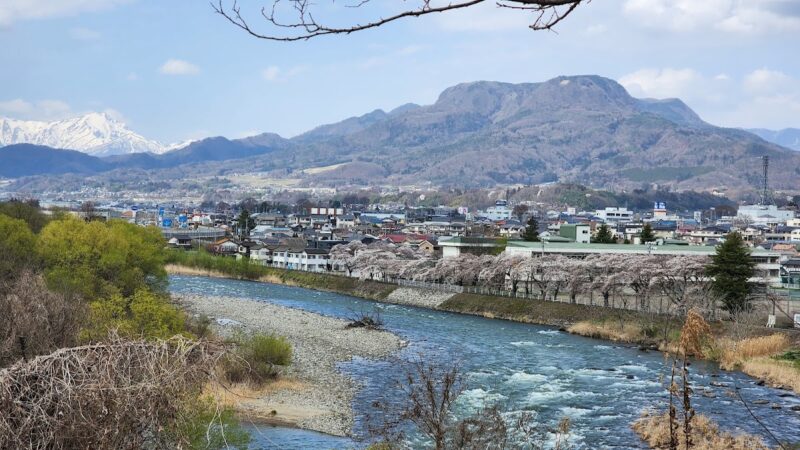
The western side of the castle faced the Tone River, and the steep cliffs served as a natural moat. Even if the enemy crossed the river to attack, climbing the cliffs would be extremely difficult, and this topographical advantage was crucial to the castle’s defense.
Castle Grounds
According to historical documents, the grounds of Kawada Castle were extremely vast. It is said that the castle grounds extended from the current Kawada Community Center to Senryuji Temple in the north and Yakushido Hall in the east.
This vast castle grounds suggest that it may have included not only a castle as a military facility but also elements of a castle town. It is thought that the residences of the Kawada clan’s retainers and residential areas for merchants and artisans were also included within the castle grounds.
Currently Visible Remains
Currently, the following remains can be observed at Kawada Castle:
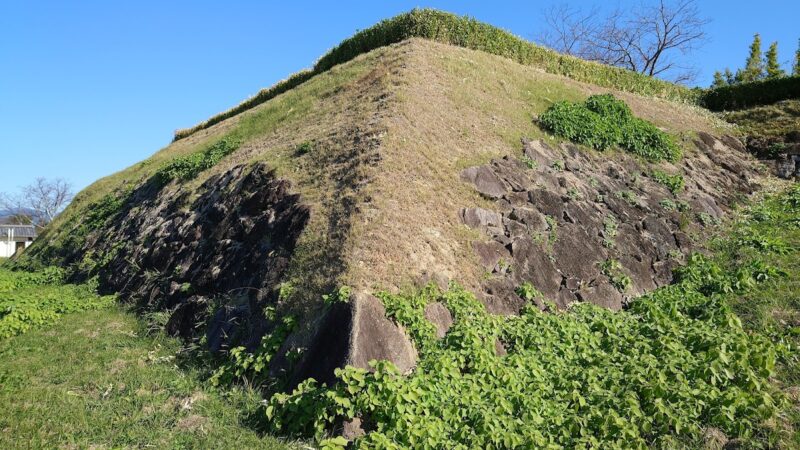
Enclosures (Kuruwa): Multiple enclosures were arranged in the central part of the castle. A hierarchical structure can be seen, with the main enclosure at the center, and the second and third enclosures. The flat surfaces of the enclosures are still relatively well preserved, allowing us to estimate their original size.
Moats: Traces of dry moats remain as defensive structures for the castle. The castle’s defenses were enhanced by utilizing the river terrace topography and excavating artificial moats. While some moats have been filled in or altered, their original locations can be estimated from the topography.
Earthworks: Traces of earthworks were built around the enclosures. These defensive walls, constructed by piling up earth, prevented enemy intrusion and served as a base for observation and archery attacks from within the enclosures.
Cliffs: Cliffs, which are steep slopes artificially carved, were constructed between enclosures or between enclosures and moats. This made enemy movement difficult and enhanced defensive effectiveness.
Characteristics of the Castle’s Layout
The layout (design and arrangement) of Kawada Castle exhibits typical characteristics of a medieval local clan’s castle. It made maximum use of the river terrace terrain, achieving high defensive capabilities with minimal artificial modifications.
Against attacks from the Tone River side, natural cliffs acted as a barrier, while against attacks from the land side, moats, earthworks, and multiple enclosures provided a multi-layered defense. Such a layout can be considered a testament to the wisdom of local clans who needed to build efficient defensive facilities with limited resources and labor.
The Kawada Clan’s Genealogy and its Relationship to the Numata Clan
About the Miura-line Numata Clan
The Numata clan, the main branch of the Kawada clan, was a branch of the Miura clan, a powerful local clan in Sagami Province. The Miura clan wielded considerable power from the late Heian period to the Kamakura period, based on the Miura Peninsula in Sagami Province, and was a prestigious family that participated in Minamoto no Yoritomo’s uprising.
The Numata clan is believed to have originated in the Kamakura period when a branch of the Miura clan was appointed as the jitō (land steward) of Numata Manor in Kōzuke Province. From then on, the Numata clan developed as a local lord ruling the Tone-Numata region.
Numata Kagehisa and Branch Family Policy
Numata Kagehisa, the ancestor of the Kawada clan, was the sixth head of the Numata clan and was active in the early 15th century. To stabilize the management of his territory and expand his power, Kagehisa promoted a branch family policy, placing family members in various locations.
He granted the Shimokawada region to his fourth son, Kagenobu, establishing the Kawada clan, and the Ogawa region to his second son, Kageaki, establishing the Ogawa clan. The Numata clan built multiple branch castles in the Tone-Numata region, solidifying their power base. These branch castles formed a defensive network centered around Numata Castle, creating a system to prepare for invasions by external forces.
Successive Lords of Kawada Castle
The following individuals can be confirmed as lords of Kawada Castle:
- First Lord: Kawada Shiro Kagenobu (fourth son of Numata Kagehisa)
- Second Lord: Kawada Nobumitsu
- Third Lord: Kawada Nobukiyo
- Fourth Lord: Kawada Mitsukiyo
Under these lords, Kawada Castle functioned as the residence of the Kawada clan for approximately 170 years. While historical records are limited regarding the detailed achievements of each lord, their ability to repel an attack by Murakami Dewa-no-kami in 1406 suggests they possessed considerable military strength and governing capabilities.
Kawada Castle and the Surrounding Castle Network
Relationship with Numata Castle
Kawada Castle served as a branch castle of Numata Castle, responsible for the defense of the eastern side across the Tone River. Numata Castle was the main castle of the Numata clan, built on a river terrace on the left bank of the Tone River. It was located approximately 3 kilometers in a straight line from Kawada Castle.
The two castles were separated by the Tone River, a natural moat. This offered both defensive advantages and challenges to coordination. However, it is believed that effective cooperation was possible through the use of river transport for the transportation of goods and information.
Location of Ogawa Castle
Ogawa Castle, built by Kageaki, the second son of Numata Kagehisa, was located west of Numata Castle and played a role in defending against invasions from the west. Kawada Castle served as the eastern defense, and Ogawa Castle as the western defense, thus establishing a defensive system for the Numata clan’s territory.
Such a network of branch castles was a common strategy for local powerful families in the medieval period to control large territories with limited military power. The Numata clan maintained strong ties based on blood relations to resist external forces.
Castles of the Tone-Numata Region
The Tone-Numata region was home to numerous medieval castles, in addition to those associated with the Numata clan. These castles were built by powerful local figures to protect their territories, forming complex alliances and conflicts during the Sengoku period (Warring States period).
Kawada Castle was part of this regional castle network, sometimes cooperating, sometimes clashing, as they tried to survive the turbulent Sengoku era.
Current Status and Access to Kawada Castle Ruins
Current State of Kawada Castle Ruins
Currently, the Kawada Castle Ruins are designated as a historical site by Numata City and are being preserved. The Kawada Community Center is located in the center of the castle grounds, and the surrounding area is used for residential and agricultural purposes.
While some of the remains have been lost due to development, traces of the baileys and moats can still be seen in the topography. The cliffs facing the Tone River, in particular, retain a strong sense of their former glory, allowing visitors to appreciate its characteristics as a cliffside castle.
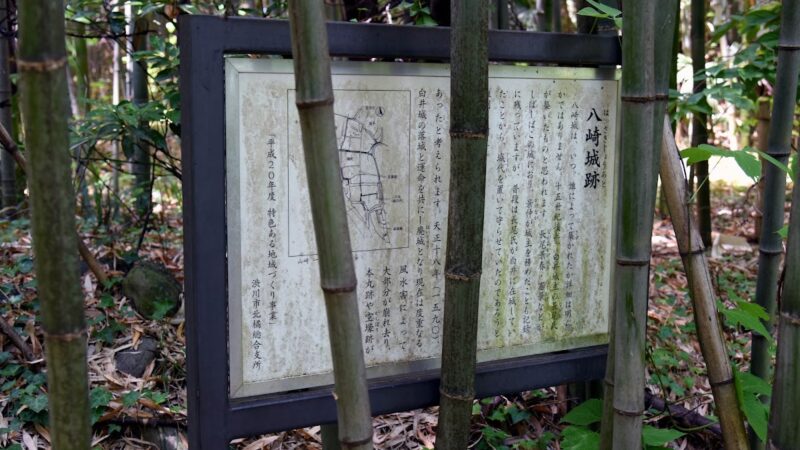
An information board is installed at the castle ruins, where you can learn about the history and structure of Kawada Castle. Local cultural property preservation groups and history enthusiasts regularly hold guided tours, making it a cherished historical site in the region.
Access Information
Location: Shimokawada-cho, Numata City, Gunma Prefecture
Access by Public Transportation:
- Approximately 15 minutes by Kanetsu Kotsu bus from JR Joetsu Line “Numata Station,” get off at “Shimokawada” bus stop, then approximately 5 minutes on foot.
Access by Car:
- Approximately 10 minutes from Kanetsu Expressway “Numata IC”
- Parking: Parking is available at Kawada Community Center (it is recommended to check in advance before visiting).
Visiting Hours: There are no specific restrictions, but since the site includes residential areas and public facility grounds, consideration for surrounding residents and facility users is necessary during your visit.
Admission Fee: Free
Points to Note When visiting Kawada Castle Ruins, paying attention to the following points will help you understand the castle’s history more deeply:
- River Terrace Topography: By actually seeing the elevation difference of the cliffs facing the Tone River, you can appreciate the defensive capabilities of the castle as a cliffside fortress.
- Arrangement of Enclosures: By observing the topography around the Kawada Community Center, you can infer how the multiple enclosures were arranged.
- Positional Relationship with the Tone River: By looking across the Tone River, you can understand the positional relationship with Numata Castle and how the river functioned as a natural moat.
- Contents of Information Boards: The information boards installed at the castle ruins contain important information about the history and structure of Kawada Castle.
Nearby Attractions
In addition to visiting Kawada Castle Ruins, we recommend visiting the following nearby spots:
Numata Castle Ruins: The main castle of the Numata clan, the head family of the Kawada clan. Currently developed as Numata Park, remnants such as stone walls and moats remain.
Senryuji Temple: A temple located at the northern end of the Kawada Castle grounds. Its connection to the castle has also been noted.
Tone River: The Tone River, a crucial defensive feature of Kawada Castle. From the riverbed, you can look up at the cliffs of the castle ruins, giving you a real sense of its importance as a defensive structure.
Historical Significance of Kawada Castle
As a Castle of a Medieval Local Clan
Kawada Castle holds significant historical value as a typical example of a castle built by a medieval local clan. Unlike early modern castles with large stone walls and keeps, it is a practical defensive structure that skillfully utilizes the terrain, conveying the castle-building techniques and strategic thinking of the time.
How did people in the Middle Ages find solutions to the challenge of constructing effective defensive structures with limited resources and labor? The remains of Kawada Castle provide valuable historical information to answer such questions.
Position in the History of the Tone-Numata Region
Kawada Castle is indispensable for understanding the medieval history of the Tone-Numata region. It played a crucial role in important phases of regional history, including the Numata clan’s rule over the area, their defensive system based on a network of branch castles, and the struggles for control among major powers during the Sengoku period.
In particular, the struggle for control of the Numata region between the Hojo and Sanada clans during the Tensho era had a significant impact on the subsequent political situation in the Kanto region. The fall of Kawada Castle can be positioned as a turning point in this major historical flow.
Value as a Cultural Heritage in the Modern Era
Currently, the Kawada Castle ruins are being preserved as a regional historical heritage site and are being passed down to future generations. Despite being exposed to the waves of development, important remains have been protected through the efforts of local residents and the government.
Castle ruins are not merely relics of the past; they play a vital role in modern society, shaping regional identity, serving as sites for historical education, and as tourist resources. The preservation and utilization of Kawada Castle ruins holds great significance in passing on the region’s history and culture to future generations.
Summary
Kawada Castle (Shimokawada Castle) was a medieval castle located in Numata City, Gunma Prefecture. It was the residence of the Kawada clan, a branch of the Miura-lineage Numata clan, who ruled for approximately 170 years. Built on a river terrace on the right bank of the Tone River, it boasted excellent defensive capabilities and functioned as an important subsidiary castle protecting the Numata clan’s territory.
From its construction in the early Muromachi period, through the Ōei War and the turmoil of the Sengoku period, to its capture by Sanada Masayuki in 1580, Kawada Castle survived a turbulent era. Its history is essentially the history of the Tone-Numata region from the medieval to the Sengoku period.
Currently, the castle ruins are preserved as a historical site in Numata City, and remains such as baileys and moats can be seen. Kawada Castle ruins, which convey the characteristics of a medieval castle that made use of the terrain, are a place worth visiting not only for history enthusiasts but also for anyone interested in local history.
Learning the history of Kawada Castle is not simply about the rise and fall of a single castle. It provides clues to understanding how local Japanese society functioned and underwent changes from the medieval period to the Sengoku period. When you visit Gunma Prefecture, why not take a trip to Kawada Castle ruins and reflect on its history?