Complete Guide to Ishikura Castle (Gunma Prefecture) | The History and Remains of a Strategic Maebashi Site During the Sengoku Period
Ishikura Castle, located in Ishikura-cho, Maebashi City, Gunma Prefecture, is a flatland castle that played a crucial role as the political and military center of Kozuke Province (present-day Gunma Prefecture) during the Sengoku period. Built by the Nagao clan, it is known as a historical stage where prominent warlords of the Sengoku period, such as Takeda Shingen, Uesugi Kenshin, and the Hojo clan, fought for control. This article provides a detailed explanation of Ishikura Castle’s history, the background of its construction, the changes in its lords, the current state of its remains, and its deep connection to Maebashi Castle (Umayabashi Castle), offering a particularly comprehensive overview among castle information nationwide.
Basic Information on Ishikura Castle
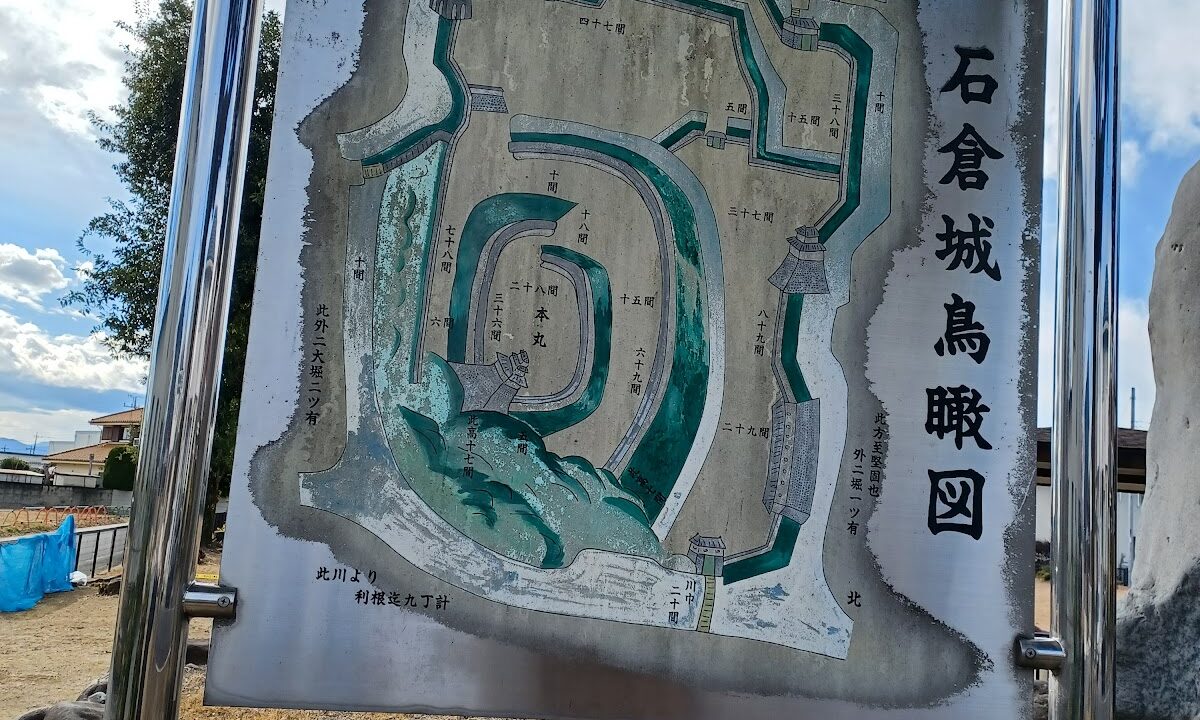
Ishikura Castle is a flatland castle located in Ishikura-cho, Maebashi City, Gunma Prefecture, and is currently maintained as “Ishikura Castle Ninomaru Park.” A castle site monument has been erected, and it is a popular recreational area for citizens.
Location
Location: 4-19-5 Ishikura-cho, Maebashi City, Gunma Prefecture (Ishikura Castle Ninomaru Park)
Located northeast of the center of Maebashi City, it was built near the Tone River. This location held significant importance both militarily and as a transportation hub.
Former Province Name
Former Province Name: Kozuke Province
Kozuke Province corresponds to present-day Gunma Prefecture and was an important region where the Uesugi clan (Kanto Kanrei), Takeda clan, and Hojo clan vied for supremacy during the Sengoku period.
Classification and Structure
Classification: Flatland Castle
Structure: Flatland castle style with baileys, earthworks, and dry moats
Ishikura Castle was a flatland castle built on plains, utilizing the natural terrain while combining artificial defensive structures. It is believed that the design incorporated the use of the Tone River as a natural moat.
Keep Structure
Ishikura Castle did not have a keep. As a flatland castle from the Sengoku period, it was primarily composed of practical defensive structures.
Builder
Builder: Nagao Norikage
Nagao Norikage was the eldest son of Nagao Tadafusa, the deputy governor of Kōzuke Province and lord of Sōkai Castle. As a powerful warrior serving the Kantō Kanrei Uesugi clan, he sought to expand the Nagao clan’s influence in Kōzuke Province.
Year of Construction
Year of Construction: Bunmei 17 (1485)
It was built in the late Muromachi period, at the beginning of the Sengoku period. This was a time when warfare intensified in the Kanto region, and the need for defensive strongholds increased.
Main Renovator
Main Renovator: Takeda Shingen
In Eiroku 8 (1565), Takeda Shingen renovated and strengthened Ishikura Castle as a base for his invasion of Kōzuke Province. Shingen is believed to have positioned Ishikura Castle as a strategic stronghold and carried out large-scale renovations with the aim of separating Maebashi Castle and Minowa Castle.
History of Ishikura Castle | From the Nagao Clan to the Hojo Clan
Construction by the Nagao Clan (Bunmei 17, 1485)
Ishikura Castle was built in Bunmei 17 (1485) by Nagao Norikage. The Nagao clan, as important retainers of the Kanto Kanrei Uesugi clan, were expanding their power in Kozuke Province and had Sokai Castle as their base. Ishikura Castle is thought to have been built as a branch castle of Sokai Castle and to control a strategically important transportation and military point in the Tone River basin.
Nagao Kageharu, the son of Nagao Norikage, clashed with Nagao Kagenobu over the position of chief retainer of the Yamanouchi Uesugi family in Bunmei 8 (1476), leading to the “Nagao Kageharu Rebellion.” This rebellion escalated into a large-scale conflict that engulfed the entire Kanto region, and Ishikura Castle was built against this backdrop of turmoil.
Flooding of the Tone River and Changes in the Castle Grounds
When discussing the history of Ishikura Castle, it is impossible to ignore the impact of flooding of the Tone River. At that time, the Tone River’s course was more unstable than it is today, and repeated flooding caused erosion and fragmentation of the Ishikura Castle grounds.
Due to this natural disaster, the third bailey of Ishikura Castle suffered significant damage. Therefore, the Nagao clan expanded and improved the third bailey, constructing a new castle, Mayabashi Castle (later Maebashi Castle). In other words, Ishikura Castle was the direct trigger for the construction of Maebashi Castle, and it occupies an important position in the history of Maebashi City.
Conquest and Renovation by Takeda Shingen (Eiroku Era)
In 1565 (Eiroku 8), Takeda Shingen of Kai Province began his full-scale invasion of Kozuke Province. Shingen’s strategic objective was to divide the Uesugi Kenshin-controlled Maebashi Castle and Minowa Castle and establish control over Kozuke Province.
Ishikura Castle was located exactly halfway between Maebashi Castle and Minowa Castle, and Shingen took notice of it as a strategically important point for dividing these two castles. After capturing Ishikura Castle, the Takeda army extensively renovated and strengthened it, using it as a forward base for their invasion of Kozuke Province.
Shingen intensified his attack on Minowa Castle from Ishikura Castle, and succeeded in capturing it in September of Eiroku 9 (1566). During this period, the castle was ruled by the Sone clan, vassals of the Takeda clan.
The Era of the Uesugi and Hojo Clans
After the death of Takeda Shingen, the situation in Kozuke Province became fluid again. Uesugi Kenshin strengthened his control over the territory he had recaptured from the Takeda clan, and stationed Arai Jinrokuro, a retainer of the Uesugi clan, at Ishikura Castle.
In 1582, when the Takeda clan fell, Kozuke Province came under the control of the Later Hojo clan. Ishikura Castle also became a Hojo stronghold, with the Terao clan serving as its lord. The Hojo clan controlled a vast area of the Kanto region, and Ishikura Castle played a vital role in their control of the Kanto region.
Toyotomi Hideyoshi’s Siege of Odawara and the Surrender of Ishikura Castle (1590)
In 1590, when Toyotomi Hideyoshi’s Siege of Odawara began, the fighting reached Ishikura Castle. The defending commander at the time was Kobayashi Samanosuke, but the castle was attacked by the forces of Matsudaira Yasunori and others, and Ishikura Castle surrendered.
After the Siege of Odawara, the Kanto region became the territory of Tokugawa Ieyasu, and it is believed that Ishikura Castle ceased to function as a military base and was abandoned.
Changes in the Lords of Ishikura Castle
Ishikura Castle was under the control of several forces over its approximately 100-year history. The main lords are as follows:
- Nagao Clan (Bunmei 17th year – Eiroku era): Beginning with the builder Nagao Norikage, Nagao Kagenaga and others served as lords.
- Sone Clan (Eiroku era – Tensho 10th year): Served as vassals of the Takeda clan, defending Ishikura Castle.
- Arai Jinrokuro (Tensho era): Served as a vassal of the Uesugi clan.
- Terao Clan (Tensho 10th year – 18th year): Served as the last lord, as a vassal of the Hojo clan.
This history illustrates how fiercely contested the Kozuke Province was during the Sengoku period.
Remains and Current State of Ishikura Castle
Existing Remains
The following remains of Ishikura Castle can be confirmed today:
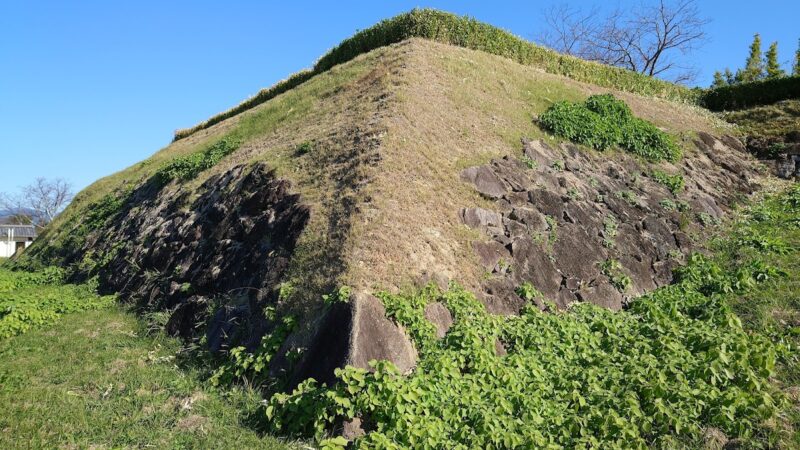
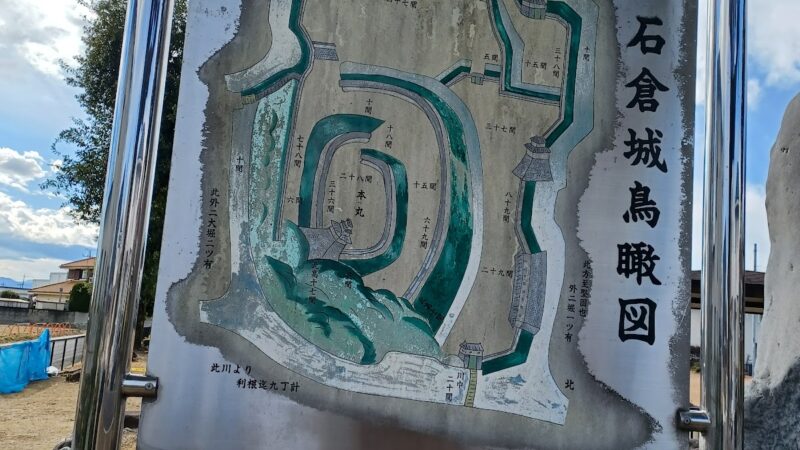
Kuruwa (Enclosure): The remains of the central enclosure of the castle are preserved as a topographical feature. The area developed as Ishikura Castle Ninomaru Park is thought to be the site of the former Ninomaru (second enclosure).
Dorui (Earthwork): Part of the earthen embankment built as a defensive structure still exists. Traces of the earthwork can be seen in part of the park.
Yokobori (Dry Moat): Partial remains of a dry moat that did not hold water remain. The topography of the moat, dug to prevent enemy intrusion, can still be seen as undulations in the terrain.
Ishikura Castle Ninomaru Park
Currently, the site of Ishikura Castle has been developed as “Ishikura Castle Ninomaru Park,” and a castle site monument has been erected. Playground equipment and other facilities have been installed in the park, making it a place of relaxation for local residents.
From the park, you can imagine the topography that once allowed Ishikura Castle to utilize the Tone River’s flow as a natural defensive line. However, due to changes in the Tone River’s course and urban development, it is difficult to completely restore its original appearance.
Access Information
Location: 4-19-5 Ishikura-cho, Maebashi City, Gunma Prefecture
Transportation Access:
- Approximately 15 minutes by car from JR Maebashi Station
- Approximately 20 minutes by car from Kan-Etsu Expressway Maebashi IC
- Approximately 20 minutes on foot from Jomo Electric Railway “Joto Station”
Parking: Limited parking space available around the park (please check)
Relationship between Ishikura Castle and Maebashi Castle (Maebashi Castle)
When discussing Ishikura Castle, its relationship with Maebashi Castle (later Maebashi Castle) is essential.
History of Maebashi Castle’s Construction
As mentioned above, Ishikura Castle suffered damage from repeated flooding of the Tone River, resulting in erosion and fragmentation of its castle grounds. The San-no-maru (third bailey) area suffered particularly severe damage, so the Nagao clan expanded and renovated this area, constructing a new castle, Umayabashi Castle.
In other words, Umayabashi Castle was born as a result of the damage to Ishikura Castle, and Ishikura Castle can be considered the “predecessor” of the castle that would become the center of Maebashi City.
Division of Functions of the Two Castles
It is believed that Ishikura Castle continued to exist for a certain period even after Umayabashi Castle was built. The two castles were located in close proximity and may have had a mutually complementary relationship. There is also a theory that Umayabashi Castle served as the political and administrative center, while Ishikura Castle functioned as a military base.
Significance in Maebashi’s History
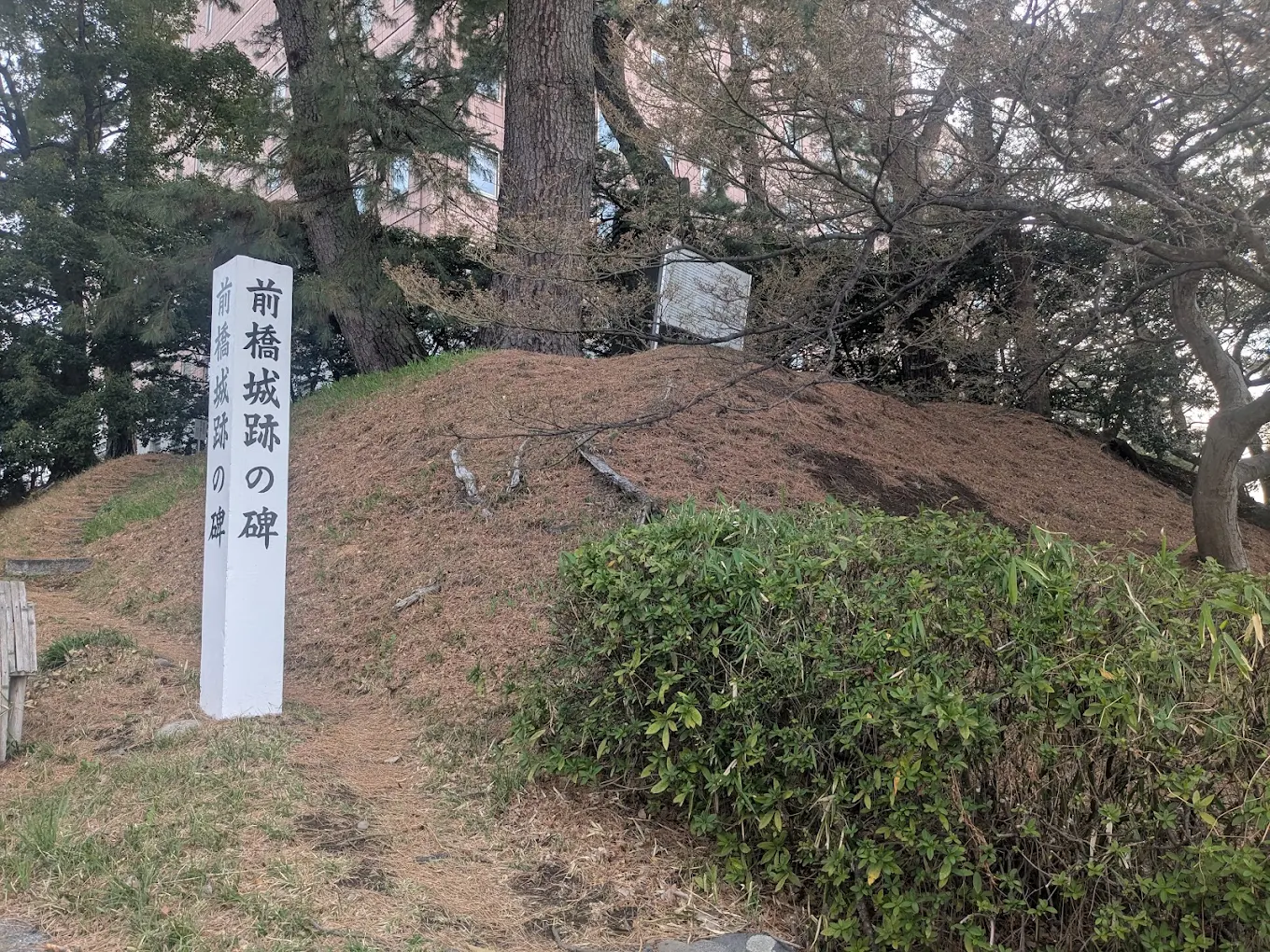
The development from Ishikura Castle to Umayabashi Castle marked the starting point of Maebashi City’s historical development. Umayabashi Castle was later renovated as Maebashi Castle during the Edo period and became the administrative center of the Maebashi Domain. The foundation of the current urban structure of Maebashi City was formed around this Umayabashi Castle.
In that sense, Ishikura Castle is an important castle that can be called the “origin” of Maebashi City’s history.
Surrounding Castles and the Castle Network of Kōzuke Province
Ishikura Castle did not exist in isolation, but functioned as part of the castle network of Kōzuke Province.
Ōmi Castle
Ōmi Castle, the base of the Nagao clan, was the castle of Nagao Tadafusa, the father of Nagao Norikage, the builder of Ishikura Castle. Located in Asahi-machi, Maebashi City, it had a close relationship with Ishikura Castle.
Mayabashi Castle
As mentioned above, this castle was built by expanding and improving the third bailey of Ishikura Castle, and later became Maebashi Castle. During the Sengoku period, it played an important role as a base for Uesugi Kenshin’s campaigns in the Kantō region.
Minowa Castle
Located in Misato-cho, Takasaki City, Minowa Castle is a formidable mountain castle known as the residence of the Nagano clan. Takeda Shingen, using Ishikura Castle as his base, attacked Minowa Castle and captured it in 1566.
Other Surrounding Castles
- Anai Castle: Located in Anai-cho, Maebashi City
- Shimana Castle: Located in Shimana-cho, Maebashi City
- Tsurugi Castle: Located in Kamiizumi-cho, Maebashi City
- Imamura Castle: Located in Imai-cho, Maebashi City
These castles were in a relationship of mutual cooperation or confrontation within the power struggles of the Nagao, Takeda, Uesugi, and Hojo clans in Kozuke Province.
Strategic Importance of Ishikura Castle
Strategic Transportation Hub
Ishikura Castle was located along the Tone River, controlling a transportation route connecting the north and south of Kōzuke Province. It was also situated along the Shimizu Road (possibly confused with Ishikura Castle in Minakami Town) leading from Echigo Province (Niigata Prefecture) to the Kanto Plain, making it a crucial base for monitoring and controlling the movement of supplies and troops.
Military Strategic Point
Takeda Shingen valued Ishikura Castle because of its location, which allowed it to separate two important strongholds: Maebashi Castle and Minowa Castle. This geographical advantage ensured Ishikura Castle maintained its strategic importance in the struggle for control of Kōzuke Province.
The Tone River as a Natural Defensive Line
Ishikura Castle was situated in a location where the Tone River could be used as a natural moat. While flooding of the Tone River caused damage to the castle, it also functioned as a natural defensive line, preventing enemy invasions. This duality was also a characteristic of Ishikura Castle.
Current Status and Challenges of Ishikura Castle Research
Limitations of Historical Sources
Primary sources concerning Ishikura Castle are limited, and there are various theories regarding its construction date and changes in its lords. Many details, especially those concerning the Nagao clan’s era, remain unclear, and further research is needed.
Archaeological Investigations
No full-scale excavation has been conducted at the Ishikura Castle site, and details of the remains and the castle’s size remain speculative. While large-scale excavation is difficult now that the site is a park, progress in research using non-destructive methods is expected.
Confusion with Ishikura Castle in Minakami Town
In addition to Ishikura Castle in Maebashi City, Gunma Prefecture, there is also an Ishikura Castle in Minakami Town. The Ishikura Castle in Minakami Town is said to have been built in 1478 (Bunmei 10) by Uesugi Akisada, the Kanto Kanrei (governor of the Kanto region), along the Shimizu Road as a transit point to Echigo. Although they are separate castles, they are sometimes confused due to their similar names, so caution is advised.
Points to Note When Visiting Ishikura Castle
Highlights
- Castle Site Monument: The castle site monument erected within Ishikura Castle Ninomaru Park is an important memorial indicating that this site is a historical castle ruin.
- Observing the Topography: The subtle undulations and elevation differences within the park allow you to imagine the layout of the former baileys and earthworks.
- Relative to the Tone River: By viewing the Tone River from the park, you can appreciate how the castle utilized the river as a natural defensive line.
Points to Note When Visiting
- Ishikura Castle ruins are maintained as a park and can be freely visited, but please be mindful of preserving the remains.
- Detailed information boards are limited, so learning about the historical background beforehand will allow for a deeper and more enjoyable visit.
- Visiting the surrounding Maebashi Castle ruins (formerly Umayabashi Castle) and Sokai Castle ruins will give you a better understanding of the castle network of Kozuke Province.
Summary | The History of Kozuke Province During the Sengoku Period as Told by Ishikura Castle
Ishikura Castle was an important castle that played a significant role in the history of Kozuke Province for approximately 100 years, from its construction in 1485 to its surrender in 1590. Beginning with its construction by the Nagao clan, it was renovated as a base for Takeda Shingen’s invasion of Kozuke Province, and through successive changes in lords—the Uesugi clan and the Hojo clan—it consistently served as a strategic stronghold.
The fact that the castle grounds were divided by a natural disaster, the flooding of the Tone River, and that Maebashi Castle (formerly Umayabashi Castle) was built as a result, indicates that Ishikura Castle is the “origin” of Maebashi City’s history. Currently, the site is known as Ishikura Castle Ninomaru Park and is a popular spot for locals. Parts of the castle’s remains, including baileys, earthworks, and moats, still exist.
The history of Ishikura Castle tells the story of how Kōzuke Province was the battleground for the three major powers—the Takeda, Uesugi, and Hōjō clans—during the Sengoku period. The history etched into this small flatland castle can be considered a microcosm of Japan’s Sengoku period.
When visiting Gunma Prefecture, be sure to stop by the Ishikura Castle ruins and, while gazing at the Tone River, reflect on the turbulent history waged by the Sengoku warlords.