Yoshii Jinya (Gunma Prefecture) Complete Guide: History, Remains, and Access Information
What is Yoshii Jinya?
Yoshii Jinya (Yoshii Jinya) was a jinya (fortified residence) that existed in Tago District, Kozuke Province (present-day Yoshii, Yoshii-cho, Takasaki City, Gunma Prefecture) during the Edo period. It functioned as the administrative center of the Yoshii Domain and was ruled by the Takatsukasa Matsudaira family for generations. A jinya refers to the administrative center of a small domain without a castle, and Yoshii Jinya is a typical example, making it an important historical site for understanding the local governance system of Japan during the Edo period.
Currently, most of the jinya site is occupied by Yoshii Elementary School and surrounding residential areas. However, valuable remains such as the relocated main gate, the stone walls of the Kasuga Shrine site, and parts of the earthworks still remain, allowing visitors to imagine the appearance of the time.
History of the Yoshii Jinya
Establishment of the Yoshii Domain and the Yada Jinya Era
The history of the Yoshii Domain begins in 1709 (Hōei 6) when it was re-established by Matsudaira Nobukiyo. Initially, the domain’s administrative office was located in Yada (present-day Yada, Yoshii-machi, Takasaki City) and was called the Yada Jinya. Therefore, the Yoshii Domain was also known as the “Yada Domain.”
Matsudaira Nobukiyo, as the first lord of the Takatsukasa Matsudaira family, governed a small domain of 10,000 koku. The Takatsukasa Matsudaira family was descended from the noble Takatsukasa family, and due to their lineage, they adopted the Edo-jōfu system, meaning the lord resided permanently in Edo.
Relocation of the Jinya to Yoshii
In 1752 (Hōreki 2), the third lord, Matsudaira Nobuari, moved the domain’s administrative office from Yada to Yoshii. This marks the beginning of the Yoshii Jinya as it is known today. While the exact reason for the relocation isn’t clearly recorded, it’s believed that the better transportation access to Yoshii and its location along the Shinano-betsuro, a side route of the Nakasendo highway, were major contributing factors.
Interestingly, even after the relocation of the jinya (fortified residence), the name “Yada Jinya” continued to be used for some time. It’s believed that it officially became known as “Yoshii Jinya” during the time of the 9th lord, Matsudaira Nobuoki.
Characteristics of Edo Residence and Jinya
Since the lords of the Takatsukasa Matsudaira family were permanent residents of Edo, the lords themselves rarely resided at the Yoshii Jinya. Therefore, the jinya was small in scale, only housing a local magistrate, and lacked castle-like defensive structures or elaborate buildings.
Actual domain administration was carried out by local magistrates and chief retainers, rather than the lord who resided permanently in Edo. This form of governance was a characteristic system seen in smaller domains and daimyo families of noble origin.
From the End of the Edo Period to the Meiji Restoration
During the end of the Edo period, the Yoshii Domain, like many other small domains, was tossed about by the turbulent times. During the Boshin War, it sided with the new government and was not involved in any major battles.
With the return of the domains to the emperor in 1869 (Meiji 2) and the abolition of the feudal domains and establishment of prefectures in 1871 (Meiji 4), the Yoshii Domain was abolished, and the Yoshii Jinya (fortified residence) ceased to function. After the abolition of the feudal domains and establishment of prefectures, the buildings and land of the Jinya were sold off and transferred to private ownership.
Structure and Size of the Yoshii Jinya
Layout of the Jinya
The Yoshii Jinya spread across the area centered around the current Yoshii Elementary School. The Jinya grounds are estimated to have been approximately 150 meters east-west and 200 meters north-south, and although small, it was large enough to function as a domain office.
At the center of the jinya (fortified residence) was a building equivalent to the lord’s residence (although it was not actually used as the lord resided in Edo), along with government offices and a magistrate’s office. It is believed that the surrounding area consisted of barracks for samurai and warehouses.
Defensive Structures
While the Yoshii jinya lacked the high stone walls and keep of a castle, it did have earthen ramparts as a minimum defensive measure. Parts of these ramparts still remain and can be seen near the southwest corner of the jinya.
The ramparts were approximately 2-3 meters high, and it appears there was no moat. This reflects that the jinya was developed during the peaceful mid-Edo period and that, due to the lord’s residence in Edo, administrative functions were prioritized over military functions.
Main Gate and Architectural Style
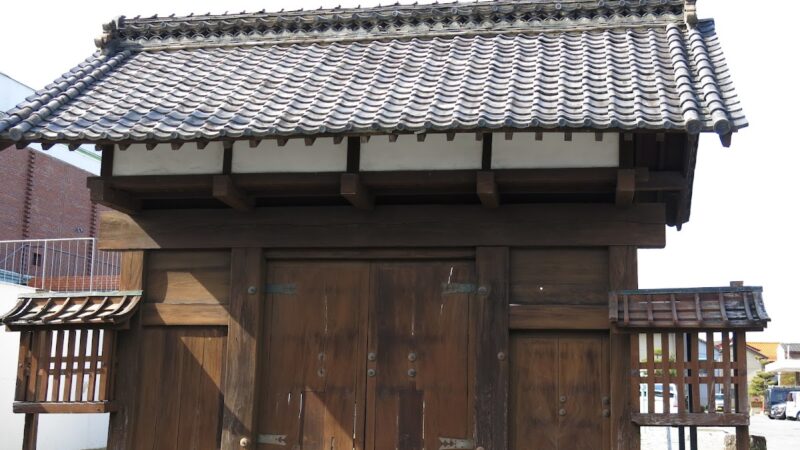
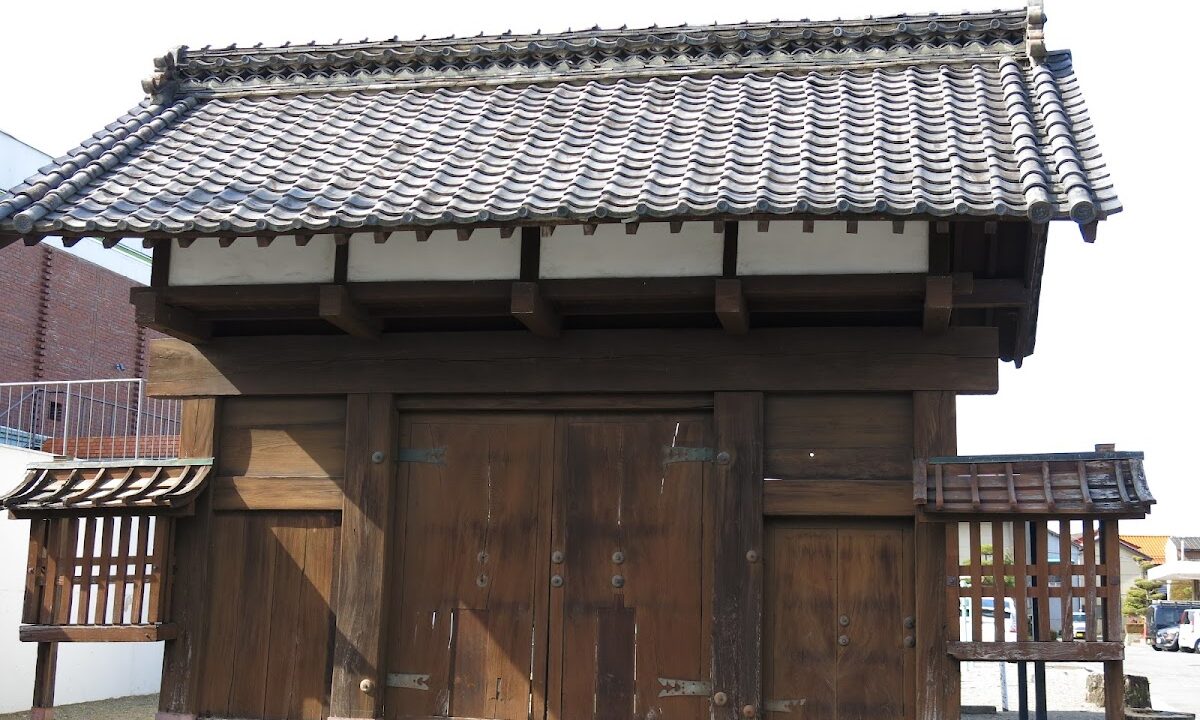
The main gate of the jinya, the omote-mon (front gate), is a valuable historical structure as the only surviving building. This main gate was sold off after the abolition of the feudal domains and was stored privately, but in 1970 it was donated to the town and is now relocated next to the Yoshii Cultural Hall (now the Yoshii Local History Museum).
The main gate is in the Yakui-mon style, a simple yet dignified structure. It is characterized by a refined architectural style that avoids ostentation, typical of the Takatsukasa Matsudaira family, who were of aristocratic origin.
Existing Remains
Yoshii Jinya Main Gate (Relocated and Existing)
As mentioned above, the main gate of the Yoshii Jinya has been relocated and preserved on the grounds of the Yoshii Local History Museum (formerly the Yoshii Cultural Hall). This main gate is one of the few remaining structures of the Yoshii Jinya and is a valuable example of Edo-period Jinya architecture in Gunma Prefecture.
The structure of the main gate is a Yakui-mon style, consisting of two main pillars and two supporting pillars, with a gabled roof covered with tiles. The decorations are understated, and the construction prioritizes practicality, but the details showcase the finest Edo period architectural techniques.
Kasuga Shrine Ruins and Stone Wall
At the southwest corner of the Yoshii Jinya (fortified residence) stood the Kasuga Shrine, dedicated to the Kasuga deity, the tutelary god of the Takatsukasa family. The Takatsukasa family were noble families descended from the Fujiwara clan, and they invited the Kasuga deity from Kasuga Taisha (Nara), the tutelary god of the Fujiwara clan, from Kyoto and enshrined it within the Jinya.
Currently, the Kasuga Shrine building no longer exists, having been merged with the Yoshii Hachimangu Shrine in 1908 (Meiji 41). However, the stone wall where the shrine once stood remains. This stone wall is one of the few remaining structures of the Yoshii Jinya and is preserved at the site along with a monument.
The stone wall is constructed using the nozura-zumi (rough stone masonry) method, using natural stones, and is approximately 1-2 meters high. Although small in scale, it is a valuable relic that conveys the atmosphere of the Jinya to this day.
Remains of Earthen Embankments
A portion of the earthen embankments that surrounded the encampment still remains today. In particular, the embankments can be seen in relatively good condition around the site of the Kasuga Shrine in the southwest corner.
The embankments are approximately 2 meters high and about 5 meters wide at the base, with a flat top. While this is a standard size for defensive structures of an Edo-period encampment, it is simpler compared to a castle.
Samurai Residences (Renovated and Existing)
Near the Yoshii encampment, there are still surviving residences believed to have belonged to samurai. These buildings have been renovated and differ from their original appearance, but they provide clues to the layout and structure of samurai residences during the Edo period.
Some of the residences are still used as homes today, and their exteriors retain a sense of the Edo period. However, since they are on private property, consideration is required when visiting.
Yoshii Jinya and the Takatsukasa Matsudaira Family
Origins of the Takatsukasa Matsudaira Family
The Takatsukasa Matsudaira family is a unique lineage, inheriting the bloodlines of both the Takatsukasa family (a noble family) and the Tokugawa family. The Takatsukasa family was one of the Five Regent Houses, the main lineage of the Fujiwara Hokke (Northern Fujiwara clan), and held the highest rank in the imperial court.
This family came to use the Matsudaira surname when a daughter of the Takatsukasa family married into the Tokugawa family, and her descendants were elevated to samurai status. Having both noble and samurai bloodlines, the Takatsukasa Matsudaira family possessed a unique culture and traditions.
Reasons for Residence in Edo
The reason the Takatsukasa Matsudaira family resided in Edo is related to their noble origins. Daimyo (feudal lords) of noble origin were often required by the shogunate to reside permanently in Edo, which was a policy of the shogunate in managing its relationship with the imperial court.
Furthermore, the fact that it was a small domain of 10,000 koku reduced the need for the lord to reside permanently in the territory. Actual domain administration was entrusted to local magistrates and chief retainers, while the lord of the domain served in Edo, handling duties for the shogunate and acting as a liaison with the imperial court.
Cultural Characteristics
The Takatsukasa Matsudaira family, originating from the court nobility, possessed a cultural background distinct from that of the samurai class. The enshrinement of the Kasuga deity within the domain’s headquarters is a prime example of this. Furthermore, the architectural style of the domain’s headquarters is said to have differed from the rugged samurai residences, possessing an elegance reminiscent of a court noble’s mansion.
In the Yoshii domain, culture from Kyoto and Nara was introduced, contributing to the improvement of the region’s cultural level. Cultural activities such as waka poetry, calligraphy, and tea ceremony were encouraged, and significant effort was put into the education of the domain’s samurai.
The Town of Yoshii and the Domain Headquarters
Development as a Post Town
Yoshii was located along the Shinano-betsuji, a side route of the Nakasendo highway, and developed as a post town. The establishment of the domain headquarters elevated Yoshii from a mere post town to the center of the domain, and it prospered as a center of commerce and culture. As a post town, Yoshii was lined with inns and shops, bustling with many travelers. It also functioned as a market town, regularly hosting markets where products from surrounding farming villages were gathered.
Industrial Development
Sericulture flourished within the Yoshii domain. Gunma Prefecture has been known for sericulture and silk production since the Edo period, and Yoshii played a significant role. The domain encouraged improvements in sericulture techniques and strived to produce high-quality raw silk.
Stone carving using Tagoishi stone, quarried in the southwest, was also a specialty product of Yoshii. Tagoishi is an easily processed and beautiful stone, used for lanterns and tombstones, and was an important source of income for farmers as a side business.
Education and Culture
The Yoshii domain had a domain school for the education of the children of samurai. Although small in scale, it provided education in Confucianism and martial arts, striving to cultivate capable individuals.
Furthermore, due to having a feudal lord from a noble family, Kyoto culture was actively adopted, and the region’s cultural level is considered to have been high. Waka poetry gatherings and tea ceremonies were held, fostering a cultural atmosphere.
Current Status of the Yoshii Jinya Site
Current Status of the Jinya Site
Currently, the central part of the Yoshii Jinya site is the grounds of Yoshii Elementary School. It is believed that the foundations and remains of the former Jinya buildings are buried beneath the school buildings and grounds, but no full-scale archaeological excavation has been conducted.
The area around the elementary school is now a residential area, and it has been pointed out that some of the town layout from the Jinya era remains in the current road layout. According to local elders, more Jinya-related buildings and stone walls remained until the early Showa period.
Preservation and Utilization
Preservation efforts are underway for the remains of the Yoshii Jinya as a valuable historical heritage of the region. The main gate, in particular, has been relocated and preserved, and is open to the public, attracting many history enthusiasts.
The stone walls of the Kasuga Shrine site have also been restored, and explanatory signs have been installed. The remains of the earthworks have also been preserved to the extent possible and are used as educational materials to convey the region’s history.
Yoshii Local History Museum
The Yoshii Local History Museum (formerly the Yoshii Cultural Hall) exhibits materials and artifacts related to the Yoshii Jinya (fortified residence). A model of the Jinya, ancient documents, and everyday items from the time are on display, allowing visitors to learn about the history of the Yoshii Domain and the Jinya.
The relocated main gate is also located on the museum grounds, allowing visitors to see Edo-period architecture up close. The museum also regularly holds special exhibitions and lectures, serving as a hub for local history education.
Nearby Historical Attractions
Tago Monument and Tago Monument Memorial Hall
Approximately 10 minutes by car from the Yoshii Jinya site is the Tago Monument, one of Japan’s three oldest monuments. The Tago Monument is a stone monument erected in 711 AD during the Nara period and is designated as a National Special Historic Site.
At the Tago Monument Memorial Museum, you can learn in detail about the history of the Tago Monument and the ancient Tago County. Visiting it together with the Yoshii Jinya (fortified residence) allows you to gain a comprehensive overview of the history of the Yoshii region from ancient times to the early modern period.
Yoshii Hachimangu Shrine
Yoshii Hachimangu Shrine is a shrine where the Kasuga Shrine of the Yoshii Jinya was enshrined. The grounds feature a magnificent shrine building and serve as a center of local faith. The sacred object of the Kasuga Shrine and related cultural artifacts are preserved here, and it may be possible to view them by contacting the shrine in advance.
Kaburagawa River and River Terraces
The town of Yoshii is located on the north bank of the Kaburagawa River, while river terraces have developed on the south bank. Sericulture flourished on these terraces from the Edo period onward, and buildings of sericulture farmers from that time still remain today.
From the river terrace, you can enjoy a panoramic view of the town of Yoshii, and even see the site of the former samurai residence in the distance. A beautiful landscape unfolds, where natural and historical scenery harmonize.
Access Information
Access by Public Transportation
Train
- Get off at Yoshii Station on the Joshin Electric Railway, then walk approximately 15 minutes to the Yoshii Local History Museum (Front Gate).
- Walk approximately 10 minutes from Yoshii Station to the central area of the Jinya Ruins (around Yoshii Elementary School).
Bus
- Take the Gunma Bus bound for Yoshii from JR Takasaki Station (approximately 30 minutes), then get off at the Yoshii bus stop.
Access by Car
- Approximately 5 minutes from the Yoshii Interchange on the Joshinetsu Expressway.
- Approximately 15 minutes from the Fujioka Interchange on the Kanetsu Expressway.
- Parking: Free parking available at the Yoshii Local History Museum (approximately 20 cars).
Points to Note
Yoshii Local History Museum (Front Gate)
- Address: Yoshii, Yoshii-machi, Takasaki City, Gunma Prefecture
- Opening Hours: 9:00 AM – 5:00 PM (Last entry at 4:30 PM)
- Closed: Mondays (or the following day if Monday is a public holiday), New Year holidays
- Admission Fee: 200 yen for adults, free for high school students and younger
Kasuga Shrine Ruins and Earthwork Ruins
- Open to visitors at all times (outdoors)
- Address: Yoshii, Yoshii-machi, Takasaki City, Gunma Prefecture (west side of Yoshii Elementary School)
Jinya Ruins (around Yoshii Elementary School)
- Entry into school grounds is prohibited
- Viewing from surrounding roads is possible
Summary
The Yoshii Jinya is a valuable historical site that represents a form of local governance in Japan, serving as the administrative center of a small Edo period domain. Because it was ruled by the Takatsukasa Matsudaira family, a daimyo family of aristocratic origin, it possessed cultural characteristics different from other samurai Jinya.
Currently, most of the Jinya buildings have been lost, but valuable remains such as the relocated and preserved main gate, the stone walls of the Kasuga Shrine ruins, and a portion of the earthworks remain. These remains are carefully preserved as important witnesses to the history of the region.
A visit to the Yoshii Jinya Ruins offers a chance to learn about a variety of historical themes, including the life of a small Edo-period domain, the fusion of aristocratic and samurai cultures, and the development of a regional city. Furthermore, the surrounding area contains ancient ruins such as the Tago Monument, allowing visitors to experience the long flow of history from ancient times to the early modern period.
For history enthusiasts, those interested in Japanese regional history, and those fascinated by Edo-period jinya architecture, the Yoshii Jinya Ruins are a historical site well worth visiting. The remains, nestled in a quiet residential area, evoke the history of the domain’s administration and the lives of the people who once lived here.