Tanaka Castle (Minamisoma City, Fukushima Prefecture) Complete Guide | History, Remains, and Access Information
Located in Kashima Ward, Minamisoma City, Fukushima Prefecture, Tanaka Castle is an important flatland castle indispensable to the history of the Soma region from the medieval to the early modern period. Flourished as the residence of the Kuwori clan, it was the stage for turbulent events of the Sengoku period, such as the Tenbun Rebellion and the Battle of Shichihashi. Even today, the remains of earthworks and moats convey the atmosphere of that time. This article provides a comprehensive explanation of Tanaka Castle, including its detailed history, structure, highlights, and access methods, for castle enthusiasts and history fans.
Overview of Tanaka Castle
Tanaka Castle is a flatland castle located within Tanaka-kan, Kashima, Kashima Ward, Minamisoma City, Fukushima Prefecture. Built on the plains north of the Mano River, this castle once boasted a rectangular size of approximately 300 meters east-west and 215 meters north-south, and possessed a sturdy structure with double and triple moats.
Basic Information
- Location: Tanaka-kan, Kashima, Kashima-ku, Minamisoma City, Fukushima Prefecture
- Castle Structure: Flatland Castle
- Year of Construction: Late 14th to early 15th century (estimated)
- Builder: Kuwori clan
- Main Lords: Kuwori Jibu-no-sho Tadaie, Kuwori Hisaie, Soma Satotane (Tanaka Chujiro Satotane)
- Year of Abandonment: 1602 (Keicho 7)
- Remains: Part of the earthworks and moat
- Designated Cultural Property: None
History of Tanaka Castle
Migration of the Kuwori Clan and the Establishment of Tanaka Castle
The history of Tanaka Castle dates back to the 5th year of the Joji era (1366). In this year, Kuwori Goro Motoie moved from Kuwori, Date District (present-day Kuwori Town, Date District, Fukushima Prefecture) to Mano-go (present-day Kashima Ward, Minamisoma City) and made Nakadate his castle. The Kuwori clan was a branch of the Date clan and a samurai family with considerable influence in Mutsu Province.
Later, during the time of Kuwori Jibu-no-sho Tadaie, the castle was moved from Nakadate to Tanaka Castle. Tanaka Castle was located in a strategically important location on the plains north of the Mano River and functioned as the Kuwori clan’s base of operations in the Soma region. Its location as a flatland castle offered the advantage of direct control over the agriculturally productive plains, and it is thought that this was intended to strengthen the economic base of the lord.
The Tenbun Rebellion and the Battle of Shichihashi
Tanaka Castle first appears on the historical stage in the “Battle of Shichihashi” in Tenbun 11 (1542). This battle was a consequence of the Tenbun Rebellion (1542-1548), which occurred within the Date clan.
The Tenbun Rebellion was a civil war between Date Tanemune and his eldest son, Date Harumune, and became a large-scale conflict that divided the daimyo of southern Mutsu Province. Amidst this chaos, Soma Akita sided with Date Tanemune, while fierce battles ensued between him and forces loyal to Date Harumune.
In 1542 (Tenbun 11), Kuwori Hisaie, lord of Tanaka Castle, was loyal to Soma Akitaie, but came under attack from Kuroki Danjo Nobufusa, lord of Kuroki Castle. Kuroki Nobufusa was a general loyal to Date Harumune and attacked Tanaka Castle, a stronghold of the Soma clan. This battle, known as the Battle of Shichihashi, was a fierce battle in which Kuwori Hisaie was killed.
This battle dealt a major blow to the Kuwori clan’s control over Tanaka Castle. The Battle of Nanahashi marked a crucial turning point that reshaped the power dynamics in the Soma region.
Soma Clan Rule
After the death of Kuwori Hisaie in battle, Tanaka Castle came under the direct control of the Soma clan. Soma Satotane, the younger brother of Soma Yoshitane, entered Tanaka Castle as its castellan and adopted the name Tanaka Chujiro Satotane. This name change is thought to have been intended to demonstrate the legitimacy of their rule over the area by incorporating the place name of Tanaka Castle.
The Soma clan was a powerful daimyo family that ruled the Soma region throughout the Sengoku period, and Tanaka Castle functioned as one of the important branch castles in the Soma clan’s territorial management. Located northwest of the Soma clan’s main base, Odaka Castle (Odaka Ward, Minamisoma City), Tanaka Castle held strategic value as a base for controlling the Mano River basin and for defense against attacks from the north.
The Abandonment of the Castle and its Aftermath
In 1602 (Keicho 7), Tanaka Castle was abandoned. This was shortly after the establishment of the Edo Shogunate, a time when castle consolidation and reorganization were underway throughout the country. The Soma clan was developing Nakamura Castle (present-day Soma City) as their base, and it seems they judged that a subsidiary castle like Tanaka Castle had served its purpose.
After the Summer Siege of Osaka in 1615 (Genna 1), the “One Castle Per Province” decree was issued, obligating each domain to demolish castles other than their primary residence. However, Tanaka Castle had already been abandoned before this.
After its abandonment, the site of Tanaka Castle was used for farmland and settlement, eventually transforming into the present-day Tatenouchi settlement. According to records from the early Meiji period, a clearly defined rectangular area approximately 300 meters east-west and 215 meters north-south remained, and traces of double and triple moats could still be seen.
Structure and Layout of Tanaka Castle
Characteristics as a Flatland Castle
Tanaka Castle is a typical flatland castle built on the plains north of the Mano River. Unlike mountain castles, flatland castles built on flat land secured their defensive capabilities by surrounding them with moats and earthen ramparts. Tanaka Castle was no exception, protected by multiple moats and high earthen ramparts.
The advantages of flatland castles are their high habitability and connection to economic activity. While mountain castles have a strong character as fortresses during wartime, flatland castles emphasize their function as political and economic centers during peacetime. Tanaka Castle is also thought to have controlled the fertile farmland in the Mano River basin and functioned as a distribution hub for goods utilizing water transport.
Scale and Composition of the Layout
According to records from the early Meiji period, Tanaka Castle had a rectangular layout of approximately 300 meters east-west and 215 meters north-south. This scale is standard for the residences of local lords from the medieval to early modern periods.
The castle was surrounded by double and triple moats, giving it a multi-layered defensive structure. The innermost section was the main enclosure (honmaru), where the lord’s residence and important facilities are presumed to have been located. Outside of this were the second and third enclosures, each separated by moats and earthen ramparts.
Structure of Earthen Ramparts and Moats
The key to Tanaka Castle’s defense was the earthen ramparts and moats. The earthen ramparts were earthen walls built to prevent enemy intrusion, reaching several meters in height. Fences and walls were likely constructed on top of the ramparts to further enhance its defensive capabilities.
The moats encircled the castle, and are estimated to have been over 10 meters wide in some places. Moats in flatland castles are often water moats, and it is highly probable that Tanaka Castle’s moat was also a water moat, drawing water from the Mano River. Water moats not only made enemy approach difficult but also served as a water source in case of fire.
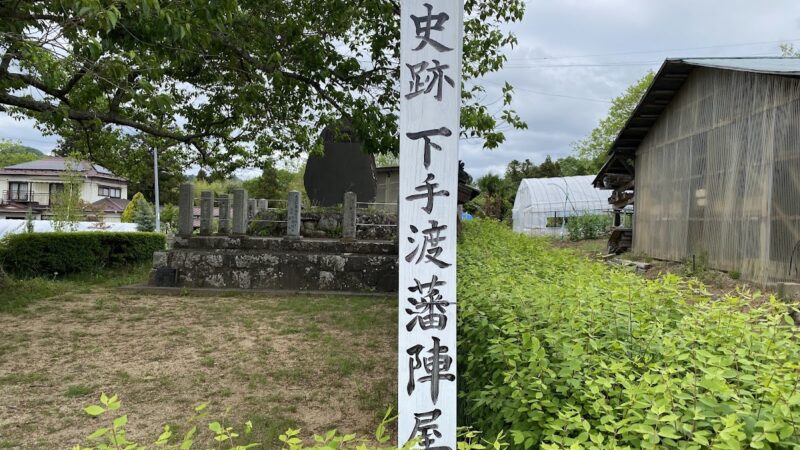
Even today, traces of earthworks and moats remain in parts around the settlement within the castle grounds, allowing us to imagine the scale of the castle in its heyday.
Castle Gates and Entrances
The castle gates and entrances (koguchi) are the most important points in a castle’s defense. It is believed that Tanaka Castle also had multiple entrances, but detailed information about their structure is scarce due to a lack of historical records, and remains speculative.
Typical entrances to flatland castles often have a winding structure (masugata koguchi) rather than a straight passage, a design intended to slow down enemy advances. It is possible that Tanaka Castle also employed a similar structure.
Highlights and Remains of Tanaka Castle
Existing Remains
More than 400 years have passed since Tanaka Castle was abandoned, and many remains have been lost. However, the following traces can still be seen today.
Remaining Earthworks
A small portion of the earthworks remains in a part of the Tateuchi settlement. Although their height has decreased, they are valuable remnants that indicate the scale of the former castle. While the earthworks have been eroded by years of wind, rain, and development, their original form is preserved in the undulations of the terrain.
Moat Remains
Remains of the former moats remain in the settlement as depressions and waterways. The double and triple moats, which were clearly visible during the Meiji period, are now only partially discernible, but by carefully observing the topography, it is possible to imagine the outline of the castle.
Land Division of Tateuchi Settlement
The current land division (plot division) of Tateuchi settlement is thought to reflect the layout of Tanaka Castle. The structure of the former castle may have influenced the arrangement of the settlement’s roads and plots.
Related Historical Sites in the Surrounding Area
When visiting Tanaka Castle, visiting the related historical sites in the surrounding area will allow for a deeper understanding of the history. #### Nakadate Castle Ruins
The ruins of Nakadate, the first castle of the Kuwori clan, are located within Kashima Ward, Minamisoma City. This was the Kuwori clan’s base before their relocation to Tanaka Castle, and is an important site for understanding the history of Tanaka Castle.
Odaka Castle
Odaka Castle, the headquarters of the Soma clan, is located in Odaka Ward, Minamisoma City. Visiting Odaka Castle is essential for understanding the relationship between Tanaka Castle and the Soma clan after Tanaka Castle came under their control. Odaka Castle is a mountain castle, with a structure contrasting sharply with Tanaka Castle.
Kuroki Castle Ruins
The ruins of Kuroki Castle, the residence of Kuroki Danjo Nobufusa, who attacked Tanaka Castle in the Battle of Nanahashi, are also located nearby. Understanding the relationship with this castle helps to comprehend the complex situation in the Soma region during the Tenbun Rebellion.
Access Information to Tanaka Castle
Location
〒979-2335
Tanaka-kan, Kashima, Kashima-ku, Minamisoma City, Fukushima Prefecture
Access by Public Transportation
- From JR Joban Line “Kashima Station”
Approximately 15 minutes on foot
Kashima Station is the central station of Kashima-ku, Minamisoma City. Head northwest to reach Tanaka Castle Ruins.
- By Bus
Minamisoma City operates a community bus, but the number of services is limited, so it is recommended to check the timetable in advance.
Access by Car
- From Joban Expressway “Minamisoma IC”
Approximately 15 minutes
Head north on National Route 6 towards Kashima-ku.
- Parking
There is no dedicated parking lot at Tanaka Castle Ruins. Use nearby public facilities or roadside stations and visit on foot. When visiting, please be considerate of the lives of local residents and avoid parking on the street.
Points to Note When Visiting
The Tanaka Castle ruins are currently a residential area within the Tatenouchi settlement. Please note the following points when visiting:
- Avoid trespassing on private property
Many of the remains are located on private property. Entering the premises without permission is strictly prohibited.
- Respect the lives of residents
Please observe quietly and be considerate so as not to disturb the lives of the residents.
- Take your trash with you
Please be sure to take all trash you generate during your visit with you.
- Consideration when taking photographs
Please be careful when taking photographs to avoid including private homes or residents in your shots.
History of Tanaka Castle and the Soma Region
The Soma Clan’s Territorial Management
The Soma clan was a daimyo family that ruled the Soma region from the Kamakura period to the Edo period. The history of the Soma clan began when Soma Moritsune, a member of the Chiba clan, acquired territory in Namekata District, Mutsu Province (present-day Minamisoma City). During the Sengoku period, Soma Akimune and Soma Yoshitane expanded their power.
Tanaka Castle was positioned as a strategic point in the northwestern part of the Soma clan’s territory, playing a role in controlling the Mano River basin and defending the border with the Date territory. It was part of a network of castles centered around Odaka Castle, the Soma clan’s main base.
The Tenbun Rebellion and the Soma Region
The Tenbun Rebellion was a large-scale conflict that began as an internal dispute within the Date clan, but its effects extended to surrounding daimyo. Soma Akimune initially sided with Date Tanemune, but sometimes changed his position depending on the changing course of the war.
The Battle of Nanahashi, which occurred amidst this chaos, was a crucial battle that altered the balance of power in the Soma region. Following the death of Kuwori Hisaie in battle, the Kuwori clan’s power declined, and the Soma clan’s direct rule was strengthened.
Transition to the Early Modern Period
After Toyotomi Hideyoshi’s unification of Japan and the Battle of Sekigahara, the Soma clan had their territory confirmed by Tokugawa Ieyasu and continued to exist as the Nakamura Domain (Soma Nakamura Domain). During this process, the Soma clan moved their main castle from Odaka Castle to Nakamura Castle (present-day Soma City) and reorganized their territory.
In this reorganization, Tanaka Castle lost its strategic importance and was abandoned in 1602. Many subsidiary castles became unnecessary during the peaceful Edo period.
Significance of Visiting Tanaka Castle
Learning about Local History
Tanaka Castle is a historical site that symbolizes the transition period from the medieval to the early modern period in the Soma region. Through this castle, you can learn about the historical flow of events: the transition of rulers from the Kuwori clan to the Soma clan, the impact of the large-scale conflict known as the Tenbun Rebellion, and the transition to peace during the Edo period.
Understanding the Structure of a Flatland Castle
In the Tohoku region, where mountain castles are common, flatland castles like Tanaka Castle are rare. You can experience firsthand the structure of a castle in a plain, the defensive system using earthworks and moats, and the characteristics of a flatland castle that balance habitability and defense.
The Value of Disappearing Remains
The remains of Tanaka Castle are disappearing year by year. Due to development and natural erosion, only limited parts retain their former appearance. Therefore, the earthworks and moat remains that remain today are precious and cultural heritage that should be passed on to future generations.
Materials and Research on Tanaka Castle
Major Historical Materials
While historical materials on Tanaka Castle are limited, descriptions can be found in the following documents.
- “Okusō Chawa-ki”
This is an Edo period geographical record of the Soma region, containing a description of Tanaka Castle.
- “Soma-han Seiki”
This is the official record of the Soma domain, containing information about the lord of Tanaka Castle and its subsequent abandonment.
- Meiji Period Cadastral Map
A cadastral map created in the early Meiji period clearly records the layout of Tanaka Castle.
Archaeological Investigation
No full-scale archaeological excavations have been conducted at the Tanaka Castle site. However, small-scale investigations conducted in conjunction with settlement development have unearthed artifacts from the medieval to early modern periods, confirming the existence of the castle.
Further planned excavations may reveal more about the detailed structure and history of Tanaka Castle.
Nearby Tourist Attractions
When visiting Tanaka Castle, we recommend also visiting other tourist attractions in Minamisoma City.
Soma Nomaoi Festival
The Soma Nomaoi Festival, a representative traditional event of Minamisoma City, is held every July. This festival, with a history of over 1000 years, is known for the magnificent sight of mounted warriors clad in armor galloping. It is said to have originated from the military training of the Soma clan, and offers a valuable opportunity to experience the samurai culture of the Tanaka Castle era.
Minamisoma City Museum
This museum introduces the history and culture of Minamisoma City and also features exhibits on castles in the Soma region. It is an ideal facility for learning about the history of the area, including Tanaka Castle.
Manogawa River
The Manogawa River, flowing just south of Tanaka Castle, has supported the lives of the local people since ancient times. Walking along the riverside promenade helps to understand the geographical reasons for the construction of Tanaka Castle.
Kashima Mikoshi Shrine
This ancient shrine in Kashima Ward, Minamisoma City, is a center of local faith. It has a history dating back to the Tanaka Castle era and provides clues to understanding the spiritual world of the people of that time. ## Summary
Tanaka Castle in Minamisoma City, Fukushima Prefecture, was built as the residence of the Kuwori clan. It experienced the turbulent times of the Sengoku period, including the Tenbun Rebellion and the Battle of Shichihashi, and was ultimately abandoned under the control of the Soma clan. While now a residential area, traces of earthworks and moats remain, allowing us to imagine its former glory.
The history of Tanaka Castle symbolizes the transition from the medieval to the early modern period in the Soma region, making it an important historical site for understanding local history. Although the remains are limited, visiting it in conjunction with related historical sites in the surrounding area allows for a deeper understanding of its history.
For castle enthusiasts and history buffs, we highly recommend visiting the Tanaka Castle ruins and tracing the historical footprints etched into this land. Taking time to quietly imagine its former appearance, while respecting the lives of the local residents, will surely be a valuable experience.
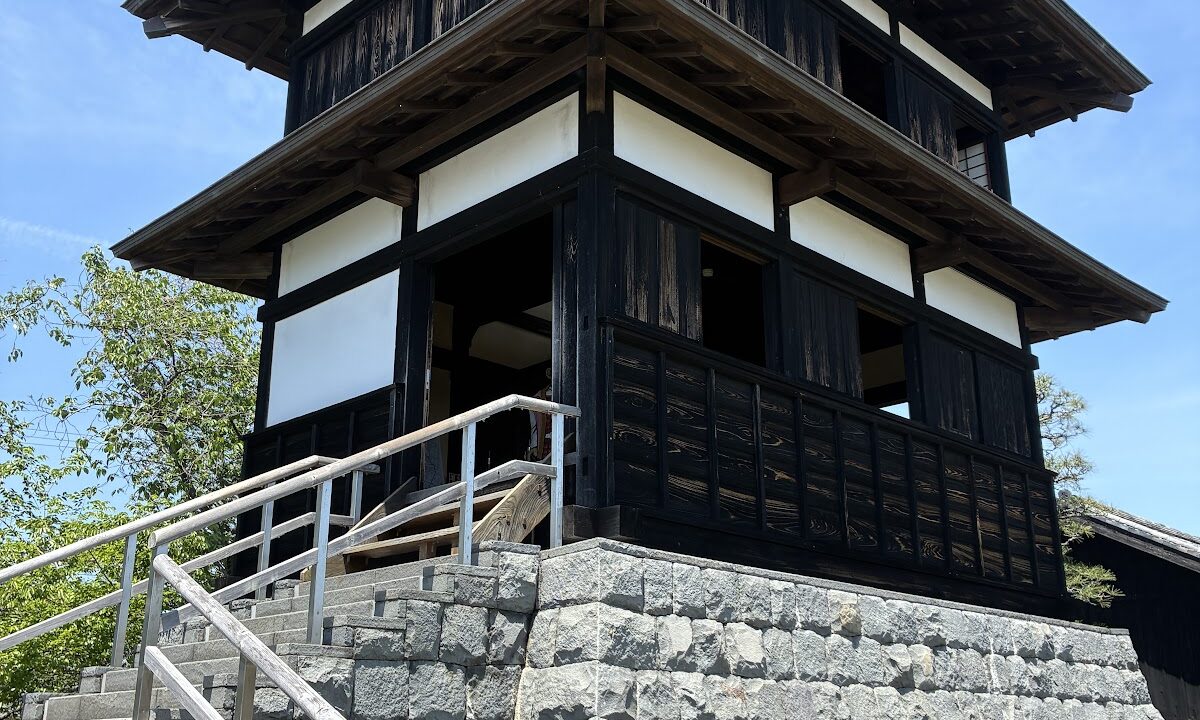
Tanaka Castle may lack a grand keep or stone walls, but it is an irreplaceable cultural heritage site that conveys the appearance of a medieval castle rooted in the local community.