Complete Guide to Omori Castle (Fukushima City, Fukushima Prefecture) | Thorough Explanation of History, Remains, and Access
Omori Castle is a Sengoku period mountain castle located in the Omori district in southern Fukushima City, Fukushima Prefecture. It functioned as an important military base for the Date clan and is also known as Gagyu Castle. Currently, it is maintained as Omori Castle Mountain Park and is a popular cherry blossom viewing spot in Fukushima during the spring. This article provides a detailed explanation of Omori Castle’s history, structure, remains, and access information.
Basic Information on Omori Castle
Omori Castle is a mountain castle built on the tip of a small hill in Omori, Fukushima City. It sits on an isolated hill with an elevation of 147 meters and a relative height difference of approximately 60 meters. It is located about 2 kilometers west of JR Minami-Fukushima Station and is relatively easily accessible from downtown Fukushima City.
Basic Data:
- Location: Honmaru, Omori, Fukushima City, Fukushima Prefecture
- Former Province: Shinobu District, Mutsu Province
- Classification/Structure: Mountain Castle
- Builder: Date Tanemune (or Date Harumune)
- Year of Construction: Around 1542
- **Common Name/Alternate Name: Gagyū Castle
- Main Lords: Date Sanemoto, Date Shigezane, Kimura Shigetsugu
- Year of Abandonment: 1664
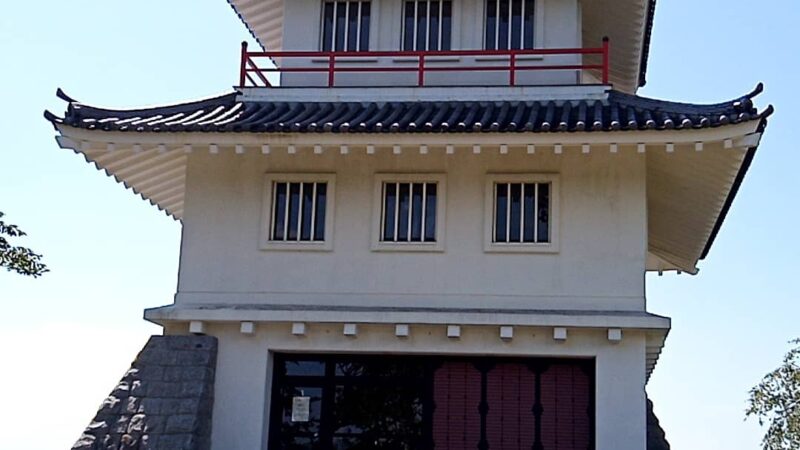
- Keep Structure: None (due to being a mountain castle)
- Current Status: Developed as Omori Castle Mountain Park
History/Background
Background of Construction and the Kamakura/Muromachi Periods
The area where Omori Castle was built is said to have been ruled by the Nikaido clan from the Kamakura period to the early Muromachi period. This area is located in the southern part of Shinobu County and was strategically important as a key point for accessing Aizu and Nihonmatsu.
Construction by the Date Clan
There are several theories regarding the full-scale construction of Omori Castle. The most plausible theory is that it was built by Date Harumune in 1542. Harumune moved his residence from Kuwori Nishiyama Castle to Yonezawa Castle, but Omori Castle remained important as a strategic point bordering the territories of the Ashina clan of Aizu and the Hatakeyama clan of Nihonmatsu.
On the other hand, there is also a theory that it was built by Date Tanemune during the Tenbun era (1532-1555). In any case, it is certain that Omori Castle was developed as a military base for the Date clan to control the southern part of Shinobu County.
The Era of Date Sanemoto
Date Sanemoto is considered to be the first lord of Omori Castle. Date Shigezane was the younger brother of Date Harumune and governed the southern part of Shinobu County from his base at Omori Castle. He was a key retainer of the Date clan and worked to stabilize the surrounding region from Omori Castle.
Date Shigezane and Omori Castle
In the late Sengoku period, Omori Castle became the base of Date Shigezane, a key retainer of Date Masamune. Shigezane was a renowned general who achieved numerous military successes as Masamune’s right-hand man, and was entrusted with governing Shinobu County from Omori Castle.
Even after Toyotomi Hideyoshi’s pacification of Oshu in 1590, Shigezane continued to serve as an important retainer of the Date clan. After the Battle of Sekigahara in 1600, when Date Masamune was transferred to Sendai, Shigezane also moved to Kakuda Castle, marking a turning point in the history of Omori Castle.
The Gamo and Uesugi Eras
In 1598 (Keicho 3), when the Gamo clan entered Aizu, Omori Castle came under their control. Records indicate that Kimura Shigetsugu, a vassal of the Gamo clan, temporarily resided at Omori Castle before moving to Fukushima Castle.
Later, in 1601 (Keicho 6), when Uesugi Kagekatsu was transferred to Yonezawa, Shinobu District became Uesugi territory, and Omori Castle also came under Uesugi control. However, in 1664 (Kanbun 4), a series of disturbances (the Kanbun Incident) surrounding Uesugi Tsunanori’s succession resulted in the Uesugi territory being halved from 300,000 koku to 150,000 koku. Shinobu District became shogunate territory, and Omori Castle was abandoned.
After the Edo Period
After its abandonment, Omori Castle lost its function as a fortress and became a living space for the local people. A shrine was built on the castle ruins, and it came to function as a center of local faith. The castle ruins were preserved even after the Meiji era, and in the Showa period, development progressed to create a park.
Structure and Current Status
Layout and Structure
Omori Castle is a typical mountain castle built on the tip of an isolated hill with a relative height of approximately 60 meters. It is characterized by a layout that skillfully utilizes the hill’s topography, with multiple baileys arranged in a stepped pattern.
The main structural elements are as follows:
Main Bailey (Honmaru)
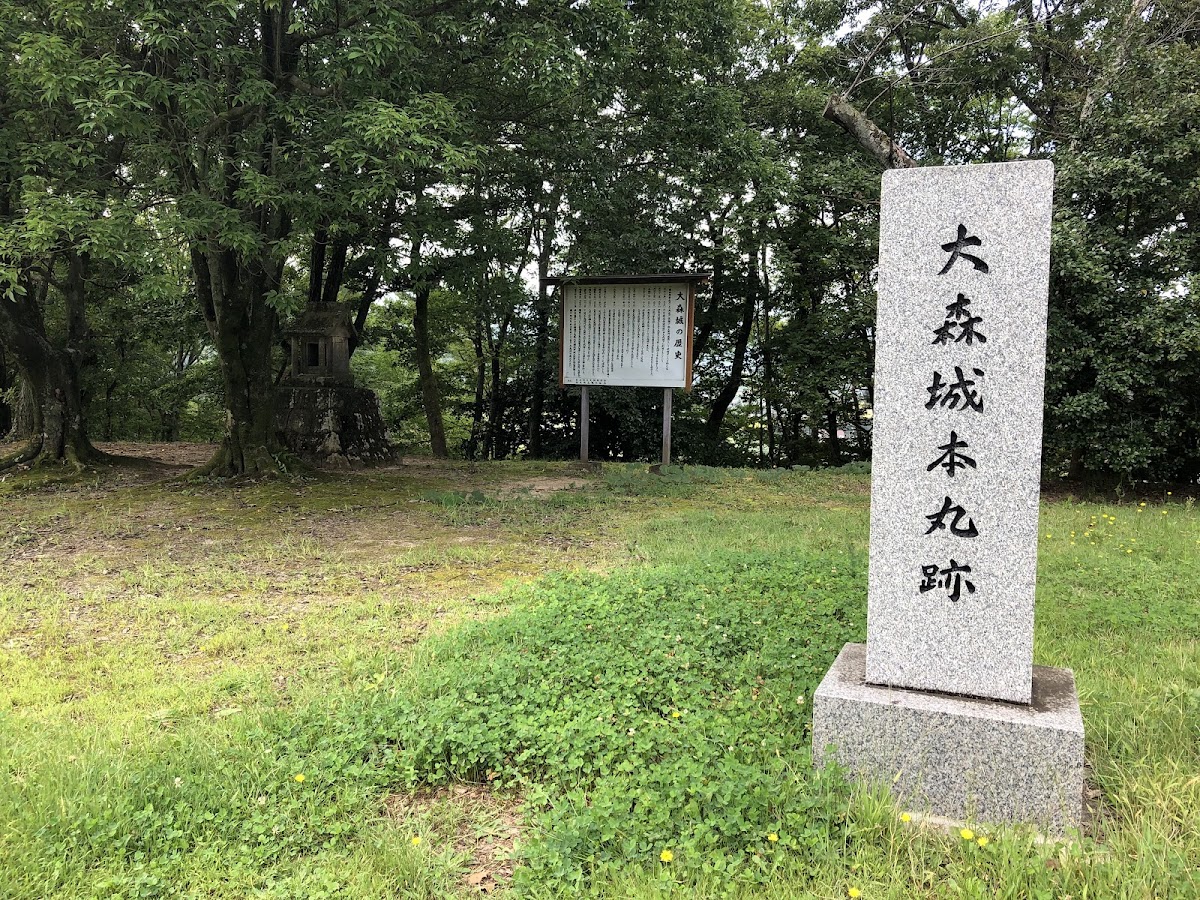
Located at the highest point of the hill, this is the central bailey of the castle. Currently, the area is leveled, and traces of earthworks remain around it. From here, one can see a panoramic view of the Fukushima Basin, indicating its strategically important position as a lookout point.
Second and Third Baileys
These are groups of baileys arranged around the main bailey, forming a defensive line protecting it. Each bailey is demarcated by earthworks and dry moats, preventing enemy intrusion.
Dry Moats and Earthworks
Dry moats and earthworks played a crucial role as defensive structures for Omori Castle. The remains of the dry moats and earthworks between the baileys are still well-preserved today, providing valuable information for understanding the structure of mountain castles during the Sengoku period.
Tiger’s Mouth (Entrance)
The tiger’s mouth, the entrance to the castle, had a complex structure to prevent enemy intrusion. By incorporating winding passages and spaces called masugata (square enclosures), defensive capabilities were enhanced.
Current Status as Omori Castle Mountain Park
Currently, the Omori Castle ruins have been developed as “Omori Castle Mountain Park,” serving as a place of relaxation for local residents. Walking paths have been constructed within the park, allowing visitors to easily stroll through the castle ruins.
Famous Cherry Blossom Spot
Omori Castle Mountain Park is known as one of Fukushima City’s leading cherry blossom viewing spots. In spring, approximately 300 Somei Yoshino cherry trees bloom, attracting many visitors. The rows of cherry trees covering the hillside are breathtaking, and enjoying the blossoms while overlooking Fukushima city is a special experience.
Observation Spot
From the main enclosure ruins, you can enjoy a panoramic view of the Fukushima Basin, the Azuma mountain range, and mountains such as Mount Adatara. On clear days, you can even see Mount Bandai in the distance, making it an excellent viewpoint.
Parking and Facilities
The park has a free parking lot, making it easily accessible by car. Basic facilities such as restrooms are also available, making it a safe and convenient place for families to visit.
Remains
Many remains still exist at Omori Castle, conveying the appearance of a mountain castle from the Sengoku period.
Enclosures
Several enclosures are arranged in a stepped pattern around the main enclosure. The flat surfaces of each enclosure are still clearly visible, allowing us to understand the castle’s structure at the time. The defensive design, utilizing the elevation differences between the enclosures, speaks to the high level of castle-building technology of the Sengoku period.
Earthworks
Traces of earthworks remain around the main enclosure and each of the baileys. The earthworks around the main enclosure, in particular, are relatively well-preserved, with mounds of earth approximately 1-2 meters high visible. These earthworks served not only to prevent enemy intrusion but also to protect the buildings within the baileys.
Dry Moats
Dry moats separating the baileys were an important defensive feature of Omori Castle. Several dry moats, several meters deep, can still be seen today, with the moat separating the main enclosure and the second bailey being particularly clearly preserved. These dry moats hindered enemy advances and restricted movement between baileys.
Steep Slopes
Steep slopes, where the edges of the baileys are cut vertically, can also be seen in various places. These steep slopes were defensive structures designed to make climbing difficult for the enemy, and were created by artificially modifying natural slopes. They remain as steep slopes today, demonstrating the high level of defensive awareness at the time.
Vertical Moats
Traces of vertical moats dug vertically into the slope have also been confirmed. These moats effectively restricted the movement of enemies climbing the slope and made lateral movement difficult.
Archaeological Materials
Various archaeological materials have been discovered at the Omori Castle site.
Excavated Artifacts
Excavation and surface collection have yielded fragments of pottery, roof tiles, and iron products. These artifacts primarily date from the 16th to the first half of the 17th century, coinciding with the period when Omori Castle was in use.
In particular, the pottery includes Seto-Mino style porcelain and Chinese celadon and white porcelain, providing important information about the castle lord’s economic power and trade relations.
Maps and Historical Documents
Several maps and historical documents related to Omori Castle remain. These materials provide insights into the castle’s structure, successive lords, and the appearance of the castle town. Maps created in the early Edo period, in particular, are valuable historical documents that convey the appearance of Omori Castle just before its abandonment.
Castle Town
A castle town formed at the foot of Omori Castle. Some traces of the town’s layout remain in the present-day Omori district of Fukushima City.
Town Structure
The castle town was divided into a merchant district where merchants and artisans lived, and a samurai district where samurai resided, with roads radiating from the center of Omori Castle. Merchant houses lined the main roads, and the area also functioned as a key transportation hub connecting the castle to the surrounding region.
Temples and Shrines
Several temples and shrines were built in the castle town. These served as centers of faith as well as defensive structures. Several temples and shrines from that time still remain in the Omori district today, conveying the atmosphere of the castle town.
Surrounding Medieval Historical Sites
Numerous historical sites from the medieval period to the Sengoku period remain around Omori Castle.
Fukushima Castle
A flatland castle located in the center of Fukushima City, built by Kimura Yoshikiyo, a retainer of Gamo Ujisato. It had close ties to Kimura Shigetsugu of Omori Castle and functioned as a central castle in Shinobu District. Currently, its remains are located around the Fukushima Prefectural Government building.
Koori Nishiyama Castle
One of the Date clan’s strongholds, it served as the residence of Date Tanemune and Harumune. It was the former residence of Date Harumune, who built Omori Castle, and is a historical site with close ties to Omori Castle. Located in Koori Town, its remains are still well-preserved.
Hachichome Castle
A medieval castle located in the Hachichome district of Fukushima City. Like Omori Castle, it was one of the important strongholds of Shinobu District and was under the control of the Date clan. Although the area is now being developed into residential land, some remains still exist.
Nihonmatsu Castle
A famous castle located in Nihonmatsu City, known as the residence of the Hatakeyama clan. Located approximately 20 kilometers southwest of Omori Castle, and situated near the border between the Date and Hatakeyama clans, Omori Castle played a crucial role in the tense relationship between the two forces.
Access
Here’s how to access Omori Castle Park.
Public Transportation
By JR
- Get off at Minami-Fukushima Station on the JR Tohoku Main Line, then walk west for about 40 minutes (approx. 2 km).
- From Fukushima Station on the JR Line, take the Fukushima Kotsu bus bound for Hirata, get off at the Omori Honmachi bus stop, then walk for about 15 minutes.
By Bus
- From the east exit of Fukushima Station, take the Fukushima Kotsu bus bound for Hirata or Hobara.
- After getting off at the Omori Honmachi bus stop, follow the signs and walk for about 15 minutes.
- Buses run approximately 1-2 times per hour.
By Car
By Expressway
- Approximately 5 minutes (approx. 2 km) from Fukushima Minami IC on the Tohoku Expressway.
- Approximately 20 minutes (approx. 8 km) from Fukushima Iizaka IC on the Tohoku Expressway.
By Local Road
- Approximately 10 minutes via the prefectural road from National Route 4.
- Approximately 15 minutes from Fukushima city center.
Parking Information
- Omori Shiroyama Park Parking: Free, approximately 30 spaces available
- During cherry blossom season (mid-to-late April), congestion is expected, so early arrival is recommended.
Location Details
Address: 960-1101 Honmaru, Omori, Fukushima City, Fukushima Prefecture
Inquiries: Fukushima City Tourism and Convention Promotion Office (Tel: 024-525-3722)
Points to Note When Visiting
- Free to Visit: As it is a park, you can visit freely year-round.
- Visiting Hours: Visiting during daylight hours is recommended.
- Estimated Time Required: Approximately 1-2 hours for a thorough visit.
- Attire: While the walking paths are well-maintained, there are some steep slopes, so comfortable walking shoes are recommended.
- Best Season: While the cherry blossom season (mid-to-late April) is the most popular time to visit, you can also enjoy beautiful scenery in May with its fresh greenery and in November with its autumn foliage.
References
For those who want to learn more about Omori Castle, here are some major references.
Books
- “Fukushima City History,” Fukushima City History Compilation Committee
- “Comprehensive Survey of Japanese Castles,” Vol. 3, Shin Jinbutsu Oraisha
- “Medieval Castle Sites in Fukushima Prefecture,” Fukushima Prefectural Board of Education
- “The Date Clan and the Sengoku War,” Yoshikawa Kobunkan
- “Research on the Date Clan, a Sengoku Daimyo,” Koshi Shoin
Research Reports
- “Omori Castle Site Excavation Survey Report,” Fukushima City Board of Education
- “Fukushima Prefecture Medieval Castle Site Distribution Survey Report,” Fukushima Prefectural Board of Education
Websites
- Fukushima City Official Homepage (Tourism Information)
- Agency for Cultural Affairs National Designated Cultural Properties Database
- Various Castle Research Sites
Summary
Omori Castle is a mountain castle that played a significant role during the Sengoku period as an important base for the Date clan. Built on an isolated hill 147 meters above sea level with a relative height of 60 meters, Omori Castle served as a strategic point in the southern part of Shinobu County. Famous generals such as Date Sanemoto and Date Shigezane served as its lords, and it was considered important as a frontline against the Ashina clan of Aizu and the Hatakeyama clan of Nihonmatsu.
Even after being abandoned in 1664, the castle ruins were well preserved and are now maintained as Omori Castle Park. The remains of the baileys, earthworks, and dry moats remain clearly visible, making it a valuable historical site for understanding the structure of mountain castles from the Sengoku period.
Especially during the spring cherry blossom season, it is a popular spot for many people to enjoy cherry blossoms, and it continues to be cherished by the community as an attractive place where history and nature harmonize. When visiting Fukushima City, why not visit the Omori Castle ruins and enjoy the atmosphere of the Sengoku period and its beautiful scenery?