Moji Castle (Fukuoka Prefecture) Complete Guide: History and Highlights of a Strategic Fortress Overlooking the Kanmon Strait
What is Moji Castle?
Moji Castle (Mojijō) was a Japanese mountain castle that once existed in Kojōyama, Moji, Kitakyushu City, Fukuoka Prefecture (formerly Moji, Kikuchi District, Buzen Province). Built on the summit of Kojōyama, 175 meters above sea level, overlooking the narrowest part of the Kanmon Strait, this castle played an extremely important role as a transportation hub connecting Kyushu and Honshu, and as a strategic defensive base.
Also known as Mojisekizan Castle, Mojigasekiyama Castle, and Kamejō, its strategic location made it a historical fortress that served as the stage for numerous battles from the Genpei War at the end of the Heian period through the Sengoku period and into modern times. Currently, the castle ruins are maintained as part of Mekari Park, a tourist spot where visitors can enjoy spectacular views of the Kanmon Strait.
Location and Strategic Importance of Moji Castle
A Fortress Controlling the Kanmon Strait
Moji Castle was built on Kojōyama Mountain, a prime location overlooking the narrowest point of the Kanmon Strait. This strait, a waterway only a few hundred meters wide separating Honshu and Kyushu, has been known as a crucial point for maritime traffic since ancient times. From Moji Castle, one could see all the way to Nagato Province (present-day Shimonoseki City, Yamaguchi Prefecture) on the opposite shore, making it possible to monitor and control ships passing through the strait.
This geographical advantage is the main reason why Moji Castle was repeatedly fought over. Whoever controlled the entrance to Kyushu could hold military and economic superiority over the entire western region.
Value as a Transportation Hub
Moji has been called “Kanmon” since ancient times, serving as a gateway to Kyushu by both land and sea. A checkpoint was already established during the Heian period to manage the movement of people and goods. This strategic importance in transportation remained unchanged throughout the medieval and early modern periods, and Moji Castle continued to function as its military base.
History of Moji Castle
Late Heian Period: Construction by Taira no Tomomori
The origins of Moji Castle are believed to date back to 1184 or 1185, when Taira no Tomomori had it built in preparation for battle against the Minamoto clan. With the Battle of Dan-no-ura imminent, the Taira clan constructed the castle on Kojōyama as a defensive base on the Kyushu side.
Taira no Tomomori was the fourth son of Taira no Kiyomori and a well-known warrior of the Taira clan. In the final stages of the Genpei War, securing control of the Kanmon Strait was a crucial issue that determined the fate of the Taira clan. However, the Taira clan was annihilated in the Battle of Dan-no-ura on March 24, 1185, and it is believed that Moji Castle also ended its role.
Sengoku Period: The Conflicts of the Ouchi, Otomo, and Mori Clans
With the arrival of the Sengoku period (Warring States period), Moji Castle once again reappeared on the historical stage. During this period, the northern Kyushu region became the front line where the spheres of influence of the three major powers—the Ouchi, Otomo, and Mori clans—intersected.
Ouchi Clan Rule
From the 15th to the first half of the 16th century, the Ouchi clan, based in Suo and Nagato provinces, controlled northern Buzen, including Moji. The Ouchi clan considered Moji Castle a crucial bridgehead for their expansion into Kyushu and appointed their vassals as castle lords.
Clashes Between the Otomo and Mori Clans: The Battle of Moji Castle
The “Battle of Moji Castle,” which took place in 1559 and 1561, is the most famous battle in the history of Moji Castle.
After the fall of the Ouchi clan, Otomo Yoshishige (later Otomo Sorin), based in Bungo (present-day Oita Prefecture), and Mori Motonari of Aki (present-day Hiroshima Prefecture) fiercely clashed over hegemony in northern Kyushu. Moji Castle became the front line of this conflict.
In the First Battle of Moji Castle in 1559, the Mori forces captured Moji Castle, but thanks to the efforts of Otomo retainers such as Tachibana Dōsetsu and Usuki Akimoto, the Otomo forces succeeded in recapturing it.
In the Second Battle of Moji Castle in 1561, Mori Motonari himself led a large army to besiege Moji Castle. Otomo Yoshishige also sent reinforcements from Bungo, and a fierce battle ensued. Ultimately, a peace agreement was reached through the mediation of Shogun Ashikaga Yoshiteru, and Moji Castle remained in the hands of the Otomo clan.
In these battles, the names of Kii Michisuke and others are recorded as lords and commanders of Moji Castle.
Early Modern Period: Abandonment and Modern Fortification
In the Edo period, it is believed that Moji Castle was abandoned due to the “One Castle Per Province” decree of 1615. Buzen Province became the territory of the Kokura Domain (Hosokawa clan, later Ogasawara clan), and Moji came under the control of Kokura Castle.
In the Meiji era, the Moji Castle ruins once again attracted military attention. After the First Sino-Japanese War, an army artillery battery was installed on the summit of Kojōyama to strengthen the defense of the Kanmon Strait. This modern fortification resulted in the destruction or alteration of many of the remains of the medieval Moji Castle.
Structure and Remains of Moji Castle
Layout as a Mountain Castle
Moji Castle was a typical mountain castle, with the main keep located on the summit of Kojōyama, and baileys (kuruwa) arranged on the ridges and slopes. Located at an altitude of 175 meters, the castle was difficult to attack and also offered an excellent observation point overlooking the entire Kanmon Strait.
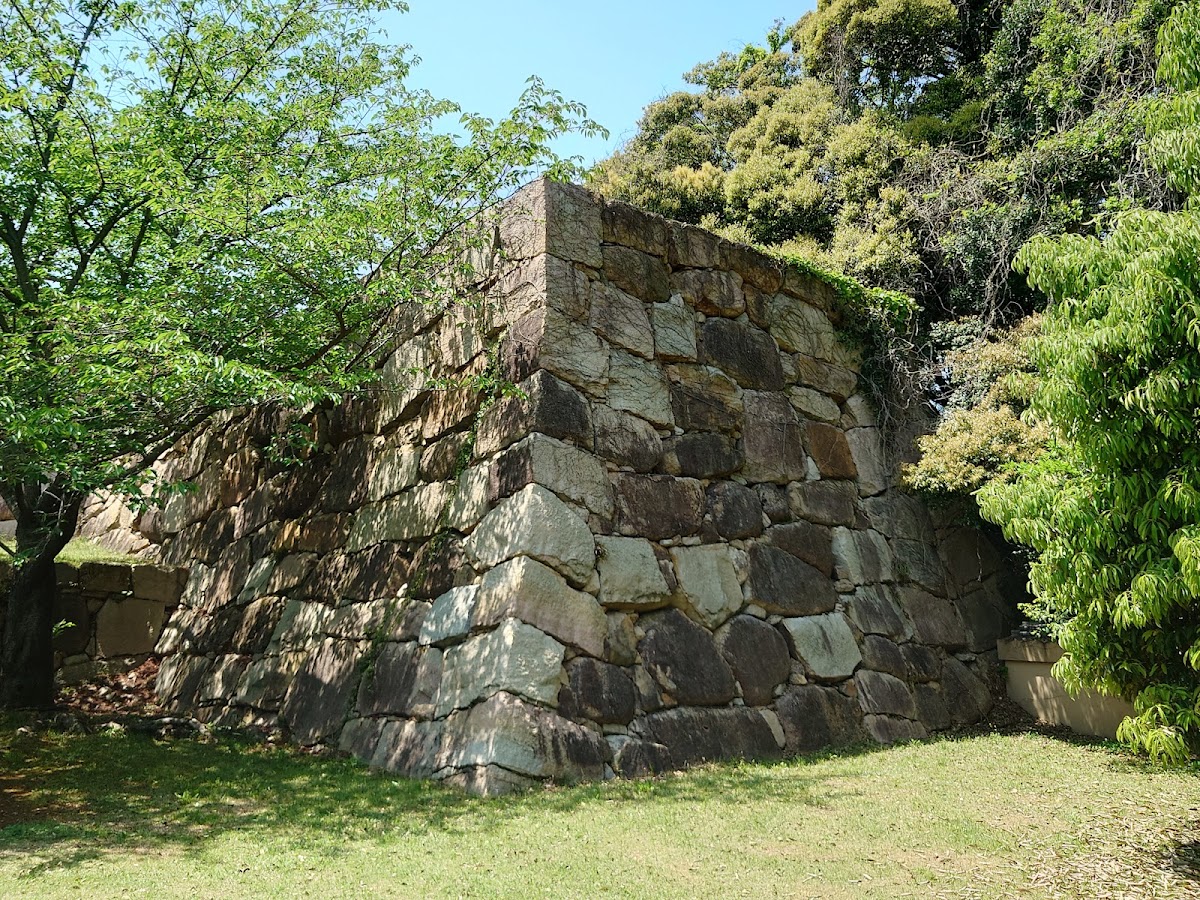
It is believed that Moji Castle during the Sengoku period was a full-fledged castle constructed with stone walls. Records from that time mention the existence of stone walls and moats, suggesting it was a castle of considerable size, not merely a fort.
Existing Remains
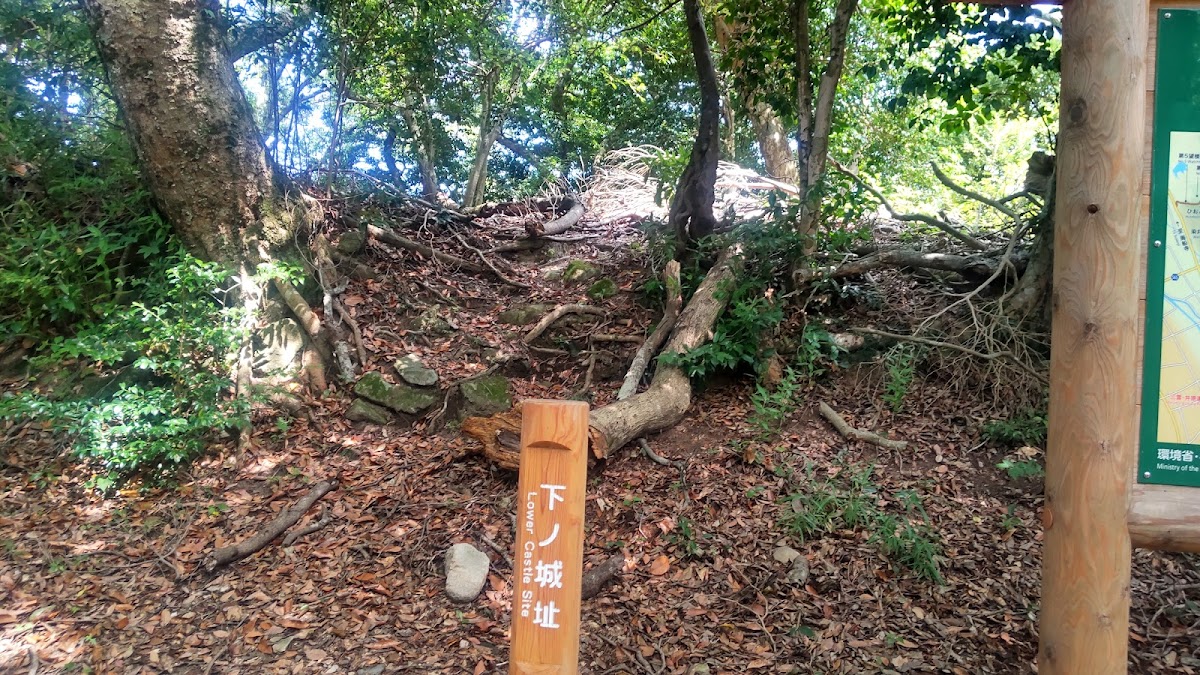
Unfortunately, the construction of artillery batteries during the Meiji era resulted in the loss of most of Moji Castle’s medieval remains. Currently, the foundations (concrete foundations) of the artillery batteries remain on the site of the main keep, and these are the most prominent structures.
However, upon careful observation, the following remains can be identified:
- Part of a stone wall: Fragments of what appear to be medieval stone walls remain near the summit and on parts of the slopes.
- Remains of a bailey: Traces of former baileys can be seen as elevation changes in the terrain.
- Remains of a moat: The topography of a moat blocking the ridge can be seen in some areas.
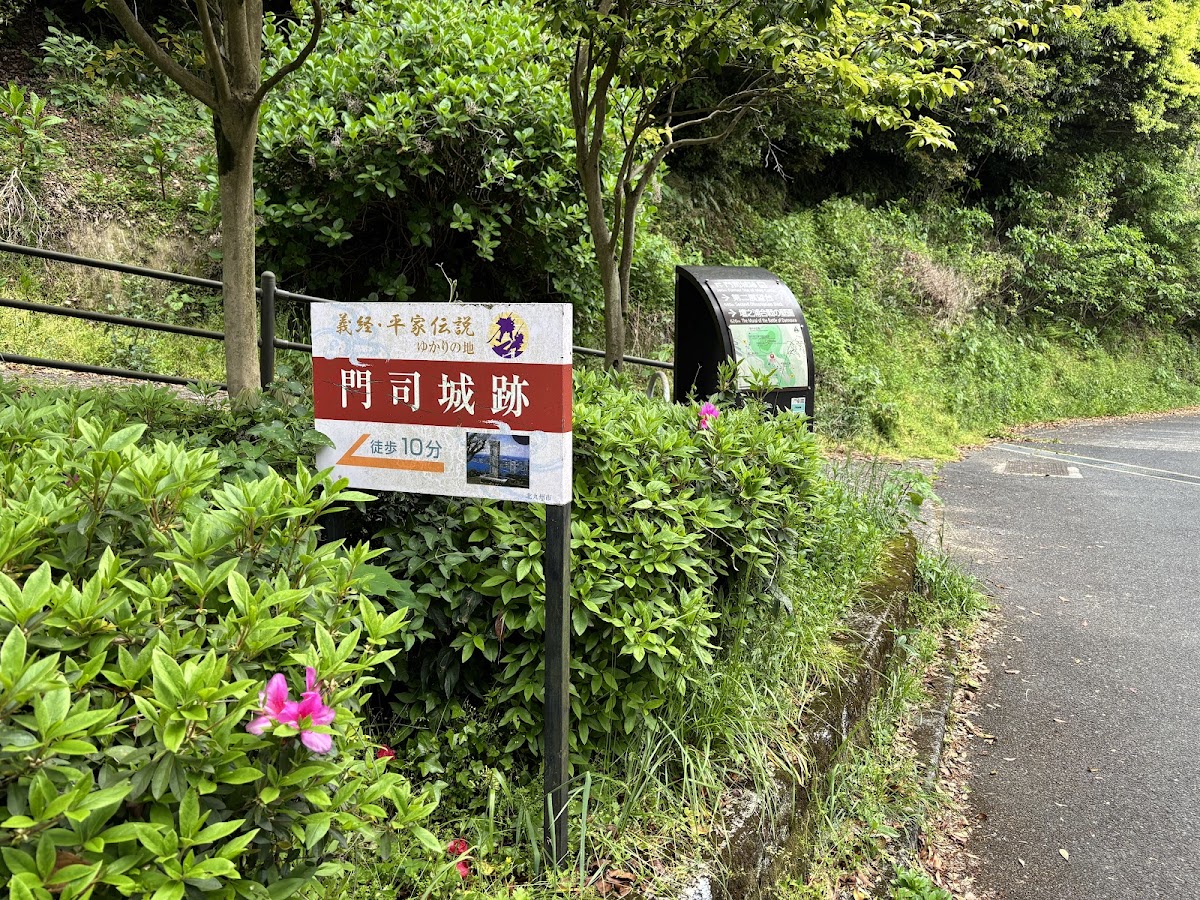
- Stone monument: A stone monument marking the site of Moji Castle has been erected, indicating its historical location.
Reconstructed Structures
Moji Castle does not have any reconstructed structures such as a keep. The castle site has been developed into a park with walking paths and observation facilities, but no historical buildings have been restored.
Current Status as Mekari Park
Park Development
The area around Kojōyama, including the Moji Castle site, has been developed into Mekari Park. Walking paths have been developed within the park, making it relatively easy to access the Moji Castle site. Cherry blossoms bloom in spring, and azaleas in early summer, allowing visitors to enjoy the changing seasons. ### Scenic Spot
The view from the summit of Kojōyama Mountain is breathtaking. You can see the entire Kanmon Strait, with a 360-degree panoramic view of Shimonoseki city on the opposite shore, the Kanmon Bridge, and passing ships. The sunset and nighttime views are particularly beautiful, making it a popular spot for both tourists and locals.
On a clear day, you can see the vast expanse of sea from Hibiki-nada to Suō-nada, allowing you to imagine what the former castle lords saw from this very spot.
Access and Visiting Information
Basic Information
- Location: Kojōyama, Moji, Moji-ku, Kitakyushu City, Fukuoka Prefecture
- Former Province: Kikuchi District, Buzen Province
- Castle Structure: Mountain Castle
- Year of Construction: Genryaku 1-2 (1184-1185)
- Builder: Taira no Tomomori
- Year of Abandonment: Around Genna 1 (1615)
- Main Lords: Taira no Tomomori, retainers of the Ōuchi clan, retainers of the Ōtomo clan, retainers of the Mōri clan
- Remains: Stone walls (partial), remains of baileys, remains of moats, remains of gun emplacements (Meiji period)
- Designated Cultural Property: None
Access Method
Public Transportation
- Approximately 15 minutes by Nishitetsu Bus bound for “Wakamekari Park” from JR Mojiko Station, then approximately 20 minutes on foot from the last stop.
- Approximately 10 minutes by taxi from JR Mojiko Station
By Car
- Approximately 5 minutes from Mojiko IC on the Kanmon Expressway
- Parking available at Wakamekari Park (free)
Notes on Visiting the Castle
- As it is a mountain castle, you will need to climb slopes and stairs to reach the summit. We recommend wearing comfortable shoes.
- The sun is strong in summer, so please bring a hat and drinking water.
- While the remains are limited, you can enjoy the view of the Kanmon Strait and the historical atmosphere.
- Visiting is free, and there is no entrance fee.
Nearby Attractions
Wakamekari Shrine
An ancient shrine located within walking distance of the Mojiko Castle ruins, facing the Kanmon Strait. The “Wakamekari Ritual,” held annually in the early morning of the first day of the lunar new year, is known as a rare ritual in which Shinto priests enter the sea to harvest wakame seaweed.
Kanmon Tunnel Pedestrian Tunnel
A pedestrian tunnel that allows you to walk across the seabed from the Mojiko side to the Shimonoseki side. The Kanmon Strait is approximately 780 meters long and can be crossed between Honshu and Kyushu in about 15 minutes on foot. It’s a unique spot where you can experience the strait, once watched over by the lords of Moji Castle, from underwater.
Norfolk Square
A square located in the Mojiko Retro District, offering a panoramic view of the Kanmon Strait. Mojiko flourished as an international trading port from the Meiji to the early Showa period, and many retro buildings remain.
Mojiko Retro District
A tourist area located about 10 minutes by car from Moji Castle. Historical buildings such as the former Moji Customs House, the former Moji Mitsui Club, and the former Osaka Shosen Kaisha have been preserved and repurposed, operating as restaurants and museums.
The Significance of Visiting Moji Castle
Experiencing Historical Romance
While the remains of Moji Castle are limited, its historical importance is immeasurable. Standing in this place—a castle built by Taira no Tomomori in preparation for the Battle of Dan-no-ura, the front line where Otomo Sorin and Mori Motonari clashed, and a key defensive stronghold of modern Japan—allows you to experience firsthand the multifaceted nature of Japanese history.
Learning a Geopolitical Perspective
Standing on the summit of Kojōyama Mountain and overlooking the Kanmon Strait, you can truly understand why this area repeatedly became the stage for battles. It serves as an excellent learning tool for developing a geopolitical perspective, exploring the relationship between topography and history, and the relationship between transportation routes and power.
A Fusion of Nature and History
The current Moji Castle ruins, now developed as Mekari Park, offer a place to enjoy both historical exploration and nature walks simultaneously. The spectacular views of the Kanmon Strait, seasonal flowers, and the sounds of wild birds—visiting the castle ruins will be a rich experience that goes beyond mere historical site sightseeing.
Current Status and Challenges of Moji Castle Research
Limitations of Historical Sources
Primary sources concerning Moji Castle are limited, and many details remain unclear, particularly regarding its construction in the late Heian period and the early medieval period. While fragmentary records of battles at Moji Castle during the Sengoku period exist in the records of the Otomo and Mori clans, much of the information regarding the castle’s specific structure and scale relies on speculation.
The Need for Archaeological Investigation
Although many medieval remains were lost due to alterations during the Meiji period, systematic excavation surveys have not been sufficiently conducted. Further archaeological investigations could potentially reveal a clearer picture of Moji Castle.
Balancing Preservation and Utilization
Currently, the Moji Castle site is a popular park for citizens, but further efforts are needed from the perspective of raising awareness of its historical value and preserving the remains. Measures to enhance its value as a cultural property, such as improving information boards, protecting the remains, and holding history lectures, are expected.
Summary: The Historical Significance of Moji Castle
Moji Castle, a mountain castle located at the crucial crossroads of the Japanese archipelago—the Kanmon Strait—consistently maintained its strategic importance from the late Heian period to modern times. Its transformation—from its construction by Taira no Tomomori, the struggles for control by various warlords, and its modernization as a fortress—symbolizes the relationship between Kyushu and Honshu in Japanese history, and the geopolitical value of the strait.
While the castle remains are limited today, visiting the old castle hill, now developed as Mekari Park, allows you to experience both the weight of history and the magnificent view of the Kanmon Strait. Standing on the Moji Castle ruins and gazing upon the same scenery as its former lords, we can enjoy a dialogue with history that transcends time and space.
When visiting Kitakyushu City, be sure to visit the Moji Castle ruins and reflect on the profound history this land has witnessed. Old castle hill, which has watched over the Kanmon Strait for so long, continues to tell its story quietly, yet eloquently.