Yomogita Castle (Aomori Prefecture) Complete Guide: A Thorough Explanation of History, Remains, and Access
What is Yomogita Castle?
Yomogita Castle is a medieval castle site located in Shiogoe, Yomogita, Yomogita Village, Higashitsugaru District, Aomori Prefecture. It is an important historical site in the history of the Tsugaru region and functioned as a strategic point from the Kamakura period to the Sengoku period.
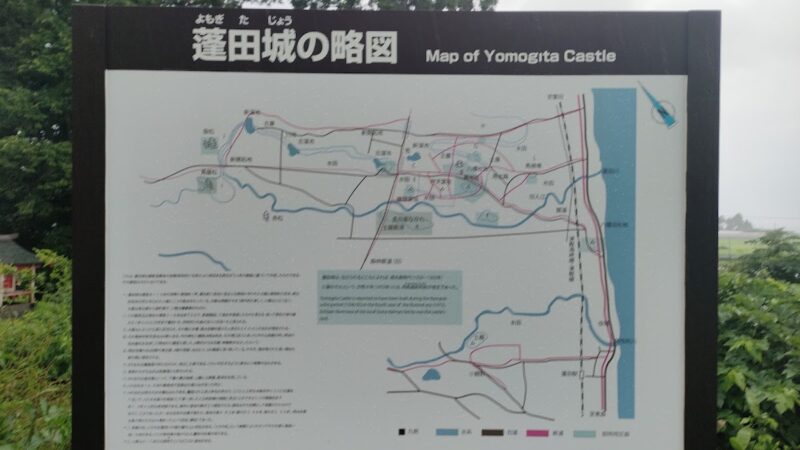
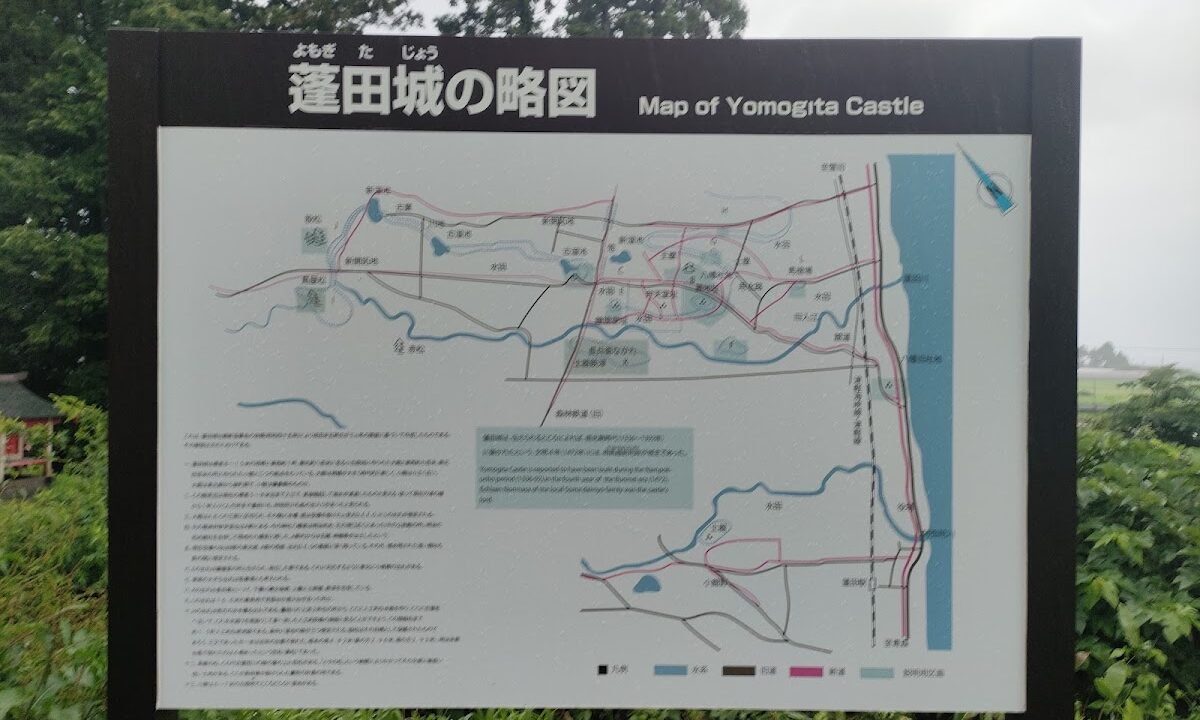
The castle is broadly divided into two areas: the “Odate” (large castle) and the “Kodate” (small castle), which are thought to have been built at different times. Currently, Yomogita Hachimangu Shrine stands on the site of the Odate, creating a sacred space covered by a lush forest.
Location and Geographical Characteristics of the Castle
Yomogita Castle is a flatland castle located in the northern part of the Tsugaru Plain, on low ground facing Mutsu Bay. Its proximity to the sea made it an important hub for water transport. Furthermore, from the Nanboku-cho period to the Sengoku period, its location on the front lines of the power struggle between the Ando, Nanbu, and Tsugaru clans in the Tsugaru region made it a strategically important base.
History of Yomogita Castle
Kamakura Period: Construction and Early History
There are various theories regarding the construction date of Yomogita Castle, but the most widely accepted theory is that it was built in 1238 (Katei 4) by Shiogata Michisada. The Shiogata clan was a branch of the Ando clan and built up power as a powerful local family that ruled this region.
There are also records indicating that Shiogata Shiro Michisada, the younger brother of Ando Morisue, resided there, indicating that it functioned as one of the important bases in the Ando clan’s control of Tsugaru. From the Kamakura period to the Nanboku-cho period, this region was also important as a trade route with Ezo (Hokkaido), and Yomogita Castle played a role as a transit point.
From the Nanboku-cho Period to the Muromachi Period: As a Residence of a Local Power
During the Nanboku-cho period, it is said that Yomogita Castle functioned as a residence of a local power. During this time, Yomogita Castle served as one of the power bases of the Ando clan in the Tsugaru region, and a center of control for the surrounding area.
In the Muromachi period, the Nanbu clan’s influence began to extend into the Tsugaru region. According to historical documents, after becoming part of the Nanbu clan’s territory, Okuse Kensuke became the lord of the castle, and the Okuse clan ruled the castle for several generations. It is believed that the Okuse clan, as vassals of the Nanbu clan, were entrusted with the governance of this region.
The Sengoku Period: The Era of the Yomogita Clan
During the Bunmei era (1469-1487), Soma Sadenshiro Norimasa became the lord of the castle under the protection of the Ando clan, and adopted the name Yomogita Echizen-no-kami Norimasa. This is considered the beginning of the Yomogita clan. It is thought that the Yomogita clan demonstrated their legitimacy in establishing themselves in the region and ruling it by adopting the place name as their surname.
During the late Sengoku period, Oura Tamenobu (later Tsugaru Tamenobu) expanded his power in the Tsugaru region. In 1585, Tamenobu aimed to unify Tsugaru and successively captured surrounding castles. It is said that when Aburakawa Castle fell that year, Yomogita Echizen-no-kami, the lord of Yomogita Castle, fled to Nanbu territory without fighting after receiving the news.
Abandonment and Aftermath
Thus, Yomogita Castle came under the control of Tsugaru Tamenobu. However, after Tamenobu’s unification of Tsugaru, it is believed to have lost its military importance and was abandoned. During the Edo period, it came under the control of the Hirosaki Domain, and the castle ruins were used as farmland and shrine grounds.
Castle Structure and Remains
Odate
Odate was the main part of Yomogita Castle and is now the grounds of Yomogita Hachimangu Shrine. Covered in a dense forest, it exudes a sacred atmosphere.
Main Remains:
- Earthworks: Clear earthworks remain around the temple grounds, confirming their function as a defensive structure of the castle. The height varies depending on the location, but the best-preserved sections retain a height of approximately 2 meters.
- Dry Moat (Horizontal Moat): Traces of a dry moat can be seen outside the earthworks. Although currently shallow due to burial and erosion, it is clear that it once functioned as a defensive structure.
- Enclosure (Kuruwa): Traces of a flat enclosure remain, showing evidence of buildings. While archaeological excavations have been limited, medieval earthenware has been unearthed.
Kodate
Kodate is located approximately 1 kilometer south of Odate. Known as the Kodate site, it is suggested that it may have been built at a different time than Odate.
Artifacts from the Jomon period have also been unearthed at the Kodate site, indicating that this area was a place of human habitation from ancient times. Medieval remains include the remains of post-hole buildings and pits, suggesting that the site functioned as a residence.
Earthen Bridge and Entrance
Traces of an entrance to the castle, known as a “koguchi,” have been partially confirmed. Topographical features suggesting the remains of an earthen bridge also remain, indicating a structure where one would cross a moat to enter the castle.
Archaeological Excavations and Excavated Artifacts
Several archaeological excavations have been conducted at the Yomogita Castle site since the Showa period. These investigations have deepened our understanding of the castle’s structure and period of use.
Main Excavated Artifacts
- Haji Ware: Numerous medieval Haji ware pieces have been excavated, confirming their use from the 13th to the 16th centuries.
- Porcelain: Fragments of Chinese celadon and white porcelain have also been discovered, providing important evidence of trade relations at the time.
- Iron Products: Iron products such as nails and knives have also been excavated, providing clues to the building’s structure and daily life.
- Jomon Pottery: Jomon period pottery has also been unearthed at the Kodate site, telling the story of this region’s long history.
Highlights of Yomogita Castle
Yomogita Hachimangu Shrine
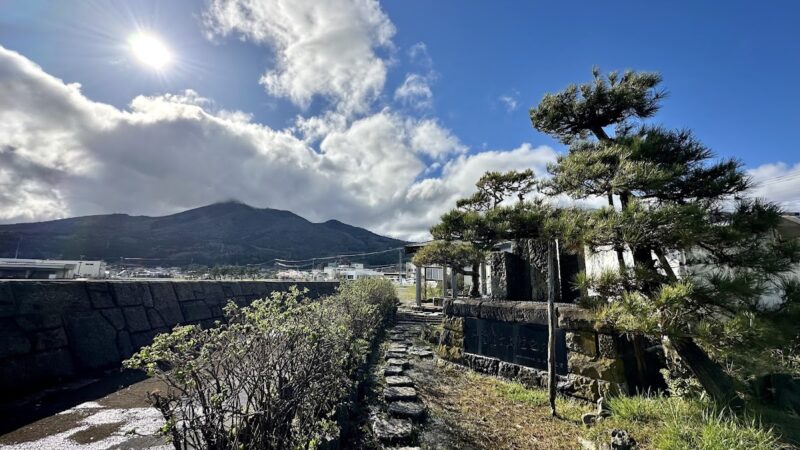
Yomogita Hachimangu Shrine, located on the site of the Odate ruins, remains a cherished center of local faith. The lush forest within the shrine grounds conveys the atmosphere of the medieval castle ruins, evoking a sense of historical romance for visitors.
Walking around the shrine, you can see traces of earthworks and moats, giving you a real sense that this was once a military facility. The autumn foliage season is particularly beautiful and an ideal time for a historical stroll.
Observation Points for the Ruins
When visiting the castle ruins, paying attention to the following points will help you understand the history of Yomogita Castle more deeply.
- Height and Shape of Earthworks: Observe the ingenuity of the defensive structure.
- Moat Arrangement: Imagine how the moats protecting the castle were arranged. 3. Size of the Enclosure: The layout of the buildings can be inferred from the flat remains of the enclosure.
- Utilization of Topography: Consider how the castle was built utilizing the natural terrain.
Access and Visiting Information
Location
Address: Shiogoe, Yomogita, Yomogita Village, Higashitsugaru District, Aomori Prefecture (Yomogita Hachimangu Shrine)
Transportation Access
Access by Car:
- Approximately 30 minutes from central Aomori City via National Route 280
- Approximately 40 minutes from Aomori IC on the Tohoku Expressway
- Parking: Limited parking space available at Yomogita Hachimangu Shrine
Public Transportation:
- Take a local bus from JR Aomori Station (advance confirmation recommended as the number of buses is limited)
- Taxis are also available from Yomogita Village Office
Points to Note When Visiting
- Visiting Hours: As it is within the shrine grounds, daytime visits are recommended.
- Admission Fee: Free
- Estimated Time Required: Approximately 30 minutes to 1 hour for a thorough visit
- Attire: Comfortable shoes and clothing are recommended.
- Notes: Please respect the shrine grounds and observe quietly.
Nearby Tourist Attractions
When visiting Yomogita Castle Ruins, we recommend also visiting nearby historical sites and tourist attractions.
- Kodate Ruins: Part of Yomogita Castle, located approximately 1 kilometer south of Odate
- Yomogita Village Office: Information about the village’s history and culture can be obtained here
- Mutsu Bay: Enjoy the beautiful coastline and fresh seafood
- Historical Sites in Aomori City: Consider visiting other castle ruins in the Tsugaru region, such as Namioka Castle Ruins.
History of Yomogita Castle and the Tsugaru Region
The Ando Clan and Tsugaru Rule
The existence of the Ando clan is essential to understanding the history of Yomogita Castle. The Ando clan was a powerful local family that ruled the Tsugaru region during the medieval period, accumulating wealth through trade with Ezo (present-day Hokkaido). Yomogita Castle served as one of the Ando clan’s important bases in their control of Tsugaru.
Expansion of the Nanbu Clan
During the Muromachi period, the Nanbu clan expanded its influence into the Tsugaru region. The Nanbu clan was a prestigious family descended from the Kai Genji clan and possessed vast territories in northern Mutsu Province. Yomogita Castle also came under Nanbu control for a time, with the Okuse clan serving as its lord.
Tsugaru Tamenobu’s Unification Project
At the end of the Sengoku period, Oura Tamenobu (Tsugaru Tamenobu) proceeded with the unification of the Tsugaru region. Although a vassal of the Nanbu clan, Tamenobu became independent and, by 1585, had brought almost the entire Tsugaru region under his control. The surrender of Yomogita Castle was part of this unification project.
Cultural Value of Yomogita Castle
Yomogita Castle ruins hold significant historical and academic value as a typical example of a medieval castle in the Tsugaru region.
Historical Value
- An important historical site that tells the political history of the Tsugaru region from the Kamakura period to the Sengoku period.
- The stage for the rivalry between the three major powers: the Ando, Nanbu, and Tsugaru clans.
- An example showing the transition from a local powerful family’s residence to a Sengoku period castle.
Academic Value
- Research material for castle structures in medieval northern Tohoku.
- Elucidation of the lifestyle, culture, and trade relations of the time based on excavated artifacts.
- A complex site showing long-term land use changes from the Jomon period to the Middle Ages.
Challenges for Preservation and Utilization
Currently, Yomogita Castle ruins are preserved to a certain extent as part of the shrine grounds, but more proactive preservation and utilization measures are needed. Detailed surveying of the remains, development of information boards, and utilization for local history education are future challenges.
History and Culture of Yomogita Village
Yomogita Village is a small village located in Higashitsugaru District, Aomori Prefecture, with a population of approximately 2,500. Facing Mutsu Bay, it is blessed with abundant nature and rich history and culture.
Village History
The name Yomogita has existed since ancient times, and in the Middle Ages, the Yomogita clan ruled the area. During the Edo period, it came under the control of the Hirosaki Domain and developed as a village centered on agriculture and fishing. With the implementation of the town and village system in the Meiji era, Yomogita Village was established, and it remains so to this day.
Culture and Tradition
Yomogita Village has inherited many ancient traditions and cultural events. The festival of Yomogita Hachimangu Shrine is an important annual event in the village and plays a role in strengthening the bonds of the local community.
Significance of Visiting Yomogita Castle
Visiting the ruins of Yomogita Castle is not simply about viewing a historical site, but also an opportunity to deeply understand the history and culture of the Tsugaru region.
As a Place for Historical Learning
Yomogita Castle is a valuable place where you can experience local history that you can’t learn from textbooks. You can learn about the history of the Tsugaru region from the Kamakura period to the Sengoku period through actual ruins.
Deepening Regional Understanding
Understanding medieval history is essential to understanding the origins of present-day Aomori Prefecture and the Tsugaru region. By learning about the history of Yomogita Castle, you can deepen your understanding of the culture and lives of the people in this region.
Experiencing Historical Romance
Walking through the castle ruins, covered in lush forest, allows you to reflect on the era in which medieval samurai lived. Looking at the remains of earthworks and moats, you can enjoy imagining the battles and lives of the time.
Summary
Yomogita Castle is a valuable medieval castle site remaining in Yomogita Village, Aomori Prefecture. Since its construction in 1238, the castle has witnessed the changing of rulers from the Ando clan to the Nanbu clan, the Yomogida clan, and finally the Tsugaru clan, serving as a witness to the history of the Tsugaru region.
Although it now stands quietly within the grounds of the Yomogida Hachimangu Shrine, the remains such as earthworks and moats still convey its former appearance. The castle’s structure, consisting of two sections, Odachi and Kodachi, the unearthed artifacts such as earthenware and ceramics, and the historical fact of its surrender in 1585 all attest to the important role this castle played in the Tsugaru region.
Yomogida Castle Ruins, easily accessible from Aomori City by car in about 30 minutes, offers a quiet and peaceful atmosphere for historical exploration. It is a worthwhile historical site for those interested in the history of the Tsugaru region, medieval castles, or simply those seeking a tranquil historical spot.
The Yomogita Village Office and local history research groups also have materials related to Yomogita Castle, so we recommend contacting them if you would like to learn more. By actually visiting the place that was the stage of history and feeling the atmosphere there, you will gain a deeper understanding and emotion that cannot be obtained from books alone.