History and Highlights of Inakadate Castle (Aomori Prefecture) | From the Residence of the Sentoku Clan to the Holy Land of Rice Paddy Art
What is Inakadate Castle?
Inakadate Castle was a medieval flatland castle located in Inakadate Village, Minamitsugaru District, Aomori Prefecture. Currently, the Inakadate Village Office stands on the castle site, and its building, modeled after a castle keep, has become a tourist attraction. This castle, which once functioned as a strategic point in the Tsugaru region, served as the residence of the Sentoku clan, who ruled the area for approximately 100 years.
In modern times, the “rice paddy art” held around the castle site has become nationally famous, attracting many people as a unique tourist destination where history and culture blend.
Basic Information on Inakadate Castle
Location and Presence
Location: 123-1 Nakatsuji, Inakadate, Inakadate Village, Minamitsugaru District, Aomori Prefecture
Presence: Located in the central part of the Tsugaru Plain, in a low-lying wetland area in the Asaseishi River basin
Access: Approximately 15 minutes on foot from Inakadate Station on the Konan Railway Konan Line, approximately 10 minutes by car from Kuroishi IC on the Tohoku Expressway
Basic Data on the Castle
- Common Name/Alternate Name: Sentoku-kan
- Castle Structure: Flatland Castle (Water Castle)
- Year of Construction: Bunmei era (1469-1486)
- Builder: Sentoku Daisaburo Sadatake (Masazane)
- Main Lords: Sentoku clan (5 generations, approximately 100 years)
- Year of Abandonment: Tensho 13 (1585)
- Remains: Part of an earthen embankment, a large Japanese honey locust tree
- Designated Cultural Property: Village Historic Site
History of Inakadate Castle
Background of Construction and the Rise of the Sentoku Clan
There are several theories regarding the construction of Inakadate Castle. The most plausible theory is that it was built during the Bunmei era (1469-1486) by Sentoku Daisaburo Sadatake (also known as Masazane), the second son of Sentoku Masahisa, lord of Asaseishi Castle. Sadatake ruled the Inakadate area, adopted the name Inakadate Sentoku, and reigned as the ruler of this region.
On the other hand, there is also a theory that some kind of castle existed before that, and it has been suggested that Sadatake may have expanded and improved it. In any case, it is certain that it was established as the base of the Sentoku clan in the latter half of the 15th century.
The Five Generations of the Sentoku Clan’s Rule
Inakadate Castle served as the residence of five generations of the Sentoku clan:
- First Generation – Sentoku Sadatake (Masazane): Builder of the castle, ancestor of the Inakadate Sentoku clan
- Second Generation: Successor to Sadatake and inherited the castle
- Third Generation: Maintained the Sentoku clan’s power
- Fourth Generation: Survived a period of turmoil in the Tsugaru region
- Fifth Generation – Sentoku Kamon Masatake: Last lord of the castle, it fell in 1585 (Tensho 13)
The Sentoku clan used Inakadate Castle as their base for approximately 100 years, governing the region as a powerful local lord in the southern Tsugaru Plain. It is believed that they maintained considerable power, backed by the high agricultural productivity of the Tsugaru Plain.
The Fall of Inakadate Castle and the Downfall of the Sentoku Clan in 1585
The history of Inakadate Castle came to a dramatic end in 1585. Attacked by Oura Tamenobu (later Tsugaru Tamenobu), who aimed to unify Tsugaru, the castle fell during the time of the 5th lord, Sentoku Kamon Masatake.
Oura Tamenobu was advancing the unification of the Tsugaru region from his base at Hirosaki Castle (then Takaoka Castle), and Inakadate Castle was captured in the process. With this fall, the Sentoku clan was destroyed, and the Inakadate area came under the control of the Tsugaru clan.
After its fall, Inakadate Castle was abandoned and lost its function as a fortress. For approximately 400 years thereafter, the castle site continued to be used as farmland and a settlement.
Structure and Characteristics of Inakadate Castle
Characteristics as a Flatland Castle
Inakadate Castle is a typical flatland castle, built in the low-lying wetlands of the Tsugaru Plain. Unlike mountain castles or hill castles, castles built on flat land are generally considered to be at a disadvantage defensively. However, Inakadate Castle possessed a unique defensive system.
Defensive Mechanisms as a Water Castle
The most distinctive feature of Inakadate Castle is its defensive system utilizing the surrounding water. Water facilities known as “hidden water gates” were installed on the north and south sides of the castle.
When these water gates were closed during wartime, the area around the castle became a swamp, functioning as a natural moat that made it difficult for enemies to approach. This can be considered a unique castle-building technique of the region, skillfully utilizing the abundant water resources and low-lying wetland terrain of the Tsugaru Plain.
This water castle characteristic is a clever way to achieve high defensive capabilities despite being a flatland castle, and is a good example of the wisdom of medieval Tsugaru castle architecture.
Scale and Structure of the Castle
While historical records regarding the detailed structure of the castle are limited, it is presumed to have been a square or rectangular castle surrounded by earthen ramparts. A moat surrounded the castle, and in conjunction with the aforementioned sluice gate system, it enhanced its defensive capabilities.
The central area contained the lord’s residence, the mansions of senior retainers, and warehouses, and it is believed that the structure was designed to allow the local people to evacuate in times of emergency. It was a medium-sized flatland castle, and it possessed sufficient functionality as a regional base.
Current Inakadate Castle Site and Remains
Remaining Remains
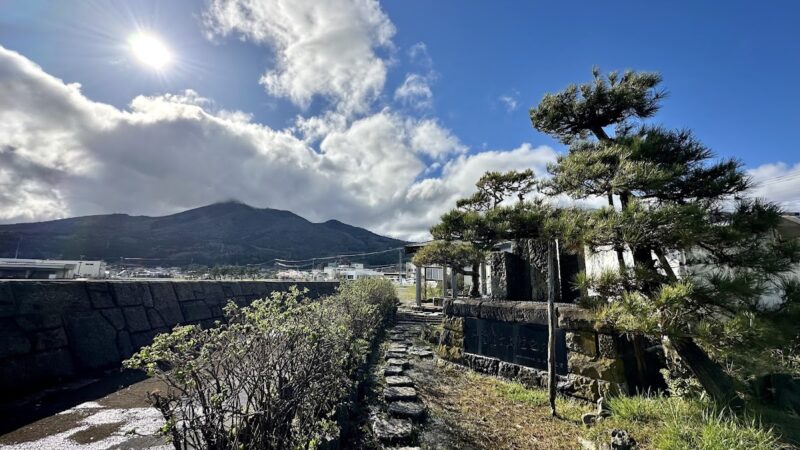
While no original buildings remain at the current Inakadate Castle site, a few remains can be identified.
Earthworks: Traces of earthworks that surrounded part of the castle remain in sections. Although their height is low, they give a glimpse into the former scale of the castle. Markers and information boards are installed on the earthworks, conveying the castle’s history to visitors.
Large Japanese Honey Locust Tree: A large Japanese honey locust tree, estimated to be several hundred years old, stands at the castle site. This tree may have survived since the time of Inakadate Castle, and is cherished locally as a living witness to the castle’s history.
Castle-Style Architecture of Inakadate Village Hall
The Inakadate Village Hall currently stands on the castle site. This unique building was designed to resemble a castle, in remembrance of Lord Sentoku Kamon Masatake, who once ruled this land.
With its castle tower, main gate, and stone wall-like exterior, this building is attracting attention as a rare example of castle-style architecture for a village hall nationwide. An observation deck is located on the 4th floor, and a castle tower observation room is on the 6th floor, serving as a base for viewing the rice paddy art.
This architecture is a prime example of ingenuity in utilizing historical castle ruins in the modern age, and plays a significant role as a tourist resource. It has become so popular that it has even been made into a model kit, becoming a symbol of Inakadate Village.
Stone Monuments and Information Boards
Stone monuments and information boards that tell the history of Inakadate Castle are installed around the castle site. These elements help visitors understand the castle’s history and are also used in local history education.
The marker post reads “Inakadate Castle Ruins,” and the explanatory sign provides detailed information about the castle’s history from its construction to its fall, its structure, and the achievements of the Sentoku clan.
Rice Paddy Art and Inakadate Castle Ruins
Origin and Development of Rice Paddy Art
Inakadate Village is nationally known as the birthplace of “rice paddy art.” This initiative, which began in 1993 as part of a village revitalization project, is unique in that it uses rice plants of different colors to create giant pictures in rice paddies.
Initially using three colors of rice, rice paddy art now uses more than seven colors, producing intricate and highly artistic works. The theme changes every year, and a variety of works are created, including historical figures, movie and anime characters, and reproductions of famous paintings.
Inakadate Castle Ruins as the First Venue
The Inakadate Castle Ruins (village office) functions as the first venue for rice paddy art. From the town hall’s observation deck or the castle tower, you can admire the giant rice paddy art from the perfect angle.
The best time to see it is usually from mid-July to early August, during which time many tourists from all over Japan visit. From the observation deck, you can enjoy not only the rice paddy art but also the vast landscape of the Tsugaru Plain and the majestic view of Mount Iwaki.
By transforming a historic castle site into a stage for contemporary art, Inakadate Village has developed into a unique tourist destination where history and culture harmonize.
Surrounding Castles and the Tsugaru Region’s Castle Network
Relationship with Hirosaki Castle
Oura Tamenobu, who destroyed Inakadate Castle, later unified the Tsugaru region as Tsugaru Tamenobu and built Hirosaki Castle (originally Takaoka Castle, later renamed Hirosaki Castle). Hirosaki Castle is one of the 12 existing castle towers and is designated as a National Important Cultural Property, known as a representative castle of Tohoku.
Inakadate Castle and Hirosaki Castle are approximately 15km apart, about a 30-minute drive apart. Visiting both castles during a tour of the Tsugaru region allows you to experience the historical flow before and after unification.
Kuroishi Castle and Asaseishi Castle
Near Inakadate Castle were other castles such as Kuroishi Castle (Kuroishi City) and Asaseishi Castle (Kuroishi City). Asaseishi Castle, in particular, was the main castle of the Sentoku clan, and a deep connection to Inakadate Castle has been noted.
These castles are important for understanding the distribution of power and regional control networks in the Tsugaru region during the medieval period.
Castle Culture of the Tsugaru Region
Many flatland castles, like Inakadate Castle, were built in the Tsugaru region. This is due to the topographical characteristics of the Tsugaru Plain and the development of castle-building techniques utilizing abundant water resources.
Unlike other regions where mountain castles were prevalent, Tsugaru has formed its own unique castle culture, and Inakadate Castle occupies an important position as a typical example.
Access and Visiting Information for Inakadate Castle
Access Methods
Access by Train:
- Get off at Inakadate Station on the Konan Railway Konan Line, approximately 15 minutes on foot
- Transfer to the Konan Railway at Kawabe Station on the JR Ou Main Line
Access by Car:
- Approximately 10 minutes from Kuroishi IC on the Tohoku Expressway
- Approximately 20 minutes from Owani-Hirosaki IC on the Tohoku Expressway
- Parking: Inakadate Village Office parking lot is available (free)
Visiting Information
Inakadate Village Office Observation Deck:
- Opening Hours: 8:30 AM – 5:00 PM (Extended hours during the rice paddy art period)
- Closed: Saturdays, Sundays, and public holidays (Open during the rice paddy art period)
- Admission Fee: Free (Charged during the rice paddy art period, approximately 300 yen for adults)
- Castle Tower Observation Room: In addition to the 4th-floor observation deck, the castle can also be viewed from the 6th-floor keep.
Points to Note During Your Visit:
- The remains of the earthworks are scattered around the town hall, so please use the information boards as a guide while exploring.
- The large Japanese honey locust tree is a must-see.
- It gets crowded during the rice paddy art period (July-August), so it’s recommended to visit earlier in the day.
- The area around the castle ruins is a residential area, so please be considerate of the local residents when visiting.
Nearby Tourist Spots
- Rice Paddy Art Venue 2: Located within the Inakadate Roadside Station, exhibiting a different design of rice paddy art.
- Hirosaki Castle: Approximately 30 minutes by car, a famous spot for its existing keep and cherry blossoms.
- Kuroishi City Nakamachi Komise Street: Approximately 15 minutes by car, a designated Important Preservation District for Groups of Traditional Buildings with Edo-period merchant architecture.
- Iwakiyama Shrine: Approximately 40 minutes by car, an ancient shrine located at the foot of Mt. Iwaki, also known as Tsugaru Fuji.
The Cultural Value of Inakadate Castle
Historical Value
Inakadate Castle is an important historical site that illustrates the realities of regional governance in the Tsugaru region during the medieval period. As the residence of the Sentoku clan, a minor local lord, it is a valuable site that concretely conveys the history of the region.
It is also important as a site that tells the story of the process of Tsugaru’s unification by Oura Tamenobu, and is an indispensable historical site for understanding the local history of the late Sengoku period.
Significance in the History of Castle Construction Technology
Inakadate Castle, with its characteristics as a water castle, is noteworthy in the history of Japanese castle construction technology. Its defensive system, which cleverly utilized the topographical constraints of the low-lying wetlands, is considered a good example of castle construction technology adapted to the local natural environment.
Connection to Local Culture
In modern times, the Inakadate Castle ruins have become connected with a new culture, rice paddy art, forming a unique cultural space where history and modernity merge. From the perspective of utilizing historical heritage, it has become a nationally recognized example.
The Future and Preservation of Inakadate Castle
Preservation Status of Remains
The remains of Inakadate Castle are limited, and their state of preservation is not perfect. There is a risk that remains such as earthworks will be lost due to development and natural erosion.
Local efforts continue to preserve the remaining remains and pass them on to future generations. While certain protective measures have been taken due to its designation as a village historical site, more proactive preservation activities are needed.
Utilization in History Education
Inakadate Village, efforts are being made to utilize the history of Inakadate Castle in local history education. Efforts are continuing to raise awareness of it as a local historical heritage through local history lessons in elementary and junior high schools, and history lectures for villagers.
Development as a Tourism Resource
Due to the popularity of rice paddy art, the number of tourists visiting the Inakadate Castle ruins is increasing year by year. In the future, it is hoped that the guided tour system will be improved to allow visitors to learn about the history of the castle ruins in conjunction with viewing the rice paddy art.
Including the unique castle-like village office, further enhancing the appeal of this tourist destination, where history and modern culture blend seamlessly, has the potential to contribute to regional development.
Summary
Inakadate Castle, built by Sentoku Sadatake during the Bunmei era, is an important flatland castle in the Tsugaru region that served as the residence of the Sentoku clan for approximately 100 years across five generations. It possessed a unique defensive system as a water castle and flourished as the center of the region until its fall in 1585 to an attack by Oura Tamenobu.
Currently, only a few remains of the castle are left, but the castle-like Inakadate Village Office stands there, and it has become a nationally recognized tourist destination as the first venue for rice paddy art. It is a prime example of a historic castle site being reborn as a stage for modern art, and a spot with a unique charm where history and culture harmonize.
For those interested in the history of the Tsugaru region, those who enjoy castle tours, and those who want to appreciate rice paddy art, Inakadate Castle ruins is a place worth visiting at least once. This is a valuable historical site where you can reflect on the history of the Sentoku clan while experiencing the rich nature and culture of the Tsugaru Plain.