Fujisaki Castle (Aomori Prefecture) Complete Guide: A Thorough Explanation of the History and Remains of the Birthplace of the Ando Clan
Located in Fujisaki-cho, Minamitsugaru-gun, Aomori Prefecture, Fujisaki Castle is a historically important fortress as the birthplace of the Ando clan, a powerful local family in the Tohoku region. Built on a river terrace on the right bank of the Hirakawa River, this flatland castle functioned as the political and military center of the Tsugaru region for approximately 500 years, from the end of the 11th century to the end of the 16th century. This article provides a detailed explanation of Fujisaki Castle’s historical background, castle structure, existing remains, and visiting information.
Overview and Location of Fujisaki Castle
Basic Information
Fujisaki Castle was a Japanese castle (flatland castle) located in Fujisaki, Fujisaki-cho, Minamitsugaru-gun, Aomori Prefecture. The entire castle complex measured approximately 360 meters east-west and 800 meters north-south, and consisted of three baileys: the main bailey (Honmaru), the western bailey, and the eastern bailey (Shinjo).
The area around the current intersection of National Route 7 and National Route 339 corresponds to the castle grounds, and the grounds of Fujisaki Hachimangu Shrine were also included in the former castle area. A distinctive feature is the layout, which skillfully utilizes the natural topography of the river terrace on the right bank of the Hirakawa (Hiraga River), employing the elevation difference of the terrace for defensive purposes.
Geographical Importance
Fujisaki Castle was built in the central part of the Tsugaru Plain, a strategically important transportation hub since ancient times. In addition to its location allowing access to the Hirakawa River’s water transport, it also offered excellent land access to various parts of the Tsugaru region, making it an ideal base for governing the domain.
History of Fujisaki Castle
The Former Nine Years’ War and the Establishment of the Ando Clan
The history of Fujisaki Castle dates back to the Former Nine Years’ War (1051-1062) in the 11th century. At the end of the Heian period, the Abe clan, a powerful family in the Tohoku region based around present-day Morioka City, Iwate Prefecture, suffered a defeat in battle against the imperial army.
Takaakimaru, the son of Abe Sadato, the Abe clan’s leader who died in the Former Nine Years’ War, is said to have fled the conflict to the Tsugaru region. Takaakimaru took refuge in Fujisaki and, upon reaching adulthood, adopted the name Ando and established a new power base.
Construction of Fujisaki Castle
There are several traditions regarding the construction date of Fujisaki Castle. The most common theories suggest it was built in 1082 (Eihō 2) or completed in 1092 (Kanji 6). In any case, it is thought to have been built at the end of the 11th century, and was developed by Takaakimaru as the Ando clan’s base.
It is presumed that the initial castle was relatively small, but it was gradually expanded as the Ando clan’s power grew.
The Development of the Ando Clan and the Ezo Governorship
From the 12th to the 13th centuries, the Ando clan expanded their power in the Tsugaru region, with Fujisaki Castle as their base. During the Kamakura period, they were appointed “Ezo Governorship” by the Kamakura Shogunate, growing into a powerful local clan controlling a vast area from Tsugaru to Ezo (Hokkaido).
The Ando clan controlled trade along the Sea of Japan, establishing a trading network known as “Mitsu Nanatsuminato” (Three Ports and Seven Ports) with Jusanminato (present-day Goshogawara City) as their base. During this period, Fujisaki Castle maintained its status as the main base of the Ando clan.
The Division and Power Shifts of the Ando Clan
From the 14th to the 15th centuries, the Ando clan split due to internal conflict. They split into the Shimokuni Ando clan, based in Jusanminato, and the Kamikuni Ando clan, which held power in the Nanbu region, and internal conflicts continued within the Ando family.
From the mid-15th century onward, as the Nanbu clan expanded into the Tsugaru region, Fujisaki Castle came to be used as a base for the Nanbu clan’s control of Tsugaru. It is believed that the castle’s structure was also modified during this period.
The Rise of Oura Tamenobu and Fujisaki Castle
During the Tensho era, at the end of the Sengoku period, the situation in the Tsugaru region changed dramatically. Oura Tamenobu (later Tsugaru Tamenobu), the head of the Oura clan, a branch of the Nanbu clan, began to show signs of independence.
In 1571, Oura Tamenobu launched a surprise attack on Nanbu Takanobu at Ishikawa Castle and seized it. This military action brought Fujisaki Castle under Tamenobu’s control. Tamenobu continued to unify Tsugaru, and in 1590, he received official recognition of his rule over the Tsugaru region from Toyotomi Hideyoshi.
Abandonment of the Castle and its Aftermath
When Tsugaru Tamenobu built Hirosaki Castle (originally Takaoka Castle) and moved his base there, Fujisaki Castle lost its importance as a military base and was abandoned. The exact date of its abandonment is unclear, but it is estimated to be sometime between the late 16th and early 17th centuries.
Castle Structure and Layout
A Flatland Castle with Three Enclosures
Fujisaki Castle was a flatland castle composed of three main enclosures: the main enclosure (Honmaru), the western enclosure, and the eastern enclosure (Shinjo). It is characterized by its long north-south layout, approximately 360 meters east-west and 800 meters north-south.
The main enclosure was located in the center of the castle and is thought to have housed the lord’s residence and administrative functions. The western and eastern enclosures served as defensive and residential areas for retainers, respectively.
Defense Utilizing River Terraces
Taking advantage of its location on a river terrace on the right bank of the Hirakawa River, the castle’s layout utilized the natural elevation differences for defense. The cliff face of the terrace served as a natural barrier, making it difficult for attackers to approach.
Despite being a flatland castle, the skillful use of the terrain to achieve robust defenses is a characteristic feature of Fujisaki Castle’s construction techniques.
Arrangement of Earthworks and Moats
Earthworks were built around the castle grounds, and moats were dug outside of them. The defenses around the main enclosure were particularly strong, and it is presumed that a multi-layered defensive structure consisting of multiple moats and earthworks was employed.
The earthworks that still remain today are valuable relics that convey the construction techniques of the time.
Existing Remains
Earthworks around Fujisaki Hachimangu Shrine
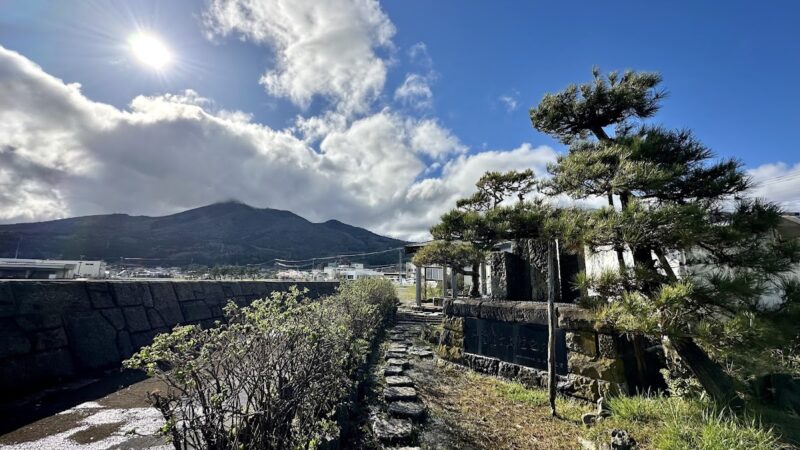
The remains of Fujisaki Castle that can be confirmed today are mainly the earthworks remaining around Fujisaki Hachimangu Shrine. Behind the shrine (northwest side), the earthworks and dry moat from that time are preserved for approximately 200 meters.
A portion of the earthworks remains along National Route 7, and at the southern end of the earthworks, markers indicating “Remains of Fujisaki Castle Earthworks” and “Birthplace of the Ando Clan” are installed. These markers serve as important landmarks for visitors.
Loss of Remains Due to Urbanization
Unfortunately, most of the castle grounds are now urbanized, and many remains have been lost. The residential areas around National Route 7 and National Route 339 correspond to the former castle grounds.
Excavation surveys have been limited, and many aspects of the detailed structure of the castle remain unknown.
Relationship Between Hachiman Shrine and the Castle
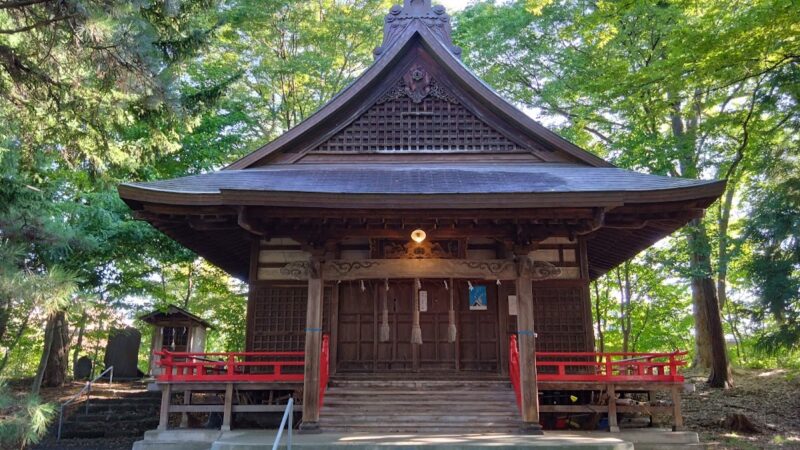
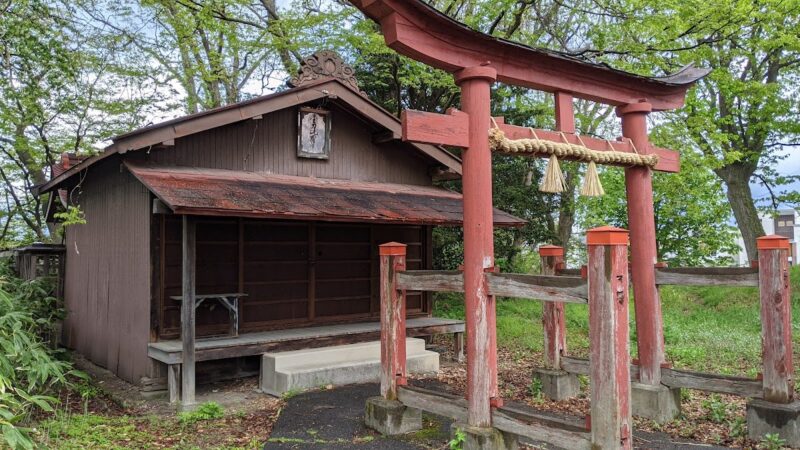
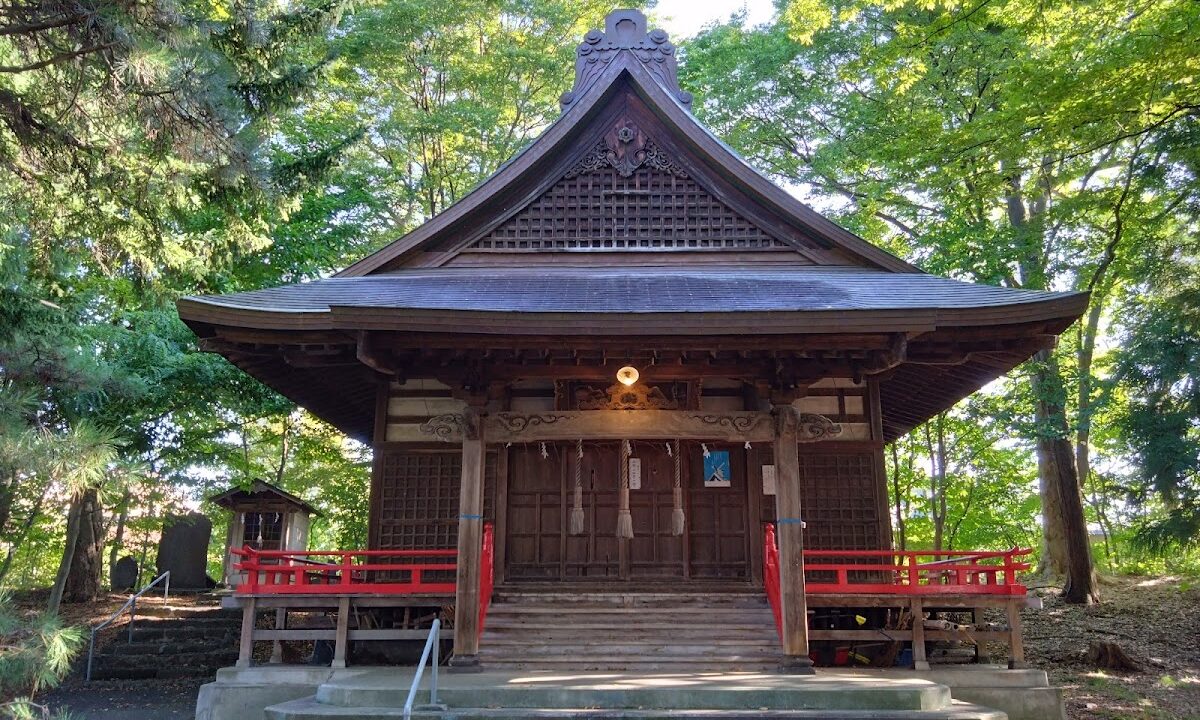
Fujisaki Hachiman Shrine is thought to have functioned as the guardian shrine of the castle, and its grounds were positioned as part of the castle. Even today, an information board is installed at the entrance to the Hachiman Shrine, explaining the history of Fujisaki Castle.
The earthworks can be seen from the shrine grounds, providing clues to imagining the scale of the castle in its heyday.
Historical Significance of Fujisaki Castle and the Ando Clan
Position in Tohoku History
Fujisaki Castle is a symbolic representation of the reorganization of power in the Tohoku region after the Former Nine Years’ War. The history of the Ando clan, descendants of the Abe clan, establishing a new power base in Tsugaru, is a crucial element in understanding the medieval history of Tohoku.
The fact that it was the base of the Ando clan, who controlled northern trade as the governor of Ezo (Hokkaido), is also noteworthy from the perspective of medieval Japanese economic and trade history.
Political Center of the Tsugaru Region
The history of Fujisaki Castle, which remained the political center of the Tsugaru region for approximately 500 years from the end of the 11th century to the end of the 16th century, can be considered the history of the region’s medieval history itself. While the rulers changed from the Ando clan to the Nanbu clan and then to the Tsugaru clan, it consistently remained an important base.
Hub of Northern Trade
In the northern trade that the Ando clan developed centered around Jusanminato, Fujisaki Castle functioned as the administrative base for the inland areas. As a key point in the network connecting port cities along the Sea of Japan coast with inland areas, it played a vital economic role.
Access and Visiting Information for Fujisaki Castle
Transportation Access
Access by Train:
- Approximately 10 minutes on foot from Fujisaki Station on the Konan Railway Konan Line
- Transfer to the Konan Railway from Kawabe Station on the JR Ou Main Line
Access by Car:
- Approximately 15 minutes from Kuroishi IC on the Tohoku Expressway
- Easily accessible, located along National Route 7
Points of Interest for Visitors
Fujisaki Hachimangu Shrine: This is the starting point for visiting the castle ruins. It is recommended to check the history on the information board at the entrance to the shrine grounds before exploring.
Earthwork Remains: The earthwork and dry moat behind the Hachimangu Shrine are the main points of interest. Don’t miss the marker along National Route 7.
Surrounding Environment: Because it is urbanized, it is important to walk while imagining the scale of the castle in its heyday. The relative positions of National Routes 7 and 339 give an idea of the extent of the castle grounds.
Points to Note When Visiting
- Since most of the remains are located in a residential area, please be considerate of the residents’ privacy when visiting.
- The ground around the earthworks can be uneven in some places, so we recommend wearing comfortable shoes.
- Checking the locations of information boards and markers in advance will allow for a more efficient visit.
History and Tourism of Fujisaki Town
Overview of Fujisaki Town
Fujisaki Town is located in Minamitsugaru District, Aomori Prefecture, and is surrounded by abundant nature, water, and greenery. With the motto “A kind and compassionate town created by everyone,” the town is working on town development that utilizes its history and nature.
Related Historical Spots
Besides Fujisaki Castle, there are many historical sites related to the Ando clan and the history of the Tsugaru region scattered throughout the town. We recommend exploring the surrounding historical sites in conjunction with visiting the castle ruins.
Seasonal Charms
Fujisaki Town offers beautiful scenery and events throughout the four seasons. Especially during the cherry blossom season in spring and the autumn foliage season, you can enjoy both historical walks and nature appreciation simultaneously.
Current Status and Challenges of Fujisaki Castle Research
Limitations of Documentary Sources
Detailed documentary sources regarding Fujisaki Castle are limited, and much of the information regarding its construction date and changes in its structure relies on tradition. In particular, archaeological investigations are needed to clarify the early structure of the castle.
The Need for Archaeological Excavations
While much of the remains have been lost due to urbanization, archaeological excavations around the remaining earthworks and in undeveloped areas could provide important information for understanding the true nature of Fujisaki Castle.
Efforts for Preservation and Utilization
Preserving the existing earthwork remains is an important issue as part of Fujisaki Town’s historical heritage. At the same time, there are expectations for their use as a tourist resource and for historical education.
Summary
Fujisaki Castle, built by the Ando clan in Tsugaru after the Former Nine Years’ War, holds a significant place in the medieval history of the Tohoku region. From its construction at the end of the 11th century until its abandonment at the end of the 16th century, it functioned as the political, military, and economic center of the Tsugaru region for approximately 500 years.
Although much of the remains have been lost due to urbanization, the earthworks and dry moats remaining around Fujisaki Hachimangu Shrine are valuable historical sites that convey the scale of the castle in its heyday. As the birthplace of the Ando clan and the base of the Ezo governor, it can be considered an important historical heritage site that tells the story of Japan’s relationship with the northern world in Japanese history.
Visiting the Fujisaki Castle ruins offers a valuable opportunity to experience the medieval history of the Tohoku region, particularly the history of the Ando clan and the realities of northern trade. Although the remains are limited, by strolling through the site while using your historical imagination, you can experience 500 years of Tsugaru region history.
When you visit Aomori Prefecture, why not stop by Fujisaki Town and reflect on the history of Fujisaki Castle, the birthplace of the Ando clan?