Asaseishi Castle (Kuroishi City, Aomori Prefecture) Complete Guide | The Sentoku Clan’s Residence and the Full Story of the Battle of Uguino
Overview of Asaseishi Castle
Asaseishi Castle (Aseishi-jo) was a Japanese castle (hilltop castle) located in Tatsunokuchi and Yamabe, Asaseishi, Kuroishi City, Aomori Prefecture. Also known as Asaseishi Castle and Asaishi Castle, it functioned as an important military base in the Tsugaru region during the Sengoku period.
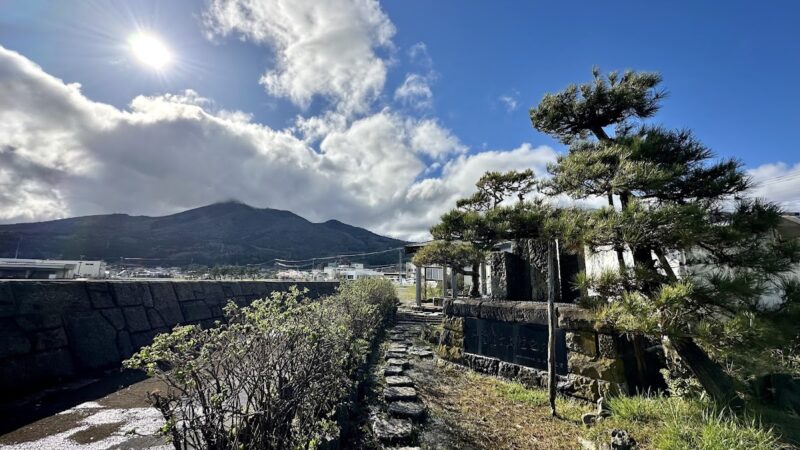
The castle was built on the tip of a tongue-shaped plateau jutting northward from the south bank of the Asaseishi River, cleverly utilizing the terrain at an elevation of approximately 123.1 meters and a relative height of approximately 30 meters. Currently, most of the castle site is used as an apple orchard, making it difficult to imagine its former appearance. However, the layout of the castle can be inferred from the topography and some remaining moat traces.
Asaseishi Castle served as the residence of the Sentoku clan for approximately 350 years. It is particularly known for its important role during the Sengoku period, caught in the conflict between the Nanbu clan and Tsugaru Tamenobu (Oura Tamenobu).
History of Asaseishi Castle
Construction and the Establishment of the Sentoku Clan
Regarding the construction of Asaseishi Castle, one theory suggests it was built in 1240 (Ninji 1) by Ichinohe Yukishige, the ancestor of the Sentoku clan. The Sentoku clan is said to be descended from Ichinohe Yukitomo, the eldest illegitimate son of Nanbu Mitsuyuki, and his son, Yukishige, is believed to have built the castle in Asaseishi.
However, the Sentoku family tree included in the “Kuroishi Hoshida Family Documents,” which is considered the basis for this construction date, contains many questionable points, and from a historical criticism perspective, the details remain unclear. While the actual construction period is suggested to be from the late Kamakura period to the Nanboku-cho period, this has not been confirmed by reliable historical sources.
The Sentoku clan, as a branch of the Nanbu clan, played a crucial role in governing the Tsugaru region, and Asaseishi Castle functioned as one of the Nanbu clan’s bases in Tsugaru.
The Turmoil of the Sengoku Period and the “Eiroku Pact”
With the arrival of the Sengoku period, Asaseishi Castle became embroiled in the political turmoil of the Tsugaru region. A major turning point occurred in 1561 (Eiroku 4), during the reign of the 10th lord, Sentoku Masauji.
During this period, Oura Tamenobu (later Tsugaru Tamenobu) expanded his power and sought independence from the Nanbu clan. Amidst the escalating conflict between the Nanbu clan and Oura Tamenobu, Sentoku Masauji decided to form an alliance with Tamenobu. This alliance is known as the “Eiroku Pact.”
By concluding this alliance, the Sentoku clan effectively betrayed the Nanbu clan, and relations with the main Nanbu family rapidly deteriorated. Nanbu Nobunao refused to tolerate the defection of the Sentoku clan and ordered his retainer, Higashi Masakatsu, to launch an attack on Asaseishi Castle.
Battle of Uguino
In April 1585 (Tensho 13), Nanbu Nobunao dispatched an army of approximately 3,000 men, led by Higashi Masakatsu, to attack Asaseishi Castle. This battle is known as the “Battle of Uguino.”
Sentoku Masauji fortified the castle and waged a siege. In this battle, Masauji is said to have employed skillful tactics that took advantage of the terrain. In particular, his strategy of luring the Nanbu forces into the deep rice paddies (wetlands) surrounding the castle, thereby crippling their mobility, and then counterattacking proved successful.
As a result, Sentoku Masauji succeeded in repelling Nanbu Nobunao’s large army and successfully defended Asaseishi Castle. This victory further strengthened the alliance between the Sentoku clan and Oura Tamenobu, making them an important support force in Tamenobu’s unification of Tsugaru. The Battle of Uguino holds a significant place in regional history as a crucial turning point, marking a decline in the Nanbu clan’s control over the Tsugaru region and an expansion of Ōura Tamenobu’s power.
Collapse of the Alliance with Ōura Tamenobu and the Fall of the Castle
After repelling the Nanbu forces at the Battle of Uguino, the Sentoku clan maintained their alliance with Ōura Tamenobu. However, during the time of the 11th head of the clan, Sentoku Akinosuke Masayasu, cracks began to appear in their relationship.
In February 1597, when the alliance with Ōura Tamenobu completely collapsed, Tamenobu decided to attack Asaseishi Castle. At this time, several senior retainers, including Kimura Echigo-no-kami, defected to the Ōura clan. This internal division greatly weakened the castle’s defenses.
Tamenobu attacked Asaseishi Castle from three directions with approximately 3,000 troops. Masayasu Sentoku defended the castle with approximately 2,000 soldiers, but faced extreme difficulties due to internal betrayal and simultaneous attacks from three directions.
After a fierce battle, Masayasu Sentoku realized the castle was falling and is said to have committed suicide (although some accounts suggest he died in battle). Thus, Asaseishi Castle fell, bringing an end to the approximately 350-year rule of the Sentoku clan. After its fall, Asaseishi Castle was abandoned, closing its history.
The Legend of Abbot Jōen and the “Jonkara-bushi” Song
In connection with the fall of Asaseishi Castle, an interesting legend remains in the region. Abbot Jōen of Shinsōji Temple, the Sentoku clan’s family temple, is said to have learned of their plight and rushed to the castle in the guise of a mountain ascetic to offer his assistance.
However, as the battle turned against him and he was about to be captured, it is said that Abbot Jōen threw himself into the turbulent waters of the Asaseishi River from a cliff, ending his life. The scene and tragedy of this event are said to be one of the origins of the Tsugaru folk song “Jonkara-bushi.”
While there is little historical evidence to support the veracity of this legend, it has been passed down as a local memory, adding cultural color to the history of Asaseishi Castle.
Structure of Asaseishi Castle
Layout and Arrangement
Asaseishi Castle is a flatland castle utilizing the tip of a tongue-shaped plateau on the south bank of the Asaseishi River. The castle grounds measured approximately 170 meters east-west and 160 meters north-south, and the main castle area was divided into four baileys by dry moats.
The castle’s layout was structured as follows, starting from the western side (tip) of the plateau:
Western Side (Tip)
- Honmaru (North Side)
- Yashikimaru (South Side) – Site of Samurai Residences
Eastern Side (Near the Base of the Plateau)
- Ninomaru (North Side)
- Yashikimaru (South Side) – Site of Townhouses
These enclosures were separated by deep dry moats, enhancing their defensive capabilities. The dry moat separating the Honmaru and Ninomaru was particularly deep and is thought to have formed the castle’s main defensive line.
Utilization of Topography
The most distinctive feature of Asaseishi Castle lies in its layout, which skillfully utilizes the natural terrain. The tongue-shaped plateau extending northward itself served as a natural stronghold, surrounded on three sides by steep slopes.
The north and west sides of the castle were steep cliffs, making attacks difficult. Furthermore, the nearby Asaseishi River functioned as a natural moat, enhancing the castle’s defensive strength.
The castle’s only weakness, the eastern side (towards the base of the plateau), was fortified with multiple deep dry moats, giving it a typical medieval castle defensive structure.
Current Remains
Currently, most of the Asaseishi Castle site is used as an apple orchard, and many of the castle remains have been lost. The moat remains are used as work roads within the orchard, making it difficult to determine their original depth and size.
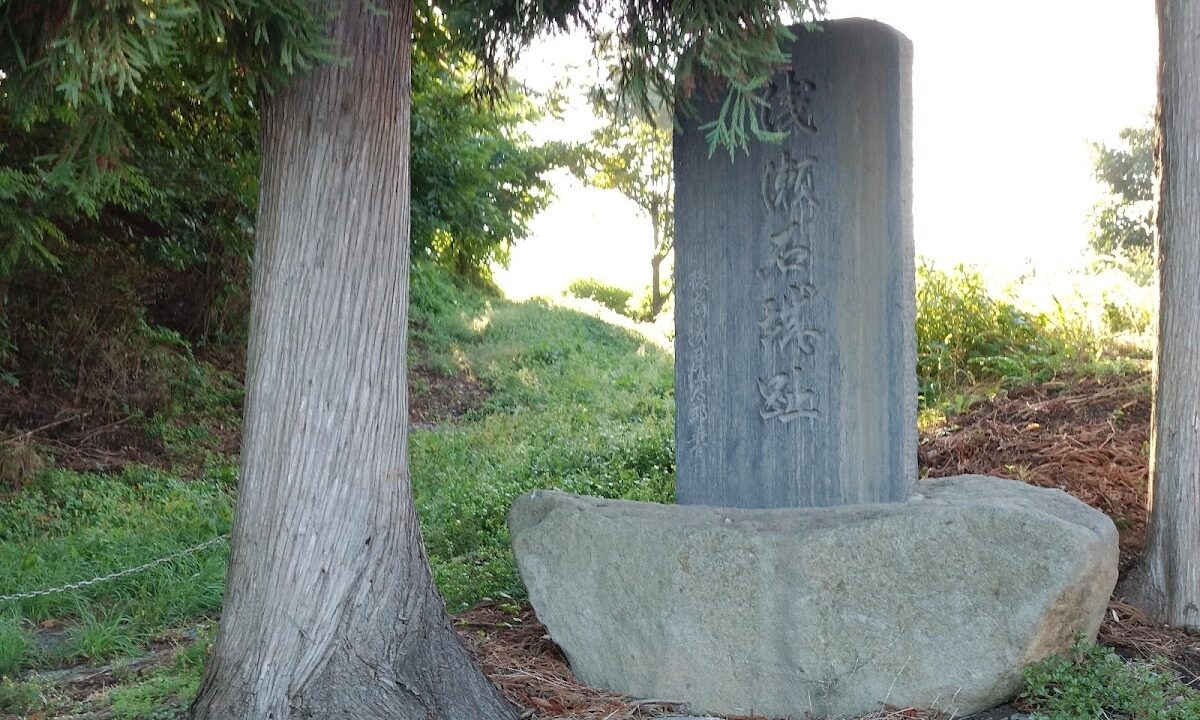
However, a stone monument stands at the entrance to the dry moat between the main keep and the samurai residences, indicating that this is the site of Asaseishi Castle. This area around the monument is virtually the only place currently accessible to the public.
Because most of the castle area is private land (an apple orchard), access is restricted, making detailed observation of the remains difficult. However, it is possible to confirm the topography of the plateau and the location of the castle from a distance, allowing one to imagine its former layout.
Branch Castles of Asaseishi Castle
The Sentoku clan used Asaseishi Castle as their main castle and positioned several branch castles in the surrounding area. These subsidiary castles functioned as bases for territorial control and as part of the defensive network for Asaseishi Castle.
Inakadate Castle
Inakadate Castle was ruled by Masatake Sentoku, a branch of the Sentoku clan. However, in 1585, Masauji Sentoku, along with Tamenobu Oura, attacked Inakadate Castle and annihilated his relative, Masatake Sentoku.
This attack is thought to have been carried out as a result of internal conflict within the Sentoku clan or as part of Tamenobu Oura’s strategy to expand his power. This internal conflict is noteworthy as an example illustrating the complex political situation in the Tsugaru region during the Sengoku period.
Other Related Castles
It is presumed that other small forts and residences existed within the Sentoku clan’s territory, but detailed records do not remain. Unraveling the full scope of the castle network centered around Asaseishi Castle remains a subject of future research.
Access
Location
Address: Near 183 Yamabe, Asaseishi, Kuroishi City, Aomori Prefecture
Asaseishi Castle Ruins are located on a plateau along the Asaseishi River, east of the city center of Kuroishi.
Access by Car
Using the Tohoku Expressway
- Approximately 5 minutes by car from the Kuroishi Interchange
- Head east after exiting the interchange towards the Asaseishi area
- If using a car navigation system, searching for “Yamabe, Asaseishi, Kuroishi City” will guide you to the vicinity.
Parking: There is no dedicated parking lot. Since the castle ruins are on private land (an apple orchard), please avoid street parking and be considerate of the surrounding area.
Access by Public Transportation
Using Konan Bus
- Take a bus bound for Asaseishi from Kuroishi Station.
- A short walk is required from the nearest bus stop.
- Since bus service is limited, it is recommended to check the timetable in advance.
Access by public transportation is inconvenient; using a rental car or taxi is more practical.
Notes for Visitors
- Respect for Private Property: The majority of the castle ruins are private property used as an apple orchard. Unauthorized entry is strictly prohibited.
- Visitable Area: Only the area around the stone monument near the entrance to the dry moat between the main keep and the samurai residences is accessible. Entry to other areas is prohibited.
- Optimal Visiting Time: Particular caution is needed during the harvest season (September to November) to avoid disrupting apple orchard operations.
- Estimated Time Required: Approximately 15-20 minutes for checking the monument and observing the surrounding terrain.
- Nearby Facilities: Asaseishi Dam is nearby and can be visited in conjunction with this.
Nearby Tourist Information
Asaseishi Dam
Asaseishi Dam is located near the Asaseishi Castle ruins. This dam is a multi-purpose dam used for agricultural water, tap water, and power generation, and offers beautiful surrounding scenery. When visiting Asaseishi Castle, it’s recommended to also visit the dam.
Kuroishi City Center
In the center of Kuroishi City, there is a traditional shopping street called Komise-dori, where buildings retaining the atmosphere of the Edo period are preserved. Kuroishi Onsenkyo (hot spring resort) is also nearby, allowing you to relax in the hot springs after visiting the castle ruins.
Nakano Momiji-yama
Nakano Momiji-yama, known as a famous spot for autumn foliage, is located within Kuroishi City, with the best viewing period being from late October to early November. This is a recommended sightseeing route to visit in conjunction with the Asaseishi Castle ruins.
Other Castle Ruins in the Tsugaru Region
Hirosaki Castle: The main castle of the Tsugaru clan, built by Tsugaru Tamenobu, and a valuable castle with an existing keep. Visiting Hirosaki Castle, which was Tamenobu’s base, is very meaningful for understanding the history of Asaseishi Castle.
Daikoji Castle Ruins: A castle attacked by Sentoku Masauji together with Oura Tamenobu, and closely related to the history of Asaseishi Castle.
Ishikawa Castle Ruins: One of the Nanbu clan’s bases of control over Tsugaru, and a castle from the same period as Asaseishi Castle.
Historical Significance of Asaseishi Castle
Position in the History of the Tsugaru Region
Asaseishi Castle is one of the castles that symbolizes the transfer of power from the Nanbu clan to Tsugaru Tamenobu in the Tsugaru region during the Sengoku period. The rise and fall of the Sentoku clan vividly reflects the political changes in the Tsugaru region and is an important case study in regional history research.
Significance of the Battle of Uguino
The Battle of Uguino was a crucial battle that marked the beginning of instability in the Nanbu clan’s rule over Tsugaru. The victory of the Sentoku clan in this battle provided indirect support for Ōura Tamenobu’s unification of Tsugaru, paving the way for the later establishment of the Tsugaru Domain.
A History of Alliances and Betrayal
The history of Asaseishi Castle is a classic example of the fluidity of alliances during the Sengoku period. The fate of the Sentoku clan—from loyalty to the Nanbu clan to an alliance with Ōura Tamenobu, and ultimately their destruction by Tamenobu—exemplifies the difficult political choices faced by minor feudal lords during the Sengoku period.
References
Here are some references and materials that are helpful in learning about the history of Asaseishi Castle.
Basic References
- *Comprehensive Survey of Japanese Castles, Volume 2: Aomori, Iwate, and Akita* (Shin Jinbutsu Oraisha)
- *Medieval Castles and Residences of Aomori Prefecture* (Aomori Prefectural Board of Education)
- *History of Kuroishi City* (Kuroishi City)
Related Materials on the Sengoku Period History of the Tsugaru Region
- *Everything About Tsugaru Tamenobu* (Shin Jinbutsu Oraisha)
- *Studies on the Nanbu Clan* (Yoshikawa Kobunkan)
- *Studies on the Sengoku Daimyo Tsugaru Clan*
Materials Related to the Sentoku Clan
- *Kuroishi Hoshida Family Documents* (Requires critical analysis of historical sources)
- *Tsugaru Ittōshi* (History of Tsugaru)
- *Tsugaru Kyūki* (Old Records of Tsugaru)
These documents are available for viewing at libraries and local history museums. Kuroishi City Library and Aomori Prefectural Library have extensive collections of materials related to local history.
Summary
Asaseishi Castle was the residence of the Sentoku clan, located in Kuroishi City, Aomori Prefecture, and played an important role in the Tsugaru region during the Sengoku period. While caught in the conflict between the Nanbu clan and Tsugaru Tamenobu, the castle achieved military success by repelling the Nanbu forces at the Battle of Uguino.
Currently, most of the castle site is an apple orchard, making it difficult to imagine its former appearance. However, the location of the stone monument allows us to imagine the topography and location of the time. It is relatively easy to access, being close to the Kuroishi Interchange on the Tohoku Expressway, but careful consideration is necessary as it is private property.
The history of Asaseishi Castle eloquently tells the story of the political difficulties faced by local powerful families during the Sengoku period and their fate at the mercy of the times. For those interested in the history of the Tsugaru region or medieval castles, it is a historical site well worth visiting.