Nejo Castle Complete Guide | History and Highlights of a Hachinohe Historic Site Selected as One of Japan’s Top 100 Castles
Nejo Castle, located in Hachinohe City, Aomori Prefecture, is one of Japan’s Top 100 Castles and a valuable medieval castle site designated as a National Historic Site in 1941. Built during the Nanboku-cho period, it functioned as the political, economic, and cultural center of the Hachinohe region for approximately 300 years. Currently, it is maintained as the Nejo Castle Historic Site Plaza, and the buildings, including the main keep restored based on archaeological excavations, convey its original appearance.
This article comprehensively explains everything you need to know before visiting Nejo Castle, from its historical background and architectural features to its highlights and access methods.
What is Nejo Castle? | A National Historic Site Representing Hachinohe City
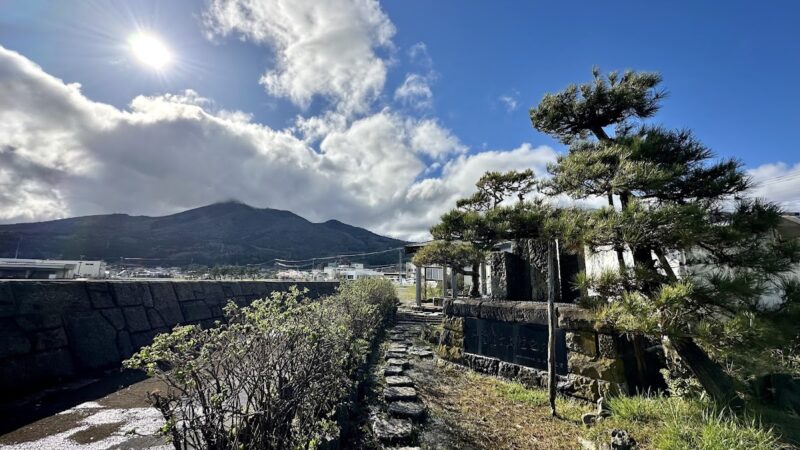
Nejo Castle is a flatland castle located in Nejo, Hachinohe City, Aomori Prefecture, built on a river terrace on the south bank of the Mabuchi River. Nejo Castle has a linear structure consisting of five interconnected enclosures (kuruma): Honmaru, Nakadate, Tozenji, Okamaedate, and Sawasatodate, preserving a typical form of medieval castles.
While the official pronunciation is “Nejo,” the general noun “Nejiro” is also used to mean “a castle that serves as a base of operations” or “a base of operations.” However, the proper noun for the historical site in Hachinohe City is accurately pronounced “Nejo.”
Value as one of Japan’s Top 100 Castles
Nejo Castle was selected as the 5th of “Japan’s Top 100 Castles” by the Japan Castle Association in 2006. It is highly regarded for its well-preserved original form as a medieval castle and for the scientific restoration based on archaeological excavations.
Since its designation as a national historical site in 1941, large-scale archaeological excavations were conducted from 1978 to 1994, and based on the results, the buildings of the Honmaru were restored from 1994 to 1998. This restoration project has attracted nationwide attention as a faithful reproduction based on archaeological evidence.
History of Nejo Castle | Approximately 300 Years of Changes from the Nanboku-cho Period
Background of the Castle’s Construction and Nanbu Moroyuki
Nejo Castle was built in the first year of Kenmu (1334), during the turbulent period of the Nanboku-cho period. Kitabatake Akiie, a general under the command of Emperor Go-Daigo, entered Mutsu Province with Prince Noriyoshi (later Emperor Go-Murakami), a son of Emperor Go-Daigo.
At this time, Nanbu Moroyuki, a general of the Southern Court who followed Kitabatake Akiie, built Nejo Castle in Nukabe District, Mutsu Province (present-day southern Aomori Prefecture). Moriyuki was a member of the Nanbu clan who migrated from Kai Province (present-day Yamanashi Prefecture), and Nejo Castle became an important base for the Nanbu clan to establish their power in the Tohoku region.
The Nanbu Clan’s Rule of Hachinohe and the Development of Nejo Castle
After its construction by Nanbu Moriyuki, Nejo Castle functioned as the residence of the Nanbu clan’s Hachinohe family for approximately 300 years. Throughout the Muromachi, Sengoku, and Azuchi-Momoyama periods, it played a crucial role as the political and military center of the Hachinohe region.
The castle lords were successive members of the Nanbu clan, and especially during the Sengoku period, they strengthened their control over the surrounding areas and improved the castle’s fortifications. Archaeological excavations have revealed that the layout and structure of the buildings changed over time, indicating that the castle was constantly being renovated to meet the demands of the era.
Territorial Change and the End of the Castle
Nejo Castle ceased to function as a castle in 1627 (Kanei 4). In that year, the Nanbu clan’s Hachinohe family was ordered to relocate to Tono (present-day Tono City, Iwate Prefecture), and Nejo Castle was abandoned. The history of Nejo Castle, which lasted for approximately 300 years, comes to an end here.
After the castle was abandoned, the site was converted into farmland, but the remains of the medieval castle were preserved relatively well. This was an important factor that led to its later designation as a national historical site and restoration project.
Structure and Characteristics of Nejo Castle | The Complete Picture of a Consecutive-Enclosure Hilltop Castle
Castle Layout Consisting of Five Enclosures
Nejo Castle has a consecutive-enclosure structure with the main enclosure (Honmaru) at its center, surrounded by five enclosures (kuruma): Nakadate, Tozenji, Okamaedate, and Sawasatodate. Each enclosure is separated by dry moats and earthen ramparts, enhancing its defensive capabilities.
Honmaru is the core of the castle, where the lord’s residence (Shuden) and other buildings with administrative functions were located. Currently, the area developed as the Nejo Castle Historic Site Plaza is mainly this Honmaru area.
Nakadate is located north of the Honmaru and is thought to have housed the residences of retainers and warehouses. Tozenji was a fortified enclosure where a temple was located, serving as the spiritual pillar of the castle. Okamae-kan and Sawazato-kan formed the outer perimeter, responsible for the overall defense of the castle.
The Ingenious Location Utilizing the Mabuchi River
Nejo Castle was built on a river terrace on the south bank of the Mabuchi River, with a layout that skillfully utilized the natural terrain. The elevation difference of the river terrace acted as a natural defensive wall, and the Mabuchi River served as a natural moat.
This location offered not only defensive advantages but also the convenience of water transport. The transportation of goods via the Mabuchi River was a crucial element supporting the castle’s economic base. The classification of a “hirayama-jiro” (hilltop castle) refers to a castle built on terrain intermediate between plains and mountains, and Nejo Castle is a typical example.
Nejo Historic Site Plaza | Highlights of the Restored Main Enclosure
Restored Main Enclosure Building
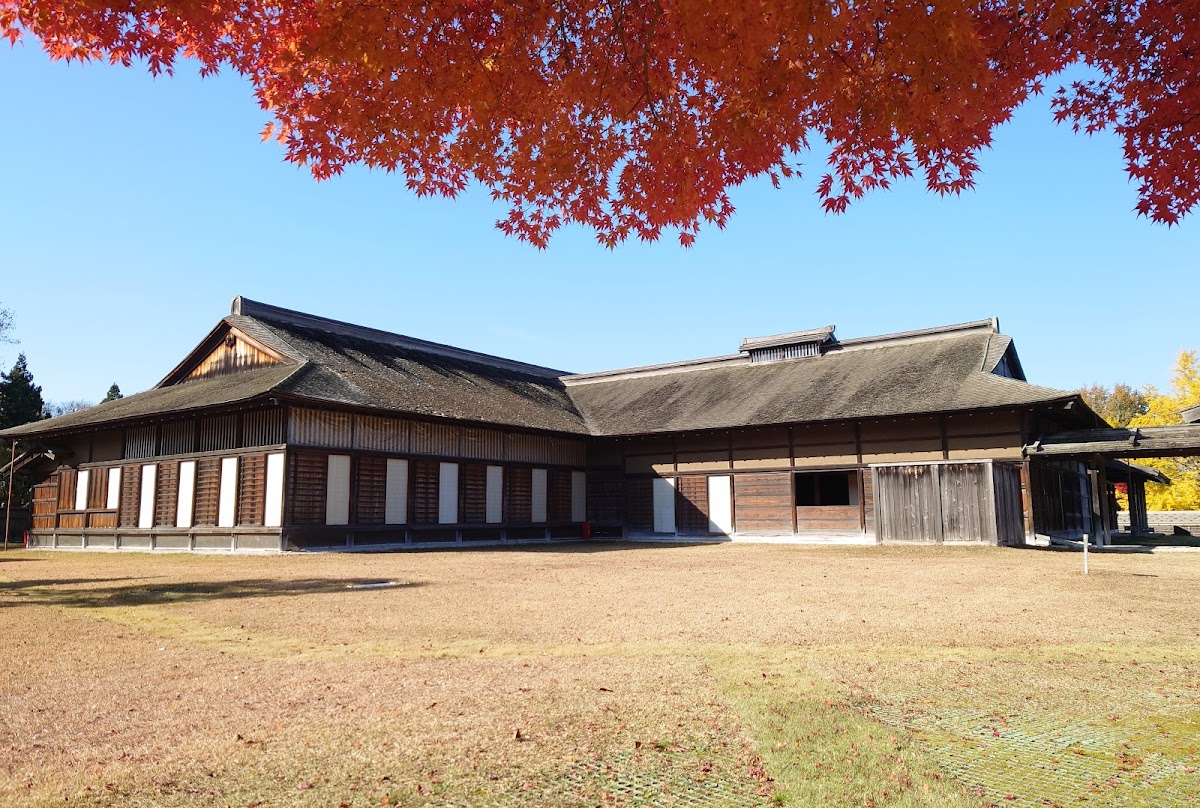
The most noteworthy feature of the Nejo Historic Site Plaza is the Main Enclosure Building, restored based on the results of archaeological excavations. This building recreates the residence of the castle lord from the late Muromachi period to the Azuchi-Momoyama period, and was restored between 1994 and 1998.
The main building incorporates the Shinden-zukuri architectural style and consists of a large wooden-floored room and an earthen floor. The interior is furnished with everyday items and furnishings from the period, allowing visitors to concretely imagine the lifestyle of a medieval samurai. In particular, the upper room where ceremonies and government affairs were conducted, the lord’s living quarters, and the kitchen have been faithfully reproduced, making it a historically valuable exhibit.
Restored Buildings
In addition to the Main Enclosure Building, the following buildings have also been restored:
- Workshop: A building where blacksmithing, woodworking, and other similar tasks were performed.
- Blacksmith’s Workshop: A facility where weapons and farming tools were manufactured and repaired.
- Barn: A warehouse for storing rice and supplies.
- Stable: A building for raising warhorses.
- Wooden Storehouse: A raised warehouse for storing important items.
These buildings indicate that the castle was not merely a military facility, but also a place for economic activity and daily life.
Remains of Moats and Earthworks
The dry moats and earthworks surrounding the main keep are important remains for understanding the defensive system of medieval castles. The dry moats reached a depth of several meters, forming a strong barrier against enemy intrusion. The earthworks were built by piling up the soil excavated from the moats and served as castle walls.
These remains are still well-preserved today, allowing visitors to experience the scale and structure of the castle. Walking around the plaza of the Nejo Historic Site will give you a tangible understanding of how medieval castles were defended.
Collaboration with Hachinohe City Museum | Deeper Understanding of Nejo Castle’s History
The Hachinohe City Museum, adjacent to the Nejo Castle Historic Site Plaza, displays artifacts and materials related to Nejo Castle. Through actual artifacts such as ceramics, weapons, and daily life tools unearthed during excavations, you can learn more about life and culture at Nejo Castle.
In addition to a permanent exhibition explaining Nejo Castle’s history chronologically, the museum also regularly holds special exhibitions. Visiting the museum in conjunction with the Nejo Castle Historic Site Plaza will provide a more enriching historical experience.
Annual Events and Activities at Nejo Castle
Various events related to history and culture are held at the Nejo Castle Historic Site Plaza.
Nejo Castle Historic Site Festival
The “Nejo Castle Historic Site Festival,” held every autumn, is a representative event where you can experience the history of Nejo Castle. Activities include trying on samurai armor, archery, and traditional performing arts, making it enjoyable for families.
Hands-on Craft Workshop
At the Nejo Historic Site plaza, a “Hands-on Craft Workshop” is regularly held, where visitors can experience ancient and medieval techniques such as making magatama (comma-shaped beads) and starting fires. This is a valuable opportunity for children and adults alike to learn about history while engaging their hands.
Guided Tours by Volunteer Guides
Free guided tours by volunteer guides are available at the Nejo Historic Site plaza (advance reservations required). By listening to the guide’s detailed explanations, you can gain a deeper understanding of the meaning and historical background of the ruins.
Access, Opening Hours, and Fee Information
Access Methods
By Train and Bus
- From JR Hachinohe Line “Hon-Hachinohe Station,” take the Nanbu Bus “bound for Korekawa Danchi via Tanomogi” or “bound for Shimin Byoin via Nejo Ohashi,” get off at the “Nejo (Museum Front)” bus stop, and walk for approximately 5 minutes.
- From Tohoku Shinkansen “Hachinohe Station,” approximately 20 minutes by taxi or approximately 30 minutes by bus.
By Car
- Approximately 10 minutes from Hachinohe IC on the Hachinohe Expressway.
- Free parking available (accommodates approximately 100 regular cars).
Opening Hours and Closing Days
Opening Hours
- April to October: 9:00 AM to 6:00 PM
- November to March: 9:00 AM to 5:00 PM
- Last admission is 30 minutes before closing.
Closing Days
- Every Monday (or the following day if Monday is a public holiday)
- Closed the day after a public holiday (open if it falls on a Saturday or Sunday)
- Year-end and New Year holidays (December 27th – January 4th)
Admission Fees
Nejo Historical Site Plaza
- General: 250 yen
- High school and university students: 150 yen
- Elementary and junior high school students: Free
Combined ticket with Hachinohe City Museum
- General: 400 yen
- High school and university students: 240 yen
*Group discounts available (20 or more people)
*Free admission for those with a disability certificate
Tourist Attractions Around Nejo
When visiting Nejo, we recommend also visiting the surrounding tourist attractions.
Korekawa Jomon Museum
Located about 10 minutes by car from Nejo, the Korekawa Jomon Museum exhibits valuable artifacts from the Jomon period, including the national treasure “Gassho Dogu” (praying clay figurine). You can trace the history of Hachinohe City from the Jomon period.
Kushihiki Hachimangu Shrine
Located about 15 minutes by car from Nejo Castle, this historic shrine houses two national treasure suits of armor. As a shrine associated with the Nanbu clan, it has deep ties to the history of Nejo Castle.
Hachinohe City Center
The city center around Hon-Hachinohe Station boasts numerous spots where you can enjoy Hachinohe’s food culture, including the Hachinohe Yatai Village “Miroku Yokocho” and the Hachishoku Center. After visiting Nejo Castle, enjoying fresh seafood from Hachinohe is highly recommended.
Points to Note When Visiting Nejo Castle
Estimated Visiting Time
If you plan to thoroughly explore the Nejo Castle plaza, approximately 1 to 1.5 hours is a good estimate. If you plan to visit the Hachinohe City Museum as well, allow 2 to 3 hours.
Clothing and Items to Bring
Since the Nejo Castle plaza is an outdoor facility, appropriate clothing for the season and comfortable walking shoes are essential. In summer, the sun is strong, so be sure to bring a hat, sunscreen, and drinks for hydration. In winter, take thorough precautions against the cold.
Photography
Photography is permitted in the Nejo Castle plaza for personal use. The reconstructed main keep, moat, and earthworks are excellent photo spots. However, permission is required in advance for commercial use.
Summary | Nejo Castle: A Valuable Historical Site Where You Can Experience the History of Medieval Tohoku
Nejo Castle is a historically important castle site that functioned as the center of the Hachinohe region for approximately 300 years after its construction during the Nanboku-cho period. Its value is widely recognized, having been designated a National Historic Site in 1941 and selected as one of Japan’s Top 100 Castles in 2006.
The buildings, including the main keep which were reconstructed based on archaeological excavations, are valuable resources that concretely illustrate the life of medieval samurai and the functions of the castle. By visiting the Nejo Castle plaza, you can experience living history that you can’t learn from textbooks.
When visiting Hachinohe City, be sure to stop by Nejo Castle and experience the history of the Nanbu clan and the charm of a medieval castle. Visiting it in conjunction with the adjacent Hachinohe City Museum will provide a deeper understanding and a more moving experience.
The Nejo Castle plaza is an ideal spot not only for history enthusiasts but also for families and students looking for a place to learn. You can enjoy a fulfilling time experiencing Japanese history amidst the beauty of nature throughout the seasons.