Kenyoshi Castle (Nanbu Town, Aomori Prefecture) Complete Guide: The Residence of the Kita Clan, a Senior Retainer of the Nanbu Clan, and its Historical Value
What is Kenyoshi Castle?: A Sengoku Period Castle Site Remaining in Nanbu Town, Aomori Prefecture
Kenyoshi Castle (Kenyoshi-jo) is a Japanese castle site located in Kenyoshi, Nanbu Town, Sannohe District, Aomori Prefecture. Also known as “Kenyoshi-tate,” it served as the residence of the Kita Clan, a senior retainer of the Nanbu Clan, from the Sengoku period to the Azuchi-Momoyama period.
Located in a strategically important location midway between Hachinohe Castle and Sannohe Castle, this castle, built on the hills east of the Mabuchi River, functioned as an important base within the Nanbu Clan’s sphere of influence. Currently, most of the castle site is occupied by Kenyoshi Elementary School, and while its former appearance is gradually being lost, it is known as a valuable historical site that conveys the history of medieval castles in Mutsu Province.
Overview and Basic Information of Kenkichi Castle
Castle Scale and Structure
Kenkichi Castle is a flatland castle measuring approximately 70 meters east-west and 100 meters north-south. The residential area was divided into two baileys: “Odate” and “Kofurudate.”
Odate was the main part of the castle and is currently used as the school building and playground of Kenkichi Elementary School. It was significantly leveled during the construction of the school building and playground before the war, and no trace of its original form remains.
Kofurudate is thought to have served as a secondary bailey, but it underwent significant alterations due to the opening of the Tohoku Main Line (now the Aoimori Railway Line) during the Meiji period, and subsequent track widening work in the Showa period.
Location and Access
- Location: Odachi, Kenkichi, Nanbu-cho, Sannohe-gun, Aomori Prefecture
- Nearest Station: Approximately 10 minutes on foot from Kenkichi Station on the Aoimori Railway Line
- Access by Car: Approximately 20 minutes from Ichinohe IC on the Hachinohe Expressway
- Current Status: Kenkichi Elementary School grounds (Consideration is required for visits as it is a school facility)
Castle Type and Period
- Castle Classification: Hilltop Castle
- Construction Period: Unknown (Estimated to be from the Nanboku-cho period to the Muromachi period)
- Major Period: Sengoku period to Azuchi-Momoyama period
- Abandonment Period: Early Edo period (Estimated)
- Remains: Almost completely gone (Slight traces in the topography)
History of Kenkichi Castle: Relationship between the Kita and Nanbu Clans
Background of the Castle’s Construction and the Expansion of the Nanbu Clan’s Power
The exact construction date of Kenkichi Castle is unclear due to a lack of definitive records, but it is believed to have been built during the Nanboku-cho period (14th century) to the Muromachi period, when the Nanbu clan controlled Nukanobu District.
The Nanbu clan was a prestigious samurai family based in Kai Province (present-day Yamanashi Prefecture). During the Kamakura period, they obtained the position of jitō (land steward) of Nukanobu District and expanded into northern Mutsu Province. Nanbu Town is known as the “birthplace of the Nanbu Domain” and is an important region where the Nanbu clan established their power base in northern Oshu.
Besides Kenkichi Castle, several other castles and residences from this period remain in the town, including Kaminakui Castle (the residence of the Higashi clan) and Seijuji Mansion, illustrating the system of territorial control by the Nanbu clan and their retainers.
The Kita Clan, Lords of the Castle During the Sengoku Period, and Their Role
The Kita clan appears in historical records as the lords of Kenkichi Castle. The Kita clan was a prestigious family that served as chief retainers of the Nanbu clan, and because their residence was located north of the castle town of Sannohe, they were called “Kitadono” (Northern Lord).
During the Sengoku period, the Nanbu clan greatly expanded its power during the reigns of the 20th head Nanbu Nobutoki, the 22nd head Nanbu Masayasu, the 23rd head Nanbu Yasunobu, and the 24th head Nanbu Harumasa, eventually gaining control of northern Oshu. In this process, the Kita clan played a crucial role in both the military and administrative aspects of the Nanbu clan’s rule, and Kenkichi Castle functioned as their base.
Located midway between the two major Nanbu strongholds, Hachinohe Castle and Sannohe Castle, Kenkichi Castle held a strategically important position as a base for securing military communication routes, monitoring the Mabuchi River basin, and governing the territory.
Castle Reorganization and the Survival of Kenkichi Castle in the Tensho Period
In 1590 (Tensho 18), Toyotomi Hideyoshi carried out the Oshu Settlement, and the Nanbu clan’s territory was secured. Subsequently, the “Record of Demolition of Various Castles,” compiled in 1592 (Tensho 20), states, “Kenkichi Hirajo, within Nukabe District, owned by Nanbu Saemon-no-jo,” confirming that Kenkichi Castle was spared from demolition.
This record indicates that Kenkichi Castle was recognized as having a certain degree of importance even under the Toyotomi regime and was permitted to remain. “Nanbu Saemon-no-jo” is thought to refer to the head of the Nanbu clan at the time, suggesting that it may have been managed as a directly controlled territory.
Changes after the Edo Period
Although detailed records after this period are scarce, it is presumed that the castle was abandoned in the early Edo period. It is thought that during the process of the Nanbu clan establishing the Morioka Domain, the consolidation and reorganization of branch castles progressed, and Kenkichi Castle was among those targeted.
Throughout the Edo period, Kenkichi developed as a post town, and the castle ruins were used for farmland and residential areas. In the Meiji era, the Tohoku Main Line was opened, and the Koyado area was largely leveled. During the Taisho era, Kenkichi Elementary School was built in the Odachi area, and it remains there to this day.
Remains and Current Status of Kenkichi Castle
Existing Remains
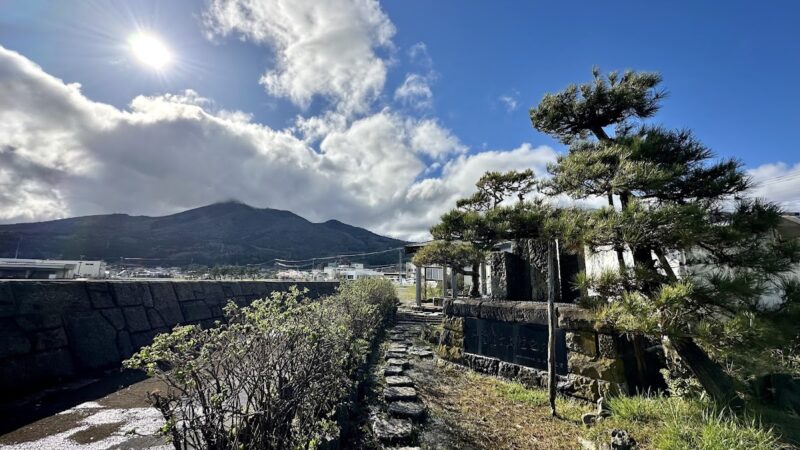
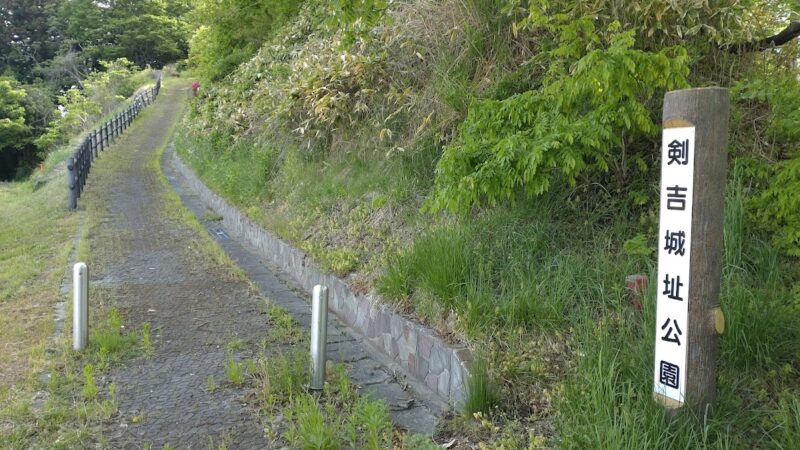
Unfortunately, very few remains of Kenkichi Castle remain. The construction of Kenkichi Elementary School and the laying and widening of the Tohoku Main Line (Aoimori Railway Line) significantly altered the main parts of the castle.
Currently identifiable remains include:
- Topographical Relief: Slightly remaining hilly terrain suggests the location of the castle.
- Place Names: Place names such as “Odachi” and “Kodachi” preserve the castle’s structure.
- Surrounding Microtopography: Traces of the terrace cliff facing the Mabuchi River functioning as a natural defensive line.
Status of Archaeological Excavations
No full-scale archaeological excavations have been conducted at the Kenkichi Castle site to date. Due to its use as a school facility, challenges remain regarding future investigations.
However, the Nanbu Town Board of Education is conducting a survey of the distribution of medieval castles and fortifications in the surrounding area, and basic information about Kenkichi Castle is being collected.
Status of Cultural Property Designation
Currently, the Kenkichi Castle ruins are not designated as a cultural property by the national, prefectural, or town governments. The main reason is the limited remaining structure, but the existence of the castle is considered certain based on historical documents and place names, and it is recognized as an important historical site in telling the history of Nanbu Town.
Kenkichi Castle and the Nanbu Clan’s Castle Network
Relationship with Sannohe Castle
Sannohe Castle was an important base used as the main castle of the Nanbu clan from the Sengoku period to the early Edo period. Located approximately 8 kilometers northwest of Kenkichi Castle, it functioned as the political and military center of the Nanbu clan.
Kenkichi Castle is thought to have served as a subsidiary castle protecting the south of Sannohe Castle, forming a defensive line against invasions from the Hachinohe area. The fact that the Kita clan, while possessing a residence in the town below Sannohe Castle as “Kita-dono,” used Kenkichi Castle as their primary residence speaks to the close relationship between the two castles.
Location in relation to Hachinohe-ne Castle
Hachinohe-ne Castle was the base of the Nejo Nanbu clan, a branch of the Nanbu clan, and is located approximately 20 kilometers east of Kenkichi Castle. It is designated a national historic site and retains well-preserved remains as a medieval castle.
Kenkichi Castle was located midway along the transportation route connecting Sannohe Castle and Hachinohe-ne Castle, functioning as a relay point for communication and the transport of goods between the two castles. It is also presumed to have played a role in monitoring and defending the transportation route along the Mabuchi River.
Surrounding Castle Sites
In addition to Kenkichi Castle, several other medieval castle sites have been confirmed within Nanbu Town:
- Kami-Nakui Castle: The residence of the Higashi clan. Located in the southwestern part of the town
- Seijuji-kan: Site of a residence related to the Nanbu clan
- Other small residence sites: Bases for governing the territory
These castle and residence sites are important historical sites that demonstrate the reality of the Nanbu clan’s rule over Nukabe County, and require a holistic understanding.
Kenkichi Region and Historical Background
History of Nanbu Town and the Kenkichi District
Nanbu Town is a municipality formed in 2006 through the merger of the former Nanbu Town, former Nagawa Town, and former Fukuchi Village. The town name originates from the Nanbu clan, and town development emphasizes its historical identity as the “birthplace of the Nanbu Domain.”
The Kenkichi district is located in the northern part of the town, and a settlement has formed around Kenkichi Station on the Aoimori Railway Line. It has flourished as a transportation hub since ancient times and also has a history as a post town.
Mabuchi River and Geographical Environment
The hilly area on the east bank of the Mabuchi River, where Kenkichi Castle was built, is characterized by terraced topography formed by river erosion. The Mabuchi River originates near the border of Aomori and Iwate prefectures and flows into the Pacific Ocean in Hachinohe City. It is a first-class river that has historically served as an important transportation and logistics route in northern Mutsu Province.
The location of the castle was ideal, as it utilized the river as a natural moat and was also suitable for monitoring and managing river traffic. It is a typical location for a castle during the Sengoku period (Warring States period).
Origin of the Place Name “Kenkichi”
There are several theories regarding the origin of the place name “Kenkichi,” but no definitive explanation exists. One theory suggests it is related to a shrine or belief system involving swords, while another suggests it represents a topographical feature.
The place name also retains sub-district names such as “Aramachi,” “Kamimachi,” and “Nakamachi,” suggesting a castle town layout and conveying the history of settlement formation from the medieval to early modern periods.
Access and Visiting Information for Kenkichi Castle
Access by Public Transportation
By Train:
- Get off at Kenkichi Station on the Aoimori Railway Line, approximately 10 minutes on foot.
- Approximately 1 hour 30 minutes from Aomori Station, approximately 30 minutes from Hachinohe Station.
- Only local trains stop at Kenkichi Station (express trains pass through).
By Bus:
- Operated by Nanbu Town Bus (limited number of services).
- For details, please inquire at Nanbu Town Hall.
Access by Car
- Approximately 20 minutes from Ichinohe IC on the Hachinohe Expressway via National Route 4.
- Approximately 30 minutes from the center of Hachinohe City.
- Parking: The parking lot at Kenkichi Elementary School is for school personnel only; please use nearby public facilities.
Precautions During Visits
The Kenkichi Castle ruins are currently located on the grounds of Kenkichi Elementary School, so please note the following points when visiting:
- Consideration for School Facilities: Avoid entering the grounds during class hours.
- Exterior Viewing: Limit viewing to the exterior from the road.
- Photography: Respect the privacy of children.
- Prior Contact: If you wish to visit in detail, please consult the Nanbu Town Board of Education.
Related Historical Sites and Tourist Facilities in the Surrounding Area
Nearby facilities to visit in conjunction with Kenkichi Castle:
Historical Facilities:
- Nanbu Town Historical and Folk Museum (exhibits the history of the town)
- Seijuji-kan Ruins (within walking distance)
- Nakui-dake (known as a mountain of faith)
Historical Sites Related to the Nanbu Clan:
- Mito Castle Ruins (approx. 15 minutes by car, developed as Prefectural Shiroyama Park)
- Hachinohe-ne Castle Ruins (approx. 30 minutes by car, National Historic Site)
Other Tourist Facilities:
- Nanbu Performing Arts Transmission Hall (introduces local performing arts such as Enburi)
- Bade Park (hot springs and accommodation)
- Nakui Agricultural High School (famous for cherry blossoms)
Current Status and Challenges of Kenkichi Castle Research
Status of Historical Sources
Primary sources concerning Kenkichi Castle are extremely limited. The main sources include:
- *Shojo Hakyaku Kakage* (Record of Demolition of Various Castles) (Tensho 20, 1592): The most important source confirming the castle’s existence.
- Documents related to the Nanbu clan: Fragmentary descriptions.
- Edo period geographical records: Brief descriptions.
Historical sources concerning the Kita clan are also scarce, leaving many uncertainties regarding their lineage and specific activities.
Need for Archaeological Investigation
Further archaeological investigation is essential to clarify the true nature of Kenkichi Castle. However, the following challenges exist:
- Use as a school facility: Difficulty in conducting large-scale investigations.
- Status of remaining structures: Already significantly altered.
- Budget and personnel: Constraints on the local government’s cultural property protection system.
If there is an opportunity for future school reconstruction, prior archaeological excavations may provide valuable information.
Future Research Topics
Main Research Topics in Kenkichi Castle Research:
- Identification of Construction Period: Archaeological and Documentary Historical Approaches
- Restoration of Castle Structure: Topographical Surveys and Analysis of Old Maps
- Elucidation of the Kita Clan’s Reality: Genealogical Research, Investigation of Historical Materials from Other Regions
- Elucidation of the Nanbu Clan’s Castle Network: Broad-Based Castle Research
- Position in Regional History: Research on the Regional Structure of Nukabe County in the Middle Ages
Kenkichi Castle Tells the Story of the Nanbu Clan in the Sengoku Period
The Nanbu Clan’s Territorial Management and Vassal System
The Nanbu clan, a prestigious branch of the Kai Genji clan, built its power in northern Mutsu Province from the Kamakura period onward. During the Sengoku period, they controlled a vast territory centered on Nukabe County, extending from present-day eastern Aomori Prefecture to northern Iwate Prefecture.
Their territorial management was supported by a system of branch castles, where powerful vassals were stationed in various castles. Senior retainers such as the Kita and Higashi clans were entrusted with strongholds such as Kenkichi Castle and Kaminakui Castle, and were responsible for governing the territory and military defense.
Military Tensions in the Sengoku Period
During the Sengoku period, the Nanbu clan was in a state of tension with the Ando clan to the north (Akita area) and the Date, Kasai, and Osaki clans to the south (Miyagi and Iwate areas). Furthermore, conflicts sometimes arose within the Nanbu clan itself, between the main family and branch families.
Kenkichi Castle is thought to have played an important role in defending Sannohe Castle and securing transportation routes within the territory amidst these military tensions.
Relationship with the Toyotomi Regime
In 1590, during Toyotomi Hideyoshi’s pacification of Oshu, the Nanbu clan’s territory was confirmed. The head of the family, Nanbu Nobunao (26th generation), had an audience with Hideyoshi and his territory, centered on Nukabe District, was officially recognized.
The fact that Kenkichi Castle was spared from destruction in the subsequent “Record of the Demolition of Various Castles” indicates that the Nanbu clan was allowed to maintain a certain level of military power under the Toyotomi regime.
Kenkichi Castle and Local Culture
Cultural Properties and Historical Heritage of Nanbu Town
Nanbu Town has many cultural properties in addition to Kenkichi Castle:
Designated Cultural Properties:
- Nationally Designated Important Intangible Folk Cultural Property “Enburi of the Nanbu Region”
- Numerous Tangible and Intangible Cultural Properties Designated by the Prefecture and Town
Historical Buildings:
- Temple and Shrine Architecture
- Modern Japanese-Style Architecture
Folk Culture:
- Enburi (Folk Performing Arts for Praying for a Bountiful Harvest)
- Kagura, Komadori, etc.
These cultural properties convey the traditions of local culture that were formed under the rule of the Nanbu clan.
The Nanbu Clan as a Regional Identity
Nanbu Town emphasizes its identity as the “birthplace of the Nanbu Domain” and is promoting town development that utilizes its history. Castle ruins, including Kenkichi Castle, are important elements that support the historical identity of the region.
Events such as the annual “Nanbu Town Hometown Products Festival” and “Enburi” showcase the region’s history and culture, contributing to the cultivation of local pride among residents.
Summary: Historical Significance of Kenkichi Castle
Although the remaining structures of Kenkichi Castle are limited, it is an important historical site that reveals the reality of the Nanbu clan and their retainers’ rule over the territory during the Sengoku period.
Built on a strategically important location midway between Hachinohe Castle and Sannohe Castle, it served as the residence of the Kita clan, a senior retainer of the Nanbu clan, who were responsible for governing the territory and military defense. It escaped destruction during the castle reorganization of the Tensho period, maintaining a certain level of importance.
Currently, the site is occupied by Kenkichi Elementary School, making it difficult to imagine its former appearance, but its existence and role can be understood from place names, topography, and historical documents.
Kenkichi Castle is an indispensable site for understanding the history of Nanbu Town and the Nanbu clan’s rule of their territory. Further research is expected to reveal even more detailed facts about the castle.
When visiting the ruins of Kenkichi Castle, why not imagine the lives of the warriors who once lived during the Sengoku period amidst the quiet school landscape of today? It will surely be a valuable experience that allows you to feel the layers of history.