Iizume Castle (Takadate Castle) Complete Guide | A Thorough Explanation of History and Highlights in Goshogawara City, Aomori Prefecture
What is Iizume Castle?
Iizume Castle (Iizume-jo) is a flatland castle located in Iizume, Goshogawara City, Aomori Prefecture, also known as “Takadate Castle” or “Takadate Castle.” Built on Mt. Iizuka, at an altitude of 58.8 meters, this castle holds an important position in the Sengoku period history of the Tsugaru region as the residence of the Asahi clan, who resisted Oura Tamenobu, who aimed to unify Tsugaru, to the very end.
It is a flatland castle composed of three enclosures: the West Enclosure, the Main Enclosure, and the East Enclosure. It had a strong defensive structure that utilized the Nukazuka River, which flows to the north, as a natural moat. Although some parts are now used as orchards, valuable remains such as earthworks and the remains of enclosures remain, making it an indispensable historical site for understanding medieval castles in the Tsugaru region.
History of Iizume Castle
Construction History and the Establishment of the Asahi Clan
The construction of Iizume Castle dates back to the 3rd year of Kōei (5th year of Kōkoku, 1344). The builder is believed to be Asahi Kagefusa, the son of Manrikōji Fujifusa. Manrikōji Fujifusa was a court noble known as a high-ranking official of the Southern Court, and it is said that his descendants moved to the Tohoku region and adopted the name Asahi.
Asahi Kagefusa, as a subordinate of the Kitabatake clan, lords of Namioka Castle, built the castle in Iizume to strengthen the defenses of Tsugaru. This area was a crucial transportation hub connecting the inland Tsugaru Plain with Jūsanminato on the Sea of Japan side, making it a strategically important location. The Asahi clan, serving the Kitabatake clan, lords of Namioka Castle, established their control over this region for generations.
Development of the Asahi Clan and Regional Control
The Asahi clan expanded their influence into the surrounding areas, using Iizume Castle as their base. It functioned as an important branch castle of the Kitabatake clan in the Tsugaru region, playing a crucial role both economically and militarily through managing logistics routes connecting the inland areas and the Sea of Japan coast, and controlling the surrounding agricultural areas.
As the Sengoku period began, the Tsugaru region became a complex situation with various powers intertwined, including the Ando, Nanbu, and Kitabatake clans. The Asahi clan consistently maintained loyalty to the Kitabatake clan and maintained regional control centered around Iizume Castle.
The Rise of Oura Tamenobu and the Fall of Namioka Castle
At the end of the Sengoku period, the emergence of Oura Tamenobu significantly changed the situation in the Tsugaru region. Originally a member of the Nanbu clan, Tamenobu gradually strengthened his independence movement and aimed to unify Tsugaru.
In 1578 (Tensho 6), Oura Tamenobu attacked Namioka Castle and seized it from Kitabatake Akimura. The fall of Namioka Castle significantly weakened the Kitabatake clan, and the castles under their control fell one after another under Tamenobu’s rule. However, Iizume Castle, belonging to the Asahi clan, remained loyal to its lord, the Kitabatake, and refused to surrender to Tamenobu.
Ten Years of Resistance
Even after the fall of Namioka Castle, Asahi Saemon-no-jo Yukiyasu (the 10th generation descendant of Asahi Kagefusa), the lord of Iizume Castle, continued to resist Oura Tamenobu. This resistance lasted for a remarkable ten years, becoming the final obstacle in Tamenobu’s unification of Tsugaru.
The reasons for Asahi Yukiyasu’s long-term resistance include the castle’s strong defensive structure, the natural moat of the Nukazuka River, the support of the surrounding residents, and his strong loyalty to the Kitabatake clan. Tamenobu attempted to capture Iizume Castle many times, but Yukiyasu’s tenacious resistance prevented him from easily conquering it.
The Fall of Iizume Castle and the Downfall of the Asahi Clan in 1588
In 1588 (Tensho 16), Oura Tamenobu launched his final attack on Iizume Castle. This attack employed a tactic of cutting off the castle’s water supply. With its water source cut off, Iizume Castle found it difficult to continue its siege and eventually fell.
It is said that the castle lord, Asahi Yukiyasu, attempted to escape by throwing his armor and helmet into the Nukazuka River, but his strength gave out, and he committed suicide along with his retainers. Even today, the place name “Yoroidome” (armor-dropping) remains, marking the site of Yukiyasu’s final moments.
With the fall of Iizume Castle, the Asahi clan was destroyed, and Oura Tamenobu’s unification of Tsugaru was completed. Tamenobu subsequently adopted the name Tsugaru and became the founder of the Hirosaki Domain. Iizume Castle was abandoned after this fall and was never used as a military base again.
Structure and Layout of Iizume Castle
Overall Structure
Iizume Castle is a flatland castle built on Mount Iizuka, which is 58.8 meters above sea level. The castle’s basic structure consists of three enclosures: the West Enclosure, the Main Enclosure, and the East Enclosure, with a long, narrow layout extending east to west.
The Nukazuka River flows to the north, serving as a natural moat. The south side is a steep slope, and the castle’s defenses cleverly utilize the natural terrain.
Main Enclosure (Honmaru)
The Main Enclosure is located in the center of the castle and is the most important section. Situated on the highest point of the east-west extending plateau, it is believed to have housed the lord’s residence and important facilities.
Even today, traces of earthworks can be seen around the Main Enclosure, providing insight into the castle’s defensive structure at the time. The Main Enclosure offered a wide view of the surrounding area, suggesting it also functioned as a military observation post.
West and East Enclosures
The West and East Enclosures, located on either side of the main enclosure, functioned as secondary enclosures to defend the main enclosure. It is presumed that these enclosures housed barracks and armory facilities.
The arrangement of the three enclosures in sequence creates a structure that gradually prevents enemy incursions, exhibiting a typical layout for medieval castles.
Defensive Structures
Defensive structures at Iizume Castle include earthworks, moats, and steep slopes. The earthworks, in particular, surround the main enclosure, and parts of them remain in good condition today.
By utilizing the Nukazuka River to the north as a natural moat, while constructing artificial moats and steep slopes on other sides, a robust defensive system was built to withstand attacks from all directions.
Remains and Highlights of Iizume Castle
Existing Remains
The following remains are preserved at the current Iizume Castle site:
Earthwork Remains: Clear traces of earthworks remain around the main enclosure, allowing visitors to experience the defensive structure of the time. The height varies depending on the location, but the best-preserved sections maintain a height of over 1 meter.
Enclosure Remains: The topography of the three enclosures—the West Enclosure, Main Enclosure, and East Enclosure—can still be seen today. The Main Enclosure, in particular, has a wide flat area, indicating that it was the central part of the castle.
Cut Slopes: Steep, artificially carved slopes (cut slopes) can be seen around the enclosures, suggesting that defensive measures were implemented throughout the site.
Takadate Castle Historical Museum
Near the Iizume Castle site is the Takadate Castle Historical Museum, which exhibits the castle’s history, excavated artifacts, and related materials. At the historical museum, you can learn in detail about the history of the Asahi clan, the battles with Oura Tamenobu, and the structure of the castle.
Actual artifacts unearthed during archaeological excavations, such as pottery fragments, ancient coins, and fragments of weapons, are also on display, allowing you to concretely imagine what Iizume Castle was like during the Sengoku period.
The Site of Yoroi-dome
Near the castle ruins is a place called “Yoroi-dome,” which is said to be the place where the castle lord, Asahi Yukiyasu, met his end. Located on the banks of the Nukazuka River, this is an important historical site that conveys the tragedy of the castle’s fall.
This legend has been passed down through generations in the local area, imbued with respect and mourning for the Asahi clan.
Coexistence of Orchards and Castle Ruins
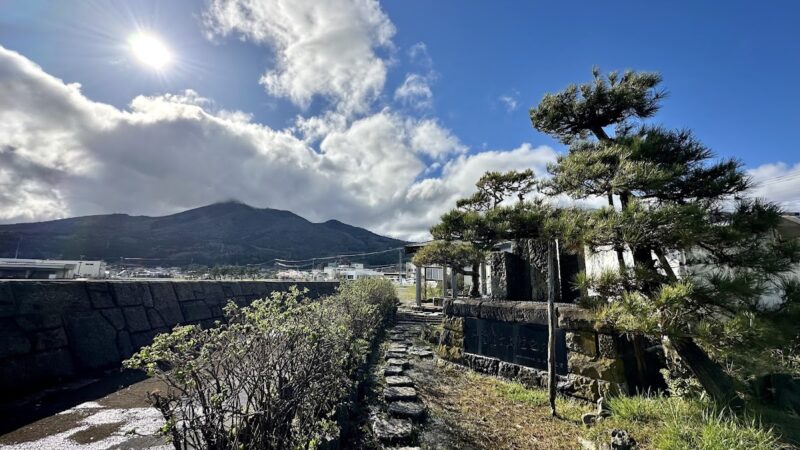
Currently, part of the Iizume Castle ruins is used as an orchard. The sight of the castle ruins scattered among apple orchards and other orchards creates a unique landscape where history and modern life coexist.
Thanks to the cooperation of the orchard owners, important remains have been preserved, and visitors can view the castle ruins while walking through the orchards.
Access and Visiting Guide
Location
Address: Fukuizumi, Iizume, Goshogawara City, Aomori Prefecture
Transportation Access
Access by Car:
- Approximately 30 minutes from Namioka IC on the Tohoku Expressway via National Route 101
- Approximately 15 minutes by car from Goshogawara city center
- Parking: Parking available at Takadate Castle Historical Museum
Access by Public Transportation:
- Approximately 20 minutes by car from Goshogawara Station on the JR Gonō Line
- If using a bus, take the Konan Bus bound for Iizume from Goshogawara Station
Points to Note When Visiting
Visiting Hours: While the castle ruins themselves are open for viewing at all times, the Takadate Castle Historical Museum has specific opening hours, so it is recommended to check in advance.
Clothing and Equipment: Part of the castle ruins is an orchard, and the terrain is uneven, so comfortable walking shoes and clothing are recommended. Particular caution is needed after rain, as the ground can become slippery.
Visiting Etiquette: Since some areas are used as an orchard, respect for private property is necessary. Please refrain from touching fruit trees or crops.
Best Season for Visiting
Spring (April-May): The season when fruit trees bloom creates a beautiful landscape around the castle ruins. The apple blossom season is particularly spectacular.
Autumn (September-October): The fruit trees ripen, creating a lively harvest season atmosphere. It’s also the season of autumn foliage, offering beautiful views from the castle ruins.
Summer (June-August): The greenery is lush, making the castle ruins’ topography clearly visible. However, the dense vegetation can make it somewhat difficult to identify the remains.
Winter (November to March): While heavy snowfall can make visits difficult at times, the absence of leaves during snow-free periods allows for the best observation of the castle’s layout.
Nearby Tourist Attractions
Namioka Castle Ruins
Namioka Castle, which had a close relationship with Iizume Castle, is located in the Namioka district of Aomori City. This castle, the residence of the Kitabatake clan, is also an important historical site that was captured by Oura Tamenobu. Visiting both Iizume Castle and Namioka Castle will provide a deeper understanding of the history of Tsugaru’s unification.
Goshogawara City Center
Goshogawara City Center is home to the Tachineputa Museum, which permanently displays a giant 23-meter-tall Tachineputa float. It is a popular facility for experiencing the traditional culture of the Tsugaru region.
Jusanminato Ruins
Because Iizume Castle was connected to Jusanminato, a key transportation hub, the Jusanminato Ruins are also an interesting historical site. The history of Jusanminato, which flourished as an international trading port in the Middle Ages, is helpful in understanding the strategic importance of Iizume Castle.
Nature of the Tsugaru Peninsula
The area around Iizume Castle is surrounded by the rich nature of the Tsugaru Peninsula. You can enjoy beautiful natural scenery, such as views of Mount Iwaki and the rural landscape of the Tsugaru Plain.
Activities of the Iizume Revitalization Association
The local citizens’ group, “Iizume Revitalization Association,” is working to protect and promote the history and culture of the Iizume area. They continue their efforts to widely convey the charm of the region, such as creating a map called “Our Town Iizume Walking Guide” that introduces local landmarks and recommended spots, including the Iizume Castle ruins.
Through these activities by local residents, the history of Iizume Castle is being passed down to future generations and is cherished as a part of the region’s identity.
Historical Significance of Iizume Castle
Position in the History of Tsugaru Unification
Iizume Castle was the final obstacle in Ōura Tamenobu’s unification of Tsugaru. The ten-year resistance held significance beyond mere military resistance. It symbolized the clash of two values: loyalty based on medieval lord-vassal relationships and the new Sengoku daimyo’s vision of regional unification.
The prolonged resistance of the Asahi clan delayed Tamenobu’s unification of Tsugaru, but conversely, it demonstrated the strategic importance of Iizume Castle and the strength of the Asahi clan.
Value as a Medieval Castle
Iizume Castle possesses typical characteristics of medieval castles in the Tohoku region. Its layout, skillful use of natural terrain, multi-layered defenses with multiple enclosures, and defensive structures such as earthworks and moats make it a valuable example for understanding the castle-building techniques of the time.
In particular, as a flatland castle in the Tsugaru region, its use of terrain and defensive structure exhibit regional characteristics, making it an important historical site for castle research.
Significance in Local History
The history of Iizume Castle holds a significant place in the local history of Goshogawara City and the Tsugaru region. The series of events—the rule of the Asahi clan, the battles against Oura Tamenobu, and the castle’s fall—are crucial elements in shaping the region’s identity.
The fact that the place name “Yoroi-dome” and legends concerning the Asahi clan are still passed down today is a testament to the local residents’ respect for and pride in their history.
How to Enjoy Visiting Iizume Castle
Feeling the Romance of History
Standing at the castle ruins and gazing at the surrounding scenery, one can easily imagine what the Asahi clan saw from this place during the Sengoku period. The flow of the Nukazuka River, the vastness of the Tsugaru Plain, and Mount Iwaki visible in the distance—these views have remained unchanged for over 450 years, and the castle lords must have seen the same landscape.
Standing in the main enclosure, one can truly feel the weight of history by contemplating the determination and loyalty of Asahi Yukiyasu, who resisted Oura Tamenobu for 10 years.
Observing the Ruins
By walking along the remains of the earthworks and examining the layout of the enclosures, you can understand the structure of the castle at that time. Even without specialized knowledge, you can imagine where the center of the castle was and how it was defended by observing the topography and the extent of the flat areas.
Visiting the castle ruins after obtaining information from the Takadate Castle Historical Museum beforehand will lead to a deeper understanding.
Scenery of the Seasons
The castle ruins, now used as an orchard, show different expressions in each of the four seasons. Spring flowers, summer greenery, autumn harvests, and winter snowscapes. You can enjoy a unique landscape where history, nature, and modern life are fused together.
Interaction with the Local People
The people of the Iizume area take pride in their local history and are often happy to guide visitors. The legends and anecdotes heard from the locals are valuable information that cannot be learned from documents alone.
Summary
Iizume Castle (Takadate Castle) is a valuable medieval castle ruin remaining in Goshogawara City, Aomori Prefecture. From its construction in 1344 until its fall in 1588, this castle, defended by successive generations of the Asahi clan, is known as a historical stage where they resisted Oura Tamenobu, who aimed to unify Tsugaru, to the very end.
The remaining earthworks and baileys still convey the structure of the castle at that time, allowing you to experience firsthand the history of the Tsugaru region during the Sengoku period. Visiting the castle ruins in conjunction with learning at the Takadate Castle Historical Museum will provide a deeper understanding.
While being used as an orchard, the Iizume Castle ruins, where important remains are preserved, are a valuable space where history and modernity coexist. It is one of the historical sites you should definitely visit when you come to the Tsugaru region.
Here, you can feel the history of Asahi Yukiyasu’s loyalty and resistance, and the major turning point in history when Oura Tamenobu unified Tsugaru. The history of Iizume Castle is not merely a past event; it teaches us, who live in the present, the meaning of loyalty, pride, and the importance of cherishing local history.