Toyoshima Castle (Akita Prefecture) Complete Guide: A Thorough Explanation of the Sengoku Period Mountain Castle Remains and the History of the Minato Rebellion
Located in Kawabe Tojima, Akita City, Akita Prefecture, Toyoshima Castle is an important mountain castle site from the Sengoku period in Dewa Province. This castle, which was the stage for the Minato Rebellion—a conflict indispensable to understanding Akita’s history—still retains well-preserved remains such as vertical moats and trenches, and is designated as a historical site by Akita Prefecture. This article provides a detailed explanation of Toyoshima Castle’s history, structure, highlights, and access methods for castle enthusiasts and history buffs.
What is Toyoshima Castle?: An Overview of a Sengoku Period Mountain Castle Remaining in Akita City
Toyoshima Castle is a medieval mountain castle located in Tojima-kan, Kawabe Tojima, Akita City. Built on the summit of a ridge extending southwest towards the Iwamigawa River, it boasts a strategically advantageous structure that cleverly utilizes the terrain.
Also known as “Kuwaki Castle,” there is a legend that it was built by Kurokawa Higo-no-kami during the Muromachi period. Currently, it is maintained as the Toyoshima-kan Historical Park, where visitors can see the remains such as dry moats and baileys. Located in a relatively accessible location, about 20 minutes by car from Akita Station and about 10 minutes by car from Wada Station, it is an important historical site for understanding medieval castles in Akita Prefecture.
History of Toyoshima-kan: From the Hatakeyama Clan to the Ando Clan
Origins of the Toyoshima Clan and the Establishment of the Castle
The Toyoshima clan, who are said to be the lords of Toyoshima-kan, are believed to be descendants of Hatakeyama Shigetada. Toyoshima Genba-no-kami (Hatakeyama Shoji Jiro Shigemura) is said to have established his residence in this area, and is thought to have been a family descended from the Hatakeyama clan, a prominent family in the Kanto region.
Another legend states that Kurokawa Higo-no-kami built it as Kuwaki Castle during the Muromachi period, suggesting the transitions between multiple powers in this region. The area around Akita City was a region where a complex power structure unfolded during the medieval period, and Toyoshima Castle was one of its important strongholds.
Relationship with the Ando Clan
Notably, there is a theory that Ando Shigeki, who succeeded the Minato Ando clan, used Toyoshima Castle as his residence. While Minato Castle is generally considered the main base of the Minato Ando clan, it has been suggested that Toyoshima Castle may have functioned as their de facto base for a period.
The Ando clan was a prominent Sengoku-period daimyo family in Akita, divided into the Minato Ando clan and the Hiyama Ando clan, who were in conflict. This conflict between the two led to the Minato Rebellion, which will be discussed later.
The Minato Rebellion and the Fall of Toyoshima Castle in 1588
The most important event in the history of Toyoshima Castle is the “Minato Rebellion,” which recurred in 1588. This conflict escalated from the rivalry between the Minato Ando clan and the Hiyama Ando clan, becoming a large-scale battle that engulfed the entire northern part of Dewa Province.
Toyoshima Shigeuji, the lord of Toyoshima Castle at the time, sided with Ando Takasue, the lord of Minato Castle, and fought against Akita Jōnosuke (Ando Sanesue), the lord of Hiyama Castle. However, the battle turned against Toyoshima Shigeuji when the Twelve Lords of the Yuri region, powerful local families, sided with Akita Sanesue on the Hiyama side, and Toyoshima Shigeuji suffered a defeat. Toyoshima Castle fell in this battle, marking the end of the Toyoshima clan’s rule.
Toyoshima Castle after the Minato Rebellion
It is said that after the fall of Toyoshima Castle, Shin’nai, the younger brother of Akatsu Okuro of Hagawa Castle (one of the Twelve Lords of Yuri), took up residence there. Shin’nai was called “Lord Toyoshima” and is said to have ruled the area. During this period, the Akita region came under the control of the Hiyama Ando clan (later the Akita clan), and Toyoshima Castle was incorporated into the Akita clan’s sphere of influence.
In the Edo period, Tojima (formerly Noda Takaya), where Toyoshima Castle was located, developed as the first post station on the Ushu Kaido road, departing from the Kubota castle town, and transformed from a castle town into a post town.
Structure of Toyoshima Castle: A mountain castle layout utilizing the terrain
Overall layout and use of terrain
Toyoshima Castle is built on the summit of a ridge extending southwest from the northern mountain range towards the Iwamigawa River. This location makes maximum use of the natural strongholds of the river and mountains, demonstrating typical castle construction techniques of the medieval mountain castle.
The castle area is broadly composed of two main parts, with a double defensive structure consisting of the “Front Palace” at the southern end and the “Inner Palace” at the mountaintop. This layout is a clever design to gradually prevent enemy invasions and represents a characteristic of practical castle design from the Sengoku period.
Front Palace: Defensive Base at the Southern End
The enclosure known as “Front Palace” is located at the southernmost end of the ridge. This was a crucial defensive point controlling the entry route to the castle and functioned as the first line of defense.
Moats and earthen ramparts were placed around the Front Palace, creating a system to hinder enemy advances. Multiple defensive structures are continuously arranged along the ridge from this enclosure to the Inner Palace, indicating a multi-layered defensive strategy.
Inner Palace: Main Enclosure at the Summit
The main enclosure known as “Inner Palace” is located at the summit and was the central space of Toyoshima Castle. It is believed to have been the location of the lord’s residence and important facilities, and functioned as the final defensive base.
The Inner Palace is located at a higher elevation than the Front Palace, offering a vantage point overlooking the surrounding area. This layout, utilizing the difference in elevation, offers advantages in terms of command and control and surveillance, and adheres to the basic design principles of mountain castles.
Vertical Moats and Dry Moats: Abundant Remaining Defensive Structures
The most distinctive feature of Toyoshima Castle is the large number of well-preserved remains of defensive structures such as vertical moats and dry moats. These are important defensive facilities designed to prevent lateral movement by the enemy and limit their attack routes.
Vertical moats are moats dug vertically along the slope of a ridge, making it difficult for enemy soldiers to move across the slope. Multiple vertical moats have been identified at Toyoshima Castle, demonstrating its high level of defensive capability as a mountain castle.
Dry moats are moats dug across the ridge, serving to prevent enemies advancing along the ridge. Dry moats are also positioned between the front and inner palaces, allowing each enclosure to function as an independent defensive unit.
Dry Moats and Earthen Embankments
At Toyoshima Castle, defensive lines combining dry moats (moats that do not hold water) and earthen embankments can be seen in various places. The dry moats physically hindered enemy advances, while the earthen embankments functioned as positions from which defending soldiers could conceal themselves and launch attacks.
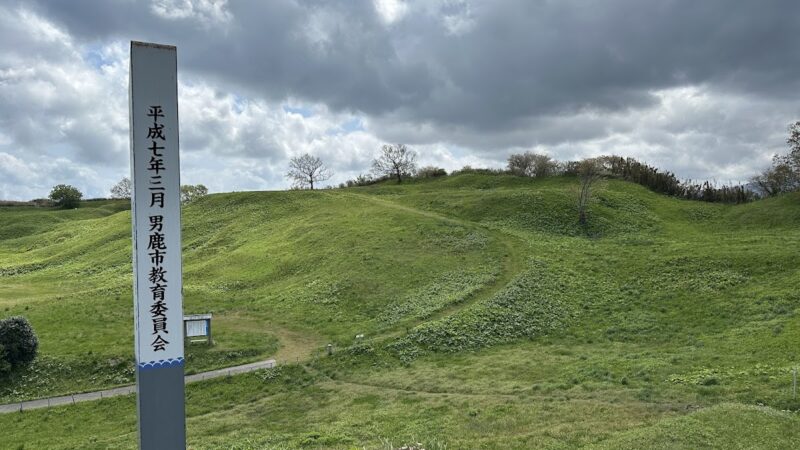
These remains are still clearly visible on the ground surface, allowing visitors to directly observe the castle construction techniques of the Sengoku period. Such well-preserved remains of a medieval mountain castle in Akita City are rare, enhancing the historical value of Toyoshima Castle.
Highlights of Toyoshima Castle: Must-See Points for Castle Enthusiasts
Preservation of the Remains
The greatest attraction of visiting Toyoshima Castle is undoubtedly the excellent state of preservation of its remains. Having escaped the waves of development, this mountain castle retains much of its original appearance, allowing for clear identification of the shapes of the vertical moats and trenches.
The depth of the moats and the continuity of the vertical trenches are particularly impressive, making it an excellent resource for understanding the defensive systems of medieval mountain castles. Those interested in castles can experience these remains firsthand, gaining a real feel for the castle-building techniques and tactical thinking of the Sengoku period.
Layout Integrated with the Topography
Another highlight of Toyoshima Castle is its layout (castle design), which skillfully utilizes the natural terrain. The castle’s design demonstrates ingenuity in maximizing the use of topographical elements such as ridges, valleys, and rivers, creating maximum defensive effect with minimal effort.
Visiting the site allows one to understand the builder’s intentions—why the baileys were placed in this location and why the vertical trenches were dug in this direction—and appreciate the rationality and beauty of medieval mountain castles.
Views and Surrounding Environment
From the mountaintop, one can overlook the surrounding terrain, understanding that Toyoshima Castle served as a base for monitoring and controlling the region’s transportation routes and settlements. While gazing at the plains of the Iwamigawa River basin and the surrounding mountains, you can reflect on the situation in the Akita region during the Sengoku period.
Development as a Historical Park
Currently, Toyoshima Castle is developed as Toyoshima Castle Historical Park, with walking paths and information boards. However, due to its nature as a mountain castle, some level of hiking equipment and physical fitness is required. We recommend preparing comfortable clothing and shoes when visiting.
Toyoshima Castle and the Medieval History of Akita: The Background of the Minato Incident
The Split of the Ando Clan
To understand the history of Toyoshima Castle, it is essential to know the history of the Ando clan. The Ando clan was a powerful family that held influence from northern Dewa Province to Ezo (Hokkaido) during the medieval period, and amassed wealth through trade along the Sea of Japan.
In the latter half of the 15th century, the Ando clan split into the Minato Ando clan and the Hiyama Ando clan due to internal conflict. The Minato Ando clan was based in Akita Port (present-day Tsuchizaki Port, Akita City), while the Hiyama Ando clan was based at Hiyama Castle (present-day Noshiro City). Although they were related, they fiercely opposed each other, and this conflict escalated into the Minato Rebellion.
The Course of the Minato Rebellion
The Minato Rebellion is a general term for several conflicts, but the most intense was the battle in 1588 (Tensho 16). At this time, Ando Takasue, lord of Minato Castle, raised an army against Akita Sanesue (Ando Sanesue), lord of Hiyama Castle.
Toyoshima Shigeuji sided with the Minato Ando clan, but the situation became unfavorable as many of the Twelve Lords of Yuri sided with the Hiyama clan. The Twelve Lords of Yuri were a coalition of powerful clans in the Yuri region (around present-day Yurihonjo City), and their actions were a crucial factor in determining the outcome of the battle.
Ultimately, the Hiyama Ando clan emerged victorious, and Akita Sanesue unified northern Dewa Province. The power of the defeated Minato Ando clan declined, and Toyoshima Castle also fell in this battle.
The Twelve Lords of Yuri and Toyoshima Castle
After the Minato Rebellion, Akatsuo Shinnai, who entered Toyoshima Castle, was a member of the Akatsuo clan of the Hagawa Castle, one of the Twelve Lords of Yuri. The Twelve Lords of Yuri were a confederation of local powerful families in the Yuri region, including the Akaotsu, Iwaya, Hagawa, and Nikaho clans, and played an important role in the Akita region during the Sengoku period.
The fact that Toyoshima Castle came under the control of a family of the Twelve Lords of Yuri symbolizes the incorporation of this region into the sphere of influence of the Hiyama Ando clan (Akita clan).
Access and Visiting Guide to Toyoshimakan
Basic Information
Location: Toyoshimakan, Kawabe Tojima, Akita City, Akita Prefecture
Designation: Akita Prefecture Historic Site
Visiting: Free (Maintained as a historical site park)
Estimated Visiting Time: 30 minutes to 1 hour
Difficulty: Intermediate (Mountain climbing required as it is a mountain castle)
Access by Car
- From Akita Station: Approximately 20 minutes by car
- From Wada Station: Approximately 10 minutes by car
- From Akita Expressway, Akita Minami IC: Approximately 15 minutes
There is parking space at Toyoshimakan Historic Site Park, but the number of spaces is limited. Setting “Toyoshimakan Historic Site Park” or the address in your car navigation system is convenient.
Access by Public Transportation
Access by public transportation is somewhat inconvenient. Wada Station on the JR Ou Main Line is the nearest station, but it is a considerable distance on foot, so taking a taxi is recommended. Alternatively, renting a car from Akita Station is a more practical option.
Points to Note When Visiting
- Clothing: As it is a mountain castle, comfortable clothing and non-slip shoes (such as trekking shoes) are essential.
- Season: Visiting during the snowy season (December to March) is difficult. Spring to autumn (April to November) is the best time.
- Insect Protection: In the summer, there are many insects, so insect repellent spray and long-sleeved clothing are recommended.
- Drinking Water: There are no vending machines in the mountains, so please bring your own drinking water.
- Solo Travel: Visiting in groups is safer if possible.
Points to Note When Visiting
While there are information boards in the historical park, learning about the history and structure of Toyoshima Castle beforehand will allow you to enjoy it more deeply. In particular, walking while noting the locations of the vertical moats and trenches will allow you to appreciate the ingenuity of the defensive system.
When taking photographs, it’s best to find an angle that captures the overall structure of the ruins. The depth of the moats and the continuity of the vertical trenches, in particular, can be conveyed effectively by photographing them from the right position.
Nearby Tourist Attractions
Castles and Historical Sites in Akita City
When visiting Toyoshima-kan, we recommend also visiting other castles and historical sites in Akita City.
Kubota Castle: The residence of the Satake clan of the Kubota Domain, located in the center of Akita City. It has been developed into Senshu Park, and the corner turret has been restored. It is approximately a 30-minute drive from Toyoshima-kan.
Akita Castle Ruins: An ancient castle site from the Nara and Heian periods, designated as a national historic site. It is an important site for understanding ancient Akita.
Sights in the Kawabe Area
The Kawabe area, where Toyoshima-kan is located, also has other attractions. Exploring the natural scenery along the Iwami River and searching for traces of the former post town on the Ushu Kaido road would be interesting. ### Yurihonjo Area
If you have time, visiting castles in the Yurihonjo City area is also recommended. Castles associated with the Twelve Lords of Yuri, such as Honjo Castle and Hagawa Shinkan, are scattered throughout the area, allowing for a deeper understanding of the historical background of Toyoshima Castle.
Evaluation of Toyoshima Castle and its Value as a Castle
Evaluation from Castle Enthusiasts
Within the castle enthusiast community, Toyoshima Castle is highly regarded as “Akita’s hidden gem, with well-preserved remains.” While not necessarily well-known, visitors highly praise the excellent state of preservation of its moats and trenches.
Castle information websites such as Kojodan allow you to view photos and reports posted by visitors, which is helpful for gathering information beforehand. The average visit time is said to be around 30-40 minutes; if you want to explore thoroughly, allow about an hour.
Academic Value
Toyoshima Castle is an important resource for the study of medieval mountain castles in Akita Prefecture. This castle is linked to a specific historical event, the Minato Incident, making it a valuable example of comparing historical documents with archaeological remains.
Furthermore, its relationship with powerful forces representing medieval Akita history, such as the Yuri Twelve Lords and the Ando clan, is clear, giving it an important position in regional history research.
Preservation Status and Future Challenges
Toyoshima Castle, designated as an Akita Prefecture Historic Site and developed as a historical park, is susceptible to weathering and vegetation changes due to its mountain castle nature. Appropriate preservation management and improved information provision for visitors are needed going forward.
Summary: The Charm and Significance of Visiting Toyoshima Castle
Toyoshima Castle (Akita City, Akita Prefecture) is an important mountain castle in Dewa Province during the Sengoku period and a historical site that was the stage for the Minato Incident. It has a complex history, tracing its lineage from the Toyoshima clan (descendants of the Hatakeyama clan) to the Ando clan and then to the Yuri Twelve Lords, and is a valuable castle ruin with well-preserved remains such as vertical moats and trenches. Located just a 20-minute drive from central Akita City, its easy accessibility is a major draw, making it a highly worthwhile spot for anyone interested in Akita’s history and castles. The castle’s layout, utilizing the unique terrain of a mountain castle, and its numerous defensive structures designed with actual battle in mind, convey the medieval castle-building techniques and the tension of the Sengoku period to the present day.
When visiting Akita, be sure to stop by Toyoshima Castle and experience the atmosphere of the Sengoku period. Walking through the ruins, reflecting on the lives of those who fought in the Minato Rebellion and the history of the Toyoshima clan who ruled this land, will surely be an unforgettable experience.