Kusaizaki Castle (Yuzawa City, Akita Prefecture): A Thorough Explanation of the Yokobori Mountain Castle Ruins
Kusaizaki Castle, located in Yokobori, Yuzawa City, Akita Prefecture, is a valuable medieval mountain castle that preserves its remains to this day. Built on a mountaintop approximately 250m above sea level, this castle functioned as a defensive structure, utilizing the steep terrain with a relative height of approximately 100m. This article provides a detailed explanation of Kusaizaki Castle’s historical background, the characteristics of its remains, and access methods, for castle enthusiasts and history buffs.
Basic Information on Kusaizaki Castle
Kusaizaki Castle is a medieval mountain castle located in the Yokobori area in the eastern part of Yuzawa City, Akita Prefecture. It is believed to have functioned as a base for a local powerful family in Dewa Province.
Location and Geographical Characteristics
- Location: Yokobori, Yuzawa City, Akita Prefecture
- Castle Classification: Mountain Castle
- Elevation: Approximately 250m
- Relative Height: Approximately 100m
- Construction Period: Medieval Period (Details Unknown)
- Main Remains: Earthworks, Enclosures (Kuruwa), Moats
Kusaizaki Castle is located east of Yuzawa city center, built on a strategically important location overlooking the southern part of the Yokote Basin. Its location takes advantage of the geographical characteristics of the southern part of the Yokote Basin, sandwiched between the Ou Mountains to the east and the Dewa Mountains to the west.
Positioning within Yuzawa City’s Castle Group
Besides Kusaizaki Castle, several other castles exist in Yuzawa City. The most famous is Inaniwa Castle, built on the site of the residence of the Onodera clan, who ruled the southern part of the prefecture for approximately 400 years from the early Kamakura period. Furthermore, the Yuzawa Castle ruins remain within the city limits as a designated historical site of Yuzawa City, and it has a history of being demolished due to the “One Castle Per Province” decree.
Unlike these major castles, Kusaizaki Castle likely served as a subsidiary castle for local powerful families or lords, making it an important site for understanding the medieval territorial control system in the Yuzawa region.
Historical Background of Kusaizaki Castle
Political Situation in Medieval Dewa Province
The southern part of Dewa Province, where Kusaizaki Castle was built during the medieval period, was a region where multiple forces vied for supremacy. In particular, southern Akita Prefecture was a period when powerful families, centered around the Onodera clan, were expanding their influence.
The Onodera clan controlled the area around present-day Yuzawa City and Ogachi District from the early Kamakura period to the end of the Sengoku period. Their base was Inaniwa Castle, and it is believed that subsidiary castles and forts were located in the surrounding area. Kusaizaki Castle may have functioned as one of these subsidiary castles.
Purpose and Function of the Castle
Kusaizaki Castle, a mountain castle, is presumed to have had the following functions due to its location:
- Military Defensive Base: Its terrain, at an altitude of 250m and a relative height of 100m, makes it a natural stronghold to prevent enemy invasions.
- Surveillance Function: Its position overlooking the southern part of the Yokote Basin allowed for monitoring of roads and transportation routes.
- Base for Territorial Control: A residence for local powerful families who governed the surrounding area.
- Emergency Shelter: Serving as a fortified outpost, where residents lived at the foot of the mountain during peacetime and took refuge in the mountain castle during wartime.
From the Sengoku Period to the Early Modern Period
At the end of the Sengoku period, the Onodera clan became embroiled in conflicts with the Mogami and Akita clans. After the Battle of Sekigahara, the Onodera clan was dispossessed of their domain, and this region came under the control of the Satake clan. In the Edo period, many castles were demolished due to the “One Castle Per Province” decree, and it is believed that Kusaizaki Castle also lost its function as a military facility.
Remains and Highlights of Kusaizaki Castle
Arrangement of Enclosures (Kuruwa)
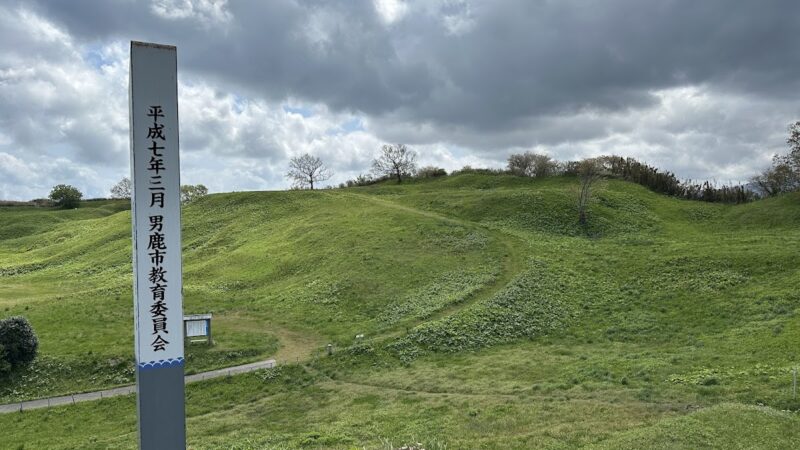
The most distinctive feature of Kusaizaki Castle is the multiple enclosures located on the mountaintop. A series of enclosures arranged in stages can be seen, centered around the main enclosure.
The main enclosure is located in the center of the castle, at the highest elevation. This is presumed to be the location of the lord’s residence and command post. Traces of earthworks remain around it, suggesting a strong defensive structure.
Around the main enclosure are secondary enclosures such as the second and third enclosures, which are thought to have been used as garrisons for soldiers and storage areas for supplies.
Structure of Earthworks
At Kusaizaki Castle, earthworks surround the enclosures. These earthworks function as a defensive wall to prevent enemy intrusion, while also providing a walkway and defensive positions during battles.
The earthworks of medieval mountain castles were generally constructed by piling up earth rather than using stone walls, and the earthworks of Kusaizaki Castle were built using this traditional method. Even today, some of the earthworks remain clearly visible, providing valuable information about the castle-building techniques of the time.
Moat Arrangement and Defensive System
The remains of moats have also been confirmed at Kusaizaki Castle. Unlike the water-filled moats of flatland castles, the moats of mountain castles are fundamentally dry moats dug into the ground.
Moats were constructed between enclosures or at boundaries separating the castle grounds from the outside, functioning as obstacles to hinder enemy advances. In particular, horikiri (cut moats) constructed to cut across ridges are important defensive features unique to mountain castles.
The moats of Kusaizaki Castle are skillfully arranged, utilizing the undulations of the terrain, demonstrating the advanced civil engineering skills of the medieval castle builders.
Ascent Route and Entrance
The ascent route to a mountain castle is a defensive weak point, so it is designed to be winding rather than straight, and to be a narrow passage. At Kusaizaki Castle, such defensive considerations can be seen in the path from the foot of the mountain to the main enclosure.
The entrance to the castle, the entrance gate (koguchi), is the place that requires the strongest defense. By creating a narrow passage flanked by earthworks, the number of enemies that could enter at once was limited, creating a battle space advantageous to the defenders.
Current Status and Preservation of Kusaizaki Castle
Remaining Structures
Even after several hundred years since its construction, Kusaizaki Castle’s main remains, such as earthworks, enclosures, and moats, remain in relatively good condition. This is thought to be due to the fact that the area did not undergo large-scale development after the Edo period.
Because it has been preserved as a forest, it has been less affected by modern land alteration, making it a valuable historical site that conveys the appearance of a medieval mountain castle to the present day. However, due to tree growth and natural weathering, some of the remains are unclear in places.
Status of Cultural Property Designation
While Kusaizaki Castle is recognized as a cultural property of Yuzawa City, unlike Yuzawa Castle Ruins, which is a city-designated historical site, it may not currently have formal cultural property designation. However, among castle researchers and history enthusiasts, it is recognized as an important site for understanding the medieval history of southern Akita Prefecture.
Access and Visiting Information for Kusaizaki Castle
Access Methods
Using Public Transportation:
- The nearest station is JR Ou Main Line “Yuzawa Station”.
- Take a bus or taxi from Yuzawa Station to the Yokobori area.
- From the Yokobori area, you will need to walk to the castle.
Using a Private Car:
- Head east on National Route 398 from Yuzawa city center.
- Head towards the Yokobori area and follow the signs.
- Parking space is limited, so be careful when parking on the street.
Precautions When Visiting the Castle
Kusaizaki Castle is a mountain castle and not a well-maintained tourist facility. When planning your visit, please note the following:
- Clothing and Equipment: Wear appropriate clothing and shoes for hiking. The ground can be particularly slippery after rain.
- Season: Spring to autumn is the best time to visit. Winter is dangerous due to snow.
- Bear Precautions: Bears have been sighted in the mountainous areas of Akita Prefecture. Carrying a bear bell is recommended.
- Avoiding Solo Activities: It is safer to visit the castle in groups whenever possible.
- Prior Confirmation: We recommend checking the latest information with the Yuzawa City Tourism and Products Association, etc.
Visiting Surrounding Castles in Combination
When visiting Yuzawa City, visiting the following castles in addition to Kusaizaki Castle will give you a deeper understanding of the castle history of this region:
Yuzawa Castle Ruins: Designated as a Yuzawa City historical site, it is easily accessible from the city center. Developed as a Millennium Park, it is close to Yuzawa Station and is important as a castle with a history of being demolished under the “One Castle Per Province” decree.
Inaniwa Castle: A replica keep built on the site of the Onodera clan’s residence is located inside, and the interior is open to the public as a local history museum. It is a facility where you can learn about the history of the southern part of the prefecture from the Kamakura period to the Sengoku period.
Historical Relationship Between Kusaizaki Castle and Yuzawa City
Historical Overview of Yuzawa City
Yuzawa City is located at the southeastern tip of Akita Prefecture and is a region with a rich history within the Tohoku region. It flourished as a transportation hub from ancient times and developed under the rule of the Onodera clan during the medieval period.
During the Edo period, it became the territory of the Satake clan, and Yuzawa was developed as a castle town. The current center of Yuzawa City corresponds to the former Yuzawa Town and retains traces of its historical streetscape.
Medieval Territorial Control and Castle Networks
Medieval feudal lords constructed a “castle network” with multiple branch castles centered around a main castle. Kusaizaki Castle is thought to have played a role as a branch castle in this network, responsible for the defense and governance of the Yokobori area.
Within the territory controlled by the Onodera clan, Inaniwa Castle served as the main castle, with numerous branch castles and forts surrounding it. These castles cooperated with each other, forming a multi-layered defensive network against enemy invasions.
Medieval feudal lords constructed a “castle network” with multiple branch castles centered around a main castle. ### Changes Since the Early Modern Period
During the Edo period, many castles were demolished due to the “One Castle Per Province” decree. It is presumed that Kusaizaki Castle also ceased its role as a military facility during this period. Afterward, the castle site was left as a forest, resulting in the preservation of its remains.
Since the Meiji era, while Yuzawa has been affected by the wave of modernization, it has continued to protect traditional industries such as Inaniwa udon noodles and Kawatsura lacquerware. Along with these historical cultural heritage sites, castle ruins like Kusaizaki Castle are now recognized as important assets that convey the history of the region.
Investigation and Research of Kusaizaki Castle
Position in Castle Research
Kusaizaki Castle is one of the ruins that attracts attention among castle researchers and history enthusiasts. In particular, it is introduced in detail with photographs in castle databases such as “Castle Wanderings,” making it a valuable example for the study of medieval mountain castles in Akita Prefecture.
Potential for Future Research and Investigation
Many aspects of Kusaizaki Castle remain unclear:
- Identifying the Construction Date: Due to a lack of historical documents, the exact construction date is unknown.
- Identifying the Castle Lord: It remains unclear who built and ruled this castle.
- The Castle’s Scale and Structure: Detailed surveying is expected to allow for the creation of a more accurate layout map.
- Relationship with Surrounding Archaeological Sites: Investigation of settlement sites and related facilities at the foot of the mountain is necessary.
Future archaeological investigations and the excavation of historical documents are expected to reveal more about the true nature of Kusaizaki Castle.
Other Historical Attractions in Yuzawa City
When visiting Kusaizaki Castle, we recommend also visiting other historical and cultural spots in Yuzawa City.
Traditional Industries of Yuzawa City
Inaniwa Udon: Inaniwa Udon, considered one of Japan’s three great udon noodles, is a traditional food with a history of over 300 years in the Inaniwa district of Yuzawa City.
Kawatsura Lacquerware: Boasting a history of 800 years, Kawatsura lacquerware is designated as a national traditional craft. At the Kawatsura Lacquerware Traditional Craft Museum, visitors can observe and experience the production process.
Tourist Facilities
Akita Prefectural Museum of Modern Art: Located in Yokote City, adjacent to Yuzawa City, it exhibits works by artists associated with Akita.
Koyasu Gorge Hot Springs: A gorge located in the southern part of Yuzawa City, famous for its “Great Geyser,” where hot water erupts from a cliff.
Summary: The Historical Value of Kusaizaki Castle
Kusaizaki Castle, a medieval mountain castle remaining in Yokobori, Yuzawa City, Akita Prefecture, possesses the following historical value:
- Remains that convey medieval castle-building techniques: Basic elements of a mountain castle, such as earthworks, baileys, and moats, are well-preserved.
- Important material for regional history research: Clues to understanding the territorial control of southern Dewa Province in the medieval period, centered on the Onodera clan.
- Part of a castle network: An example of a defensive system using a main castle and subsidiary castles.
- Historical heritage in harmony with the natural environment: Preserved as a forest, it forms a landscape integrated with nature.
Kusaizaki Castle is not a flashy tourist facility, but it is a valuable historical site that offers the pleasure of walking through nature while feeling the history. When you visit Yuzawa City, why not visit this quiet mountain castle along with Inaniwa Castle and Yuzawa Castle ruins?
As you trace the remains of the defensive structures built by people in the medieval period, you can reflect on the tension and strategic thinking of that time. Kusaizaki Castle is an important cultural heritage site that tells the history of southern Akita Prefecture, and it should continue to be preserved and studied.