Furuhorita Castle (Semboku City, Akita Prefecture) – A Complete Guide to the History and Highlights of an Important Branch Castle of the Tozawa Thirty-Five Castles
Located in Semboku City, Akita Prefecture, Furuhorita Castle is known as an important branch castle of the Tozawa clan, who ruled Dewa Province during the Sengoku period. Counted as one of the “Tozawa Thirty-Five Castles,” this castle was abandoned in 1590 by order of Toyotomi Hideyoshi, but remains from that time can still be seen today. This article provides detailed information useful for castle enthusiasts and history fans, from the history and structure of Furuhorita Castle to its highlights and access methods.
Overview and Basic Information of Furuhorita Castle
Furuhorita Castle is a medieval mountain castle located in the Tazawako area of Semboku City, Akita Prefecture. Also known as “Yokota Castle,” it was called by this name during the time of the Tozawa clan’s rule. The castle’s location was strategically important, functioning as a base for defending the northern part of the Tozawa territory.
Basic Castle Data
- Location: Tazawako, Semboku City, Akita Prefecture
- Castle Structure: Mountain Castle
- Construction Period: Details unknown (some theories suggest it predates the Sengoku period)
- Builder: Unknown (various theories exist)
- Main Lords: Tozawa clan or their retainers
- Year of Abandonment: Tensho 18 (1590)
- Remains: Enclosures, moats, earthworks, etc.
- Designated Cultural Property: None
History of Kohorita Castle
Various Theories Regarding its Origin
There are several theories regarding the origin of Kohorita Castle, and many aspects of its history remain unclear. The main theories include the following:
Ainu Chashi Theory
The theory suggesting the oldest origin is that Kohorita Castle was originally an Ainu fort called a “chashi.” The northern Tohoku region has been inhabited by the Ainu people since before the Middle Ages, and cases of their defensive structures being later used as Japanese castles have been confirmed in other regions as well. Some point out that the location and early structure of Furuborita Castle exhibit characteristics of a Chashi (ancient Ainu fortified settlement).
Theory of Tozawa Kanemori’s Retirement Castle
There is also a theory that Furuborita Castle was built as a retirement castle for Tozawa Kanemori, the head of the Tozawa clan during the Sengoku period. Tozawa Kanemori was an important figure who contributed to the expansion of the Tozawa clan’s power, and it is said that he retained influence as an advisor to the family even after retirement. According to this theory, Furuborita Castle may have functioned as a retirement residence for the clan head and as a refuge in emergencies.
Tozawa Clan Rule Era
During the time the Tozawa clan ruled Furuborita Castle, it was called “Yokota Castle.” The Tozawa clan was a Sengoku daimyo (feudal lord) based in northern Dewa Province, and at its peak, controlled a vast territory stretching from present-day northern Akita Prefecture to northern Iwate Prefecture.
The Tozawa clan’s castle changed over time. Initially, their base was Kadoya Castle, but they later moved to Kakunodate Castle. Kakunodate is now known as “Little Kyoto of Michinoku” and retains its historical townscape. Even after the main castle moved to Kakunodate, Furuborita Castle continued to function as an important branch castle defending the northern part of the Tozawa territory.
Castle Lord and Role
It is believed that a member of the Tozawa clan or a senior retainer was appointed as the castle lord of Furuborita Castle. While the specific name of the castle lord is unclear due to a lack of historical records, it undoubtedly held an important position within the Tozawa clan’s network of branch castles.
The main roles of the castle were as follows:
- Defense of the Northern Border: A frontline base protecting the northern border of the Tozawa domain.
- Monitoring of Transportation Routes: A base for monitoring and controlling important roads.
- Center of Regional Governance: The administrative and military center of the surrounding area.
- Intelligence Gathering: An intelligence base for monitoring the movements of hostile forces.
Tozawa Thirty-Five Castles and Furuborita Castle
Furuborita Castle is counted as one of the “Tozawa Thirty-Five Castles.” The Tozawa Thirty-Five Castles is a collective term for the major castles controlled by the Tozawa clan, referring to a network of branch castles located throughout the domain, centered around the main castle, Kakunodate Castle.
These castles cooperated with each other, transmitting information through signal fires and other means to build a defense system within the domain. Furuborita Castle is thought to have played a crucial role as a key point in the northern defense.
Abandonment of Castles by Toyotomi Hideyoshi
In 1590 (Tensho 18), Toyotomi Hideyoshi’s siege of Odawara ended, completing the unification of Japan. Hideyoshi ordered all daimyo throughout the country to consolidate their castles, preceding the “One Castle Per Province” decree, resulting in the abandonment of many branch castles.
The Tozawa clan also complied with this order, abandoning all of their 35 castles except Kakunodate Castle. Furuhorita Castle was also abandoned at this time, ending its historical role after more than 400 years.
After its abandonment, the castle site gradually returned to nature, and today only remnants remain within the forest.
Structure and Layout of Furuhorita Castle
Location and Topographical Characteristics
Furuhorita Castle was built as a mountain castle, possessing a defensive structure that skillfully utilizes the surrounding terrain. It has a typical mountain castle structure, with the main enclosure at the mountaintop and multiple enclosures arranged along the ridge.
The castle’s location has the following characteristics:
- View from High Place: Situated on a hill overlooking the surrounding area, allowing for early detection of approaching enemies.
- Natural Line of Defense: Steep slopes functioned as a natural defensive wall.
- Securing Water Source: It is presumed that there was a water source within or near the castle.
- Monitoring of Transportation Routes: Located overlooking an important highway.
Major Remains
Currently, the following remains can be confirmed at the site of Furuborita Castle:
Enclosures (Kuruwa)
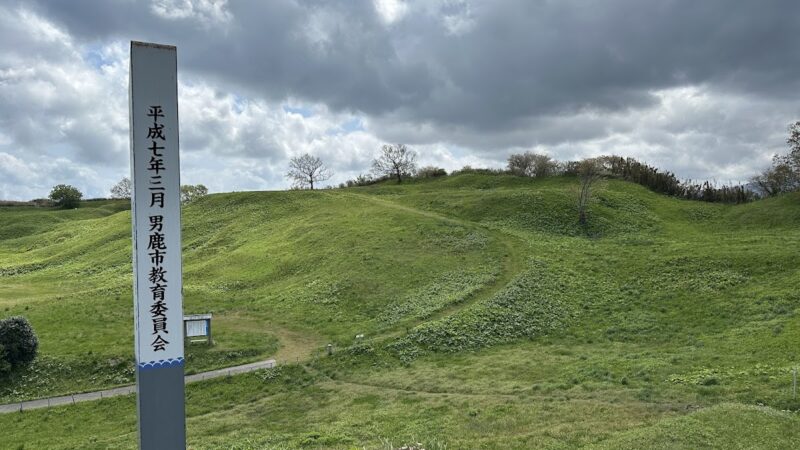
Multiple flat areas have been identified, and these are thought to have functioned as enclosures. It is possible that the enclosures were arranged in stages, with the main enclosure at the center, followed by the second and third enclosures. The size of the enclosures is relatively small, suggesting that the number of troops stationed there was limited.
Moats (Horikiri)
Multiple moats, dug to cut across the ridge, have been identified. The moats served to prevent enemy intrusion while also clearly defining the castle grounds. The moats at Furuhorita Castle are relatively large, suggesting an emphasis on defensive function.
Earthworks
Traces of earthworks remain along the edges of the enclosures. Earthworks are defensive walls built by piling up earth, serving to protect against enemy arrows and firearms. While the earthworks at Furuhorita Castle are weathered, their traces allow us to infer the defensive system of the time.
Vertical Moats
Vertical moats dug along the slopes have also been identified. Vertical moats were a technique to restrict the movement of enemies climbing the slopes, creating a situation advantageous to the defenders.
Characteristics of the Castle’s Layout
The layout (design and arrangement) of Furuborita Castle exhibits typical characteristics of a Sengoku period mountain castle, while also showing regional uniqueness:
- Consecutive Enclosure Arrangement: A continuous enclosure structure with enclosures arranged along the ridge.
- Extensive Use of Moats: Moats strategically placed to emphasize defense.
- Compact Design: Designed for defense by a small, elite force, rather than for stationing a large army.
- Harmony with the Topography: An efficient design that makes maximum use of the natural terrain.
Highlights of Furuborita Castle
Points to Observe the Remains
Here are some points to note when visiting Furuborita Castle.
View from the Main Enclosure
From the main enclosure, the highest point of the castle, you can enjoy a panoramic view of the surrounding terrain. On a clear day, you can see as far as the distant mountains, allowing you to appreciate the strategic value of this castle. The former lords of the castle likely surveyed their territory from this very spot, directing their defenses.
The Impressive Moat
The moat of Furuborita Castle remains in relatively good condition, showcasing the advanced civil engineering techniques of the Sengoku period. The deeply excavated moat is on a scale that seems impossible to have been built solely by human labor, demonstrating the mobilization capacity of the workforce at the time.
Traces of Earthworks
Although weathered, the traces of earthworks remaining on the edge of the enclosures are important for understanding the castle’s defensive structure. The height and width of the earthworks allow us to estimate the level of defensive strength.
Harmony with Nature
The current Furuborita Castle ruins are surrounded by abundant nature, offering beauty throughout the seasons. The fresh greenery of spring, the deep green of summer, the autumn foliage, and the snowy winter landscape each present a different face. The landscape, where historical remains and natural beauty harmonize, leaves a deep impression on visitors.
Photography Tips
The following are recommended photography points when visiting the castle ruins:
- Panoramic View of the Moat: An angle that shows the depth and scale of the moat.
- Flat Surface of the Enclosure: A photograph of the enclosure that helps understand the structure of the castle.
- View from the Main Enclosure: A wide-angle shot including the surrounding scenery.
- Cross-section of the Earthwork: A close-up that shows the structure of the earthwork.
- Seasonal Scenery: A combination of the castle ruins and nature in each season.
Access Information
Access by Public Transportation
The following routes are common when accessing the Furuborita Castle Ruins by public transportation:
Using JR
- Get off at “Tazawako Station” on the JR Akita Shinkansen.
- Take a local bus or taxi from Tazawako Station.
- Walk from the nearest bus stop or point to the castle ruins.
Tazawako Station is accessible from Tokyo in approximately 3 hours by Akita Shinkansen. It is about 1 hour from Akita Station by local train. Important Notes
- Public transportation is limited around the castle ruins, so it is recommended to check the bus timetable in advance.
- Taking a taxi is also worth considering (approximately 15-20 minutes from Tazawako Station).
Access by Car
Access by car is the most convenient:
Using the Expressway
- Approximately 40 minutes from the Akita Expressway “Omagari IC” via National Route 105
- Approximately 1 hour from the Tohoku Expressway “Morioka IC” via National Route 46
Parking Information
There is no dedicated parking lot around the castle ruins, but you will need to park in a safe place on the roadside. Please be considerate of local residents when visiting.
Precautions When Visiting
When visiting the Furuborita Castle Ruins, please note the following:
- Mountaineering Equipment: As it is a mountain castle, appropriate clothing and shoes for mountaineering are necessary.
- Season and Weather: Visiting in winter is difficult due to snow. Sunny days from spring to autumn are recommended.
- Insect repellent: Insect repellent spray and other measures are necessary during the summer.
- Drinking water: There are no vending machines around the castle ruins, so prepare in advance.
- Mobile phone: Due to the mountainous area, there are places where cell phone reception is poor.
- Avoiding solo travel: Visiting with multiple people is safer if possible.
- Protection of historical remains: Please be careful not to damage the historical remains.
Nearby tourist spots
When visiting the Furuhorita Castle ruins, we recommend also visiting other tourist spots in Semboku City.
Kakunodate Samurai Residence Street
Kakunodate, known as “Little Kyoto of Michinoku,” is a historical town where the Tozawa clan’s castle was located. The street lined with samurai residences is designated as a National Important Preservation District for Groups of Traditional Buildings, and retains a strong atmosphere of the Edo period. The lords of Furuhorita Castle also had a deep connection with Kakunodate.
Lake Tazawa
Lake Tazawa, boasting the deepest depth in Japan (423.4m), is a representative tourist attraction of Semboku City. Its highly transparent waters exhibit a mystical lapis lazuli color, offering beautiful scenery throughout the four seasons. A legend of Princess Tatsuko also remains on the lakeshore.
Nyuto Onsenkyo
Located northeast of Lake Tazawa, Nyuto Onsenkyo is a secluded hot spring village with seven scattered inns. Each inn has a different water quality, making it ideal for soothing tired bodies after exploring the castle ruins.
Mount Akita-Komagatake
Mount Akita-Komagatake, at an elevation of 1,637m, is an active volcano belonging to the Towada-Hachimantai National Park. Known as a treasure trove of alpine plants, it attracts many climbers in the summer.
Historical Background of Furuborita Castle and the Tozawa Clan
Genealogy of the Tozawa Clan
The Tozawa clan was a prestigious family descended from the Seiwa Genji clan, and ruled the northern part of Dewa Province from the Kamakura period. During the Sengoku period, the Tozawa clan expanded their power through repeated conflicts with surrounding local lords, and at their peak, they controlled a vast territory stretching from northern Akita Prefecture to northern Iwate Prefecture.
The Tozawa Clan’s Castle Strategy
The Tozawa clan established a network-type defense system by placing numerous branch castles within their territory. This had the following advantages:
- Dispersed Defense: Preventing enemy attacks from concentrating on a single point
- Rapid Information Dissemination: Quickly sharing information through signal fires, etc.
- Regional Governance: Achieving efficient governance by establishing bases in various locations
- Securing Reserve Forces: Dispersing troops to each castle
Furuhorita Castle played a crucial role in this network.
The Tozawa Clan under the Toyotomi Regime
After the Siege of Odawara in 1590, the Tozawa clan submitted to Toyotomi Hideyoshi. While many branch castles were abandoned at Hideyoshi’s command, their main territory was secured, and they continued to exist as a daimyo in the early modern period. During the Edo period, the family was transferred to the Shinjo Domain in Hitachi Province (present-day Shinjo City, Yamagata Prefecture), and ruled the area until the Meiji Restoration.
The Value of Kohorita Castle in Castle Research
Academic Significance
Kohorita Castle is academically important for the following reasons:
- Elucidation of Local History: Important historical material for understanding the Tozawa clan’s rule system
- Study of Castle Structure: A typical example of a medieval mountain castle in the Tohoku region
- Connection with Ainu Culture: If the Chashi theory is correct, it is a site that shows cultural contact between the Japanese and the Ainu
- Study of the Castle Abandonment Process: An example of castle reorganization by the Toyotomi regime
Challenges of Preservation and Utilization
Although the Kohorita Castle ruins are not currently designated as a cultural property, they are a site of high historical value. Future challenges include:
- Detailed surveying of the ruins
- Clarification of historical facts through archaeological excavations
- Establishment of an appropriate preservation and management system
- Examination of strategies for utilizing the site as a tourist resource
- Promotion of historical education for local residents
These are some of the challenges.
Summary
Furuhorita Castle is the site of a Sengoku period mountain castle located in Semboku City, Akita Prefecture. It functioned as an important branch castle of the Tozawa clan and was responsible for the defense of the northern part of the Tozawa territory until its abandonment in 1590.
There are various theories about the castle’s origin, including theories that it was an Ainu chashi (fortified site) or a retirement castle of Tozawa Kanemori, leaving many aspects shrouded in mystery. Even today, remains such as moats, baileys, and earthworks can be seen, allowing visitors to learn about the castle structure of the Sengoku period.
Semboku City has many tourist attractions, including the samurai residences of Kakunodate and Lake Tazawa. When visiting the ruins of Furuborita Castle, combining it with visits to these other tourist spots will allow you to enjoy a more fulfilling historical sightseeing experience.
Visiting requires hiking gear, and sunny days from spring to autumn are recommended. Public transportation access is limited, so visiting by car is convenient. While being careful not to damage the ruins, why not reflect on the historical romance of the Sengoku period?
Furuborita Castle is an important heritage site that tells the history of Akita Prefecture, and it is hoped that it will continue to be appropriately preserved and utilized in the future.