Asuke Castle Complete Guide | History, Highlights, and Access Information for Japan’s First Fully Restored Mountain Castle
What is Asuke Castle? – A Sengoku Period Mountain Castle Revived After 400 Years
Asuke Castle is a Sengoku period mountain castle located on Mt. Mayumi (elevation 301 meters) in Asuke-cho, Toyota City, Aichi Prefecture. Its official name is Mayumiyama Castle, but the name “Asuke Castle” was adopted in 1993 when the castle ruins park opened, based on the opinions of local residents.
This castle, developed as Asuke Castle Ruins Park, occupies an extremely important position in castle history research as the first mountain castle in Japan to be fully restored based on archaeological excavations. Opened to commemorate the 100th anniversary of Asuke Town’s establishment, this facility is not merely a tourist attraction, but also a valuable historical resource that allows us to understand the reality of a Sengoku period mountain castle.
From the summit of Mt. Mayumi, you can enjoy a panoramic view of the old town of Asuke and the Nakasendo Road, experiencing the scenery that the former castle lords once saw. Unlike the early modern castles that utilized stone walls, this castle faithfully reproduces the appearance of a medieval mountain castle, primarily using earthworks and moats, conveying the true form of a mountain castle as a practical defensive structure during the Sengoku period.
History of Asuke Castle – The Suzuki Clan and Mikawa in the Sengoku Period
The Origins of the Suzuki Clan and Asuke Castle
Asuke Castle is known as the residence of the Asuke Suzuki clan, a branch of the Mikawa Suzuki clan. The Suzuki clan was a powerful family in the mountainous region of western Mikawa during the Sengoku period, wielding strong influence, particularly in the Asuke area.
While there are various theories about the Suzuki clan’s origins, the most likely theory is that a branch of the Suzuki clan, who were priests of Kumano Shrine in Kii Province (present-day Wakayama Prefecture), migrated to Mikawa. The Asuke Suzuki clan established their castle on Mount Mayumi and ruled the Asuke region, maintaining a political and military balance with the surrounding areas.
Relationship with the Matsudaira Clan and the Castle’s Fate
From the mid-Sengoku period onward, the Asuke Suzuki clan became affiliated with the Matsudaira clan. The Matsudaira clan was a branch of the later Tokugawa Ieyasu family, and as they unified Mikawa Province, the Asuke region was incorporated into their sphere of influence.
The biggest turning point in the history of Asuke Castle was Toyotomi Hideyoshi’s relocation of Tokugawa Ieyasu to the Kanto region in 1590. When Ieyasu entered Kanto, the Asuke Suzuki clan also relocated there, and Asuke Castle was abandoned. At this point, Asuke Castle ended its role as a Sengoku period mountain castle and remained buried in the mountains for approximately 400 years.
From Archaeological Excavation to Restoration
After its abandonment, Asuke Castle was largely forgotten for a long time, but full-scale archaeological excavations were conducted from the late Showa period to the early Heisei period. This investigation revealed the structure of a Sengoku period mountain castle, including the remains of post-and-beam structures, earthworks, moats, and the arrangement of baileys.
In 1993, to commemorate the 100th anniversary of the establishment of Asuke Town, restoration work based on the results of the excavation was completed, and it was opened to the public as Asuke Castle Ruins Park. This restoration was the first of its kind in Japan, faithfully reproducing the discovered remains, and has received high praise from castle researchers.
Structure and Characteristics of Asuke Castle – The Reality of a Consecutive-Bailey Mountain Castle
Basic Structure of a Mountain Castle
Asuke Castle is a consecutive-bailey mountain castle, utilizing the ridges extending in all directions, with the main bailey at the summit of Mt. Mayumi, 301 meters above sea level. A consecutive-bailey castle is a castle structure in which multiple baileys are arranged in a continuous pattern, a defensive system that makes maximum use of the mountain’s terrain.
The castle as a whole is structured as follows:
- Honmaru: The core facility located at the mountaintop
- Ninokuruwa and Sannomaru: Secondary enclosures surrounding the Honmaru
- Monomidai: A facility for monitoring the surrounding area
- Horikiri: A defensive ditch dug to cut across the ridge
- Dorui: A defensive wall made by piling up earth
These facilities were constructed solely through civil engineering work, without the use of stone walls, exhibiting typical characteristics of medieval mountain castles.
Restored Structures
The following structures have been restored at Asuke Castle Ruins Park:
Takayagura (High Turret)
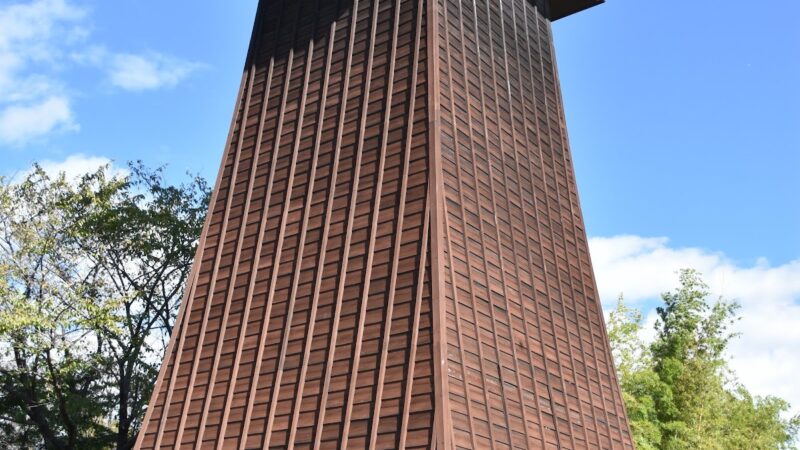
This was the most important structure built in the Honmaru, serving both as the lord’s residence and as a watchtower to monitor the surrounding area. The restored Takayagura was constructed precisely to match the location of the pillar remains discovered during archaeological excavations.
Nagaya (Longhouse)
This facility was used for soldiers to be stationed, and it is believed that many soldiers were stationed here during wartime. Its simple and sturdy construction clearly reflects the characteristics of mountain castles from the Sengoku period, which prioritized practicality over ornamentation.
Monomiyagura (Watchtower)
This facility was used to monitor enemy movements and played a crucial role in the castle’s defense. Taking advantage of the terrain of Mount Mayumi, it was positioned to overlook the surrounding roads and valleys.
Kuriya (Kitchen)
This was a kitchen facility for preparing meals. In mountain castles from the Sengoku period, food storage and cooking facilities were essential in preparation for sieges.
Features of the Restoration Method
A notable aspect of the restoration of Asuke Castle is its faithful reproduction of the construction methods of the time:
- Use of Bamboo Nails: Nails made from processed bamboo were used instead of metal nails.
- Binding with Hemp Rope: Hemp rope was used to join the timbers.
- Post-and-Beam Structure: A construction method in which pillars are directly embedded in the ground without using foundation stones.
- Thatched Roof: Roofing using materials and techniques of the time.
These construction methods are based on archaeological evidence and are valuable examples that convey the architectural techniques of the Sengoku period to the present day. The materials used are as similar as possible to those of the time, allowing visitors to experience the sturdy and robust appearance of this ancient mountain castle.
Highlights of Asuke Castle – A Time Slip to the Sengoku Period
View from the Main Enclosure
From the main enclosure, located on the summit of Mt. Mayumi at an altitude of 301 meters, you can enjoy a panoramic view of the town of Asuke and the Nakasendo Road. During the Sengoku period (Warring States period), castle lords surveyed their territories from this location and monitored enemy movements. Especially during the autumn foliage season, the view, combined with the beautiful scenery of Korankei Gorge below, offers a spectacular vista.
On a clear day, the magnificent landscape of the Mikawa Mountains unfolds, allowing one to truly appreciate why a castle was built in this location. The Nakama-kaido Road was an important transportation route connecting Shinshu and Mikawa, and Asuke Castle was strategically located at a key point controlling this road.
Earthwork and Moat Defense System
Asuke Castle’s defense system consists of earthworks and moats that skillfully utilize the natural terrain. Walking through the castle ruins, one can see moats dug to cut across ridges and remnants of earthworks surrounding baileys in many places.
Particularly noteworthy are the continuous moats built along the main ridgelines. These are defensive structures that cut across the ridges in multiple layers to prevent enemy intrusion, demonstrating the unique defensive techniques of mountain castles. Walking around the site allows you to experience firsthand how the castle’s defenders protected the castle.
Interior Tour of Restored Structures
The restored tower and longhouses are open to visitors, allowing you to imagine life in a mountain castle during the Sengoku period. The floors are made of wood, and the windows offer panoramic views of the surrounding landscape. Replicas of weapons and everyday items from the period are also displayed, providing clues to the daily lives of the castle’s defenders.
While the structures lack the grandeur of modern castles, their simple and practical design truly reflects the essence of a Sengoku-era mountain castle. You can observe the construction methods of the time in detail, from the thick pillars and beams to the structural materials secured with bamboo nails.
Nature Through the Seasons
Asuke Castle Ruins Park displays different expressions throughout the four seasons:
- Spring: Beautiful fresh greenery and blooming mountain cherry blossoms
- Summer: Surrounded by deep greenery, a cool breeze blows through
- Autumn: Adjacent to Korankei Gorge, a famous spot for autumn leaves, the entire mountain is dyed in vibrant colors
- Winter: The snow-covered castle is fantastical, evoking the harsh winters of the Sengoku period
Especially during the autumn foliage season in November, tourists visiting Korankei Gorge also stop by Asuke Castle, enjoying both history and nature.
Castle Stamp and Goods Information
Asuke Castle Stamp
With the recent castle boom, Asuke Castle also sells castle stamps (Gojoin). Castle stamps are like certificates that can be purchased as a memento of visiting the castle, and are gaining popularity as collectible items among castle enthusiasts.
The castle stamp at Asuke Castle features a design that reflects the castle’s history and characteristics, making it a perfect memento of your visit. The stamp can be purchased at the reception desk of the castle ruins park.
Original Goods
Asuke Castle also sells various original goods, including clear files (A4 size). These goods feature reconstructed illustrations of Asuke Castle and historical information, making them popular souvenirs.
Goods are sold at the shop within the castle ruins park, and can be purchased as a memento of your visit or as a gift for castle enthusiasts.
Access and Facility Information for Asuke Castle
Basic Information
Facility Name: Asuke Castle Ruins Park
Location: 39-2 Suzawa, Asuke-cho, Toyota City, Aichi Prefecture
Elevation: 301 meters (Mayumiyama summit)
Management: Sanshu Asuke Public Corporation
Opening Hours and Closing Days
Opening Hours:
- 9:00 AM – 4:30 PM (Last entry at 4:00 PM)
Closing Days:
- Thursdays (Open on national holidays)
- Year-end and New Year holidays (December 29th – January 3rd)
*During the autumn foliage season (November), the park may be open on Thursdays as well. It is recommended to check in advance.
Admission Fees
- General Admission: 300 yen
- High School Students: 100 yen
- Junior High School Students and Younger: Free
*Please inquire at the site regarding group discounts and disability discounts.
Access
Access by Car
- Approximately 15 minutes from the Sanage Green Road “Rikiishi IC”
- Approximately 20 minutes from the Tokai Loop Expressway “Toyota Kanpachi IC”
- Approximately 1 hour 30 minutes from Nagoya city center
Parking: Free parking available (approximately 20 spaces)
*During the autumn foliage season, it can get crowded, so we recommend using public transportation.
Access by Public Transportation
- From Meitetsu Toyota Line’s “Jōsui Station,” take the Toyota Oiden Bus bound for “Asuke” (approximately 60 minutes), get off at “Asuke,” and walk for approximately 15 minutes.
- From Aichi Loop Railway’s “Shin-Toyota Station,” take the Toyota Oiden Bus bound for “Asuke” (approximately 70 minutes), get off at “Asuke,” and walk for approximately 15 minutes.
Castle Ascent Route
From the parking lot to the castle ruins, it’s about a 10-15 minute walk along a mountain trail. The path is well-maintained, but since it’s a mountain trail, comfortable walking shoes are recommended. There are two routes to the castle:
- Front Ascent Route: The main route leading directly to the main keep from the parking lot (approximately 15 minutes)
- Rear Gate Route: A historical route approaching from the rear of the castle (approximately 20 minutes)
Both routes have signposts along the way, so even first-time visitors won’t get lost.
Combining with Nearby Facilities
When visiting Asuke Castle, combining it with the following nearby facilities will enhance your sightseeing experience:
Asuke Townscape
This townscape is designated as a Important Preservation District for Groups of Traditional Buildings, preserving buildings from the Edo period to the early Showa period. You can feel the history of its prosperity as a post town on the Nakasendo Road.
Korankei Gorge
One of Japan’s leading spots for viewing autumn foliage, especially in November when approximately 4,000 maple trees change color, attracting tourists from all over the country. It’s within walking distance of Asuke Castle, making it a recommended visit as a set.
Sanshu Asuke Yashiki
This facility recreates the lifestyle of a traditional farming family, where you can observe demonstrations of traditional crafts such as straw weaving and loom weaving.
Tips for Enjoying Asuke Castle
Best Season to Visit
Asuke Castle can be visited year-round, but the following seasons are particularly recommended:
Autumn (November): The autumn foliage season, perfect for a combined visit to Korankei Gorge. However, it can get crowded, so weekday visits are recommended.
Spring (April-May): Beautiful fresh greenery and pleasant weather make climbing the castle enjoyable.
Summer (July-August): The mountaintop is cool and a comfortable summer retreat. However, insect repellent is essential.
Estimated Time Required
- Visiting the Castle Ruins Only: Approximately 1 hour
- Thorough Viewing and Photography: Approximately 1 hour 30 minutes
- Combining Visiting the Townscape of Asuke: Approximately 3 hours
- Combining Visiting Korankei Gorge: Approximately 4-5 hours
Useful Items to Bring
- Comfortable Walking Shoes: Essential for walking on mountain trails
- Drinks: Hydration is especially important in summer
- Insect Repellent Spray: From spring to autumn
- Camera: For photographing restored structures and views
- Hat and Sunscreen: On sunny days
Photo Spots
- View from the Main Keep: A panoramic view of the townscape of Asuke
- Exterior of the High Turret: A representative subject for photographing restored structures
- Moat and Earthworks: A close-up view of the mountain castle’s defensive structures
- Castle Fortifications from the Ascent Path: Capture the atmosphere of a mountain castle
The Historical Value and Future Prospects of Asuke Castle
Significance in Castle Research
The restoration of Asuke Castle was a groundbreaking event in the study of Japanese castle history. Until then, castle restorations had mainly focused on early modern castles such as keep towers, but Asuke Castle is the first example in Japan of a full-scale restoration of a Sengoku period mountain castle based on archaeological excavations.
This restoration yielded the following academic results:
- Understanding the Actual State of Mountain Castles: The specific structure of the mountain castle, which could not be understood from documents alone, was revealed.
- Restoration of Architectural Techniques: Sengoku period construction methods could be empirically verified.
- Understanding the Defensive System: It became possible to intuitively understand how earthworks and moats functioned.
Contribution to Regional Development
Asuke Castle Park plays an important role as a tourist resource in the Asuke region. Combined with the autumn foliage viewing at Korankei Gorge, it attracts many tourists throughout the year, offering a chance to enjoy both history and nature.
In particular, the recent “castle boom” and “history boom” have steadily increased the recognition of Asuke Castle among castle enthusiasts and history buffs. The start of sales of castle stamps and information dissemination on social media have also led to an increase in younger visitors.
Challenges of Preservation and Utilization
More than 30 years have passed since its restoration, and the maintenance of the structure has become a crucial issue. Traditional materials such as bamboo nails and hemp rope have limited durability and require regular maintenance.
Furthermore, there is a need to enhance educational programs and events to let more people know about the value of Asuke Castle. Various initiatives are being considered, such as collaboration with local schools and holding history lectures.
Summary – Experience the Sengoku Period at Asuke Castle
Asuke Castle is not merely a tourist facility, but a valuable historical heritage site that conveys the reality of a mountain castle from the Sengoku period to the present day. As the first full-scale restored mountain castle in Japan, it occupies an important position in castle research and allows visitors to experience a time slip back to the Sengoku period.
The reconstructed structures on Mount Mayumi, at an altitude of 301 meters, including the watchtower, longhouse, and observation tower, faithfully reproduce the construction methods of the time, conveying the simple yet robust appearance of a mountain castle, distinct from the modern castles with stone walls and keeps. The view from the main keep is magnificent, offering a panoramic view of the town of Asuke and the Nakasendo road.
Located next to the famous autumn foliage spot, Korankei Gorge, and combined with a visit to the town of Asuke, which retains its Edo-period streetscape, you can enjoy both history and nature. Especially during the autumn foliage season, the entire mountain is dyed in vibrant colors, offering a spectacular view.
For castle enthusiasts, history buffs, nature lovers, and those who want to learn about the realities of mountain castles from the Sengoku period, Asuke Castle is a must-see. A 15-minute walk from the parking lot to the summit of Mount Mayumi will give you the feeling of having traveled back in time to the Sengoku period, 400 years ago.
When you visit Aichi Prefecture, be sure to stop by Asuke Castle Ruins Park and experience the charm of Japan’s first fully restored mountain castle.