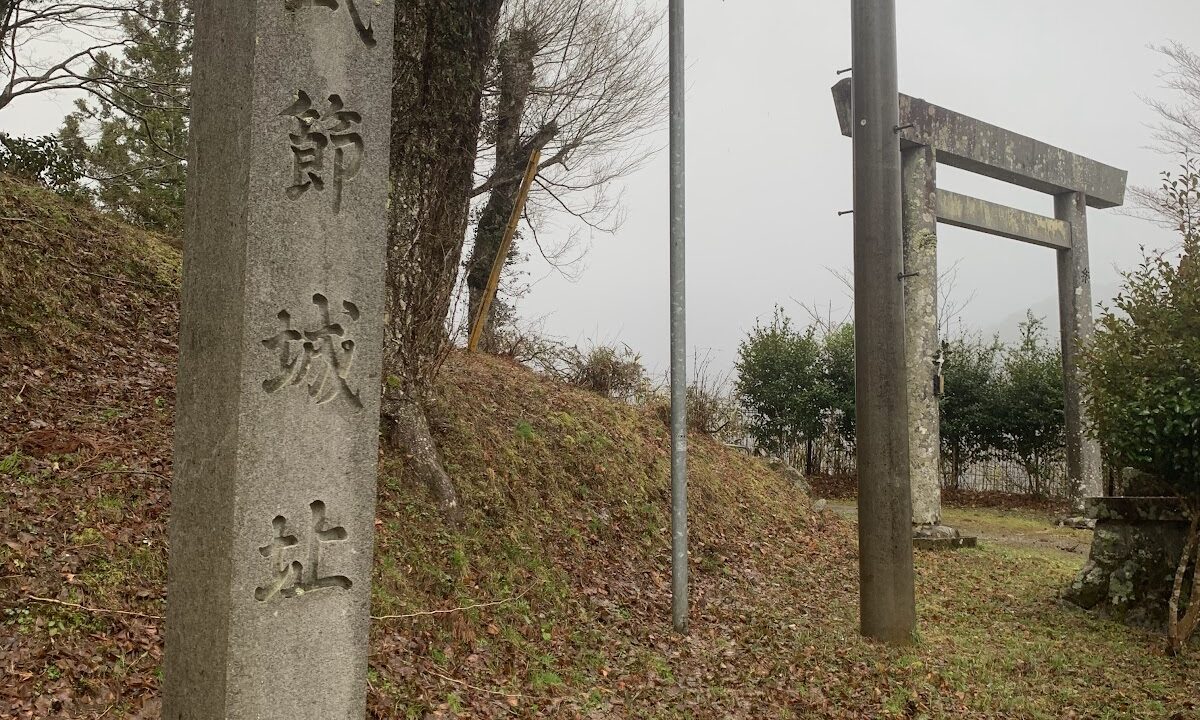
Takebushi Ancient Castle (Toyota City, Aichi Prefecture) Complete Guide | History, Remains, and Access Information
Located in the Inabu district in the northeastern part of Toyota City, Aichi Prefecture, Takebushi Ancient Castle is a valuable mountain castle site that conveys the history of the Mikawa mountainous region. Also known as “Takebushi Village Ancient Castle,” this castle is believed to have been the residence of the Yamada clan during the Sengoku period, and its remains, such as earthworks, are still well-preserved. This article provides a detailed explanation of Takebushi Ancient Castle, from its historical background and highlights to access methods and surrounding tourist information.
Overview and Basic Information of Takebushi Ancient Castle
Takebushi Ancient Castle is a flatland castle (hill castle) located in Takebushi-cho, Toyota City, Aichi Prefecture, built on a mountain at an altitude of approximately 548 meters. With a relative height difference of about 50 meters, it is relatively easy to climb for a mountain castle.
Basic Data
- Location: Around Kamikamai, Kuwahara-cho, Toyota City, Aichi Prefecture
- Alternate Name: Takesetsu-mura Old Castle
- Castle Structure: Hilltop Castle
- Construction Period: Estimated to be the late Muromachi period
- Main Lord: Yamada clan
- Remains: Earthworks, baileys, moats
- Designated Cultural Property: None
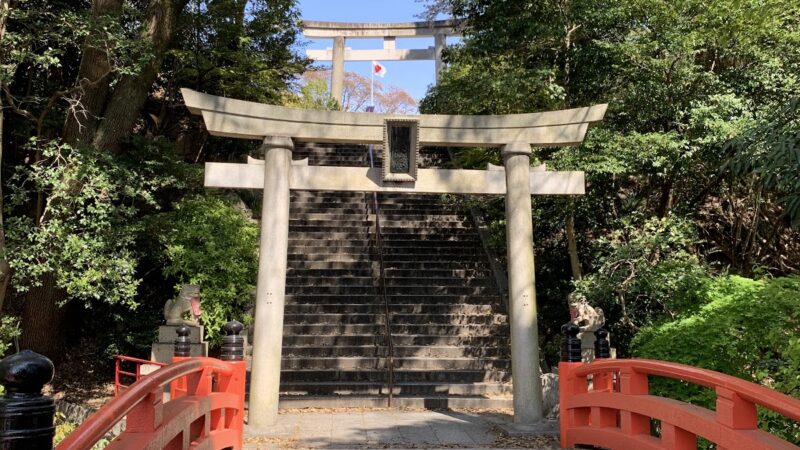
- Entrance to the Castle: Near Kumano Shrine
Takesetsu Old Castle is called “Old Castle” to distinguish it from the later-built Takesetsu Castle (Takesetsu New Castle). The two castles are located in close proximity and are important for understanding the castle history of the Takesetsu region.
History and Lords of Takesetsu Old Castle
The Yamada Clan’s Residence Period
The exact construction date of Takesetsu Old Castle is unclear, but it is believed to have been built in the late Muromachi period by the Yamada clan, a powerful local family. The Yamada clan were local lords who maintained a certain level of power in the mountainous region of Mikawa Province, controlling the surrounding area from their base at Takesetsu Old Castle.
The mountainous region of Mikawa Province was a border area with Shinano and Mino Provinces, and a strategically important transportation hub. It is presumed that Takesetsu Old Castle utilized these geographical conditions to function as a base for monitoring roads and managing the territory.
The Advance of the Suganuma Clan and the Construction of Takesetsu Castle
In the mid-Sengoku period, the power of the Tamamine Suganuma clan, a powerful local lord in eastern Mikawa, began to encroach on the Takesetsu region. It is believed that by the time Suganuma Sadanobu built the new Takesetsu Castle (Takesetsu New Castle), the Yamada clan had also submitted to them.
It is presumed that Suganuma Sadanobu built the new Takesetsu Castle in a more defensible location, and that Takesetsu Old Castle shifted its role to a forward base or subsidiary castle. During this period, the mountainous region of Mikawa was a turbulent era, with various powers such as the Matsudaira, Suganuma, and Okudaira clans intricately intertwined, and the area also facing invasions from the Takeda clan.
Abandonment of the Castle and its Aftermath
It is unclear exactly when Takesetsu Old Castle was abandoned, but it is believed that its role gradually ended after it began to function fully. In the Edo period, its function as a castle was completely lost, and the land was used for farming and forestry.
Layout and Remains of Takesetsu Old Castle
Castle Structure
Takesetsu Old Castle exhibits the typical form of a medieval mountain castle, characterized by a layout that skillfully utilizes the natural terrain. Multiple enclosures were arranged around the main enclosure, and defenses were strengthened by earthworks and moats.
Major Remains
- Main Enclosure (Honmaru): The central flat area of the castle, the topography is still clearly visible today.
- Earthworks: Well-preserved earthworks, approximately 1-2 meters high, remain around the main enclosure.
- Enclosures (Kuruwa): Multiple flat areas are arranged in a stepped pattern around the main enclosure.
- Moat: Traces of a defensive structure built to cut across the ridge can be seen.
Preservation Status of Remains
The remains of Takesetsu Ancient Castle are relatively well-preserved because they escaped development. The earthworks, in particular, remain clearly visible, allowing visitors to imagine the castle’s structure in its heyday. However, due to years of weathering and overgrown vegetation, some areas are difficult to identify.
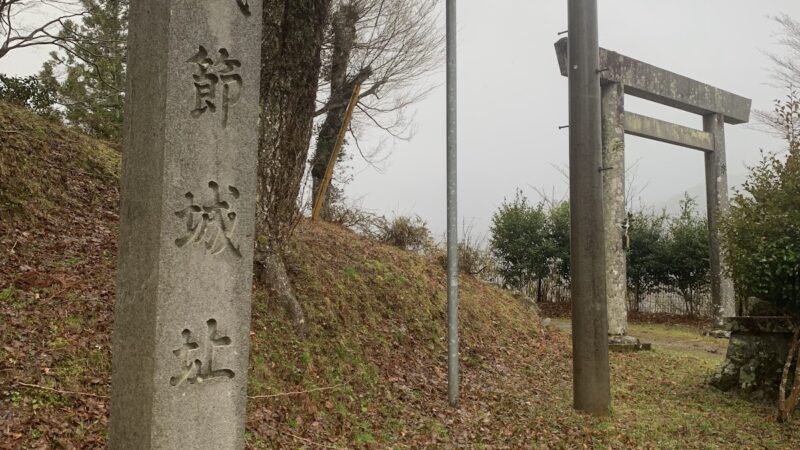
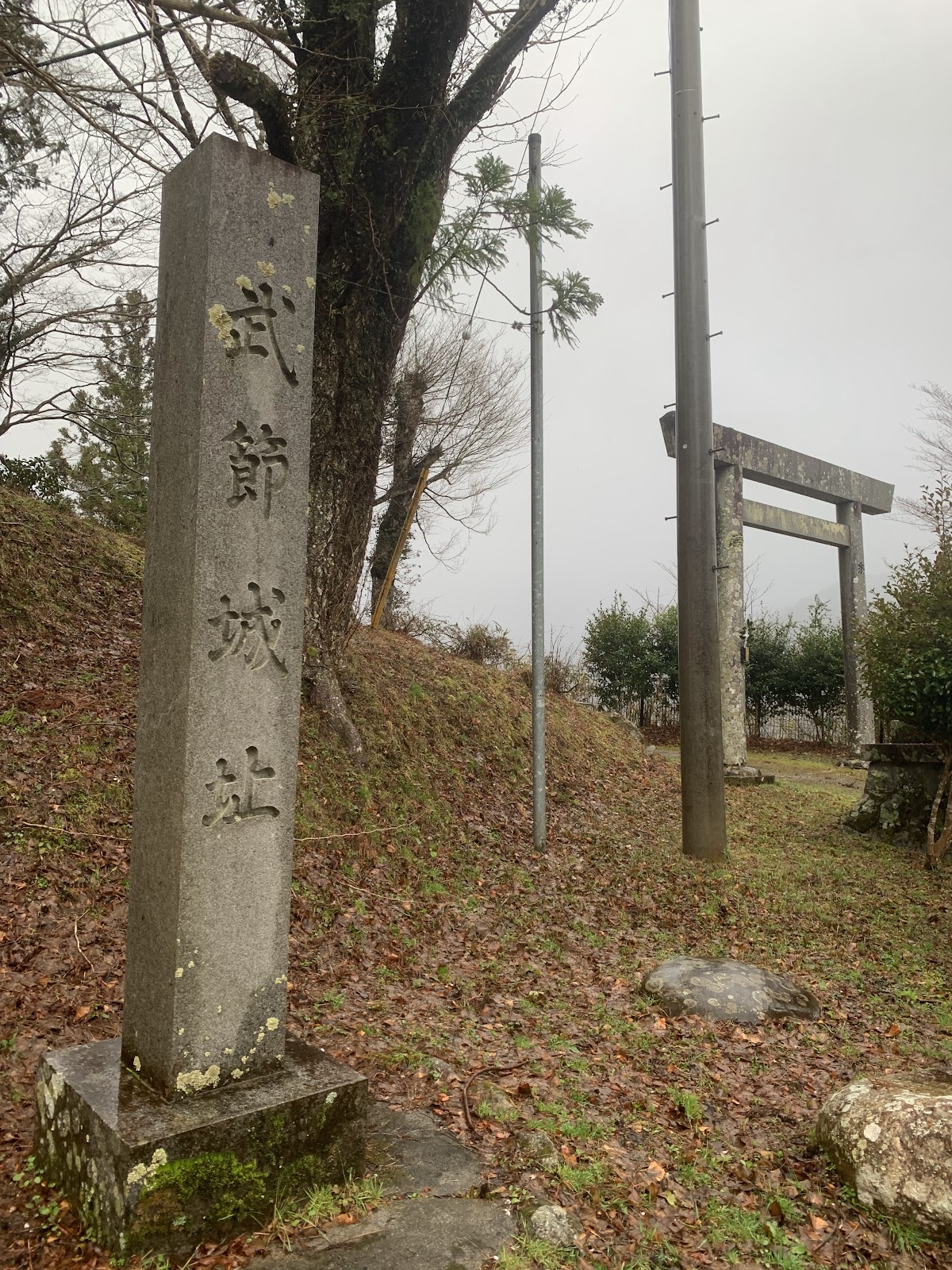
Information boards are installed at the site, and signs indicating that it is a castle site can also be seen. This allows visitors to view the remains while understanding their historical context.
Ascent Route and Points to Note
The entrance to Takesetsu Ancient Castle is near Kumano Shrine. The walk from the shrine to the castle ruins takes approximately 10-15 minutes. While there is a section of mountain path to climb, the elevation difference is relatively gentle (around 50 meters), making it an accessible castle site even for beginners.
Points to Note During Your Visit
- Observe the height and shape of the earthworks to understand the defensive structure of a medieval castle.
- Imagine the castle’s layout plan based on the arrangement of the baileys.
- Examine the surrounding topography and consider why the castle was built in this location.
- Learn about the historical background based on the information on the signboards.
The average visit takes about 27 minutes, but if you want to carefully observe the remains, it’s best to allow about an hour.
Access Information and Parking
Access by Public Transportation
Train and Bus Use
- Take the “Oiden Bus Rapid Inabu” from Meitetsu Toyotashi Station
- Get off at the last stop, “Donguri no Yu-mae” (approximately 80 minutes)
- Kumano Shrine (castle entrance) is approximately a 5-minute walk from the bus stop.
Since the Oiden Bus has limited service, we recommend checking the timetable in advance. It is especially important to know the return bus schedule.
Access by Car
Main Routes
- From Nagoya: Approximately 90 minutes via Sanage Green Road → National Route 153
- From Tomei Expressway Toyota IC: Approximately 60 minutes via National Route 153
- From Chuo Expressway Ena IC: Approximately 50 minutes via National Routes 257 and 153
Parking Information
There is no dedicated parking lot for Takesetsu Old Castle, but you can use the parking lot at the nearby roadside station “Donguri no Sato Inabu”. The most common route is to walk from there towards Kumano Shrine. There may be a few parking spaces near Kumano Shrine, but it is recommended to check for accurate information on-site.
Important Notes for Visitors
- Since you will be walking on mountain trails, please wear comfortable clothing and non-slip shoes.
- Insect repellent is necessary in summer, and warm clothing is necessary in winter.
- Bringing drinking water is recommended.
- There are areas with poor cell phone reception, so please check the map beforehand.
- Please be aware of wild animals such as bears and wild boars.
Relationship with Wujie Castle (New Castle)
Understanding the relationship with Wujie Castle (New Castle) is important for understanding Wujie Old Castle. The two castles are located close together and have a continuous history.
Overview of Wujie Castle
Wujie Castle was built by Suganuma Sadanobu and was constructed later than Wujie Old Castle. It has more robust defensive facilities and a structure that can withstand the fierce battles of the Sengoku period. The Wujie Castle ruins are currently open to visitors, and remains such as earthworks and stone walls remain.
Division of Roles Between the Two Castles
While Takesetsu Old Castle was the initial residence of the Yamada clan, Takesetsu Castle functioned as a new base of operations for the Suganuma clan. Takesetsu Old Castle may have played a complementary role to Takesetsu Castle, serving as a frontline observation post and emergency shelter.
Castle Stamps and the Toyota Castle Stamp Project
Toyota City is developing the “Toyota Castle Stamp Project,” focusing on the historical resource of over 150 castle ruins located within the city. This project has been very well received, attracting many castle enthusiasts to Toyota City.
Castle Stamp of Takesetsu Castle Ruins
The castle stamp for Takesetsu Castle Ruins (Takesetsu New Castle) can be purchased at the tourist information center inside the “Donguri no Sato Inabu” roadside station. Limited edition designs are available; the front features the words “Takesetsu Castle Ruins,” and the back features five different designs representing spring, early summer, summer, autumn, and winter, each limited to 500 stamps.
These can be enjoyed as a “Folding Screen Painting of the Four Seasons of Inabu” when lined up, making them a popular collectible item. The price is 300 yen (tax included) per sheet.
Regarding the castle stamp for Takesetsu Old Castle, it has not been confirmed at this time, but it may be issued depending on future project developments.
Toyota Castle Stamp Project, 5th Edition
In 2024, the 5th edition of the Toyota Castle Stamp Project was launched, featuring a lineup of castle stamps with new designs for all 12 castles. Toyota City, the birthplace of the Matsudaira clan, ancestors of Tokugawa Ieyasu, has many historically important castle ruins, and castle ruin tours are gaining popularity.
Nearby Tourist Spots
When visiting Takesetsu Old Castle, visiting nearby tourist spots will provide a more fulfilling travel experience.
Roadside Station “Donguri no Sato Inabu”
This roadside station serves as a base for accessing Takesetsu Old Castle. Local specialties, fresh vegetables, and handmade goheimochi (rice cakes) are sold here, making it ideal for souvenir shopping. The restaurant serves dishes made with local ingredients. The tourist information center provides information on the Inabu area and also sells castle stamps.
Donguri no Yu
This is a day-trip hot spring facility adjacent to the roadside station. It’s perfect for relaxing after visiting the castle and is popular with locals. The spring water is alkaline simple hot spring water, said to be effective for neuralgia and muscle pain.
Natsuyaki Onsen Aoyagi-tei
This is a hot spring inn located relatively close to Takesetsu Old Castle. Situated in a quiet mountainous area, you can relax and soak in the hot springs while enjoying the changing seasons. Day-trip bathing is available, and overnight guests can enjoy dishes made with local mountain produce. This facility is recommended when planning a trip that combines castle ruins and hot springs.
Inabu’s Tourist Resources
The Inabu area is blessed with abundant nature and is known as a famous spot for autumn foliage. Main Attractions
- Oihei Park: Famous for its autumn foliage, attracting many tourists in the fall.
- Inabu Onsen: Offers multiple hot spring facilities, perfect for a hot spring tour.
- Menoki Park: A plateau at an altitude of 1,240 meters, ideal for hiking and nature observation.
- Takesetsu Castle Ruins: A castle ruin worth visiting along with Takesetsu Old Castle.
Nearby Castle Ruins
In addition to Takesetsu Old Castle, numerous other castle ruins exist within Toyota City.
Nearby Major Castle Ruins
- Takesetsu Castle Ruins: A castle built after Takesetsu Old Castle, larger in scale and with more extensive remains.
- Tamamine Castle: The base of the Suganuma clan, where you can visit the reconstructed castle architecture (Shitara-cho, Aichi Prefecture).
- Asuke Castle: A reconstructed mountain castle where you can experience the castle structure of the Sengoku period (Asuke-cho, Toyota City).
- Iwamura Castle: One of Japan’s three great mountain castles, with magnificent stone walls (Ena City, Gifu Prefecture).
The “Mikawa Mountain Castle Tour,” which visits these castle ruins, is a popular route for history buffs.
Evaluation of Takesetsu Old Castle and Visitor Feedback
Evaluation as a Castle
According to data from Kojodan, the average rating for Takesetsu Old Castle is ★★★☆☆ (3.00). With only 66 visitors, this castle ruin is relatively minor, but castle enthusiasts who have visited have praised it, saying things like, “The earthworks are well-preserved,” and “It’s quiet and atmospheric.”
Visiting Time and Difficulty
The average visiting time is about 27 minutes, making it a castle ruin that can be visited in a short time. The difficulty of climbing is relatively low, making it easy for beginners to visit. However, since it involves walking on mountain paths, a certain level of physical fitness is required.
Visitor Comments (Expected)
Actual visitors have made comments such as the following:
- “The earthworks are well-preserved, giving a real sense of a medieval castle.”
- “The information boards made it easy to understand the historical background.”
- “The surrounding natural environment was wonderful, and I enjoyed strolling around.”
- “Access is somewhat inconvenient, but that means you can visit in peace.”
- “Visiting it together with Takesetsu Castle deepens your understanding.”
Historical Significance of Takesetsu Old Castle
Position in the History of Castles in the Mikawa Mountain Region
Takesetsu Old Castle holds historical significance as a typical example of a medieval castle in the Mikawa mountain region. This area was a border zone with Shinano and Mino provinces and a crucial transportation hub. Under these geographical conditions, Takesetsu Old Castle functioned as a base for regional control.
Power Transfer from the Yamada Clan to the Suganuma Clan
The history of Takesetsu Old Castle tells the story of the rise and fall of regional powers during the Sengoku period. The transfer of power from the local Yamada clan to the more powerful Suganuma clan is a typical pattern of the Sengoku period (Warring States period).
Value of Preserving the Ruins
The Takesetsu Ancient Castle, which has escaped development and whose ruins are well-preserved, is a valuable resource for the study of medieval castles. In particular, the well-preserved earthworks make it an important historical site for studying the castle construction techniques and defensive philosophies of the time.
Best Season to Visit Takesetsu Ancient Castle
Spring (March-May)
The season of fresh greenery makes for pleasant walks along the mountain paths. The temperature is mild, making it an ideal season for visiting the castle. Wildflowers can also be seen around Golden Week (early May).
Summer (June-August)
The greenery is lush, allowing for enjoyable forest bathing. However, temperatures are high and insects are numerous, so insect repellent and hydration are essential. Visiting in the early morning or evening is recommended.
Autumn (September-November)
This is the most recommended season. The autumn foliage is beautiful, and the weather is pleasant, making it ideal for visiting the castle. Especially from late October to early November, visiting in conjunction with other nearby autumn foliage spots will create a wonderful experience.
Winter (December to February)
There is a possibility of snowfall, so caution is advised when visiting. However, the castle ruins amidst a snowy landscape are fantastic and make for attractive photography. Please be sure to dress warmly when visiting.
Photography Tips
Wujie Ancient City is also an attractive photography spot.
Recommended Photography Spots
- Panoramic View of the Earthworks: Photograph the well-preserved earthworks from various angles.
- View from the Main Enclosure: Landscape photographs with the surrounding mountains in the background.
- Information Board and Remains: Documentary photographs combining information boards showing the historical background with the remains.
- Road to the Castle: The atmosphere of the mountain path leading from Kumano Shrine to the castle ruins.
- Seasonal Changes: Record the changing seasons and the natural environment.
Precautions When Photographing
- Be careful not to step on the remains.
- Do not trespass on private property.
- Remember to be considerate of other visitors.
- Choose a safe location when using a tripod.
Takesetsu Old Castle and Local History and Culture
History of the Inabu Area
The Inabu area has flourished since ancient times as a key transportation hub connecting Shinano Province and Mikawa Province. In the Middle Ages, castles such as Takesetsu Castle and Takesetsu Old Castle were built, and it became an important military base during the Sengoku period. During the Edo period, it developed as a post town, and some of its historical landscape remains today.
Local Legends
Various legends related to the Yamada and Suganuma clans remain in the Takesetsu area. These stories, passed down by local elders, are valuable as regional memories that cannot be learned from written historical documents.
Relationship with Kumano Shrine
Kumano Shrine, which serves as the entrance to Takesetsu Old Castle, is also an important part of the region’s history. While many aspects of the shrine’s founding and its relationship to the castle remain unclear, the close relationship between the castle and the shrine is a common characteristic seen in many castle ruins.
Castle Research and Takesetsu Old Castle
Status of Academic Research
While no full-scale archaeological excavations have been conducted for Takesetsu Old Castle, a layout survey using surface observation has been carried out. This has revealed the basic structure of the castle and the arrangement of its remains.
Future Research Issues
The following research issues remain regarding Takesetsu Old Castle. – Identifying the exact construction date
- Detailed genealogy and activities of the Yamada clan
- Specific relationship with Takesetsu Castle
- Period of abandonment and its background
- Relationship with surrounding castle complexes
By clarifying these issues, it is expected that the medieval history of the Mikawa mountainous region will become clearer.
Summary: The Charm and Significance of Visiting Takesetsu Ancient Castle
Takesetsu Ancient Castle, located in Toyota City, Aichi Prefecture, is not large in scale, but it is a valuable historical site that conveys the medieval history of the Mikawa mountainous region. The well-preserved remains, such as earthworks and baileys, provide important clues to understanding the castle construction techniques and defensive philosophies of the time.
The charm of Takesetsu Ancient Castle lies not only in viewing the remains, but also in experiencing the rise and fall of regional powers during the Sengoku period, its geographical importance as a transportation hub, and the regional history and culture that has been passed down to the present day.
Using the “Donguri no Sato Inabu” roadside station as a base, you can create a fulfilling itinerary that combines historical exploration with sightseeing by visiting the ruins of Takesetsu Castle and nearby hot spring facilities. Especially during the autumn foliage season, it will be an excellent opportunity to enjoy both the beauty of nature and the romance of history.
With the growing popularity of Toyota City’s castle stamp project, Takesetsu Ancient Castle is likely to attract even more attention in the future. Why not visit this quiet mountain castle and reflect on the Sengoku period in the mountainous region of Mikawa?