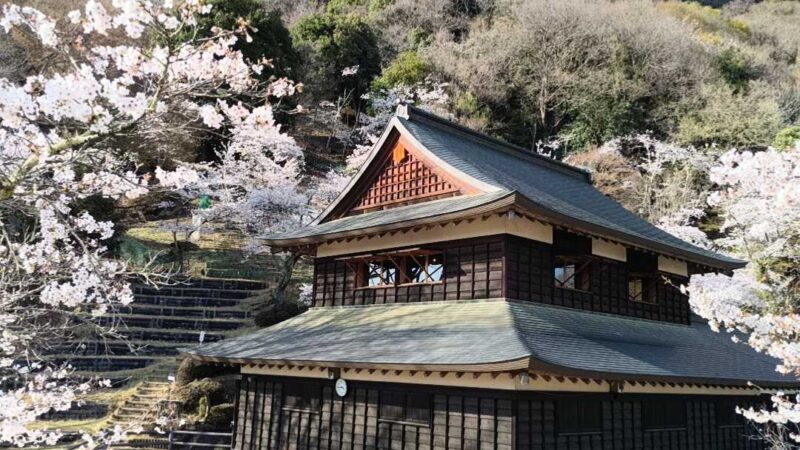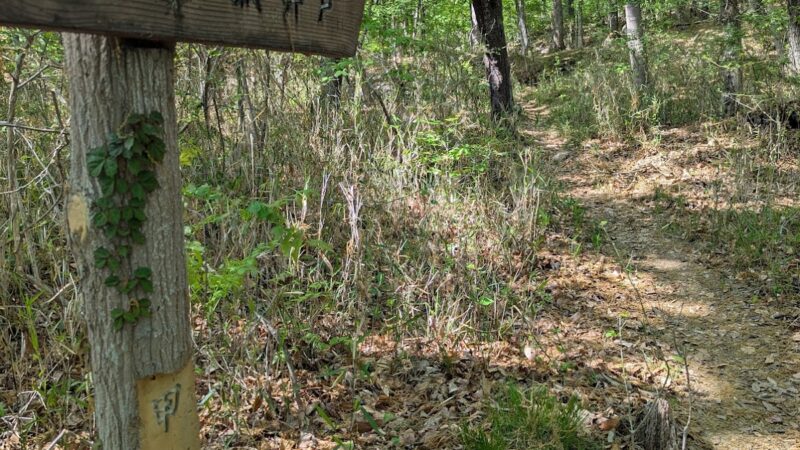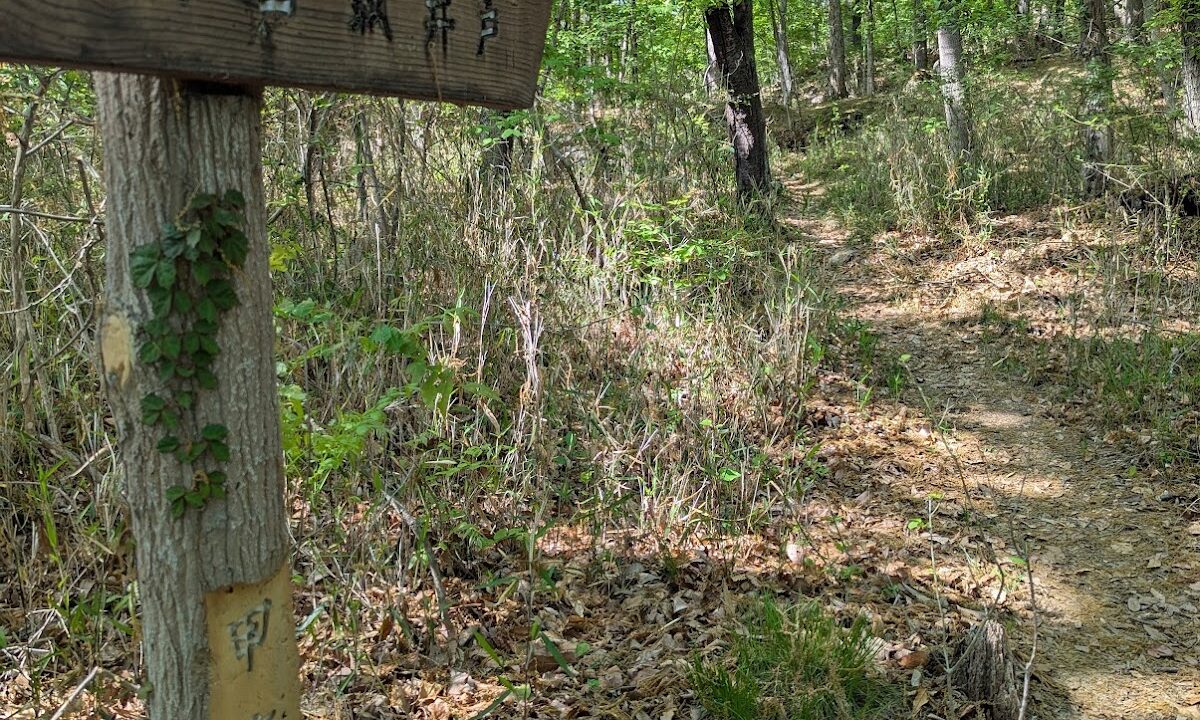
Yumurayama Castle, Kofu City (Yamanashi Prefecture) Complete Guide | A Mountain Castle with a Beacon Tower Built by Takeda Nobutora
What is Yumurayama Castle?
Yumurayama Castle is a Sengoku period mountain castle located in Yumura, Kofu City, Yamanashi Prefecture. Built on the summit of Mt. Yumura (elevation 449m, relative height approximately 150m), the castle was constructed by Takeda Nobutora in 1523. Also known as Yunoshima Castle or Yunoshimayama Castle, it functioned as an important military base overlooking Kai Province’s Fuchu (present-day Kofu City).
Mt. Yumura is located at the tip of a cape-like landform jutting out into the Kofu Basin, with the castle grounds situated on a ridge extending north and south. Currently, it is maintained as a hiking trail, and the summit is known as a scenic spot offering panoramic views of Mt. Fuji and the Kofu Basin.
Basic Information on Yumurayama Castle
Location: 3-chome, Yumura, Kofu City, Yamanashi Prefecture
Former Province: Kai Province
Other Names/Common Names: Yunoshima Castle, Yunoshimayama Castle
Classification/Structure: Mountain Castle
Builder: Takeda Nobutora
Year of Construction: Daiei 3 (1523)
Main Lord: Takeda Clan
Year of Abandonment: Around Tensho 10 (1582) (After the fall of the Takeda Clan)
Keep Structure: None (Mountain castle centered around a beacon tower)
Elevation: 449m
Relative Height: Approximately 150m
Remains: Enclosures, earthworks, moats, well remains, beacon tower remains
History and Construction Background of Yumurayama Castle
Construction by Takeda Nobutora
In 1519 (Eisho 16), Takeda Nobutora moved his residence from Isawa to Tsutsujigasaki Castle (present-day Takeda Shrine). This was because Nobutora, having unified Kai Province, needed a more defensible base. The following year, in 1520 (Eisho 17), he built Yogaiyama Castle as an auxiliary castle to Tsutsujigasaki Castle, and further, in 1523 (Daiei 3), he built Yumurayama Castle.
Yumurayama Castle had several purposes. Firstly, to serve as a subsidiary castle of Tsutsujigasaki Castle and play a role in guarding Fuchu. Secondly, to function as a surveillance base, taking advantage of its geographical advantage at the tip of the Aikawa alluvial fan. And thirdly, to form part of the emergency information transmission system as an important hub in the Koshu beacon network.
Role during the Takeda Clan Era
Yumurayama Castle continued to be used during the time of Takeda Shingen. The beacon tower on the mountaintop was a crucial facility for quickly transmitting information about enemy invasions and emergencies via smoke and fire. Its location overlooking the Kofu Basin suggests it monitored movements to the east (Fuefuki River area), west (Kamanashi River area), and south (Fuji River area), and coordinated with Tsutsujigasaki Castle and Yogaiyama Castle to the north.
Such a network of beacon towers was militarily extremely important in the Takeda clan’s territorial management. Yumurayama Castle functioned not so much as an isolated defensive base, but as part of a wider-area defense system.
After the Fall of the Takeda Clan
After the fall of the Takeda clan in 1582 (Tensho 10), Yumurayama Castle is believed to have been abandoned. When Oda Nobunaga, and later Tokugawa Ieyasu, came to rule Kai Province, the modern Kofu Castle was built, and Yumurayama Castle, a medieval mountain castle, ceased to serve its purpose.
Layout and Remains of Yumurayama Castle
Main Enclosure (Honmaru)
The main enclosure, located at the mountaintop, is the central facility of Yumurayama Castle. It has a relatively large, flat surface where a beacon tower was located. Even today, traces of earthworks and the shaping of the flat surface can be seen from the ground surface. From the main enclosure, a 360-degree view unfolds, overlooking the entire Kofu Basin.
Enclosures
Several enclosures (leveled areas) are arranged around the main enclosure. They are constructed in a stepped manner along the ridge extending north and south, each serving a defensive function. Smaller enclosures can also be seen on the eastern slope, forming a three-dimensional defensive structure overall.
Earthworks
Earthworks were constructed around the perimeter of the main enclosure and each of the baileys. Some of these earthworks remain well-preserved today, appearing as mounds approximately 1-2 meters high. The earthworks served to prevent enemy intrusion and also functioned as a screen within the baileys.
Moats
Multiple moats blocking the ridgeline have been identified. In particular, clear moats provided strong defense against intrusions from the south. These moats hindered enemy advances and also clearly demarcated the castle grounds.
Well Site
A depression within the castle grounds is believed to be the site of a well. Securing a water source was crucial for mountain castles, and this well site was a lifeline during sieges. However, it is now largely buried, and its detailed structure is unknown.
Beacon Tower Site
It is believed that a beacon tower was located in the main enclosure. The beacon towers were constructed of stone or earthen mounds and served as facilities for raising firewood and smoke signals. They played a vital role in the Koshu beacon tower network, and it is believed they could transmit information within minutes in emergencies.
Access to Yumurayama Castle
Access by Car
From Kofu-Showa IC on the Chuo Expressway: Approximately 15 minutes
Parking:
- Midorigaoka Sports Park Parking (Free)
- Mid-slope parking space on the south side of the castle ruins (Several spaces, at the end of the paved road)
If using the southern route, a paved road leads to the middle of the mountain, with several parking spaces at the end. From here, the summit can be reached in about 15-20 minutes on foot.
Access by Public Transportation
From JR Chuo Main Line Kofu Station:
- Take the Yamanashi Kotsu bus bound for “Yumura Onsen,” get off at “Yumura Onsen Iriguchi,” and walk approximately 30 minutes to the castle entrance.
- By taxi, it takes approximately 10 minutes.
Castle Ascent Routes
There are mainly four routes to Yumurayama Castle:
- Midori-ga-oka Sports Park Route: The most common route. Walk along the paved road from the parking lot, then enter the mountain trail. The estimated time is approximately 30-40 minutes.
- Hosenji Temple Route: The mountain trail begins from the grounds of Hosenji Temple. It merges with the Midori-ga-oka Sports Park Route partway through.
- Yumura Onsenkyo Route: A route that ascends directly from the Yumura Onsen hot spring town. It’s a somewhat steep climb, but convenient for combining sightseeing of the hot springs and the castle ruins.
- Southern Paved Road Route: This route involves driving up to the middle of the mountain from the south side of the castle ruins, and then hiking from there. It’s the quickest way to reach the summit (15-20 minutes on foot).
Points to Note When Climbing the Castle:
- The hiking trail is well-maintained, but comfortable walking shoes are recommended.
- Take insect repellent in the summer.
- Bring drinking water.
- Expect a round trip time of 1-2 hours.
Highlights of Yumurayama Castle
Spectacular Views from the Summit
The greatest attraction of Yumurayama Castle is the 360-degree panoramic view from the summit. Mount Fuji majestically rises in front, and the Kofu Basin stretches out below. On clear days, you can even see the Southern Alps and the Yatsugatake mountain range. Imagining the Takeda clan’s generals surveying their territories from this very spot during the Sengoku period evokes a sense of historical romance.
Observing the Ruins
A major attraction is the opportunity to observe the castle’s layout and remains as a mountain castle. Defensive structures such as earthworks, moats, and baileys are relatively well-preserved, allowing visitors to learn about the castle-building techniques of the Sengoku period. The moats, in particular, are clearly visible, making them easy to understand even for those new to mountain castles.
Enjoying the Site as a Hiking Trip
Yumurayama Castle is also a popular hiking destination. The climb offers a moderate amount of exercise while enjoying the changing seasons and nature. Spring brings beautiful fresh greenery, autumn brings vibrant autumn foliage, and winter offers clear skies and expansive views.
Nearby Castles and Tourist Spots
Tsutsujigasaki-kan (Takeda Shrine)
Located about 10 minutes by car from Yumurayama Castle, this was the base of the Takeda clan. Currently maintained as Takeda Shrine, the remains such as moats and earthworks are well-preserved. Visiting both Yumurayama Castle and Tsutsujigasaki-kan provides a deeper understanding of the Takeda clan’s defense system.
Yogaiyama Castle
This mountain castle was built before Yumurayama Castle as an outpost for Tsutsujigasaki Mansion. It is also known as the birthplace of Takeda Shingen. A full-fledged mountain castle, it is larger in scale than Yumurayama Castle and has more extensive remains.
Kofu Castle (Maizuru Castle Park)
Kofu Castle, a modern castle, is a flatland castle built after the fall of the Takeda clan. Its stone walls and reconstructed turrets are highlights, allowing for a comparison of construction techniques different from those of medieval mountain castles.
Yumura Onsen
A hot spring resort town spreading at the foot of Yumurayama Mountain. A historic hot spring with over 1200 years of history, it is also known as “Shingen’s Secret Hot Spring.” Perfect for relaxing after a climb to the castle.
Shosenkyo Gorge
A national special scenic spot located in the northern part of Kofu City, boasting one of Japan’s most beautiful gorges. It is about a 30-minute drive from Yumurayama Castle, making it a recommended combination for sightseeing.
Yumurayama Castle: Ratings and Reviews
The average rating from castle enthusiasts is around “★★★☆☆ (3.10)”. While relatively small in scale, the following points are highly rated:
Points of High Rating:
- Excellent views from the mountaintop
- Relatively clear remains
- Easy access and a casual climb
- Provides insight into the Takeda clan’s defense system
- Enjoyable as a hike
Points for Improvement:
- Feels somewhat underwhelming on its own (combination with surrounding castles recommended)
- Few signs and information boards
- Information at the entrance to the castle is unclear
The average visit time is approximately 57 minutes, but if you want to carefully observe the remains and enjoy the scenery, it’s best to allow 1.5 to 2 hours.
Points to Consider When Visiting Yumurayama Castle
Recommended Time to Visit
Spring (March-May): Beautiful fresh greenery and mild weather make it ideal for a visit.
Autumn (October-November): The autumn foliage is beautiful, the air is clear, and Mount Fuji is clearly visible.
Winter (December-February): There is little snow, and distant views are excellent. However, warm clothing is essential.
Summer (June-September): The greenery is lush, but be aware of the heat and insects.
Estimated Time Required
- From Midorigaoka Sports Park: 1.5-2 hours round trip
- From the South Parking Area: 1-1.5 hours round trip
- Stay time including observation of ruins: 1-2 hours
Combinations with Surrounding Castles
Visiting Yumurayama Castle alone may feel insufficient, so the following combinations are recommended:
- Half-Day Course: Yumurayama Castle → Tsutsujigasaki Mansion (Takeda Shrine)
- Full-Day Course: Yumurayama Castle → Tsutsujigasaki Mansion → Yogaiyama Castle
- Hot Spring Course: Yumurayama Castle → Yumura Onsen (bathing)
Historical Significance of Yumurayama Castle
Yumurayama Castle is an important castle that played a part in the defense system of the Takeda clan’s territorial management. Rather than being a standalone battle base, it served as a nexus in a network of beacon towers, functioning as an information transmission and surveillance point.
Takeda Nobutora’s defensive strategy, centered around Tsutsujigasaki Mansion and incorporating Yogaiyama Castle and Yumurayama Castle, is a prime example of the relationship between medieval mountain castles and residences. Yumurayama Castle is an important historical site for understanding the lifestyle of medieval samurai, who conducted political affairs at their residences during peacetime and fortified castles during times of conflict.
Furthermore, Yumurayama Castle is a valuable example in the study of the Koshu beacon network. The excellent view from the mountaintop clearly demonstrates its function as a beacon station.
Summary
Yumurayama Castle is a mountain castle built by Takeda Nobutora in 1523. It served as a subsidiary castle of Tsutsujigasaki Mansion and a key point in the beacon network. From the castle, built on a mountaintop at an altitude of 449m, one can enjoy a panoramic view of the Kofu Basin and a magnificent view of Mount Fuji.
The remains of the castle, including baileys, earthworks, moats, and well sites, still convey the appearance of a mountain castle from the Sengoku period. It’s relatively easy to access and can be visited on a hike, making it recommended even for those new to mountain castles.
Nearby are numerous historical sites associated with the Takeda clan, such as Tsutsujigasaki-kan (Takeda Shrine), Yogaiyama Castle, and Kofu Castle. Visiting these in combination will allow you to gain a deeper understanding of the history of the Takeda clan and the Sengoku period in Kai Province.
Combining a visit with a trip to Yumura Onsen is also recommended. Enjoy a fulfilling Kofu sightseeing experience, combining historical walks with relaxing hot springs.