Yamazaki Castle (Shiso City, Hyogo Prefecture) Complete Guide: A Thorough Explanation of History, Remains, and Highlights
Overview of Yamazaki Castle
Yamazaki Castle (Yamazaki-jo) was a flatland castle located in Shikazawa, Yamazaki-cho, Shiso City, Hyogo Prefecture. Also known as Shikazawa Castle (Shikazawa-jo), it was an important base in western Harima Province, a strategic point on the Inaba Road. From 1679 (Enpo 7) until the end of the Edo period, it existed as the Yamazaki Jinya (fortified residence), and the Kamiya Gate (Yamazaki Domain Jinya Gate), a city-designated tangible cultural property, is still preserved in Honda Park.
Basic Information
- Location: Kazawa, Yamazaki-cho, Shiso City, Hyogo Prefecture
- Former Province: Shiso District, Harima Province
- Classification/Structure: Flatland Castle
- Keep Structure: None
- Builder: Ikeda Teruzumi (Full-scale renovation)
- Year of Construction: Genna 1 (1615)
- Main Lords: Ikeda clan, Honda clan
- Year of Abandonment: Meiji 4 (1871), Abolition of the feudal system
- Remains: Stone walls, moat remains, Jinya Gate (Kamiya Gate)
- Designated Cultural Property: Yamazaki Domain Jinya Gate (Shiso City Designated Tangible Cultural Property)
History of Yamazaki Castle
Confusion between the Sengoku Period and “Yamazaki Castle”
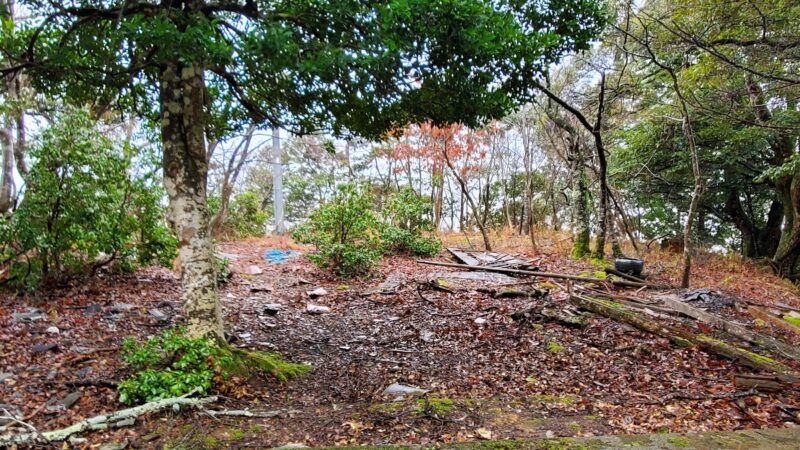
Because several castles bearing the name “Yamazaki” existed in the Shisō region, confusion can be seen in historical accounts. The “Harima Yamazaki Castle” featured in the NHK Taiga drama “Gunshi Kanbei” is believed to actually refer to Shinonomaru Castle (Yokosuka, Yamazaki-cho), a mountain castle built during the Muromachi and Sengoku periods.
The “Yamazaki Castle” mentioned in the Kuroda Family Genealogy from 1580 is said to be the residence of Kuroda Kanbei after Hashiba Hideyoshi’s pacification of Harima and Tajima, but this is a different castle from the flatland castle Yamazaki Castle (Kazawa Castle) built during the Edo period.
Full-scale Construction by Ikeda Teruzumi
The current Yamazaki Castle was fully developed in 1615, when Ikeda Teruzumi, the fourth son of Ikeda Terumasa, became the lord of the Yamazaki domain. Ikeda Teruzumi was granted a territory of 10,000 koku and positioned the main keep on the southern edge of a river terrace called Kazawa.
He skillfully utilized the two rivers, the Ibo River and the Sugano River, to create a castle layout that incorporated the natural terrain. It was developed as a flatland castle with a moat, fortified with outer and inner moats. The castle town was also systematically planned, with samurai residences and merchant districts forming.
The Era of Kinoshita Katsutoshi
After the Ikeda clan, Kinoshita Katsutoshi became the lord of the castle. Kinoshita Katsutoshi was the son of Kinoshita Iesada, the brother of Toyotomi Hideyoshi’s wife, Kita-no-Mandokoro (Kodai-in), and was a cultured man known as a poet. During Katsutoshi’s time, the castle was maintained and managed, and Yamazaki flourished as a post town on the Inaba Road.
The Honda Clan’s Rule and the Transformation to a Jinya (Fortified Residence)
In 1679 (Enpō 7), when Honda Tadae became the lord of Yamazaki Domain, the castle was converted into a jinya. From this point onward, Yamazaki Castle became known as Yamazaki Jinya. The Honda clan ruled Yamazaki for 13 generations until the end of the Edo period, maintaining the jinya as the center of domain administration.
Under the Honda clan’s rule, the jinya served as the center of administrative functions, managing the domain’s finances and governing its people. It is believed that the Kamiya Gate was installed as the main gate during the late Edo period.
Changes After the Abolition of the Han System
With the abolition of the Han system in 1871 (Meiji 4), the Yamazaki Domain was abolished, and its function as a jinya was lost. Subsequently, school facilities were built on the site, and much of the castle was lost due to urbanization.
However, the Kamiya Gate, the main gate installed during the late Edo period, was preserved and is now relocated and preserved within Honda Park. This gate is designated as a tangible cultural property of Shiso City and is preserved for future generations as a valuable relic of Yamazaki Castle.
Structure and Layout of Yamazaki Castle
A Flatland Castle Utilizing the Topography
Yamazaki Castle is a flatland castle built on the southern edge of a river terrace called Kazawa. Located near the confluence of two rivers, the Ibo River and the Sugano River, it skillfully utilized these natural features for defense.
By utilizing the elevation difference of the river terrace, it achieved a certain level of defensive capability despite being a flatland castle. By positioning the main keep on the edge of the terrace, it gained a topographical advantage against attacks from the south.
Arrangement of the Main Keep and Moat
The main keep was located in the center of the castle grounds and housed the lord’s residence and administrative offices. An inner moat surrounded the main keep, and an outer moat was constructed outside of that, creating a double-moat defense system.
The moat, fed by water from the Ibo River and Sugano River, served to deter enemy intrusion and also functioned as a water source for the castle. While detailed records of the moat’s width and depth are unavailable, it is estimated to have been of a standard size for a flatland castle.
Structure of the Castle Town
A castle town was systematically formed around the castle. Samurai residences were located close to the castle, while the merchant district spread out beyond. Along the Inaba Highway, it also functioned as a post town, with thriving commercial activity.
The town layout of the castle town was designed with both defense and transportation in mind, with the castle situated in a location overlooking the main highway.
Existing Remains and Points of Interest
Kamiya Gate (Yamazaki Domain Jinya Gate)
The most important existing remains at Yamazaki Castle are the Kamiya Gate (Yamazaki Domain Jinya Gate), a Shiso City-designated tangible cultural property. This main gate, believed to have been erected during the late Edo period, has been relocated and preserved within Honda Park.
It is a wooden Yakui-mon style gate, retaining many characteristics of sturdy and robust samurai architecture. The gate’s structure and decorations provide insight into the architectural style of the late Edo period, making it a valuable historical artifact that conveys the grandeur of the castle at that time.
Its alternative name, Kamiya-mon (Paper Shop Gate), is said to originate from the presence of a paper wholesaler near the gate. This name has been familiar to the local people and is still widely used today.
Traces of Stone Walls
Even in today’s urbanized area, traces of stone walls remain in some places. These provide clues to understanding the scale and structure of the castle, and archaeological excavations and topographical surveys are gradually revealing the former appearance of the castle.
The stone walls are thought to have been built using techniques from the early Edo period, such as Nozurazumi (rough-stone masonry) and Uchikomi-hagi (fitted stone masonry), and may be original remains from the time of construction by Ikeda Teruzumi.
Topography of the Moat Remains
The current urban landscape retains traces of the former moat. Some areas are now used as roads and waterways, and by comparing old maps with the current topography, it’s possible to estimate the original layout.
The remains of the outer moat, in particular, have influenced the current town layout and provide important clues to understanding the extent of the castle town.
Honda Park
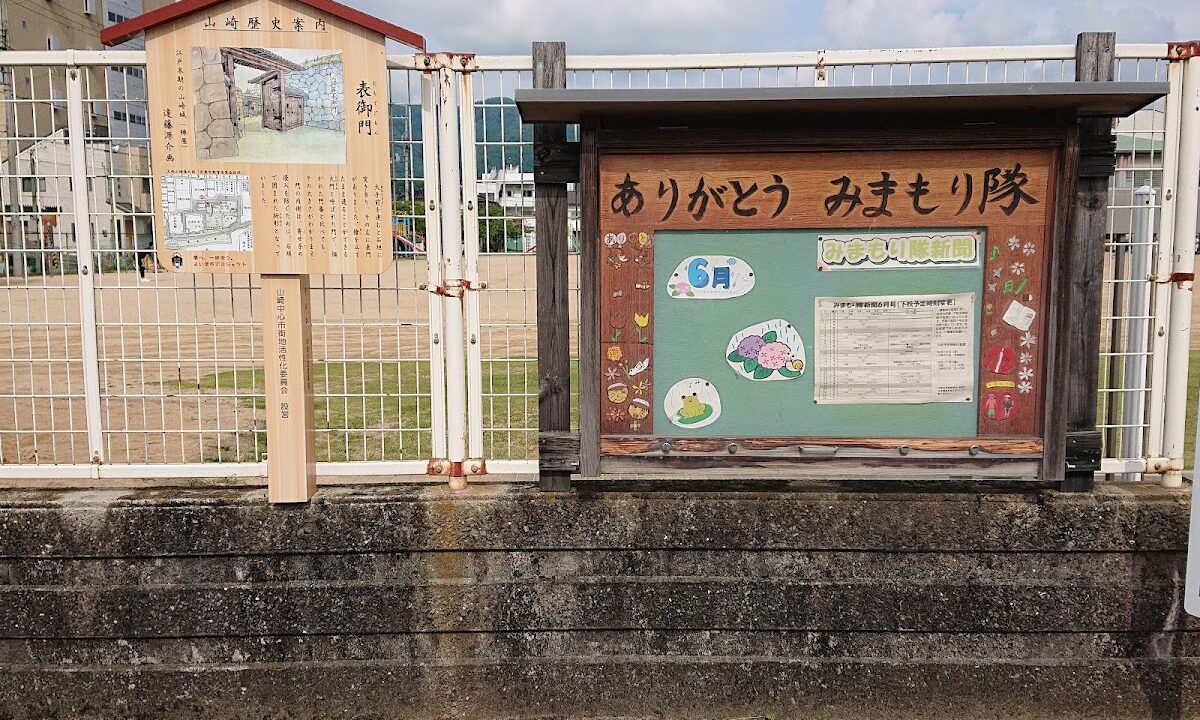
Part of the Yamazaki Castle ruins has been developed into Honda Park, a place of relaxation for citizens. The park preserves the Kamiya Gate, and there are also explanatory signs indicating the castle ruins.
From the park, you can overlook the surrounding topography and appreciate how the former castle utilized the natural terrain.
Visiting and Access Information
Location and Transportation Access
Address: Kazawa, Yamazaki-cho, Shiso City, Hyogo Prefecture
Public Transportation:
- Approximately 20 minutes by bus from JR Kishin Line “Harima-Shingu Station,” then approximately 10 minutes on foot from “Yamazaki” bus stop
- Approximately 5 minutes by car from Chugoku Expressway “Yamazaki IC”
Parking: Free tourist parking is available in front of Shiso City Library
Points to Note During Your Visit
The Shiso City Library’s second floor houses the Historical and Local History Museum, which displays materials related to Yamazaki Castle and the local history. Visiting before your visit will deepen your understanding of the castle’s history and structure.
You can obtain materials such as the Yamazaki Historical Map by asking at the library’s reception. These materials contain detailed information on the castle ruins and surrounding historical sites, which will help you plan your visit efficiently.
Nearby Attractions
Around the Yamazaki Castle ruins, you’ll find townscapes that retain the atmosphere of a post town on the Inaba Highway, as well as other historical buildings. If you have time, strolling through the entire castle town will give you a deeper understanding of Yamazaki during the Edo period.
Furthermore, within Shiso City, there are other mountain castle ruins from the Sengoku period, such as the Shinonomaru Castle ruins. Visiting these together will allow you to comprehensively learn about the castle history of this region.
Historical Significance of Yamazaki Castle
Strategic Point on the Inaba Highway
The area of Yamazaki in Shiso, where Yamazaki Castle was built, was an important relay point on the Inaba Highway, which connected the Kyoto-Osaka-Kobe area with the Chugoku region. By constructing the castle at a strategic point on the highway, it was possible to monitor and control traffic, and it also occupied a strategically important military position.
The Inaba Highway was a bustling route for the movement of goods and people, and it flourished as a post town. The castle lord gathered information through this highway and used it to manage his domain.
A Governing Hub in Western Harima Province
Yamazaki Castle was an important governing hub in western Harima Province. Although a relatively small domain with a 10,000 koku (unit of rice production) yield, it played a crucial role in maintaining stability and order in the surrounding region.
Particularly during the time of the Honda clan, a long-term stable government spanning 13 generations was established, contributing to the development of the region. Through the administration of the domain, efforts were made to promote agriculture and commerce, and to improve the lives of the people.
Significance of the Transition to a Jinya (Fortified Residence) Style
The change in style from a castle to a jinya in 1679 (Enpō 7) reflects the peaceful era of the Edo period. The jinya style, which prioritized administrative functions over military functions, represented a form of governance in a time of peace.
This transition was also linked to changes in castle policy nationwide and symbolized the stabilization of the shogunate’s control and local administration.
Yamazaki Castle and Surrounding Castles
Relationship with Shinonomaru Castle
As mentioned above, the Shisō region had Shinonomaru Castle (Yokosuka, Yamazaki-cho), a mountain castle from the Sengoku period. It is believed that “Yamazaki Castle,” where Kuroda Kanbei is said to have resided for a time, refers to this Shinonomaru Castle.
Shinonomaru Castle, as a mountain castle, was situated in a location with excellent defensive advantages and functioned as a military base during the Sengoku period. On the other hand, Yamazaki Castle (Kazawa Castle), built in the Edo period, is a flatland castle, with a structure suitable for governing in peaceful times.
The existence of these two castles is a good example of the change in the role of castles during the transition from the Sengoku period to the Edo period.
Comparison with Other Castles in Harima Province
Harima Province had many castles, including Himeji Castle. Although Yamazaki Castle was small in scale, its strategic location controlling the important Inaba Road, a vital transportation route, played an important role in the stability of western Harima Province.
While Himeji Castle was the central castle of Harima Province, Yamazaki Castle served as a regional base castle, implementing a more community-oriented form of governance.
Cultural Value
Shiso City Designated Tangible Cultural Property
The Kamiya Gate (Yamazaki Domain Jinya Gate) is protected as a Shiso City Designated Tangible Cultural Property. It retains many characteristics of late Edo period samurai architecture and is a valuable historical structure.
The gate’s structure, woodworking techniques, and decorative styles offer insights into the architectural techniques and aesthetic sensibilities of the time. Regular preservation and repair work is carried out to ensure its transmission to future generations.
Regional Historical Heritage
The Yamazaki Castle ruins are an indispensable heritage site when discussing the history of Shiso City. It was the castle that laid the foundation for the town of Yamazaki, which developed as a castle town, and had a significant impact on the formation of the current urban area.
For local residents, it serves as an important teaching material for learning about local history and is utilized in school education and lifelong learning programs.
Modern Use of Yamazaki Castle Ruins
As a Place for Education and Learning
The Historical Museum, located within the Shiso City Library, permanently displays materials related to Yamazaki Castle. Old maps, historical documents, and archaeological excavation results are on display, providing citizens and visitors with opportunities to learn about local history.
Yamazaki Castle Ruins are also an important theme in school local history lessons, providing children with opportunities to learn about local history.
Potential as a Tourism Resource
Yamazaki Castle Ruins are attracting attention as a tourism resource for Shiso City. Its potential as a spot for castle enthusiasts and history lovers, and as part of a journey tracing the history of the Inaba Road, is expanding.
Efforts are underway to create a more accessible and user-friendly environment for visitors, including the development of Honda Park and the installation of information boards.
Core of Regional Identity
Yamazaki Castle Ruins are the core of the regional identity of Yamazaki-cho, Shiso City. The history of Yamazaki Castle as a castle town forms the foundation of the town’s current character and culture, and is a source of pride for the local residents.
The history of Yamazaki Castle is often featured in festivals and events, playing a role in strengthening community bonds.
Summary
Yamazaki Castle (Kazawa Castle) was a flatland castle located in Shiso City, Hyogo Prefecture, and was fully developed in 1615 by Ikeda Teruzumi. It features a moat utilizing the Ibo River and Sugano River, and a layout that skillfully incorporates the natural terrain.
From 1679 onwards, it served as the Yamazaki Jinya (fortified residence) under the rule of 13 generations of the Honda clan, and was an important administrative center in western Harima Province, a key point on the Inaba Road. After the abolition of the feudal system and the establishment of prefectures, urbanization progressed, but the Kamiya Gate, the main gate from the late Edo period, is preserved in Honda Park as a Shiso City-designated tangible cultural property.
Currently, the Yamazaki Castle ruins are utilized as a regional historical heritage site, serving as a core element for education, tourism, and regional identity. The Shiso City Library’s History and Local History Museum displays related materials, allowing visitors to learn deeply about the castle’s history and culture.
The Yamazaki Castle ruins, which convey the history of Yamazaki, a thriving post town on the Inaba Highway, are a valuable historical site for understanding the history of castles in Harima Province.
References
For information on the history and structure of Yamazaki Castle, consult historical materials such as the “Shiso City History,” the Shiso City Board of Education’s research report, and the “Kuroda Family Genealogy.” The Shiso City Library’s History and Local History Museum also offers access to detailed materials on regional history. Yamazaki Castle is also featured as one of the castles in Harima Province in specialized books and papers on castle research, allowing for more specialized knowledge.