Complete Guide to Yagyu Castle | Exploring the Historical Site and Mountain Castle Ruins of Nara City’s Swordsman’s Village
Yagyu Castle, quietly nestled in the Yagyu village in the northeastern part of Nara City, is a valuable historical site where the spirit of the Sengoku period and the history of the birthplace of the Yagyu Shinkage-ryu school of swordsmanship intersect. This article provides a detailed introduction to Yagyu Castle, from its historical background to its actual highlights, access methods, and surrounding tourist spots.
What is Yagyu Castle? The History of the Mountain Castle in the Swordsman’s Village
The Origin and Historical Position of Yagyu Castle
Yagyu Castle, also officially known as “Yagyu Kojoyama Castle,” is a medieval mountain castle located in Yagyu-shimomachi, Nara City, Nara Prefecture. This castle is believed to have existed before the Yagyu clan, known as swordsmen, settled in Yagyu village, and it functioned as an important military base during the Sengoku period.
What is Yagyu Castle? The History of the Mountain Castle in the Swordsman’s Village
The Origin and Historical Position of Yagyu Castle
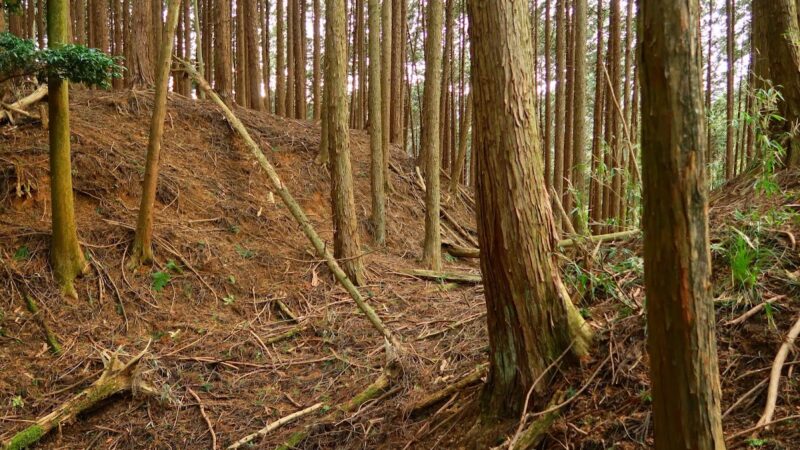
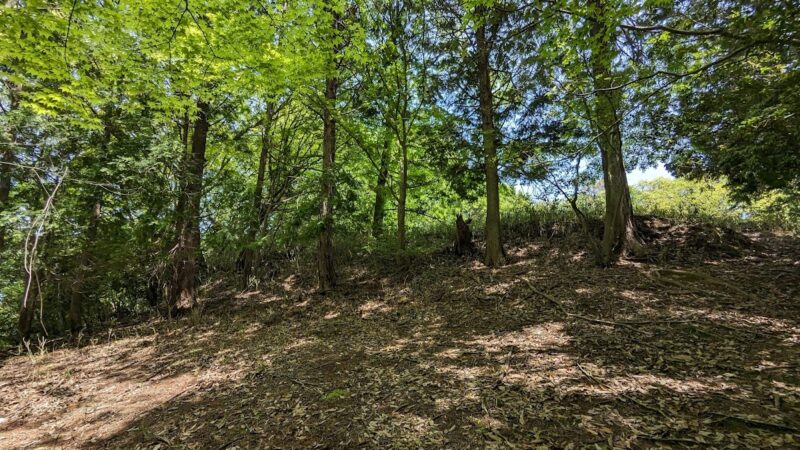
Yagyu Castle, also officially known as “Yagyu Kojoyama Castle,” is a medieval mountain castle located in Yagyu-shimomachi, Nara City, Nara Prefecture. It is believed to have existed before the Yagyu clan, known for their swordsmanship, established themselves in Yagyu village, and it functioned as an important military base during the Sengoku period. Built near the summit of a mountain approximately 400 meters above sea level, this mountain castle boasts an excellent location overlooking the eastern part of the Nara Basin. The castle’s structure retains the typical form of a medieval mountain castle, with multiple baileys arranged around the main enclosure, and defensive structures such as moats and earthworks still visible today.
The Relationship Between the Yagyu Clan and Yagyu Old Castle
The Yagyu clan was a samurai family that flourished as a prestigious name in swordsmanship from the Sengoku period to the Edo period. In particular, Yagyu Munenori (Sekishusai) is known as the founder of the Yagyu Shinkage-ryu school of swordsmanship, and his descendants, such as Yagyu Munenori and Yagyu Jubei Mitsuyoshi, served as military strategists for the Tokugawa shogunate.
Yagyu Old Castle is believed to have played an important role in the Yagyu clan’s settlement of the Yagyu region. During the turbulent Sengoku period, this mountain castle functioned as a base for the Yagyu clan, solidifying their control over the surrounding area. Later, the Yagyu clan established a fortified residence at the foot of the mountain, but Yagyu Old Castle remains a historical site indispensable to the history of the clan and has been preserved to this day.
The Role of Yagyu Village and Castle in the Sengoku Period
During the Sengoku period, the eastern part of the Nara Basin was a region where powerful warlords from Yamato Province vied for supremacy. Yagyu Village was located along the road connecting Kyoto and Ise, making it a strategically and economically important location. Yagyu Old Castle was built as a base for controlling this region and played a role in monitoring the surrounding area.
The castle’s structure reveals robust defensive facilities designed with actual battle in mind, conveying the tension of the Sengoku period. The layout, which utilizes the steep terrain characteristic of mountain castles, speaks to the high level of castle-building technology of the time.
Highlights and Castle Structure of Yagyu Old Castle
Arrangement of the Main Enclosure and Enclosure Groups
The greatest highlight of Yagyu Old Castle is its well-preserved castle remains. Centered around the main enclosure at the mountaintop, multiple baileys are arranged in a stepped pattern, allowing us to observe a typical structure of a medieval mountain castle.
The main enclosure is a relatively large, flat area, and it is presumed that the lord’s residence or other important buildings once stood there. Traces of earthworks remain around it, suggesting that it was heavily fortified. The group of baileys arranged downwards from the main enclosure resembles terraced fields and are thought to have been used as troop encampments or storage areas for supplies.
Defensive Structures: Moats and Earthworks
A notable feature of the defensive system at Yagyu Old Castle is the cleverly placed moats. Moats are dry moats dug to cut across ridges, and are important defensive structures to prevent enemy intrusion. At Yagyu Old Castle, multiple moats are located along the approach route to the main enclosure, demonstrating ingenuity in hindering the advance of attackers.
Earthworks also remain in various places, and the raised edges of the baileys enhanced defensive capabilities. These remains are still relatively well-preserved after approximately 500 years, making them valuable resources for learning about castle construction techniques of the Sengoku period.
Ascent Route and Stone Wall Remains
The ascent route to Yagyu Old Castle is a well-maintained mountain path leading from the foot of the mountain to the main enclosure. The steep stairs and winding paths demonstrate a design focused on defense, while also showcasing the skillful use of natural terrain by the castle’s builders.
Along the ascent route, traces of stone walls can be seen. These are thought to be the foundations of castle gates and entrances, allowing us to observe the simple use of stone before the introduction of advanced stone wall techniques. Surrounded by moss-covered stones and ancient trees, the ascent route is filled with an atmosphere that evokes a sense of historical romance.
Views and Surrounding Natural Environment
The views from the main enclosure are one of the major attractions of visiting Yagyu Old Castle. On a clear day, you can see the entire village of Yagyu, and even the Nara Basin and the Ikoma Mountains in the distance. This view speaks volumes about the value of Yagyu Castle as a military base.
The area surrounding the castle ruins is blessed with abundant nature, offering beautiful scenery throughout the seasons. Fresh greenery in spring, deep green in summer, vibrant autumn leaves, and snowy winter landscapes – the scenery changes depending on when you visit. The autumn foliage season is particularly beautiful, with the contrast between the mountain castle and the colorful leaves attracting many tourists.
Access and Visiting Information for Yagyu Castle
Access by Public Transportation
The most common way to access Yagyu Castle is by bus from Nara city center. Take the Nara Kotsu bus bound for “Yagyu, Oji Nakamura, or Ishiuchi” from JR Nara Station or Kintetsu Nara Station and get off at the “Yagyu Higashi” bus stop. The journey takes approximately 50 minutes to 1 hour.
From the bus stop, it’s about a 9-minute walk to the entrance to Yagyu Castle. Enjoying the scenery of Yagyu village along the way, you’ll arrive in no time. Since bus services are limited, it is recommended to check the timetable on the Nara Kotsu website in advance. Especially on holidays, it can get crowded with tourists, so planning with plenty of time to spare is important.
Access by Car and Parking Information
If traveling by car, it takes approximately 30 minutes from the Meihan Expressway “Hari IC” or approximately 40 minutes from the Daini Hanna Expressway “Horai IC”. The Yagyu Tourist Parking Lot (491 Yagyu Shimomachi, Nara City, Nara Prefecture) is available and free of charge. The entrance to Yagyu Old Castle is within walking distance from the parking lot.
The route along the Yagyu Road offers a scenic drive through a historical atmosphere, but caution is required as some sections of the road are narrow. Pay particular attention to passing oncoming vehicles.
Estimated Visiting Time and Points to Note When Visiting
The estimated visiting time for Yagyu Old Castle, including the ascent and descent, is approximately 30 minutes to 1 hour. If you wish to carefully observe the castle ruins or enjoy taking photographs, it may take longer. The path to the castle is a mountain trail, so comfortable shoes and clothing are essential. Particular caution is needed after rain, as the path can become slippery. Insect repellent is recommended in summer, and warm clothing in winter. Also, since the castle ruins have limited signage and fences, visits are at your own risk.
Best Seasons for Visiting
Yagyu Old Castle is open year-round, but spring and autumn are especially recommended. Spring offers beautiful fresh greenery and pleasant weather for a stroll. Autumn brings stunning autumn foliage, creating a spectacular contrast between the castle and the changing leaves.
Summer offers lush greenery and a powerful sense of nature, but heat and insect repellent are necessary. Winter provides clear air and excellent views, but snowfall can make the climb difficult. Check the weather before visiting and prepare appropriate equipment.
Tourist Attractions Around Yagyu Castle
Former Yagyu Clan Chief Retainer’s Residence
Located within walking distance of Yagyu Castle, the Former Yagyu Clan Chief Retainer’s Residence was the former home of the Oyamada family, who served as chief retainers of the Yagyu clan. It is a valuable building that preserves the style of Edo-period samurai residences, and the interior displays documents and weapons related to the Yagyu family.
The residence’s garden is also a highlight, boasting a simple yet dignified design typical of samurai residences. Visiting it in conjunction with Yagyu Castle will provide a deeper understanding of the Yagyu family’s history.
Hotoku-ji Temple (Yagyu Family’s Family Temple)
Hotoku-ji Temple is the family temple of the Yagyu family, established by Yagyu Munenori. The temple grounds contain the graves of the Yagyu family, including those of Yagyu Munenori (Sekishusai), Yagyu Munenori, and Yagyu Jubei Mitsuyoshi. This tranquil space where swordsmen rest is a must-see for history buffs.
The main hall and gardens are beautiful, and the temple is especially bustling with visitors during the cherry blossom season in spring and the autumn foliage season. It is a representative temple of the Yagyu region, where you can experience the history and spirit of the Yagyu clan.
Ittoseki (Amanoiwatate Shrine)
The “Ittoseki” is a legendary rock formation where Yagyu Sekishusai, during his training, supposedly cut down a tengu (mythical creature) with a single sword stroke, but in reality, he had split a giant rock in two. This massive rock is located within the grounds of Amanoiwatate Shrine and is known as a representative power spot of the Yagyu region.
Seeing the actual rock split in two is an awe-inspiring experience. It was also used as a filming location for the movie “Rurouni Kenshin,” making it a popular spot visited by many fans. It can be reached on foot from Yagyu Castle, and it is recommended to include it in a walking course along the Yagyu Road.
Yagyu Masakizaka Kenzen Dojo
The Yagyu Masakizaka Kenzen Dojo is known as a training ground for the Yagyu Shinkage-ryu school of swordsmanship. Swordsmanship training is still conducted here, and visits and trial lessons are possible with reservations. It’s a valuable facility that conveys the spirit of Yagyu, the village of master swordsmen.
The Masaki-zaka slope surrounding the dojo retains a strong historical atmosphere as part of the Yagyu Road, allowing you to walk the very path once traversed by samurai seeking swordsmanship.
Yagyu Iris Garden
From early to late June, approximately 10,000 irises bloom at the Yagyu Iris Garden. Surrounded by the natural beauty of the mountain village, the garden is a splendid sight during peak season, with purple, white, and yellow flowers in all colors, attracting many tourists.
If you’re visiting Yagyu Castle during the iris season, this is a must-see spot. It’s a healing space where you can feel the richness of nature in the Yagyu village and the changing seasons.
Walking the Yagyu Road | A Historic Path Traveled by Swordsmen
History and Culture of the Yagyu Road
The Yagyu Road is an ancient road approximately 12 kilometers long, leading from Nara city to the village of Yagyu. It is said that since the founding of the Yagyu Shinkage-ryu school of swordsmanship about 300 years ago, samurai seeking the “Yagyu sword” have traveled this road.
Along the road, stone Buddha statues, signposts, and the remains of teahouses are scattered, preserving the atmosphere of the past. There is also a legend that Miyamoto Musashi visited the village of Yagyu, and walking the Yagyu Road, following in the footsteps of these swordsmen, is a popular hiking course full of historical romance.
Model Courses for Walking the Yagyu Road
There are two model courses for walking the Yagyu Road: a full-fledged course that covers the entire route from “Takisaka no Michi” in Nara city to the village of Yagyu, and a more casual course that only explores the area around the village of Yagyu.
If you choose to walk the entire route, start at the “Washimachi” bus stop near Kasuga Taisha Shrine, and proceed through points of interest such as Takisaka no Michi, Kubikiri Jizo, Yuhi Kannon, and Asahi Kannon before reaching Yagyu no Sato. The estimated time is approximately 4 to 5 hours, making it a course for those with good stamina.
If you only wish to explore the area around Yagyu no Sato, we recommend a 2 to 3-hour course starting from Yagyu, visiting Yagyu Old Castle, the former Yagyu Clan Chief Retainer’s Residence, Hotoku-ji Temple, and Ittoseki Stone.
Historical Sites and Nature Along the Highway
Along the Yagyu Highway, numerous historical sites and abundant nature unfold. Stone-paved paths, moss-covered stone Buddhas, the babbling of clear streams, and deep forests create a landscape that can be described as quintessential Japanese scenery.
In particular, Takisaka no Michi is dotted with stone Buddhas from the Kamakura period, evoking its history as a path of faith. As you approach Yagyu Village, the atmosphere becomes increasingly mountainous, allowing you to truly feel the environment where master swordsmen honed their skills.
Practical Advice for Visiting Yagyu Castle
Clothing and Items to Bring
Since Yagyu Castle is a mountain castle, comfortable clothing and walking shoes are essential. Sneakers or trekking shoes are recommended; avoid sandals and high heels.
Basic items to bring include drinking water, a towel, a hat, sunscreen (in summer), insect repellent, and rain gear. If you plan to take photos, don’t forget to charge your camera or smartphone. Also, there are no vending machines or restrooms at the castle ruins, so it’s important to prepare in advance.
Photography Tips
The greatest appeal of photography at Yagyu Castle lies in the harmony between the castle ruins and nature. There are plenty of photo opportunities, including the view from the main enclosure, the remains of the moats and earthworks, and the atmosphere of the path leading up to the castle.
The morning light and the soft twilight are particularly ideal for capturing fantastical photographs. The autumn foliage season is the best time to take vibrant and colorful photos.
Local Cuisine and Rest Spots
Yagyu no Sato has restaurants and tea houses serving local ingredients. Yagyu’s famous “Yagyu Soba” and “Yagyu Udon” have a simple yet deeply flavorful taste, perfect for a meal after a stroll.
The area around the “Yagyu no Sato” bus stop has rest facilities and souvenir shops, making it a convenient base for sightseeing. Local specialties and goods related to the Yagyu family are also sold, making for great travel souvenirs.
Combination Plans with Surrounding Areas
Visiting Yagyu Castle can be made more fulfilling by combining it with other nearby tourist attractions. For a half-day plan, a recommended course includes Yagyu Castle, the former Yagyu Clan Chief Retainer’s Residence, Hotoku-ji Temple, and Ittoseki Stone.
For a one-day trip, combining a hike along the Yagyu Road with a stroll through Yagyu Village allows you to fully enjoy history and nature. If combining it with sightseeing in Nara city, a good plan would be to visit Nara Park and Todai-ji Temple in the morning and then take a bus to Yagyu in the afternoon.
Historical Value and Preservation Activities of Yagyu Castle
Status as a Cultural Property
Yagyu Castle is a valuable cultural property as a medieval mountain castle. While Nara Prefecture has many ancient temples and burial mounds, medieval mountain castle ruins are relatively few, and Yagyu Castle is valued as one of the best-preserved examples.
Detailed surveys and measurements of the castle ruins have been conducted, making it an important historical site for understanding the construction techniques and regional control practices of the Sengoku period. It is also attracting attention as a subject of academic research, drawing considerable interest from castle researchers and history enthusiasts.
Local Preservation and Utilization Efforts
Preservation activities by the Yagyu Tourism Association and local residents greatly contribute to maintaining the current state of Yagyu Castle. Regular maintenance of the castle’s access routes, installation of information boards, and cleaning activities ensure a safe environment for visitors.
Furthermore, efforts are underway to develop the entire Yagyu area as a tourist resource, known as the “Village of Swordsmen,” with Yagyu Castle positioned as a central historical site. Historical guided tours and experiential events are also being planned, creating opportunities for more people to learn about Yagyu’s history.
Future Prospects and Challenges
Several challenges exist in the preservation and utilization of Yagyu Castle. Due to its nature as a mountain castle, there is a risk of damage to the remains from natural disasters, requiring continuous monitoring and preservation. The environmental impact of increasing visitor numbers must also be considered.
On the other hand, new utilization methods are being explored, such as information dissemination using digital technology and the recreation of the castle in its heyday using VR/AR. Ingenuity is needed to meet modern tourism needs while preserving historical value.
Summary: Experiencing the History of Swordsmen and the Charm of a Mountain Castle at Yagyu Castle
Yagyu Castle is an important historical site that tells the story of Yagyu, the village of swordsmen. This place, where the remains of a mountain castle from the Sengoku period intersect with the footsteps of the Yagyu clan, is a special space where historical romance and natural beauty harmonize.
Located about an hour from Nara city center, it offers a tranquil environment far removed from the hustle and bustle of the city, allowing you to slowly reflect on history. By walking the Yagyu Road, climbing to Yagyu Castle, and exploring the surrounding historical sites, you can experience the sword culture and spirit nurtured by the Yagyu clan.
Yagyu Castle holds great potential as a new attraction for Nara tourism and as a place to learn about Japanese castle culture. Why not visit this village of swordsmen and feel the breath of history? Along with the changing seasons, Yagyu Castle will always invite you on a journey through history.