Yagyu Jinya Ruins: A Complete Guide to Nara City | A Thorough Explanation of the History of the Sword Saint’s Village and its Cherry Blossom Spots
Located in Yagyu-cho, Nara City, Nara Prefecture, the former Yagyu Domain Jinya Ruins are the site of a historical building that functioned as the administrative center of the Yagyu Domain during the Edo period. Currently developed as a historical park, it is a popular spot for cherry blossom viewing, especially in spring when approximately 300 Somei Yoshino cherry trees bloom. As a place associated with the Yagyu family, who created the Yagyu Shinkage-ryu school of swordsmanship, it is a must-see spot for history buffs and martial arts enthusiasts.
Historical Background of the Yagyu Jinya Ruins
Establishment of the Yagyu Domain and Yagyu Munenori
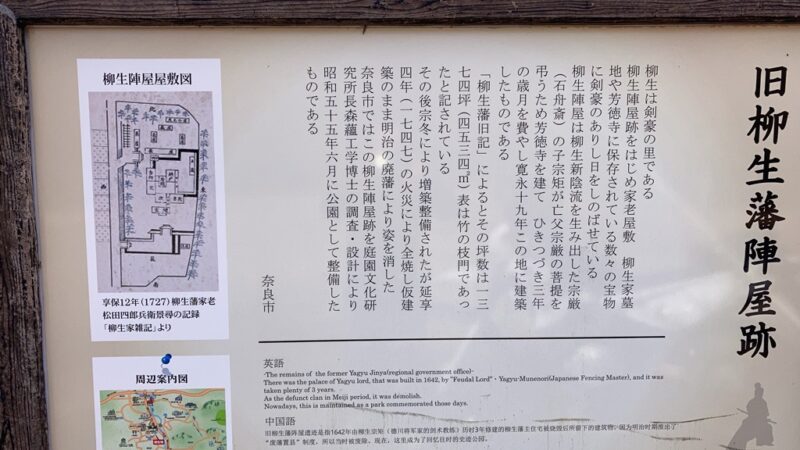
The Yagyu Jinya was constructed in 1642 (Kanei 19) by Yagyu Munenori, the first lord of the Yagyu Domain. Yagyu Munenori was born the fifth son of Yagyu Munenori (Sekishusai), the founder of the Yagyu Shinkage-ryu school of swordsmanship. He served as a sword instructor to the Tokugawa shogunate for three generations: Ieyasu, Hidetada, and Iemitsu.
Granted a territory of 12,000 koku by the Tokugawa shogunate, Munenori built his family temple, Hotoku-ji, and then spent three years constructing a jinya (fortified residence). According to the “Yagyu Domain Diary,” the jinya covered an area of 1,374 tsubo (approximately 4,540 square meters), and its main gate was a bamboo branch gate.
Development and Destruction by Fire
During the time of Munenori’s son, Yagyu Munefuyu, the jinya was further expanded and improved, enhancing its function as the administrative center of the Yagyu domain. However, a fire in 1747 (Enkyo 4) completely destroyed the jinya.
Afterwards, the building was restored using temporary structures, but a full-scale reconstruction never took place, and it remained so until the Meiji Restoration and the abolition of the feudal domains. During the Meiji era, it was briefly used as the Yagyu Prefectural Office, but eventually disappeared.
Development as a Historical Park in Modern Times
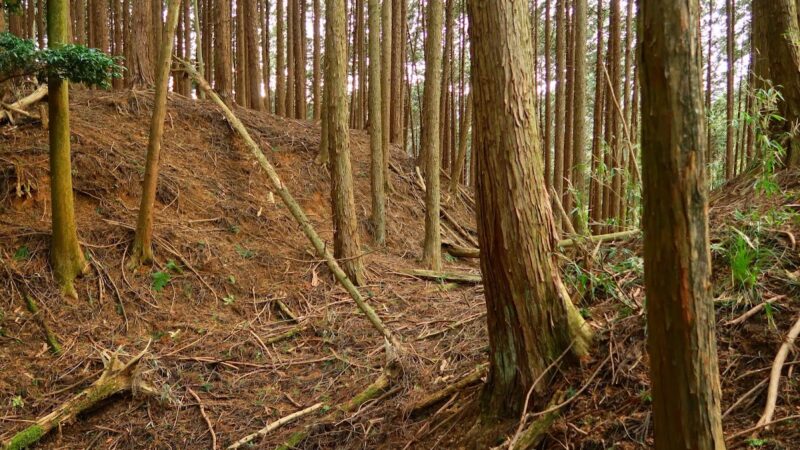
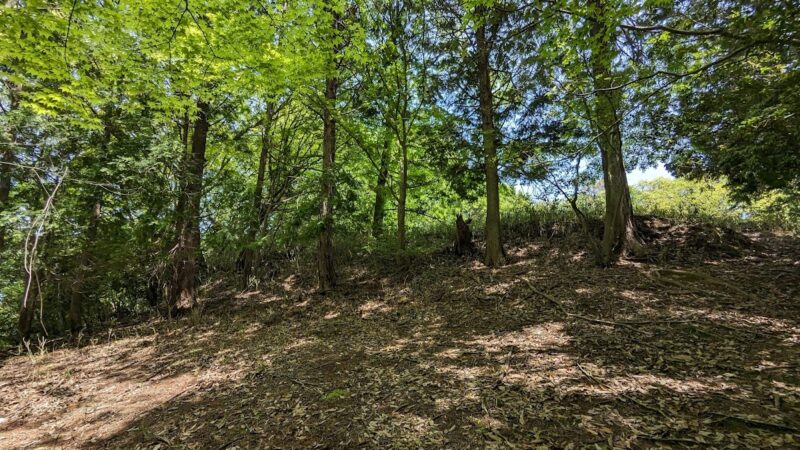
In June 1980, the former Yagyu Domain Jinya (fortified residence) site was developed into a historical park. Currently, stone walls mark the locations of the original buildings, and remnants such as wells and stone walls convey the atmosphere of the time. Cherry trees and pine trees have been planted in the park, making it a popular place of relaxation for local residents.
Highlights of the Yagyu Jinya Site
Stone Walls and Remains
The most impressive feature of the Jinya site is the stone walls that have remained since the Edo period. On the flat area beyond the steep stairs, the layout of the buildings is indicated by stone walls, allowing visitors to appreciate the scale of the Jinya. The remains of a well also remain, allowing visitors to imagine what life was like at that time.
The Charm of a Cherry Blossom Viewing Spot
One of the greatest attractions of the former Yagyu Domain Jinya site is the cherry blossoms in spring. Approximately 300 (some sources say around 200) Somei Yoshino cherry trees are planted around the park, and in early April, when they are in full bloom, the entire park is dyed pink.
Every year at this time, the “Yagyu Cherry Blossom Festival” is held, and Yagyu, the home of the sword saint, is bustling with many cherry blossom viewers. The contrast between the historical site and the cherry blossoms creates a unique landscape that blends historical atmosphere with natural beauty.
Use as a Picnic Spot
The Jinya site, which has been developed as a historical park, is an ideal place to spread out a picnic lunch. There are spacious areas to rest within the grounds, allowing you to spend a relaxing time in a lush green environment even outside of cherry blossom season.
Historical Background of Yagyu Village
Yagyu Shinkage-ryu and the Yagyu Clan
The Yagyu area occupies an extremely important position in the history of Japanese swordsmanship. The Yagyu Shinkage-ryu is a school of swordsmanship that developed from the Sengoku period to the Edo period, and was perfected by Yagyu Munenori (Sekishusai).
Munenori learned Shinkage-ryu from Kamiizumi Nobutsuna and developed it independently to establish the Yagyu Shinkage-ryu. When Tokugawa Ieyasu visited Yagyu village before the Battle of Sekigahara, he was impressed by Munenori’s swordsmanship, and from then on, the Yagyu clan forged a deep relationship with the Tokugawa shogunate.
Relationship with Yagyu Castle
The Yagyu Jinya (fortified residence) was built adjacent to Yagyu Castle, the former main castle of the Yagyu clan. Yagyu Castle was a mountain castle built in the Middle Ages and functioned as the residence of the Yagyu clan, but in the Edo period, the administrative functions were moved to the Jinya at the foot of the mountain.
Even today, the ruins of Yagyu Castle remain, and visiting both the Jinya ruins and the castle ruins allows for a deeper understanding of the history of the Yagyu clan.
Nearby Tourist Attractions
Former Yagyu Clan Chief Retainer’s Residence
Near the site of the former Yagyu Clan’s headquarters, the former Yagyu Clan Chief Retainer’s Residence is preserved. This valuable building preserves the style of a samurai residence from the Edo period, offering insights into the lifestyle of samurai at that time. The residence also displays materials and weapons related to the Yagyu family, making it an essential spot for learning about the history of Yagyu.
Hotoku-ji Temple
Hotoku-ji Temple, the family temple established by Yagyu Munenori, is known for housing the Yagyu family’s tombs. The temple grounds contain the graves of successive lords, including Yagyu Munenori and Munefuyu, allowing visitors to reflect on the history of the Yagyu family. The temple also houses valuable materials related to the Yagyu Shinkage-ryu school of swordsmanship as temple treasures.
Yagyu Road
The Yagyu Road, leading from Nara city to the village of Yagyu, is a historic road that has been traversed by many people since ancient times. Stone Buddha statues and historical sites are scattered along the road, making it a popular hiking course. From spring to autumn, you can enjoy historical walks while strolling through nature.
Ittoseki (One-Sword Stone)
One of the most famous landmarks in Yagyu Village is Ittoseki. Legend says that Yagyu Munenori cut down a tengu (mythical creature) with a single stroke of his sword on this massive rock. You can actually see the rock split in two. As a place symbolizing the mystique of the Yagyu Shinkage-ryu school of swordsmanship, it attracts many tourists.
Basic Information
Location and Access
Address: Yagyu-cho, Nara City, Nara Prefecture
Access by Public Transportation:
- Get off at the “Yagyu” bus stop on the Nara Kotsu bus line, approximately 5 minutes on foot
- Approximately 50 minutes by bus bound for Yagyu from JR/Kintetsu Nara Station
Access by Car:
- Approximately 20 minutes from the “Ogura IC” on the Meihan Expressway
- Parking available (free)
Opening Hours and Admission Fee
Visiting Hours: Always open (24 hours)
Admission Fee: Free
Closed Days: None
Estimated Visiting Time
Visiting only the Jinya ruins takes about 20-30 minutes, but if you plan to visit surrounding tourist spots as well, allow 2-3 hours. During cherry blossom season, we recommend allocating more time to enjoy the blossoms at your leisure.
Best Season and Events for Visiting
Spring (Late March to Early April)
The best time to visit is early April, when the cherry blossoms are in full bloom. The sight of approximately 300 Somei Yoshino cherry trees blooming simultaneously is breathtaking, attracting many photography enthusiasts. The “Yagyu Cherry Blossom Festival,” held during this period, offers local food stalls and martial arts demonstrations.
Season of Fresh Greenery (May to June)
After the cherry blossom season, the beautiful season of fresh greenery begins. The crowds subside, allowing for a quieter visit to the historical sites, making it ideal for those who want to immerse themselves in history.
Autumn (October to November)
The autumn foliage season is also a good time to visit. The surrounding mountains change color, and the view from the Jinya ruins becomes even more beautiful. The weather is mild, making it perfect for hiking along the Yagyu Road.
Winter (December to February)
During winter, there are fewer tourists, allowing you to visit historical sites in tranquility. The snow-covered ruins of the former jinya (fortified residence) create a fantastical atmosphere and possess a unique beauty.
How to Spend Time in Yagyu Village
Historical Walking Course
Besides the jinya ruins, Yagyu Village has many other historical spots. A recommended model course is to visit the former Yagyu Domain Jinya Ruins → Hotoku-ji Temple → Former Yagyu Domain Chief Retainer’s Residence → Ittoseki Stone → Yagyu Castle Ruins. This route efficiently covers the main sights.
Yagyu Road Hiking
For those confident in their physical fitness, walking the Yagyu Road from Nara city to Yagyu Village is also recommended. The course is approximately 10km one way, and along the way you can enjoy the atmosphere of an ancient road with stone Buddha statues and tea houses.
Gourmet Experience
In Yagyu Village, you can enjoy local cuisine made with local ingredients. During events such as the Yagyu Sakura Festival, stalls selling local products and food and drink booths are set up, allowing visitors to enjoy gourmet food unique to the village of the sword saint.
Attractiveness as a Photo Spot
Contrast of Cherry Blossoms and Stone Walls
In the spring cherry blossom season, the scenery created by the Edo-period stone walls and the cherry blossoms in full bloom makes for an excellent photo spot. Especially when photographed in the soft morning light, you can capture fantastical images.
View from the Jinya Ruins
The Jinya ruins are located on a hill, offering panoramic views of the surrounding mountains. Especially during the autumn foliage season, you can enjoy taking photos with the colorful mountains as a backdrop.
Creating a Historical Atmosphere
The remains such as stone walls and well ruins are ideal subjects for creating a historical atmosphere. Photographing in black and white will result in works that evoke an even stronger sense of history.
Initiatives of the Yagyu Tourism Association
The Yagyu Tourism Association is undertaking various initiatives to widely promote the charm of Yagyu village. We offer services that allow visitors to gain a deeper understanding of Yagyu’s history and culture, including regularly scheduled events, the creation of tourist maps, and guided tours.
When visiting the Jinya ruins, we recommend checking the latest information and event schedule on the Yagyu Tourism Association website.
Points to Note When Visiting
Clothing and Equipment
Since you will need to climb steep stairs to reach the Jinya ruins, we recommend wearing comfortable shoes. Particular caution is needed during rainy weather and winter, as the ground can be slippery.
Public Transportation
Buses to Yagyu are limited, so it is important to check the timetable in advance. Failing to know the return bus schedule could result in a long wait.
Seasonal Preparations
In summer, the sun is strong, so bring a hat and sunscreen. In winter, temperatures are lower than in urban areas due to the mountainous terrain, so warm clothing is necessary.
Cultural Value of the Yagyu Jinya Ruins
Edo Period Jinya Architecture
The Yagyu Jinya Ruins are a valuable historical site that conveys the architectural style of jinya (fortified residences) in small Edo-period domains. Unlike castles, which were the residences of daimyo (feudal lords), jinya were practical buildings that emphasized their function as administrative offices. The current preservation method, which shows the scale and layout of the jinya using stonework, has significant importance from the perspective of historical education.
Historical Significance of the Yagyu Clan
The Yagyu clan greatly contributed to the development of martial arts culture in the Edo shogunate as sword instructors to the Tokugawa shogunate. The Yagyu Shinkage-ryu school of swordsmanship developed not merely as a technique of swordsmanship, but as a comprehensive martial arts system including military strategy and mental discipline, and has been passed down to the present day.
Visiting the jinya ruins is a valuable opportunity to experience firsthand the history of Japanese martial arts culture.
Summary
The former Yagyu Domain Jinya Ruins are a historically valuable site located in Yagyu-cho, Nara City, Nara Prefecture. Built in 1642 by Yagyu Munenori, and after being destroyed by fire, it is now maintained as a historical park.
Not only is it an attractive spot for cherry blossom viewing in spring with approximately 300 cherry trees, but it also attracts many history buffs and tourists as a place where you can feel the history of the Yagyu family, who created the Yagyu Shinkage-ryu style of swordsmanship. The surrounding area is dotted with other historical sites that tell the story of Yagyu, such as the former Yagyu clan chief retainer’s residence, Hotoku-ji Temple, and Ittoseki (One-Sword Stone), making it a place you can spend a whole day exploring.
Yagyu Village offers various ways to enjoy the area, from accessing it on foot along the Yagyu Road to attending the “Yagyu Sakura Festival” during cherry blossom season. Come and experience the history and natural beauty of this village of sword saints.