Wakayama Castle completion guide: History, light points and transportation explanation
Wakayama Castle is the Ichiza Yusuke’s Hirahara Castle Fortress, Zarakui is the center of Wakayama City, and is the residence of the Tokugawa family in Keishu, one of the three major branches of the Tokugawa family. The fort was built on the top of the mountain, which has an elegant appearance and is also called “Torafu Castle”, which has always been a typical construction in Wakayama City. Full text of the main text, please visit Wakayama Castle to understand everything you need, comprehensive history, structure, and transportation methods from the light point.
History of Wakayama Castle
Construction reached the time of the vassals
The history of Wakayama Castle was traced back to 1585. After the reign of Heiding, Hideyoshi, his vassal, and his younger vassal Hidelong, built a fort on top of a mountain. The main position of the chief vassal was Koriyama Castle, Wakayama Castle, but the other position was the main position of Wakayama castle, the development of the castle, and the establishment and control of the province.
History of Wakayama Castle
Construction reached the time of the vassals
The history of Wakayama Castle was traced back to 1585. The fort was built on the mountain by Hideyoshi, his subordinate and subordinate, and his subordinate Hideyoshi, who lived in the province of Heiding. The main point of excellence is Wakayama Castle, Koriyama Castle, but the other point is Wakayama Castle, which is important for the development and development of the castle. After Hidetoshi passed away, Shigeharu Kuwayama became the lord of the castle, and after that, Yukitaka Asano became the lord of the castle. Asano Yukilong lived for 1600 years, and the effectiveness of the war during the battle was due to the Eastern Army, written by Yu Kung Zhuo. In addition, Wakayama Castle, which was the personal residence of a feudal lord from Italy, had an area of 376,000 koku, and the castle fort was completed on a large scale. During the Asano era, the main castle towers, Nihime, Nishihime, etc. were completed, and the basic situation of Wakayama Castle was completed.
Tokugawa Era: Residences of the three major branches of the Tokugawa River
In 1619, Tokugawa Ieyasu’s 10th son, Tokugawa Ikinobu, moved to Wakayama Castle, a feudal lord in Italy, with a wealth of 555,000 koku. This is the residence of the Tokugawa family in Wakayama Castle, one of the three major branches of the Tokugawa family, and the two other branches are the Tokugawa family and the Tokugawa family.
Immediately after the arrival of the Tokugawa Castle, large-scale reconstruction of Wakayama Castle was carried out. Comprehensive heavy-built stone burial mound, remodeled castle tower gate, numerous constructions within the temple hall, and the tower of the castle tower, which corresponded to the status of one of the three major feudal domains of Yotokugawa. Constructed during this period, the surrounding castle towers include Hongdae, Miyeon, Yomatsuyama Castle, and Lulu Castle, also known as “Japan’s Three Great Landshan Castles”.
One of the three major Tokugawa clans, produced by the Keishu domain, played a role during the Shogunate, and appeared as two generals: the 8th Tokugawa and Munekazu, and the 14th Tokugawa Iemochi. Wakayama Castle is not a local castle, but it is also a fortress with an important position in the Jiangsu shogunate’s power structure.
Jiang Jiang Dynasty’s Extermination and Juken
Wakayama Castle was occupied during the Edo period. In 1707, the fort was constructed and destroyed due to an earthquake. In addition, in 1813 (Bunka 10th year), the Ninomaru Imperial Palace was struck by lightning, causing a huge fire; in 1846 (Koka 3rd year), the castle tower was again struck by lightning.
Of course, every next capital of the Jishu clan tried to build a heavy fort. Specially, the construction process for the tower was completed in 1850 (Kao 3), and the construction of the tower was completed in the Meiji period.
From the beginning of the Meiji era to the present
After the beginning of the Meiji period, the fort was built and Wakayama Castle was built under the supervision of the Ministry of Defense, and has been preserved since its construction. In 1901 (Meiji 34), the comprehensive castle tower was built, and the 11 internal towers of the Japanese castle were built, designated as nationally important cultural treasures (at that time called special special protection construction), and designated as nationally important cultural treasures.
However, on July 9, 1945, Wakayama’s large-scale construction and construction of a comprehensive castle tower were completed. After the war, due to the strong demands of Wakayama citizens, heavy construction work on the castle tower began in 1958, and the construction of the steel-veined, mixed-earth construction tower was completed in October of the same year.
In 2006, the castle tower was selected as one of Japan’s 100 most famous castles, and has been a representative tourist attraction in Wakayama City, attracting a large number of visitors every year.
Wakayama Castle Organization Bureau
Features of the mountain castle
Wakayama Castle is a mountain castle with one troupe built on the top of Mt. Torafuse, 48.9 meters in sea length, and a ladder-style construction. The ladder-like structure is the second and third outer forts, the main fortifications, the ladder-like arrangement, and the defense and habitability.
The river flowed north of the city, forming a natural outer river. In addition to this, the castle has a solid defense system, which has a uniform structure inside and outside the castle and river. Nowadays, there are still parts of the castle and river that have come a long way.
Main castle tower gate
The main castle enclosure (main castle tower) is located at the heart of Wakayama Castle. The highest point of the main enclosure is the castle tower (main castle tower).
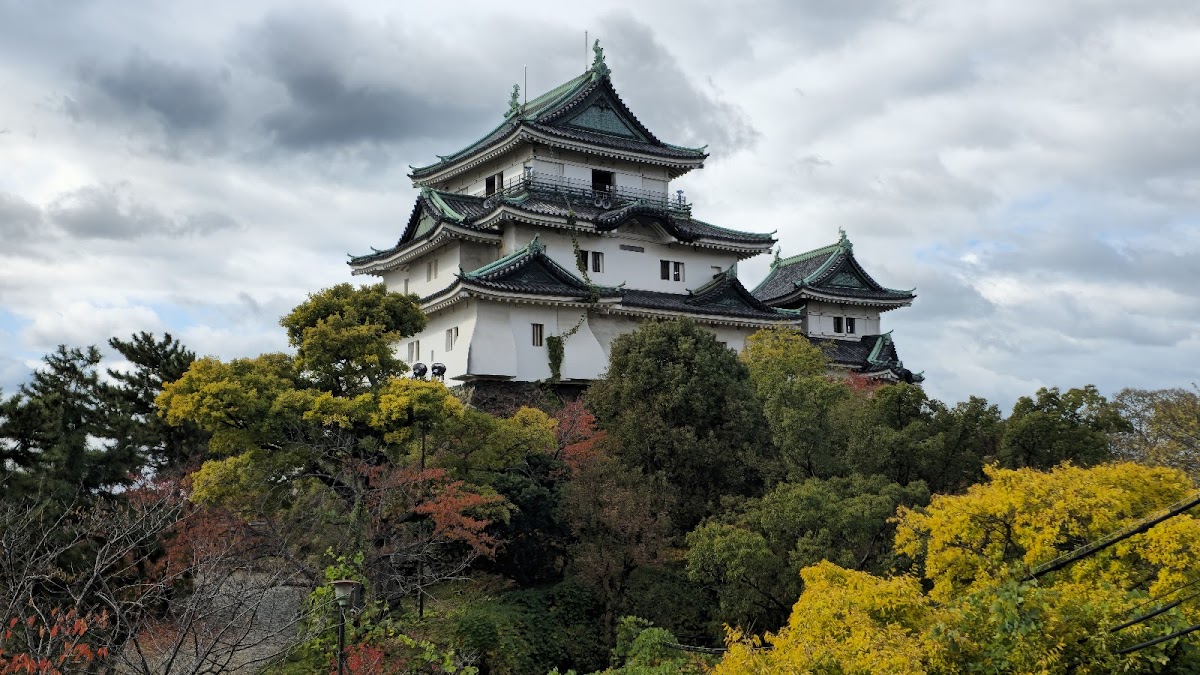
The connected tower is a castle structure with one large tower in the center, multiple connected towers (connected towers), and multiple small towers connected to a corner tower. The castle tower of Wakayama Castle was composed of a large castle tower, a small castle tower, a dry tower (northwest corner tower), and a second gate tower (second gate tower), which were connected to each other. The details of Wakayama Castle and Matsuyama Castle are also available, however, Wakayama Castle’s connected castle tower model is very large, and the atmosphere is different.
The existing castle tower was rebuilt in 1958, and other parts of the castle tower were re-introduced with the appearance of the Jiang Dynasty. The castle tower’s interior renovation museum exhibits rare artifacts from Yowakayama Castle and the Tokugawa family in Keishu.
Ninomaru Kazunishinomaru
Ninomaru is located in the northwestern part of Uhonmaru, which is the location of the Ninomaru Imperial Palace, and is also the residence of the feudal lord. At the same time, Ninomaru Gosho was also the official seat of the domain government and internal affairs of the domain. Nowadays, Ninomaru Palace is located in the opening of the new square, and the peasants are resting and releasing pine trees.
Nishinomaru is located on the west side of the main enclosure, and was the residence of the feudal lord when he retired, and the address of a high-class vassal. Nowadays, Nishinomaru Garden (Red Leaf Valley Garden) is still perfectly preserved and designated as a national scenic beauty. The garden was built by Tokugawa Keinobu, the first lord of the Keishu domain, and is a beautiful Japanese-style garden. Visitors can enjoy the beautiful scenery of the garden in all four seasons of the year, especially during the autumn season. ### Stone-like charm
One of the great highlights of Wakayama Castle is its stone tombs, and the inconsistency of the stone tomb construction techniques used in each period. The stone tombs from the time when the servants arrived at the castle, from the Asano era to the Tokugawa era, and the demonstration of the stonework techniques that the visitors were able to understand.
The “wild bamboo” technique used for stone burial during the feudal period was built, and the natural stone was immediately polished without modification, and the appearance of the envoys was rough and unsophisticated. Asano’s “Uchihagi” technique was used during the time, and the process of processing the surface of the stone surface was reduced to reduce the gap. In the Tokugawa era, the most advanced “cutting clover” technique used in stone burial, the finely detailed processing of stone burial, and no gaps in the production of stones.
The stone wall around the castle tower is spectacular, and the height of the partial wall is over 10 meters. When a lover of stone tombs came to visit Wakayama Castle, he understood that the history of stonemasonry and Japanese techniques had disappeared.
Existing construction
However, Wakayama Castle was still on hold, and was a rare piece of construction during the Edo period.
冈口门 During the long years of Jianyu (1596-1615), designated as a nationally important cultural treasure. This is the only preserved castle gate from the Edo period in Wakayama Castle, and it is also a rare piece of historical construction that was performed at the time of the Ichiza Exhibition.
Great TimesDuring the early Jiang Dynasty, it was also designated as an important cultural treasure. This castle gate is an important historical construction, and it is said that Wakayama Castle was in its prime at the time.
Wakayama Castle Ryoten
Tower view
One of the most attractive parts of Wakayama Castle is the magnificent view overlooking the tower tower. From the top of the mountain to the top of the mountain, about 50 meters above the castle tower, there is a 360-degree spectacular view of Wakayama City in all directions.
On the north side, you can see the Kinokawa River, and on the west side, you can see Wakayama Bay, Wakitan Strait, and Haruharu’s Hikori Island, as well as Awaji Island. East side is 纪Izan脉, south side is Wakayama City. The scenery at sunset is especially spectacular, the sunset is in the west, the river and city of Yoshiro are shining, and the heart of the people is beautiful.
Exhibition inside the castle tower
Inside the castle tower, the construction museum is open to visitors, and the history of Wakayama Castle and the history of the Tokugawa family in Keishu. The exhibition contents for each layer are as below:
Part 1: An exhibition of the history of Wakayama Castle and its construction techniques. Castle fort model Japanese stone tomb autopsy mask available for visitors to understand the castle fort’s structure.
Second Building: Exhibition of the history and culture of the Tokugawa family in Keishu. On display are images of the feudal lords, armor, swords, and other cultural artifacts.
Three Towers: Exhibited three-dimensional model of the Wakayama Castle townscape during the Edo period, as well as daily necessities of the time.
Four Towers: Observation platform, 360 degree panoramic view.
Nishinomaru Garden (Red Leaf Valley Garden)
Nishinomaru Garden is a central cloister-style garden built by the Dekkawa River, and is designated as a national masterpiece. The name of the garden is “Red Leaf Valley”, the meaning is “Red Leaf Valley”, and the name is derived from the beautiful scenery of red leaves in the autumn season.
The flower garden is located in the center of the pond, with a tea room called “Koshoan”, a Japanese stone bridge in a cool pavilion, and visitors can visit the beautiful scenery of the four seasons. Flower gardens are beautiful in the spring, when new green leaves bloom, and when the leaves change color in the fall, they are beautiful, attracting many visitors, and people who love movies.
The flower garden was free for the public to open, and visitors were allowed to walk there.
Beautiful scenery of the four seasons
Different views of Wakayama Castle throughout the four seasons.
Spring: Around 600 birch trees have been planted in the castle, and the flowering period starts from late March to early April. This place has been recognized as one of the “Japan’s 100 Greatest Victories.” At night, the light shining brightly illuminates the night sky, and visitors are welcome to visit the castle tower.
Summer: Iku Iku Onion’s Castle Garden Reijin’s Heart and God’s Yi. The view of the castle tower, the scenery of the green onion, the light of the river, the beauty of the victory.
Autumn: Inside the castle garden, in the comprehensive red leaf valley garden, beautiful autumn leaves can be seen. The combination of the red and yellow colors of the castle tower and the castle tower of Tsurugi, Shirayuki, and the sky is a magnificent work of art.
Winter: Shirayuki Kogo’s Wakayama Castle Real Estate is a special sight, the winter sky is in winter, and the castle tower is empty.
Animal park and public park construction
Wakayama Castle Park’s small-scale animal park – Wakayama Park Animal Park. In the animal park, there are various animals such as black bears, fire birds, pigeons, mushrooms, etc., which are ideal for children to play.
In the park, there is a place where children can play, and the local residents can relax and play freely.
Wakayama Castle
Riding the car
From JR Wakayama Station:
- “Wakayama Castle” bus to Tomoe Station (approximately 10 minutes)
- Approximate walking time: 25 minutes
Yinankai Wakayama City Station Departure:
- Travel time approximately 10 minutes (This is the most convenient bus station)
Wakayama City Station is the last station on the Nankai Main Line, and can be reached in 1 hour by the limited express train sitting at Osaka Ounami Station. Walking from the station to Wakayama Castle, the road is flat, there are shopping streets along the way, and it is an emergency walk.
Driving forward
Hanwa Expressway:
- Approximately 15 minutes from Wakayama IC exit
There are many parking areas around the fort.
- Wakayama Castle Park car stop: 58 cars, 200 yen each hour before, 100 yen each hour thereafter
- Surrounding parking lot
If you want to travel during the holidays, you can use the parking lot, so we can use public transportation tools.
Reference information
Opening time and closing date
Tenshu Gate:
- Opening time: 9:00 am to 5:30 pm (last entry time is 5:00 pm)
- Closing date: December 29th to 31st
Nishinomaru Garden:
- Opening hours: 9:00 am to 5:00 pm
- Closing date: December 29th to 31st
- Gate ticket: No charge
Vote number
Tenshu Gate:
- Adult: 410 yen
- Junior and elementary school students: 200 Japanese yuan
Televote (Tenjyo + History Museum):
- Adult: 640 JPY
- Junior and elementary school students: 260 yen
Travel time
The tour of Wakayama Castle took about 1.5 to 12 hours. 2 hours. Visiting the castle tower requires 30 minutes per hour, walking around the castle tower requires 30 minutes per hour, and walking around the castle fort requires 30 minutes per hour. As a result of deep exploration of thoughts and thoughts, the construction of thoughts is left and right for 3 minutes.
Nearby tourist attractions
Wakayama Museum
The distance to the museum is 5 minutes per trip, and the main exhibits are the history and culture of Wakayama Castle. Recommendation required for visitors to the history of Wakayama Castle.
Wakayama City Museum
The museum is located south of Wakayama Castle, the main exhibits are Wakayama City’s history and culture, and the details of Wakayama Castle Museum are also exhibited.
Daido Erasu
Since the green road has been extended to the south of Wakayama Castle, it is an ideal place for people to walk and buy goods. On the way to the highway, I stopped at a restaurant and took a short break while visiting the Japanese restaurant.
Wakaura
The distance between Wakaura and Wakayama Castle is about 20 minutes by car, and the scenery has been famous since the beginning of time, and the beautiful coastline has many historic buildings. Along the way, there are many scenic spots such as Dongshu Palace, Wind Bridge, and Katao Sea Tower.
Wakayama Castle Travel Guide
The best season to explore
Wakayama Castle can be visited in all four seasons of the year, however, the following timetables are particularly recommended:
Wakayama Castle Season (late March to early April): One of Japan’s top 100 greatest victories, the beauty of maple flowers at Wakayama Castle. At night, Hideya’s bamboo flower lamp lights up and disappears.
Red leaves season (mid-November to early December): This is the best time to visit the red leaves valley garden. The castle tower and the autumn leaves are compatible with each other, and the victory is beautiful.
**Early summer (May to June): Green intentions, beautiful scenery, mild weather, ideal time for sightseeing. That’s because the rainy season is here before the weather is clear.
Photographer
The following is a small snapshot of Wakayama Castle.
The main entrance to the castle tower: The main entrance to the castle tower. This is the typical viewing angle. Screen showing the same time as the castle tower.
Sainomaru garden view of the castle tower: The castle tower of the garden with ponds and ponds is a strange landscape that looks like an “inverted castle tower” that can be captured and reflected on the surface of the water.
The view of the castle tower: At twilight, the view of the castle tower and the river, the view of the castle city, the scenery is perfect. It was built just before sunset.
The castle tower under the reflection of lilac flowers or red leaves: The combination of beautiful scenery at the time of the castle tower and the charm of Wakayama Castle.
Activity information
Various activities of Wakayama Castle throughout the year.
樱花节 (April): At the time of the opening of the 樱花, Mitsuhide lights the party at night. Wakayama Castle Castle Tower Repair 60th Anniversary Activities: A special exhibition will be held at the event.
Ninja training activities: Ninja training activities for children on an irregular basis.
Wakayama City Tourist Information Center Wakayama City Tourist Information Center.
Wakayama Castle’s cultural center
Japan’s 100 Famous Castles
Wakayama Castle was selected as one of Japan’s 100 Greatest Castles in 2006, and ranked 62nd on the list. “Japan’s 100 Famous Castles” is a representative fort of Japan selected by the Japan Castle Fortress Association, the history of Wakayama Castle, and the culture of Japan’s construction.
“A collection of 100 famous castles” A collection of stamps from fans of the deep castle fort.
Japan’s Three Great Castles
Wakayama Castle, Matsuyama Castle, Wakayama Castle, Wakahiro Castle, also known as Japan’s “Three Great Castles”. The castle has a highly sophisticated construction style, defense and practicality, and the three-point fortress is a great example.
The current Wakayama Castle castle tower is heavy and heavy, but its form has been restored to the appearance of the Edo period, and the castle towers have continued to be a constant spectacle.
Tokugawa Sanke’s Legacy
Wakayama Castle was an important part of the Edo era’s costumes, and was the residence of the Tokugawa family in Keishu, one of the three major families of the Tokugawa clan. The two-ranked military commander (Tokugawa to Sowa Tokugawa Iemochi) came from the province of Jijishu, and served as a military commander in Wakayama Castle, which was the local fortress of the Ichiza, and also the core fortress of the Ichiza shogunate’s power structure.
Existing stone burial mounds, gardens and castle towers are rare and cultural heritage, and the status of the three families of the River River is high and mighty. ## Conclusion
Wakayama Castle is a castle with a long history, and during the time of Hideyoshi, a former retainer of the Emperor, it was the residence of one of the three clans of the Tokugawa River, and the reason for this was that it was prosperous and prosperous. During the war, the construction of many buildings was still in progress, but there was still a lot of sightseeing to be seen, after comprehensive heavy construction, the castle tower was built, and the current Fukui Gate was restored, and the beautiful Nishinomaru Garden was built.
The castle tower is sitting on the top of the mountain, about 50 meters away, and has a panoramic view of Wakayama City, with beautiful views of the four seasons. The season of 抂花和红花’s season is lost.
Transportation is also very convenient, it takes about 10 minutes to walk to JR Wakayama City Station, or it takes about 10 minutes to get there from JR Wakayama Station. The castle tower gate ticket price is reasonable, the demand is 410 days, and it is very convenient to visit.
Arriving at Wakayama, tens of millions of people went to Wakayama Castle, felt the history and culture of the Tokugawa Shogunate, and built an exquisite and beautiful castle fort. No matter who you are, you are a lover of the castle, you are not interested in the history of the city, you are happy with the city, and the view from the top of the castle tower changes with the seasons. Since the first visit to Wakayama Castle, tourists have been traveling to the capital to experience a surprising Japanese experience, which is the core of the Wakayama travel industry.