Complete Guide to Wakayama Castle: History, Highlights, and Access Explained in Detail
Wakayama Castle is a magnificent flatland castle located in the heart of Wakayama City, known as the residence of the Kishu Tokugawa family, one of the three main branches of the Tokugawa clan. Built on the summit of Torafushiyama Mountain, this castle, also known as “Torafushi Castle” due to its elegant appearance, remains a beloved symbol of Wakayama City. This article comprehensively explains everything you need to know before visiting Wakayama Castle, from its history and structure to its highlights and access methods.
History of Wakayama Castle
From Construction to the Toyota Era
The history of Wakayama Castle dates back to 1585. After pacifying Kishu, Toyotomi Hideyoshi ordered his younger brother, Toyotomi Hidenaga, to construct a castle on Torafushiyama Mountain. Hidenaga’s base was Yamato-Koriyama Castle, but he developed Wakayama Castle as a base for governing Kishu.
History of Wakayama Castle
From Construction to the Toyota Era
The history of Wakayama Castle dates back to 1585. Toyotomi Hideyoshi, who had pacified Kishu, ordered his younger brother, Toyotomi Hidenaga, to build a castle on Torafushiyama Mountain. Hidenaga’s main base was Yamato-Koriyama Castle, but he developed Wakayama Castle as a base for governing Kishu. After Hidenaga’s death, the castle lordship was passed to Kuwayama Shigeharu, and then to Asano Yukinaga. Asano Yukinaga, who distinguished himself fighting on the Eastern Army side in the Battle of Sekigahara in 1600, entered Wakayama Castle as a daimyo of Kii Province with a domain of 376,000 koku and undertook large-scale renovations of the castle. During the Asano era, major enclosures such as the main keep, second enclosure, and western enclosure were developed, forming the basic structure of the castle as it exists today.
Tokugawa Era: As the Residence of the Three Tokugawa Branches
In 1619, Tokugawa Yorinobu, the tenth son of Tokugawa Ieyasu, entered the castle as the lord of Kii Province with a domain of 555,000 koku. This made Wakayama Castle the residence of the Kii Tokugawa family, one of the three Tokugawa branches, alongside the Owari Tokugawa and Mito Tokugawa families.
Immediately after entering the castle, Tokugawa Yorinobu began a major renovation of the castle. Large-scale construction projects, including rebuilding the stone walls, remodeling the keep, and expanding the palace, transformed Wakayama Castle into a magnificent fortress befitting one of the three Tokugawa branches. The interconnected keeps built during this period possessed a scale and beauty that earned it the title of one of the “Three Great Connected Hilltop Castles of Japan,” alongside Matsuyama Castle and Himeji Castle.
The Kishu Domain, as one of the three Tokugawa branches, played a crucial role in the shogunate, producing two shoguns: the 8th Tokugawa Yoshimune and the 14th Tokugawa Iemochi. Wakayama Castle was not merely a regional castle, but a fortress occupying an extremely important position in the power structure of the Edo shogunate.
Disasters and Reconstruction in the Edo Period
Wakayama Castle suffered numerous disasters throughout the Edo period. The Hoei earthquake of 1707 caused significant damage to the castle. Furthermore, in 1813 (Bunka 10), the Ninomaru Palace was destroyed by fire caused by a lightning strike, and in 1846 (Koka 3), the main keep was again destroyed by lightning.
However, the Kishu Domain made efforts to rebuild the castle each time. In particular, the reconstruction of the main keep was completed in 1850 (Kaei 3), and this rebuilt keep would stand until the Meiji era.
From the Meiji Restoration to the Present
After the Meiji Restoration, while many castles were abandoned, Wakayama Castle was placed under the jurisdiction of the Ministry of the Army, and some buildings were preserved. In 1901 (Meiji 34), 11 buildings, including the main keep, turrets, and gates, were designated as National Important Cultural Properties (Special Protected Buildings at the time), and were recognized as valuable cultural assets.
However, on July 9, 1945, the Great Wakayama Air Raid destroyed many important buildings, including the castle keep. After the war, due to strong demand from the citizens of Wakayama, reconstruction of the castle keep began in 1958, and the reinforced concrete keep was completed in October of the same year.
In 2006, it was selected as one of “Japan’s Top 100 Castles,” and it remains a representative tourist attraction of Wakayama City, attracting many visitors annually.
Structure and Layout of Wakayama Castle
Characteristics of a Terraced Hilltop Castle
Wakayama Castle is a hilltop castle built on Mt. Torafushi, which is 48.9 meters above sea level, and has a layout called a terraced style. A terraced style is a design where the second and third baileys are arranged in a stepped fashion around the main bailey, balancing defensiveness and habitability.
The Kinokawa River flows to the north of the castle, serving as a natural outer moat. Furthermore, the castle was surrounded by both inner and outer moats, creating a robust defensive system. Parts of the inner moat still remain today, allowing us to imagine its former appearance.
Honmaru and Tenshu-kuruwa
The Honmaru (main enclosure) is located at the summit of Torafushiyama Mountain and forms the core of the castle. At the highest point of the Honmaru was the Tenshu-kuruwa (main enclosure), where a connected-style keep was built.
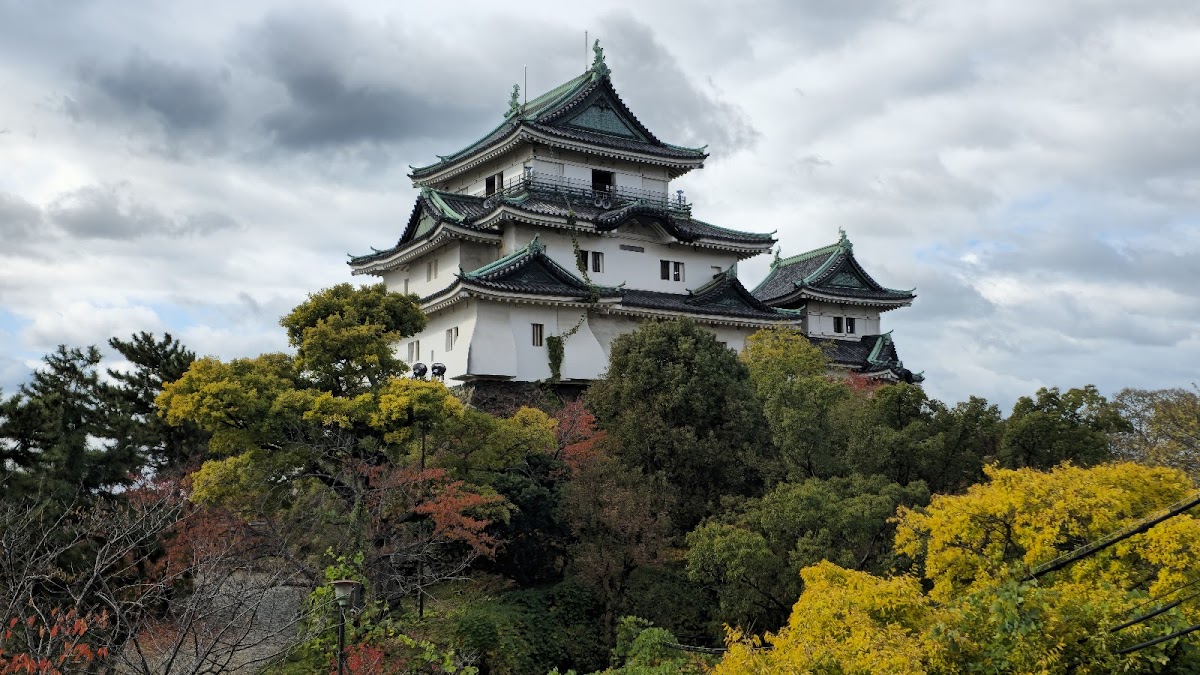
A connected-style keep is a type of keep where a large keep is at the center, with smaller keeps and turrets connected by multi-story turrets (connecting turrets). Wakayama Castle’s keep was a magnificent structure, with a large keep, smaller keeps, the Inui-yagura (northwest turret), and the Ninomon-yagura (second gate turret) all connected. While this style can also be seen at Himeji Castle and Matsuyama Castle, Wakayama Castle’s connected-style keep was particularly large in scale and boasted an imposing presence.
The current castle tower was rebuilt in 1958, and its exterior faithfully reproduces its appearance from the Edo period. The interior has been renovated into a museum, displaying valuable materials related to Wakayama Castle and the Kishu Tokugawa family.
Ninomaru and Nishinomaru
Ninomaru is located northwest of Honmaru and was the site of the Ninomaru Palace, the residence of the feudal lord. The Ninomaru Palace also functioned as a government office, where the domain’s affairs were conducted. Currently, the site of Ninomaru has been developed into a plaza, serving as a place of relaxation for citizens.
Nishinomaru is located west of Honmaru and housed the feudal lord’s retirement residence and the residences of senior retainers. Currently, the Nishinomaru Garden (Momijidani Garden) remains and is designated as a national scenic spot. This garden was constructed by Tokugawa Yorinobu, the first feudal lord of the Kishu domain, and is a beautiful Japanese garden with a pond and strolling paths. Visitors can enjoy the scenery throughout the seasons, and it attracts many tourists, especially during the autumn foliage season. ### The Charm of Stone Walls
One of the highlights of Wakayama Castle is its stone walls, built using different techniques in each era. Within the castle grounds, stone walls from the Toyotomi, Asano, and Tokugawa periods still exist, allowing visitors to observe the evolution of stonework.
The Toyotomi-era stone walls were built using a technique called “nozura-zumi,” where natural stones were stacked almost as they were, giving them a rough and rugged appearance. During the Asano period, a technique called “uchikomi-hagi” was used, where the surface of the stones was processed to reduce gaps. The Tokugawa-era stone walls were built using the most advanced technique, “kirikomi-hagi,” where stones were precisely processed and stacked without gaps.
The stone walls around the main keep are particularly impressive, with some sections exceeding 10 meters in height. For stone wall enthusiasts, Wakayama Castle is an excellent place to learn about the history and techniques of stonework.
Existing Structures
Although many buildings were lost due to war damage, Wakayama Castle still retains several valuable structures from the Edo period.
Okaguchi Gate is a castle gate built during the Keicho era (1596-1615) and is designated as a National Important Cultural Property. It is the only Edo period gate remaining at Wakayama Castle and is a valuable historical structure that conveys the architectural techniques of that time.
Oimawashi Gate is also an early Edo period structure and is designated as an Important Cultural Property. These gates are important structures that tell the story of the scale and prestige of Wakayama Castle in its heyday.
Highlights of Wakayama Castle
View from the Keep
One of the greatest attractions of Wakayama Castle is the view from the top floor of the keep. From the keep, which stands on the summit of Torafushiyama Mountain at an altitude of approximately 50 meters, you can enjoy a 360-degree panoramic view of Wakayama city.
To the north lies the majestic flow of the Kinokawa River, to the west are Wakayama Bay and the Kitan Strait, and on clear days, even Awaji Island can be seen. To the east are the mountains of the Kii Mountains, and to the south lies the city of Wakayama. The view at sunset is particularly spectacular, and the sight of the Kinokawa River and the city bathed in the setting sun captivates visitors.
Exhibits Inside the Castle Tower
The interior of the castle tower has been renovated into a museum where visitors can learn about the history of Wakayama Castle and the Kishu Tokugawa family. Each floor has the following exhibits:
1st Floor: Exhibits on the history of Wakayama Castle and its construction techniques. Castle models and cross-sections of the stone walls are included, allowing visitors to understand the castle’s structure.
2nd Floor: Exhibits on the history and culture of the Kishu Tokugawa family. Portraits of successive feudal lords, armor, swords, and other artifacts are on display.
3rd Floor: A diorama recreating the townscape of Wakayama Castle during the Edo period, along with exhibits of everyday items from that era, are displayed.
4th Floor (Top Floor): An observation room offering panoramic views in all directions.
Nishinomaru Garden (Momijidani Garden)
Nishinomaru Garden is a pond-centered strolling garden built by Tokugawa Yorinobu and is designated a National Place of Scenic Beauty. The garden’s name, “Momijidani” (Maple Valley), derives from the beauty of the autumn foliage.
Within the garden, centered around a pond, are the tea house “Koshōan,” gazebos, and stone bridges, allowing visitors to enjoy the scenery of each season. The garden is particularly beautiful during the spring when the new greenery appears and the autumn when the leaves change color, attracting many tourists and photography enthusiasts.
The garden is open to the public free of charge, allowing visitors to stroll through and experience the atmosphere of an Edo-period daimyo garden.
Seasonal Scenery
Wakayama Castle displays different expressions throughout the four seasons.
Spring: Approximately 600 cherry trees are planted within the castle grounds, full bloom from late March to early April. Selected as one of “Japan’s Top 100 Cherry Blossom Viewing Spots,” it attracts many visitors reaching during cherry blossom season. The trees are also illuminated at night, allowing visitors to enjoy the magical sight of the cherry blossoms and the castle tower.
Summer: The castle grounds, enveloped in fresh greenery, give a refreshing impression. The view from the castle tower is lush and green, and the sparkling surface of the Kinokawa River is beautiful.
Autumn: Autumn foliage can be enjoyed throughout the castle grounds, including the Momijidani Garden. The contrast between the red and yellow trees and the white walls of the castle tower is magnificent.
Winter: A snow-covered Wakayama Castle is a rare sight, and the castle tower, seen in the crisp winter air, possesses a dignified beauty.
Zoo and Park Facilities
Within Wakayama Castle Park is a small zoo called Wakayama Park Zoo. Admission is free, and you can see various animals such as Asiatic black bears, flamingos, penguins, and monkeys. It’s a popular spot for families with children.
The park also has a plaza and playground equipment, making it a popular place for locals to relax.
Access to Wakayama Castle
Access by Train
From JR Wakayama Station:
- Get off at “Wakayama Castle” bus stop (approx. 10 minutes)
- Approximately 25 minutes on foot
From Nankai Wakayamashi Station:
- Approximately 10 minutes on foot (This is the most convenient station)
Wakayamashi Station is the terminal station of the Nankai Main Line, and can be reached in about 1 hour from Osaka Namba Station by the Limited Express Southern train. The walk from the station to Wakayama Castle is flat, and there’s a shopping street along the way, making it a pleasant stroll.
Access by Car
Hanwa Expressway:
- Approximately 15 minutes from Wakayama IC
There are several paid parking lots around the castle.
- Wakayama Castle Park Parking: 58 spaces, 200 yen for the first two hours, 100 yen for each additional hour
- Several coin-operated parking lots in the surrounding area
Parking lots can get crowded during peak tourist season and on weekends, so we recommend using public transportation.
Visiting Information
Opening Hours and Closing Days
Castle Tower:
- Opening Hours: 9:00 AM – 5:30 PM (Last entry at 5:00 PM)
- Closing Days: December 29th – 31st
Nishinomaru Garden:
- Opening Hours: 9:00 AM – 5:00 PM
- Closing Days: December 29th – 31st
-Admission Fee: Free
Admission Fees
Castle Tower:
- Adults: 410 yen
- Elementary and Junior High School Students: 200 yen
Combined Ticket (Castle Tower + History Museum):
- Adults: 640 yen
- Elementary and Junior High School Students: 260 yen
Estimated Time Required
For sightseeing at Wakayama Castle, it’s recommended to allow at least 1.5 to 2 hours. A guideline for visiting the castle keep is 30 minutes to 1 hour, strolling through the Nishinomaru Garden takes about 30 minutes, and exploring the entire castle grounds takes about 30 minutes. If you want to explore thoroughly or enjoy taking photos, about 3 hours would be ideal.
Nearby Tourist Attractions
Wakayama Prefectural Museum
Located about a 5-minute walk from Wakayama Castle, this museum features exhibits on the history and culture of Wakayama Prefecture. Recommended for those who want to learn more about the history of Wakayama Castle.
Wakayama City Museum
south of Wakayama Castle, this museum showcases the history and culture of Wakayama City. Detailed materials related to Wakayama Castle are also on display.
Keyaki Avenue
A beautiful tree-lined street extending south of Wakayama Castle, perfect for strolling and shopping. There are many cafes and restaurants, making it convenient for taking a break during sightseeing.
Wakaura
Located about 20 minutes by car from Wakayama Castle, Wakaura, known as a scenic spot since the Manyo era, boasts a beautiful coastline and historical buildings. With many attractions such as Kishu Toshogu Shrine, Furōbashi Bridge, and Kataonami Beach, it’s highly recommended to visit it in conjunction with Wakayama Castle.
Tips for Enjoying Wakayama Castle
Best Season
While Wakayama Castle can be enjoyed year-round, the following times are particularly recommended:
Cherry Blossom Season (Late March to Early April): As one of Japan’s Top 100 Cherry Blossom Viewing Spots, the beauty of the cherry blossoms is exceptional. The nighttime cherry blossom illumination is also not to be missed.
Autumn Foliage Season (Mid-November to Early December): This is the most beautiful time to see the autumn leaves in the Momijidani Garden. The contrast between the castle tower and the autumn leaves is magnificent.
Early Summer (May to June): The fresh greenery is beautiful, and the mild weather makes it ideal for sightseeing. Sunny days before the rainy season are especially recommended.
Photography Tips
Here are some photography spots at Wakayama Castle.
The Castle Tower from Ichinohashi Bridge: The view of the castle tower from Ichinohashi Bridge, the main entrance to the castle, is a classic angle. You can capture both the stone walls and the castle tower together.
The Castle Tower from Nishinomaru Garden: Photographing the castle tower across the garden’s pond allows you to capture the “inverted castle tower” reflected on the water’s surface.
View from the Castle Tower: The view of the Kinokawa River and the city at dusk is exceptional. Visiting around sunset is recommended.
The Castle Tower with Cherry Blossoms or Autumn Leaves: Photos combining the castle tower with seasonal scenery have a unique beauty that only Wakayama Castle can offer.
Event Information
Wakayama Castle hosts various events throughout the year.
Cherry Blossom Festival (April): Nighttime illuminations are held to coincide with the cherry blossom season. Wakayama Castle Keep Restoration 60th Anniversary Events: Special exhibitions and lectures may be held.
Ninja Experience Events: Ninja experience events for children are held irregularly.
Event information can be found on the official Wakayama Castle website and the Wakayama City Tourism Association website.
Cultural Value of Wakayama Castle
Japan’s Top 100 Castles
Wakayama Castle was selected as the 62nd castle in the “Japan’s Top 100 Castles” list in 2006. The Japan’s Top 100 Castles are representative castles of Japan selected by the Japan Castle Association, and Wakayama Castle is highly regarded for its historical, architectural, and cultural value.
The “Top 100 Castles Stamp Rally” is popular among castle enthusiasts, and stamps can be collected at Wakayama Castle (located at the entrance to the keep).
One of Japan’s Three Great Interconnected Hilltop Castles
Wakayama Castle, along with Matsuyama Castle in Ehime Prefecture and Himeji Castle in Hyogo Prefecture, is considered one of Japan’s “Three Great Interconnected Hilltop Castles.” Interconnected castle towers are a highly sophisticated architectural style that combines defensive and functional aspects, and these three castles are prime examples.
While the current Wakayama Castle tower is a reconstruction, its form faithfully reproduces the Edo period appearance, conveying the grandeur of interconnected castle towers to this day.
A Legacy of the Tokugawa Three Houses
Wakayama Castle played a crucial role throughout the Edo period as the residence of the Kishu Tokugawa family, one of the three main branches of the Tokugawa clan. Two shoguns (Tokugawa Yoshimune and Tokugawa Iemochi) came from the Kishu domain, making Wakayama Castle not merely a regional castle, but a central fortress within the power structure of the Edo shogunate.
The remaining stone walls, gardens, and the imposing tower are valuable cultural heritage that convey the status and authority of the Tokugawa Three Houses. ## Summary
Wakayama Castle is a historic castle built during the time of Toyotomi Hideyoshi and flourished as the residence of one of the three Tokugawa branches. Although many buildings were lost in war, there are still plenty of sights to see, including the reconstructed keep, the existing Okaguchi Gate and Oimawashi Gate, and the beautiful Nishinomaru Garden.
From the keep, which stands on Torafushiyama Mountain at an altitude of approximately 50 meters, you can enjoy a panoramic view of Wakayama city and appreciate the scenery throughout the seasons. The cherry blossom and autumn foliage seasons are particularly beautiful.
Access is also convenient, being about a 10-minute walk from Nankai Wakayama City Station and about a 10-minute bus ride from JR Wakayama Station. The entrance fee to the keep is a reasonable 410 yen, making it easy to visit.
When visiting Wakayama, be sure to visit Wakayama Castle and enjoy the history and culture of the Tokugawa branch and the beautiful castle architecture. Whether you’re a castle enthusiast or someone with no particular interest in history, you’re sure to enjoy the views from the castle tower and the scenery throughout the seasons. Wakayama Castle continues to offer visitors a sense of wonder and discovery, serving as the heart of Wakayama tourism.