Wakamatsu Castle (Tsuruga Castle) Complete Guide | History, Highlights, and Access Information – Thorough Explanation
What is Wakamatsu Castle (Tsuruga Castle)?
Wakamatsu Castle (Wakamatsu-jo) is a Japanese castle located in Otemachi, Aizuwakamatsu City, Fukushima Prefecture. It is commonly known as Tsuruga Castle, and its former name was Kurokawa Castle. Nationwide, it is also called Aizuwakamatsu Castle and is selected as one of Japan’s 100 Famous Castles.
Wakamatsu Castle, built as a flatland castle with a terraced layout, has a structure where the main keep is surrounded by the west, north, second, and third baileys. As the administrative center of the Aizu domain, it played a central role in the politics, economy, and culture of the Aizu region. In particular, during the Boshin War at the end of the Edo period, it became known nationwide as an impregnable castle that withstood a siege lasting approximately one month.
Currently, the castle ruins are maintained as “Tsuruga Castle Park,” and most of it is designated as a national historic site. The reconstructed castle tower is open to the public as the Wakamatsu Castle Tower Museum, and is a representative tourist attraction of Aizu, attracting many visitors throughout the year.
History and Background of Wakamatsu Castle
Transition from the Medieval to the Early Modern Period
The origins of Wakamatsu Castle date back to the Nanboku-cho period. It is said to have begun in 1384 (Shitoku 1), when Ashina Naomori built the Higashi-Kurokawa Mansion in the Odagaki area. Initially a simple residence, as the Ashina clan grew into a powerful daimyo in the Aizu region, it gradually acquired the functions of a castle.
The Ashina clan ruled Aizu throughout the Sengoku period, but in 1589 (Tensho 17), they were defeated by Date Masamune in the Battle of Suriagehara, and the Ashina clan was destroyed. Date Masamune entered Kurokawa Castle, but was ordered to relocate from Aizu due to Toyotomi Hideyoshi’s pacification of Oshu.
Major Renovation of the Castle into a Modern Fortress by Gamo Ujisato
In 1590 (Tensho 18), Gamo Ujisato was appointed lord of Aizu with a domain of 420,000 koku by order of Toyotomi Hideyoshi. Ujisato began a full-scale renovation of the castle in 1592 (Bunroku 1), transforming Kurokawa Castle into a modern fortress on a large scale.
Gamo Ujisato built a magnificent seven-story castle tower, developed the castle town, and changed the place name from “Kurokawa” to “Wakamatsu.” This name change is said to be derived from Wakamatsu no Mori in Hino, Omi Province, Ujisato’s hometown. Ujisato was also deeply knowledgeable about the tea ceremony and was a senior disciple of Sen no Rikyu, so a tea room was built within the castle (the current Rinkaku Tea Room carries on this tradition).
The Era of Uesugi Kagekatsu and Naoe Kanetsugu
In 1598, when the Gamo clan was transferred to Utsunomiya, Uesugi Kagekatsu became the lord of Aizu with a domain of 1.2 million koku. Kagekatsu, together with the renowned strategist Naoe Kanetsugu, further strengthened the castle and developed the castle. town, however, because he sided with the Western Army in the Battle of Sekigahara, his domain was reduced to 300,000 koku in Yonezawa in 1601.
The Re-entry of the Gamo Clan and the Era of the Kato Clan
After the Battle of Sekigahara, Gamo Hideyuki again entered Aizu, but when the Gamo clan died out in 1627, Kato Yoshiaki took over. During the time of Kato Akimasa, a large-scale renovation was carried out from 1639 to 1643, and the castle tower was rebuilt into a five-story structure. This tower would remain standing until 1874.
The Aizu Matsudaira Family and the Turmoil of the Late Edo Period
In 1643, when Kato Akimasa was dispossessed of his domain, Hoshina Masayuki, the half-brother of Tokugawa Iemitsu, was appointed to the domain with a stipend of 230,000 koku. Masayuki became the founder of the Aizu Matsudaira family, which had close ties to the Tokugawa shogunate, and ruled the Aizu domain for nine generations.
During the late Edo period, Matsudaira Katamori, the lord of the Aizu domain, supported the shogunate as Kyoto Shugoshoku (Kyoto Guardian) and commanded the Shinsengumi to suppress the Sonno Joi (Revere the Emperor, Expel the Barbarians) faction. However, in the Boshin War after the Taisei Hokan (restoration of imperial rule), he became a central force in the former shogunate army, confronting the new government forces.
The Boshin War and the Siege
In 1868 (Keio 4), Wakamatsu Castle became the stage for the Aizu War, part of the Boshin War. For approximately one month, starting on August 23rd, the Aizu domain waged a siege against the fierce attacks of the new government forces.
Approximately 5,000 people held out inside the castle, resisting with all their might, including women and children. The new government forces bombarded the castle walls with state-of-the-art Armstrong cannons, firing thousands of shells, but the castle’s strong fortifications prevented it from falling. However, on September 22nd, Lord Matsudaira Katamori decided to surrender, and the castle was opened.
Many anecdotes remain from this siege, including the tragedy of the Byakkotai (White Tiger Corps) members who committed suicide on Iimoriyama Mountain, and the bravery of the women who fought with naginata (halberds).
Changes Since the Meiji Era
The Meiji government placed Wakamatsu Castle under the jurisdiction of the Ministry of the Army. In 1874 (Meiji 7), many buildings, including the keep, were demolished, leaving only the stone walls. The ruin castles were developed into a park, and in 1934 (Showa 9), it was designated a national historic site.
In 1965 (Showa 40), thanks to the enthusiasm of the citizens, the keep was restored to its original appearance using reinforced concrete. The interior was renovated into a local history museum, serving as a facility that conveys the history and culture of Aizu. In 2000 (Heisei 12), the Hoshii Yagura (dried rice storage tower) and Minami Hashiri Nagaya (southern longhouse) were restored in wood using Edo period construction methods and techniques.
In 2011 (Heisei 23), the roofing work was completed using the red tiles from the late Edo period, and the castle now has an closer appearance to its original form.
Features of the Castle Tower and Architecture
Structure and Evolution of the Castle Tower
The castle tower of Wakamatsu Castle has been remodeled several times throughout its history. The original tower, built by Gamo Ujisato, was a magnificent seven-story structure, but it was damaged by an earthquake. Later, during the time of Kato Akimasa, it was remodeled into a five-story tower, and this form was maintained until its demolition in the Meiji era.
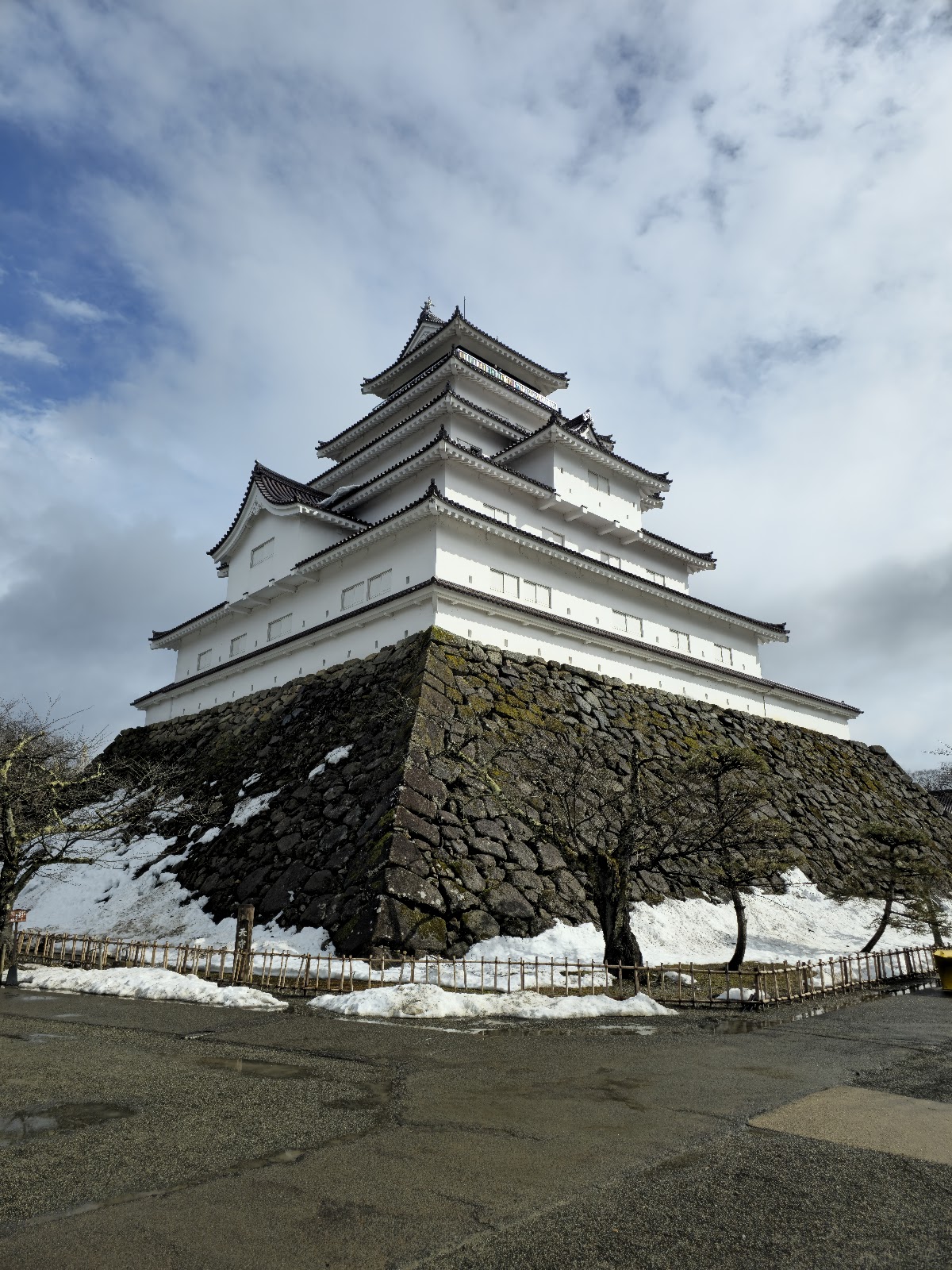
The current castle tower was restored in 1965 (Showa 40), and has a five-story exterior and seven-story interior. It stands approximately 28 meters tall, and from the top floor, one can enjoy a magnificent panoramic view of the Aizu Basin and Mount Bandai.
Red-Tiled Castle Tower
One of the most distinctive features of Wakamatsu Castle’s tower is its red-tiled roof. In 2011 (Heisei 23), the red tiles from the late Edo period were restored through re-roofing work. These red tiles are glazed tiles unique to the Aizu region and possess durability suited to the cold climate.
The red-tiled castle tower is rare throughout Japan and is a major attraction of Wakamatsu Castle. Especially during cherry blossom season, the beautiful scenery created by the red tiles, white walls, and pink cherry blossoms captivates many tourists.
Castle Tower and Shachihoko (Ornamental Deceased Fish)
The roof of the castle tower is adorned with golden, shining shachihoko (ornamental fish-like creatures). Shachihoko are decorative elements that ward off fire and are also symbols of authority in castle architecture. The current shachihoko were created during the restoration, and their brilliance can be seen even from a distance.
Castle Layout and Structure
Terraced Layout
Wakamatsu Castle is a typical terraced flatland castle. A terraced layout is a castle layout in which stepped baileys are arranged in a stepped fashion around the main bailey, and is known for its excellent defensive capabilities.
At Wakamatsu Castle, the main bailey was surrounded by the West Outer Bailey, North Outer Bailey, Second Bailey, and Third Bailey. Each enclosure is separated by stone walls and moats, creating a structure that progressively prevents enemy intrusion.
Characteristics of the Stone Walls
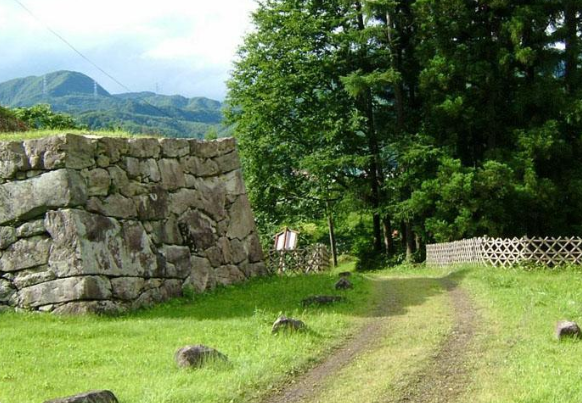
The stone walls of Wakamatsu Castle were constructed using different techniques depending on the era. While the stone walls during the time of Gamo Ujisato were primarily built using the nozura-zumi (rough stone masonry) method, the renovations during the Kato clan’s time employed more advanced techniques such as uchikomi-hagi (fitted stone masonry) and kirikomi-hagi (cut stone masonry).
In particular, the stone walls around the main enclosure are tall and built on steep slopes, making them difficult to attack. Many of the original stone walls still exist today, allowing us to observe the evolution of castle construction techniques.
Moats and Water Moats
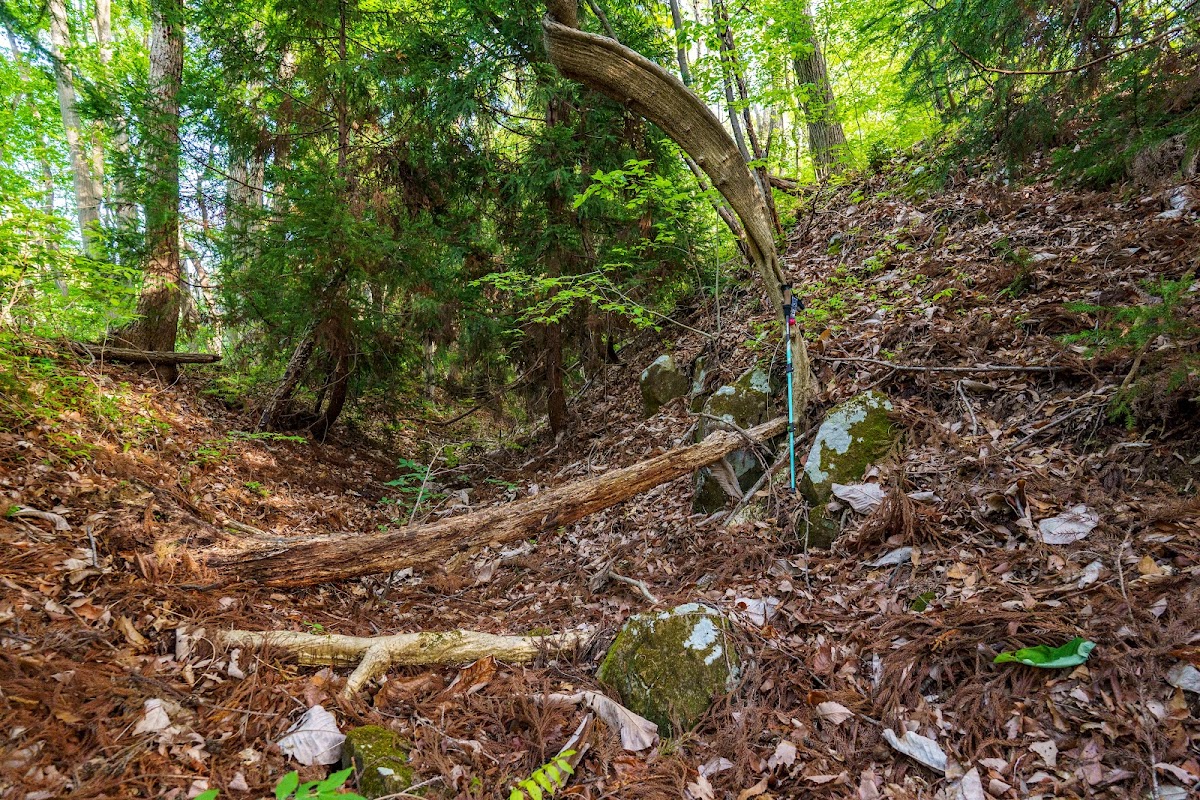
Wakamatsu Castle had a defensive system combining water moats and dry moats. Water moats were located on the north and east sides of the castle, while dry moats were provided on the west and south sides. Some of the moats are still maintained as water moats today, preserving their original appearance along with the stone walls.
Turrets and Gates
At its peak, Wakamatsu Castle had numerous turrets and gates. The Hoshii Turret and Minami-hashiri Nagaya, restored in 2000, were located on the south side of the main enclosure and were important defensive structures leading to the keep. These were reconstructed in wood using Edo period construction methods, making them valuable examples of the architectural techniques of that time.
Highlights of the Wakamatsu Castle Keep Local History Museum
Museum Exhibits
The interior of the current keep is open to the public as the Wakamatsu Castle Keep Local History Museum, featuring exhibits showcasing the history and culture of Aizu. Each floor has a different theme, displaying the history of the Aizu domain, the Boshin War, the culture of the castle town, and weapons and armor.
The Boshin War-related exhibits are particularly extensive, including materials describing the siege, exhibits on the Byakkotai (White Tiger Corps), and displays of weapons and ammunition used at the time. Furthermore, documents related to Matsudaira Katamori, the lord of the Aizu domain, and documents concerning the domain’s administration are also on display.
View from the Top Floor
From the top floor of the castle tower, you can enjoy a magnificent panoramic view of the Aizu Basin. You can see Mount Bandai, Mount Iimoriyama, and the city of Aizu-Wakamatsu, and enjoy the beautiful scenery of each season. It is especially popular as a photo spot during the cherry blossom season in spring and the autumn foliage season.
Highlights of Tsuruga Castle Park
Famous Cherry Blossom Spot
Tsuruga Castle Park is a famous cherry blossom spot selected as one of “Japan’s Top 100 Cherry Blossom Spots.” Approximately 1,000 Somei Yoshino cherry trees are planted in the park, and the magnificent cherry blossoms bloom from mid- to late April. The contrast between the red-tiled castle tower and the cherry blossoms are breathtaking, and the trees are illuminated at night, allowing you to enjoy the magical night cherry blossoms.
Rinkaku Tea House
Rinkaku Tea House is a tea house said to have been built by Shoan, the son of Sen no Rikyu. It is believed to have been built when Gamo Ujisato sheltered Shoan in Aizu. The current building was restored in 1990, and visitors can not only see authentic tea house architecture but also enjoy tea.
Hashiri Nagaya and Hoshii Yagura
The Minami Hashiri Nagaya and Hoshii Yagura are wooden structures restored in 2000 using Edo period construction methods. Restored using traditional architectural techniques, visitors can see firsthand the craftsmanship of Edo-period artisans, including nail-free joinery and woodworking techniques.
Kurogane Gate
The Kurogane Gate, the main gate to the main keep, has also been restored, allowing visitors to see the sturdy structure of the masugata gate. The gate doors are covered with iron plates, making it highly defensive. ## Local Information & Access
Basic Information
- Location: 1-1 Otemachi, Aizuwakamatsu City, Fukushima Prefecture
- Opening Hours: 8:30 AM – 5:00 PM (Last entry at 4:30 PM)
- Closed Days: Open all year round
- Admission Fee: Adults 410 yen, Elementary and Junior High School Students 150 yen (Castle tower only. Combined ticket with Rinkaku Teahouse also available)
- Management: Aizuwakamatsu Tourism Bureau (General Incorporated Foundation)
Access Methods
Access by Train:
- Approximately 20 minutes by “Machinaka Loop Bus – Haikara-san” from JR Aizuwakamatsu Station, get off at “Tsurugajo Entrance” and walk 5 minutes.
- Approximately 15 minutes by local bus from JR Aizuwakamatsu Station, get off at “Tsurugajo North Entrance” or “Tsurugajo San-no-maru Entrance” and it’s right there.
Access by Car:
- Approximately 15 minutes from the Ban-etsu Expressway “Aizu-Wakamatsu IC”
- Approximately 60 minutes via the Tohoku Expressway “Koriyama JCT”
Parking Information
Several parking lots are available around Tsuruga Castle Park:
- Nishidemaru Parking: Approximately 200 spaces, 200 yen per hour for regular cars (100 yen for each additional hour)
- Higashiguchi Parking: Approximately 130 spaces, same rates as Nishidemaru
- Minamiguchi Parking: Approximately 35 spaces
During peak tourist seasons and cherry blossom season, the park can become crowded, so consider using public transportation. Free parking spaces for people with disabilities are also available.
Nearby Tourist Attractions
The following are some of the tourist attractions near Tsuruga Castle:
- Fukushima Prefectural Museum: A comprehensive museum where you can learn more about the history and culture of Aizu.
- Oyakuen Garden: The garden of the Aizu Matsudaira family, designated as a national scenic spot.
- Iimoriyama: A historical site known as the place where the Byakkotai committed suicide.
- Aizu Samurai Residence: A facility that recreates the residence of Saigo Yorimoto, a senior retainer of the Aizu domain.
- Nanokamachi Street: A shopping street with a retro atmosphere, lined with souvenir shops and cafes.
Best Season for Visiting
Wakamatsu Castle is beautiful in every season, but the best times to visit are:
- Spring (mid-to-late April): Cherry blossoms are in full bloom, creating a beautiful contrast with the red-tiled castle tower.
- Autumn (late October to early November): The autumn leaves are beautiful, and on clear autumn days, the view of Mount Bandai is superb.
- Winter (January-February): The snow-covered castle tower is fantastical, offering a unique winter atmosphere in Aizu.
Cultural Significance of Wakamatsu Castle
Value as one of Japan’s Top 100 Castles
Wakamatsu Castle is the 12th castle selected by the Japan Castle Association as one of Japan’s Top 100 Castles. Its selection was based on its historical importance in the Boshin War, the perfection of its layout as a terraced hill castle, and its role as a cultural center of the Aizu region.
Symbol of Aizu Bushido
Wakamatsu Castle also symbolizes the spirit of “Aizu Bushido.” As a historical witness to the loyalty and courage of the Aizu samurai, who fought in the siege during the Boshin War, witnessed the tragedy of the Byakkotai (White Tiger Corps), and fought bravely by women, it resonates deeply with many people.
Regional Symbol
Currently, Wakamatsu Castle continues to be cherished by the citizens as a symbol of Aizu-Wakamatsu City. The city emblem also incorporates the castle’s design, making it a core element of the region’s identity. Various events are held throughout the year, serving as a place for interaction between citizens and tourists.
Preservation and Utilization of Wakamatsu Castle
Protection as a Cultural Property
Wakamatsu Castle ruins are designated as a national historic site and are preserved and managed in accordance with the Cultural Properties Protection Law. Remains such as stone walls and moats are regularly surveyed and restored, and efforts continue to ensure their transmission to future generations.
Digital Archiving Initiatives
In recent years, efforts to preserve and make the site accessible using the latest technology have progressed. New forms of historical transmission are being attempted, such as detailed records using 3D scanning and the recreation of the castle in its heyday using VR technology.
Utilization as a Tourism Resource
Wakamatsu Castle is a representative tourist resource of the Aizu region and contributes significantly to the local economy. The Aizu-Wakamatsu Tourism Bureau is working to effectively disseminate information and improve services for visitors.
The museum exhibits inside the castle tower are also regularly renewed, striving to create a facility where visitors can discover something new with each visit. Furthermore, measures are being taken to accommodate foreign tourists, such as the provision of multilingual signage and audio guides.
Summary
Wakamatsu Castle (Tsuruga Castle) is a magnificent castle with a history of approximately 630 years, symbolizing the history and culture of the Aizu region. From the renovation into a modern castle by Gamo Ujisato, to the siege during the Boshin War, and to modern restoration and preservation efforts, the accumulation of multiple layers of history enhances the value of this castle.
The red-tiled keep, sturdy stone walls, beautiful cherry blossoms and seasonal scenery, and comprehensive museum exhibits will deeply impress not only history buffs but all visitors. When visiting Aizu, be sure to take your time to appreciate this magnificent castle and experience the history and culture of Aizu.
Wakamatsu Castle, where the heart and pride of Aizu breathe, will continue to be loved and protected by many people.