
Complete Guide to Tsuwano Castle | History, Highlights, and Access Information for the Mountain Castle in the Sky
What is Tsuwano Castle?
Tsuwano Castle is a mountain castle built from the medieval to early modern period on the summit of Mt. Reiki in Ushiroda, Tsuwano-cho, Kanoashi-gun, Shimane Prefecture. Located at an altitude of 362m, it has a typical mountain castle structure with a relative height of approximately 200m from the foot of the mountain. Also known as “Sanbonmatsu Castle” and “Fuki Castle,” it is currently designated a national historic site and is selected as the 66th of Japan’s Top 100 Castles.
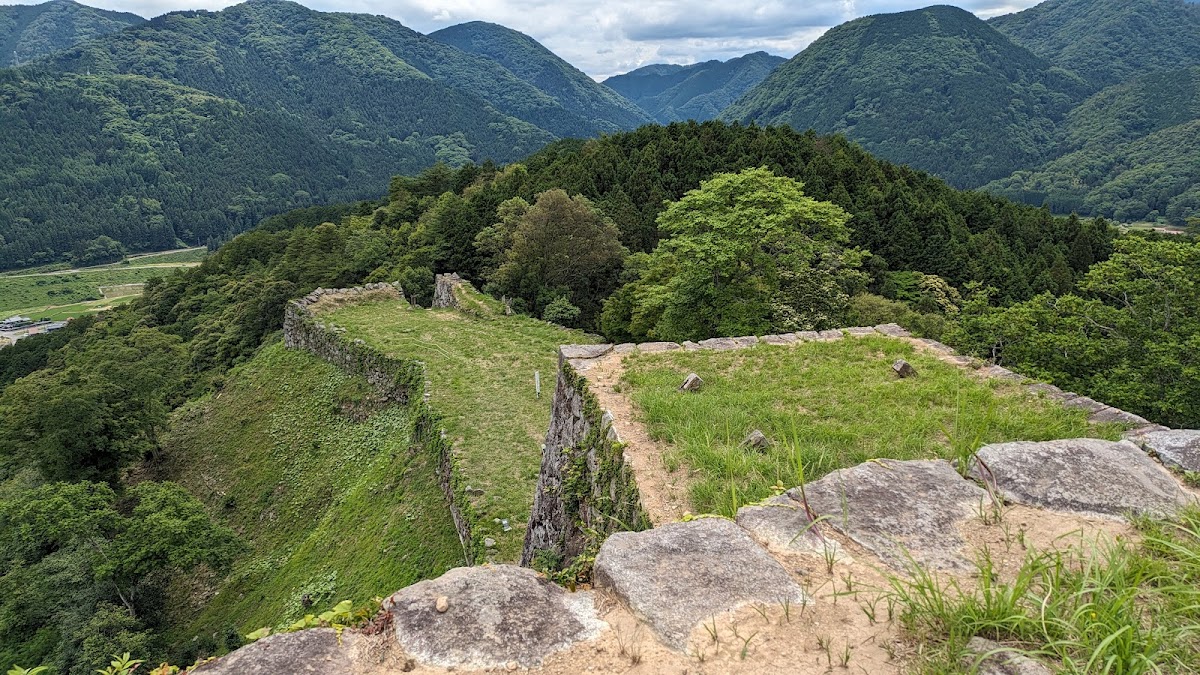
The stone walls stretching along the summit of Mt. Reiki, overlooking the town of Tsuwano, are known as the “Castle in the Sky” when shrouded in morning mist, attracting many tourists, especially during the autumn foliage season. From the castle ruins, you can enjoy a spectacular panoramic view of the town of Tsuwano, spread out at the foot of the gently sloping Aonoyama mountain, and the Tsuwano River flowing through it.
History of Tsuwano Castle
Kamakura Period: Castle Construction and the Yoshimi Clan’s Era
The history of Tsuwano Castle dates back to the late Kamakura period. After the Mongol invasions of 1281 (Kōan 4), the Kamakura Shogunate was wary of further Mongol invasions and felt compelled to strengthen its defenses along the Sea of Japan coast. As part of this defense policy, Yoshimi Yoriyuki, a vassal of Noto Province, was ordered to defend Iwami Province, and it is said that he built a castle on the summit of Reikizan Mountain over approximately 30 years, from 1295 to 1324.
The Yoshimi clan established their control over western Iwami Province from this base. Initially a medieval mountain castle centered on earthen ramparts and moats, it was gradually expanded and improved by successive lords of the Yoshimi clan. The Yoshimi clan ruled this area for approximately 300 years, and during the Sengoku period, they continued to protect Tsuwano despite repeated conflicts with surrounding daimyo.
Sengoku Period: Relationship between the Yoshimi and Mori Clans
With the arrival of the Sengoku period, the Yoshimi clan deepened their relationship with the Mori clan, the dominant power in the Chugoku region. The Yoshimi clan came under the Mori clan’s control and functioned as an important branch castle in the San’in region. It is believed that during this period, the castle’s defensive capabilities were strengthened, and some of the stone walls began to be constructed.
In 1591 (Tensho 19), when the Mori clan was reduced to the two provinces of Suo and Nagato by order of Toyotomi Hideyoshi, the Yoshimi clan also followed the Mori clan and left Tsuwano. This marked the end of the Yoshimi clan’s approximately 300-year rule over Tsuwano.
Edo Period: The Sakazaki and Kamei Clans
In 1600 (Keicho 5), following the Battle of Sekigahara, Sakazaki Naomori was appointed to Tsuwano by order of Tokugawa Ieyasu, becoming a daimyo with a 30,000 koku domain. Sakazaki Naomori was largely renovated the existing medieval mountain castle into a modern fortress, and many of the magnificent stone walls seen today were built during this period. The Sakazaki clan utilized their stone-building techniques to construct high stone walls on the steep mountaintop, developing the main keep, second bailey, third bailey, and outer bailey (Oribe-maru).
However, in 1616 (Genna 2), Sakazaki Naomori was dispossessed of his domain due to suspicions of his involvement in the Senhime Incident, bringing an end to the Sakazaki clan’s short reign.
In 1617 (Genna 3), Kamei Masanori was appointed to Tsuwano from Kano in Inaba Province (present-day Tottori Prefecture) with a stipend of 43,000 koku. The Kamei family ruled Tsuwano for 11 generations, approximately 250 years, until the Meiji Restoration. During the Kamei era, the castle town was developed, and Tsuwano flourished as a cultural town known as the “Little Kyoto of San’in.”
In 1686 (Jokyo 3), the castle suffered significant damage when a lightning strike destroyed the main keep and other major structures. The keep was never rebuilt, and only a turret was erected in the main enclosure. Following this destruction, the residence at the foot of the mountain became the de facto center of the domain’s administration, and the military function of the mountain castle gradually became a mere formality.
After the Meiji Era: Abandonment and Designation as a Historic Site
Following the Meiji Restoration, in 1871 (Meiji 4), the Tsuwano Domain was abolished due to the abolition of the feudal system and the establishment of prefectures, and Tsuwano Castle was also abandoned. In 1874 (Meiji 7), the remaining structures were dismantled, leaving only the stone walls.
Afterward, the Tsuwano Castle ruins were neglected for many years, but their historical value was recognized, and in 1942 (Showa 17), they were designated as a national historic site. Currently, preservation and repair work is being carried out on the stone walls, and the site has been developed as a tourist destination, attracting many castle enthusiasts and tourists.
Structure and Remains of Tsuwano Castle
Layout and Arrangement
Tsuwano Castle is a typical mountain castle built around the summit of Mt. Reiki, utilizing the natural fortifications of the steep mountain surrounded on three sides by the Tsuwano River, resulting in a practical, warlike structure. The castle employs a “one castle, separate enclosures” structure, with the main enclosure (Honmaru) at its center, surrounded by the second and third enclosures (Ninmaru), and an outer enclosure (also known as Oribemaru) to the north.
The Honmaru has a unique shape with stone walls projecting in three directions, which is thought to be a defensive feature. Each enclosure is demarcated by stone walls, allowing each to function as an independent defensive stronghold. Multiple access roads lead up from the foot of the mountain, each bearing traces of defensive structures such as gates and masugata (square enclosures).
Characteristics of the Stone Walls
The greatest highlight of Tsuwano Castle is the magnificent group of stone walls remaining at the mountaintop. Many of the stone walls visible today were built during the early Edo period under Sakazaki Naomori, and towering stone walls exceeding 10 meters in height can be seen throughout. The stone walls exhibit various construction methods, from the skillful combination of natural stones (Nozurazumi) to the use of processed stones (Uchikomi-tsugi), allowing observation of the evolution of castle construction techniques.
The stone walls around the main keep are particularly impressive. Built high along the steep mountain terrain, these walls demonstrate the advanced stonework techniques of the time. The corners of the walls utilize a technique called “sanuki-zumi,” which enhances structural strength. Furthermore, drainage holes are strategically placed throughout the walls to prevent collapse due to rainwater.
Main Keep and Major Enclosures
The main keep is the central part of the castle, located at the highest elevation. Spanning approximately 1,500 square meters, it once housed major buildings such as the keep and palace. While only foundation stones and traces of buildings remain today, the view of Tsuwano town and the surrounding mountains from here is breathtaking.
The second and third enclosures are located south of the main keep and are separated by stone walls. These enclosures are believed to have housed vassal quarters and warehouses. The northern outwork (Oribe-maru) was a separate enclosure from the main keep and served as an important defensive base against attacks from the north.
Current State of Remains
Currently, the remains of Tsuwano Castle mainly consist of stone walls. While all the buildings have been lost, the stone walls are well-preserved, conveying the magnificent appearance of the castle in its heyday. Foundation stones and well remains also remain within the enclosures, allowing us to infer the former building layout.
Along the path leading to the castle, traces of defensive structures such as gates, square enclosures, and moats can be seen. In particular, the path from the third enclosure to the second enclosure clearly shows the remains of a square enclosure, demonstrating the ingenuity used to prevent enemy intrusion.
Highlights of Tsuwano Castle
Spectacular Views of the Castle in the Sky
The greatest attraction of Tsuwano Castle is undoubtedly its view. The view of Tsuwano town from the 362m-high mountaintop is breathtakingly beautiful, like a miniature garden. The scenery, with its rows of red-tiled houses and the flowing Tsuwano River, truly lives up to its reputation as “Little Kyoto of San’in.”
Especially in the early mornings from autumn to winter, when morning mist hangs over the Tsuwano Basin, you can witness the fantastical sight of the stone floating walls in a sea of fog, resembling a “castle in the sky.” This scene has recently become popular on social media, attracting many photography enthusiasts.
Famous Autumn Foliage Spot
Tsuwano Castle Ruins are also known as a famous spot for autumn foliage. From late October to mid-November, the entire Reikizan area is adorned with vibrant autumn colors, creating a beautiful landscape with the contrast between the stone walls and the leaves. The view from the ski lift is also magnificent, making it a rare spot where you can enjoy autumn leaf viewing while taking a stroll through the air.
Views of the SL Yamaguchi Train
Tsuwano is the terminal station for the SL Yamaguchi train on the Yamaguchi Line, and if the timing is right, you can see the steam locomotive running from the ruin castles. The sight of the SL running over the town of Tsuwano, viewed from the mountaintop, is a breathtaking scene that transcends time. Visiting on a day when the SL is running is highly recommended.
The Impressive Stone Walls
The towering stone walls remaining on the mountaintop are the greatest highlight of Tsuwano Castle. The stone walls around the main keep, in particular, are over 10 meters high, and their sheer size is awe-inspiring. The stone walls, built along the steep mountain terrain, speak to the advanced castle-building techniques of the time. Even those who aren’t stone wall enthusiasts will be impressed by their grandeur.
Access to Tsuwano Castle
Access by Public Transportation
By Train
- Get off at Tsuwano Station on the JR Yamaguchi Line
- Approximately 15 minutes on foot (approx. 1.2 km) from the station to the Tsuwano Castle Ruins Tourist Lift Station
-Alternatively, rent a bicycle from in front of the station (approx. 5 minutes)
Tourist Lift
- Approximately 5 minutes from the lift station to the mountaintop
- Operating Hours: Normally 9:00 AM to 4:30 PM (may vary depending on the season)
- Fare: Adult round trip 700 yen, one way 450 yen (as of 2024)
- Closed: New Year holidays, during severe weather
*It is recommended to check the tourist lift’s operating status with the Tsuwano Town Tourism Association in advance.
Access by Car
Travel Time from Major Cities
- From Hiroshima City: Approximately 2 hours 30 minutes via the Chugoku Expressway
- From Yamaguchi City: Approximately 1 hour via National Route 9
- From Hagi City: Approximately 1 hour via National Route 9
Parking Information
- Free parking available at the Tsuwano Castle Ruins Tourist Lift Station (approximately 30 spaces for regular cars)
-Several others public parking lots are available within Tsuwano Town
Climbing on Foot
It is also possible to climb the castle on foot without using the lift.
Route to the Castle
- Take the hiking trail from the lift station
- Time required: Approximately 40-50 minutes one way
- Distance: Approximately 1.5 km
- Difficulty: Intermediate (Includes steep slopes)
Notes
- The hiking trail is well-maintained, but there are many steep slopes and stairs, so comfortable walking shoes such as athletic shoes are essential.
- Remember to stay hydrated in the summer.
- In winter, there is a possibility of snow and ice, so adequate equipment and caution are necessary.
Tourist Spots Around Tsuwano Castle
Tsuwano Townscape
The castle town spreading at the foot of Tsuwano Castle retains a strong Edo-period atmosphere and is known as “Little Kyoto of San’in.” With its white-walled samurai residences, carp swimming in the moats, and red-tiled roofs, the historical scenery is well-preserved, making it ideal for a stroll.
Main Attractions
- Tonomachi Street: The main street lined with samurai residences
- Hanko Yorokan: The site of the Tsuwano Domain’s school
- Tsuwano Catholic Church: A beautiful church building from the Meiji era
- Taikodani Inari Shrine: One of Japan’s five major Inari shrines
Mori Ogai Memorial Museum
Tsuwano, the birthplace of the renowned author Mori Ogai, is home to the Mori Ogai Memorial Museum. It features exhibits showcasing Ogai’s birthplace, life, and works, making it a must-see for literature fans.
Anno Mitsumasa Museum
This museum exhibits the works of Anno Mitsumasa, a painter from Tsuwano. Visitors can admire his delicate and warm works.
Notes and Advice for Visitors
Clothing and Items to Bring
- Shoes: As it is a mountain castle, comfortable walking shoes such as sneakers or trekking shoes are essential.
- Clothing: Comfortable clothing; a hat and sunscreen in summer, and warm clothing in winter.
- Items to Bring: Drinking water, towel, camera, binoculars (for viewing the scenery)
Estimated Visiting Time
- Using the lift: Approximately 1 hour 30 minutes to 2 hours, including round-trip lift time.
- Walking to the castle: Approximately 2 hours 30 minutes to 3 hours round trip.
- For a thorough visit: 3 hours or more.
Best Season
- Autumn (late October to mid-November): Beautiful autumn foliage, the most popular season.
- Spring (April to May): Beautiful fresh greenery, and pleasant weather.
- Winter (November to March): High chance of Seeing the “Castle in the Sky” floating in the morning mist.
- Summer (June-August): Lush greenery and great views, but heat protection is necessary.
Photography Tips
- Early Morning: For photographing the castle ruins in the morning mist, the best time is around sunrise.
- View from the Main Keep: An excellent photo spot offering a panoramic view of Tsuwano town.
- Details of the Stone Walls: Close-ups of the various stone wall construction methods are recommended.
- View from the Lift: The ascending lift offers beautiful views of Tsuwano town.
Cultural Value of Tsuwano Castle
Tsuwano Castle ruins were designated a national historic site in 1942 and are highly valued as a precious historical site showing the evolution of mountain castles from the medieval to the early modern period. Furthermore, in 2006, it was selected as one of Japan’s Top 100 Castles (No. 66), and is recognized as a nationally important castle.
The stone walls of the castle ruins are a valuable historical site that preserves the early modern stonework techniques used during the Sakazaki clan’s era, and are important resources for history research. In particular, the technique of constructing high stone walls on the steep mountaintop is noteworthy as it demonstrates the most advanced castle-building technology of the time.
Summary
Tsuwano Castle is one of the leading mountain castles in Iwami Province, boasting a history of approximately 700 years. The magnificent stone walls remaining on the mountaintop still convey its former glory. The view from the summit of Mt. Reikizan (362m above sea level) is superb, and the sight of the “castle in the sky” floating in the morning mist is especially worth seeing.
The fact that you can easily reach the summit by tourist lift is another attraction, making it a spot enjoyable not only conjunction for enthusiast castles but also for general tourists. Visiting in with a stroll through Tsuwano’s castle town will allow you to experience Tsuwano’s history and culture more deeply.
As one of Japan’s 100 Famous Castles and known as the “Castle in the Sky,” Tsuwano Castle continues to offer visitors a sense of awe and historical romance. When you visit the San’in region, be sure to stop by the Tsuwano Castle ruins and enjoy its magnificent stone walls and breathtaking views.
