Tsuruga Castle (Gifu Prefecture) Complete Guide: A Mountain Castle in Mino Province that Flourished as the Base of the Toki Clan
Tsuruga Castle, located in Tsuruga, Toki-cho, Mizunami City, Gifu Prefecture, is a mountain castle that functioned as an important base in Mino Province from the Kamakura period to the Sengoku period. Known as the base of the Toki clan, and with a history of being visited by Oda Nobunaga during his campaign against the Takeda clan, this castle still retains many remains and is designated as a Gifu Prefecture historical site.
Overview and Basic Information of Tsuruga Castle
Location and Alternate Names
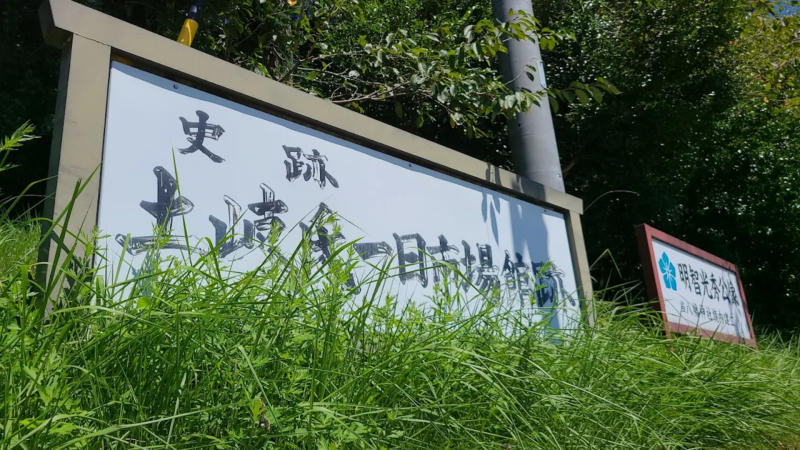
Tsuruga Castle is a mountain castle located on Shiroyama in Tsuruga, Toki-cho, Mizunami City, Gifu Prefecture. Numerous alternative names exist for this castle, including Kōnojō, Kōnojō, Tokijō, Kōnojō, Kōnojō, Ichiba-yakata, and Gōdo-yakata.
These alternative names arose from changes in place names, shifts in rulers, and regional variations in terminology, reflecting the diverse roles this castle played throughout its long history.
Castle Style and Characteristics
Tsuruga Castle is a typical mountain castle, and its name derives from the castle’s layout resembling a crane with its wings spread. The structure, with the main enclosure located at the top of the ridge and multiple enclosures extending southeast and south from there, demonstrates the skillful use of natural terrain and castle-building techniques of the Sengoku period.
The main enclosure is located at an elevation of approximately 400 meters, offering an excellent location with a panoramic view of the plains along the Toki River. This geographical advantage is thought to be one of the reasons why the Toki clan made this area their base for such a long period.
History of Tsuruga Castle
Kamakura Period: Construction by the Toki Clan
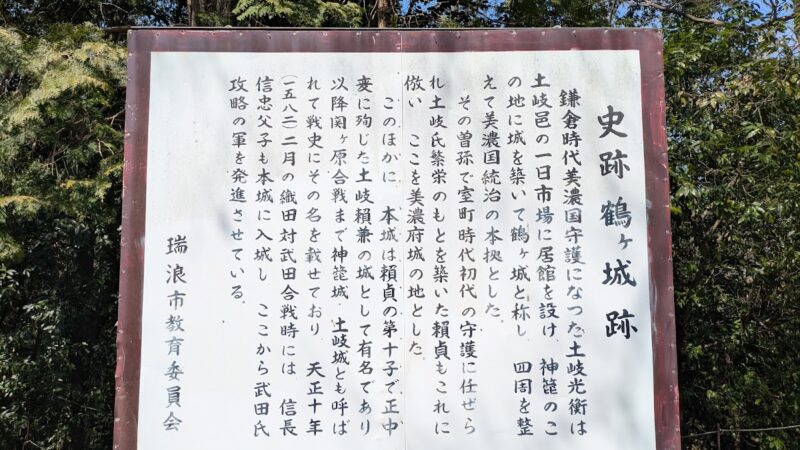
There are various theories regarding the founding date of Tsuruga Castle, but the most plausible theory is that it was built in the early Kamakura period by Toki Mitsuhira, who served Minamoto no Yoritomo and achieved great merit. Toki Mitsuhira was appointed as the governor of Mino Province by the Kamakura Shogunate, and established the foundation of the Toki clan in this area.
The Toki clan was a prestigious family descended from the Seiwa Genji clan, and grew to become the center of samurai power in Mino Province. Tsuruga Castle was a symbol of their power and played a role as a military base.
From the Nanboku-cho Period to the Muromachi Period: The Prosperity of the Toki Clan
In 1339 (Engen 4/Ryakuō 2) during the Nanboku-cho period, Toki Yorito, the head of the Toki clan and the governor of Mino Province, moved his base from Toki County to Nagamori Castle in Atsumi County (present-day Gifu City). This ended Tsuruga Castle’s role as the governor’s residence, but it maintained its status as an important base for the Toki clan.
Subsequently, members of the Toki clan, such as Toki Yorifusa and Toki Sanbei, became castle lords, and it continued to function as a center of control for the region. Throughout the Muromachi period, Tsuruga Castle was positioned as one of the important military bases within the Toki clan’s sphere of influence.
The Sengoku Period: The Involvement of Oda Nobunaga and Akechi Mitsuhide
With the arrival of the Sengoku period, Tsuruga Castle increased in importance as the Oda clan’s power expanded. In 1576, when the Takeda clan captured Akechi Castle, Oda Nobunaga appointed Kawajiri Hidetaka as the castle commander and had him oversee the castle’s construction (repair and strengthening).
Furthermore, in 1582, when Oda Nobunaga invaded Kai Province (the Takeda campaign), it is said that Akechi Mitsuhide also stopped at Tsuruga Castle with Nobunaga. Akechi Mitsuhide is believed to have been from the Akechi clan, a branch of the Toki clan, and this episode illustrates his deep connection to this area.
From the Early Modern Period Onward: Castle Abandonment and Historic Site Designation
After the Keicho era (1596-1615), with the end of the wars, Tsuruga Castle lost its role as a military base and is thought to have been abandoned. While the castle ruins were neglected throughout the Edo period, the main remains were preserved in relatively good condition.
In modern times, its historical value has been re-evaluated, and it has been officially designated as a Gifu Prefecture Historic Site. Currently, it is protected as a valuable cultural heritage site of the region, and well-maintained walking trails attract many history enthusiasts and tourists.
Remains and Highlights of Tsuruga Castle
Main Enclosure (Honmaru)
Located on the mountaintop, the main enclosure is the most important enclosure and the core of Tsuruga Castle. The leveled surface is relatively large, and it is presumed that the lord’s residence and command post were located there. From the main enclosure, one can enjoy a panoramic view of the plains along the Toki River, allowing one to appreciate its strategic importance.
The remains of the main enclosure are well-preserved, making it a valuable historical site that allows one to experience the scale of the castle at that time. On a clear day, it is also a spectacular viewpoint where you can see as far as the Ena Mountains.
Arrangement of Enclosures
On the ridges extending southeast and south from the main enclosure, several enclosures are arranged in a stepped pattern. These enclosures are thought to have functioned as defensive facilities and garrisons for soldiers. The unique shape, resembling a crane spreading its wings, is created by this arrangement of enclosures.
Leveled areas extend into the valley between the two ridges, indicating that the entire castle area was constructed in a three-dimensional manner. This complex layout enhanced the castle’s defensive capabilities as a mountain castle and also provided the capacity to accommodate a large number of troops.
Earthworks and Moats
An earthwork was constructed on the western side of the ridge extending south, functioning as a defensive structure to prevent enemy intrusion. The earthwork remains relatively clear to this day, making it an important relic demonstrating the castle-building techniques of the Sengoku period.
The ridge extending west from the main enclosure is cut off by a large moat. The moat was a defensive structure designed to prevent enemy advances along the ridge, and traces of its deep excavation can still be seen. This moat is a crucial relic that forms the core of Tsuruga Castle’s defensive system.
Well Remains
The remains of a well can be found in the valley between the two ridges. Securing a water source was a matter of life and death for mountain castles, and this well was a vital lifeline during sieges. The depression where the well once stood can still be seen today, making it a valuable historical site for understanding the castle’s functions at the time.
Impact of the Chuo Expressway
Unfortunately, the construction of the Chuo Expressway during the Showa era resulted in the removal of part of the castle site. In particular, the surrounding areas of the castle grounds were lost, leaving the remains in a smaller form than originally intended. Nevertheless, the main parts have been preserved, and sufficient remains exist to understand the structure of the mountain castle.
Successive Castle Lords and the Toki Clan
Genealogy of the Toki Clan
The Toki clan was a branch of the Settsu Minamoto clan, a branch of the Seiwa Minamoto clan. Minamoto no Mitsuhira, son of Minamoto no Mitsukuni, established his base in Toki County, Mino Province, hence the name Toki. They held the position of Shugo (military governor) of Mino Province from the Kamakura period to the Muromachi period, and were a prestigious samurai family that continued until the Sengoku period.
The period when Tsuruga Castle was the base of operations for the Toki clan was a crucial time when they solidified their power base in Mino Province. Even after the shugo (provincial governor) residence was moved to Nagamori Castle, influential members of the Toki clan continued to use Tsuruga Castle as their base.
Relationship with Akechi Mitsuhide
There is a theory that Akechi Mitsuhide, a famous warlord of the Sengoku period, originated from a branch of the Toki clan. The Akechi clan is considered a branch of the Toki clan, and Mitsuhide’s visit to Tsuruga Castle may have been driven by a sense of connection to his roots.
His visit with Nobunaga in 1582 (Tensho 10) occurred just a few months before the Honnoji Incident, making it a historically interesting episode.
Access and Visiting Information
Transportation Access
Access by Car:
- Approximately 15 minutes from Mizunami IC on the Chuo Expressway
- Accessible via Prefectural Road from National Route 19
- Parking available near the Shiroyama trailhead
Public Transportation:
- Approximately 15 minutes by taxi from Mizunami Station on the JR Chuo Main Line
- Access by car is recommended due to limited bus service.
Climbing Route
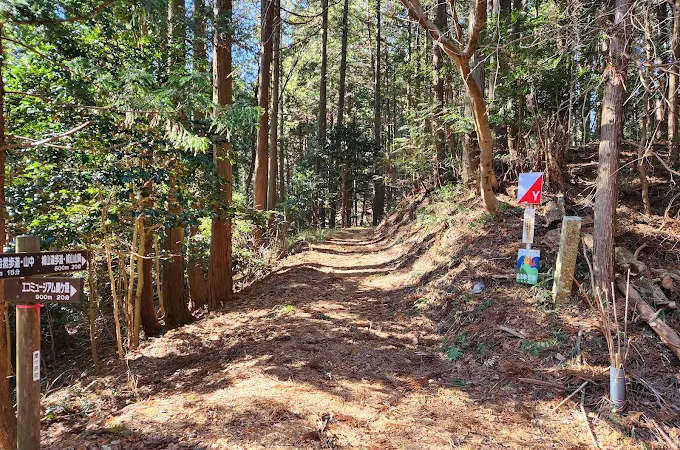
A well-maintained walking trail leads to the castle ruins, making it relatively easy even for beginner hikers. It takes approximately 20-30 minutes on foot from the trailhead to the main enclosure. While the path is well-maintained, comfortable shoes and clothing are recommended as it is a mountain trail.
Points to Note When Visiting
- Estimated Time Required: Approximately 1 to 1.5 hours for climbing and sightseeing.
- Best Season: Spring and autumn with pleasant weather are ideal.
- Notes: Insect repellent is necessary in summer, and warm clothing is required in winter.
- View: The view from the main enclosure is a must-see; especially on clear days, the scenery is magnificent.
Related Historical Sites in the Surrounding Area
Ori Castle Ruins
Within Mizunami City lies the Ori Castle Ruins, which functioned at the same time as Tsuruga Castle. Known as the residence of the Ori clan, it played an important role under the rule of the Toki clan. Visiting it together with Tsuruga Castle will give you a deeper understanding of the characteristics of medieval castles in this region.
Asano Manor and Otomi Manor
Around Toki Town, there are several manor sites related to the Toki clan, including Asano Manor and Otomi Manor. These form a network of castles centered around Tsuruga Castle and are important historical sites that demonstrate the Toki clan’s system of rule.
Akechi Castle
Akechi Castle (Ena City), known for its connection to Akechi Mitsuhide, also has deep historical ties to Tsuruga Castle. The fact that Oda Nobunaga strengthened Tsuruga Castle after its capture by the Takeda clan in 1575 demonstrates the strategic relationship between the two castles.
Castle Stamp and Cultural Property Designation
Obtaining the Castle Stamp
Tsuruga Castle stamps are available at the Mizunami City Tourism Association and other locations. In addition to the standard version, multiple designs are available, including gold and silver lettering versions, making them popular among collectors. A set of two stamps, including one for “Kanbe Castle Ruins,” is also available, making it an ideal souvenir.
Gifu Prefecture Designated Historic Site
Tsuruga Castle Ruins are officially designated as a Gifu Prefecture Designated Historic Site, publicly acknowledging their historical value. This designation has led to the protection and maintenance of the remains, and efforts are being made to pass on this valuable cultural heritage to future generations.
The Charm and Historical Significance of Tsuruga Castle
A Key Center for Toki Clan Research
Tsuruga Castle occupies an extremely important position in Toki clan research as it was the early base of the Toki clan, who prospered for a long time as the shugo (military governor) of Mino Province. This castle site provides valuable physical evidence for understanding the activities of the Toki clan from the Kamakura period to the Muromachi period.
A Typical Example of a Mountain Castle
With its unique layout resembling a crane spreading its wings, its arrangement of baileys utilizing the ridge, and defensive structures such as moats and earthworks, Tsuruga Castle possesses typical characteristics of a medieval mountain castle. It is a valuable learning resource for castle researchers and mountain castle enthusiasts, offering opportunities for on-site study.
A Cultural Heritage Site Conveying Local History
As a symbol of the history and culture of Toki-cho, Mizunami City, Tsuruga Castle is the core of the region’s identity. The place name “Tsuru-jo” (Crane Castle) also derives from the castle, demonstrating the deep connection between this region and the castle.
Connections with Oda Nobunaga and Akechi Mitsuhide
The historical fact that Oda Nobunaga and Akechi Mitsuhide, two great figures of the Sengoku period, both visited Tsuruga Castle further enhances its historical value. The fact that both visited this site shortly before the Honnoji Incident, a turning point in Japanese history, evokes a sense of historical romance.
How to Enjoy Your Visit
Observing the Remains
When visiting the castle ruins, observing the remains such as the main enclosure, baileys, earthworks, moats, and well remains in order will allow you to understand the structure of a medieval mountain castle in three dimensions. Information boards are also installed, so even first-time visitors can understand the meaning of the remains while viewing them.
Enjoying the View
The view from the main enclosure is one of the greatest attractions of visiting Tsuruga Castle. A 360-degree panorama unfolds, encompassing the plains along the Toki River, distant mountain ranges, and the city of Mizunami. From this view, you can truly appreciate why this location was chosen for the castle.
Historical Walking Course
Starting from Tsuruga Castle, we recommend creating a historical walking course that visits nearby castles such as Ozato Castle, Asano Mansion, and Otomi Mansion. Walking through the territory ruled by the Toki clan will allow you to experience the history of medieval Mino Province more deeply.
Nature in Every Season
The natural beauty of the castle mountain is also appealing, with its different expressions in each season: fresh greenery in spring and vibrant autumn leaves. A visit combining historical exploration and hiking will be a refreshing experience for both mind and body.
Summary
Tsuruga Castle in Mizunami City, Gifu Prefecture, is a historic mountain castle built by Toki Mitsuhira during the Kamakura period and which flourished as the base of the Toki clan. It boasts many attractions, including its unique layout resembling a crane spreading its wings, well-preserved remains such as baileys, earthworks, and moats, and historical anecdotes such as visits by Oda Nobunaga and Akechi Mitsuhide.
Protected as a Gifu Prefecture designated historical site and easily accessible via well-maintained walking paths, Tsuruga Castle is a recommended spot not only for history buffs but also for those who enjoy hiking and scenic views. Why not visit this castle ruin, where you can feel the history of Mino Province firsthand?
As a witness to the glory of the Toki clan, the turmoil of the Sengoku period, and the history of the region that continues to this day, Tsuruga Castle quietly stands. Standing on the castle ruins and reflecting on the warlords who once ruled this land, you are sure to feel the weight and romance of history.